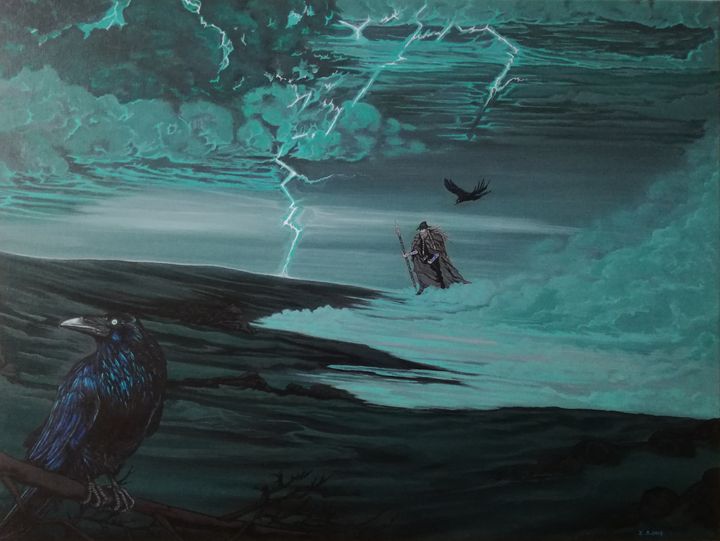
Skald Tales and Poems – Poem – ‘The Storm’

Happy Saturn’s Day

Sorry, once again no Crossing Bifrost this week. I am still reading a lot on Norse Mythology right now and next week I will take on the goddess Frigg.  For this week, it is time I took two poems I have written this month and make them blogging canon. This one will drop now and the second one later this afternoon.

“The Storm” by Edward W. Raby, Sr.:

Wind, grey skies and pouring rain.

The Storm rages in my soul.

Fed by my inner pain.

Will I ever be whole?


Lightning flashes

Thunder rolls

I tighten my grip on the staff of my reality

Knowing only the treading of my feet


Boots grinding through grey mud

Soaked in sorrow, but my heart closed

Numb to the cold of The Grey

I struggle onward, not daring to feel


Lest my tears join the flood

And drown me in the rising tide.

I walk with the hope of seeing sunlight

I walk with the hope of feeling love


But right now, I feel nothing

So I will survive.

Soon, the wolf within will rise and howl

The ravens will caw again


For I know when the light breaks through.

Then I will howl, caw and laugh,

Once again I have endured The Storm

And I have become stronger

Written by Edward W, Raby, Sr. on March 9th and 10th, 2019. Edited on March 22, 2019

Author’s Commentary:

I guess this poem about depression; and how I take it on, is one of those that is very obvious.  The imagery in part is borrowed from this whole Grey Wayfarer concept.  I draw a lot of inspiration these days from the characters and stories of Norse Mythology. I like these gods – they have dirt under their fingernails and pain of soul.

People do not understand depression that well.  Mine is ‘mild’, if you can call depression mild.  It isn’t about happy or sad with me.  It is about emotional shutdown.  I go into cold-blooded bastard mode so I don’t have to feel sorrow or pain.  The sarcastic asshole is very much a part of both sides of my life, but in The Grey I don’t laugh at my own sarcasm like I do out of it. “No dark sarcasm in the classroom.” Yeah, it gets dark and there is no feeling to it. Outside the grey it more about being playfully affectionate with the people I care about.  Inside it, I am just being a dark fucker trying to survive.

The love-hate relationship with depression is something I tried to deal with the last stanza.  Like or not, when come out of it, I have some of the most creative and wonderful inspired moments.  I feel better, love better and think better in those moments. Some of my best writing has been at these times.

Thanks for reading,

The Rabyd Skald – Wandering Soul, Bard and Philosopher. The Grey Wayfarer.

Skaal!!!

Crossing Bifrost – Gods and Goddesses – Freya: Goddess of Love

Happy Saturn’s Day

I know a lot so scholars point out the massive similarities between Frigg and Freya, but as someone who can see why certain things would change.  There are some personality differences in my opinion and I doubt Loki would have challenged the wife of Odin and basically call her a slut without some real proof out of fear the Odin would take it out on him.  Oor is Freya’s listed husband it is said she cries tears over his absence and the similarity to Odin makes people think that maybe Freya and Frigg are the same goddess with different names,

I would point out however that while Freya is a mother, her motherly attributes are subordinated whereas Frigg’s stories seem to have her motherly aspect front and center, particularly for Balder her son.   The fact is that the two goddesses are also said to have different children and their encounters with the other gods and goddess are distinct in the stories. Frigg is Aesir and Freya is Vanir along with her brother Frey.  The only evidence that seems to suggest they are the same goddess is the similarity in their husband’s names and those husband having a tendency to wander.  Sorry in all other aspects they are pretty distinct and different.

See the source image

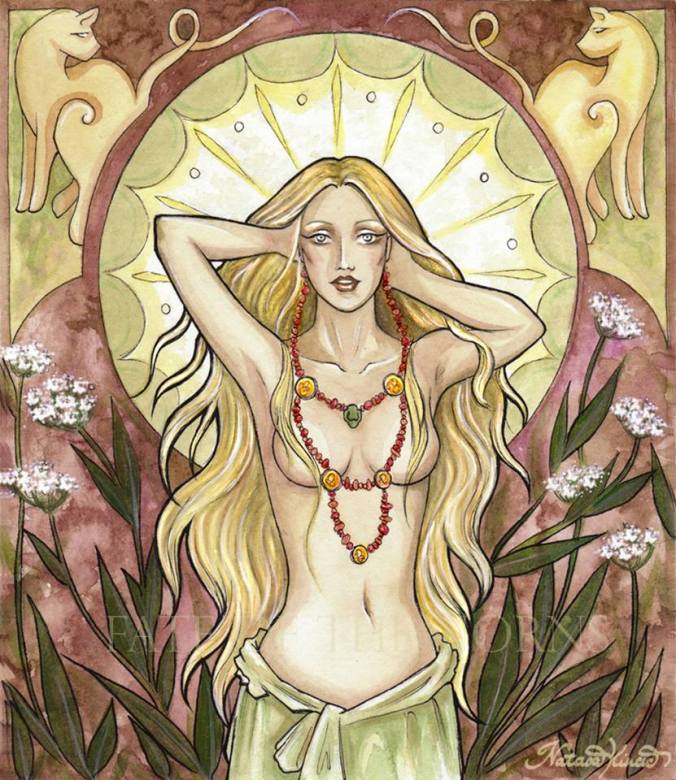
Freya is the goddess of love, fertility, beauty, and fine possessions.  The Greek goddess Aphrodite might be a good comparison except Freya has very Norse qualities. Most notably she will suit up for battle when necessary.  She also presides over the realm of Folkvang, one of the realms of the dead. Freya’s duty is to pick half the slain in battle to dwell here while Odin gets the other half.  There is no criteria it seems for who get to go where, just her choice.  This makes her one of the Valkyrie.

Some scholars call Freya, the party girl of the Norse gods. Loki basically accuses her of sleeping with every god and every elf including her own brother.  Her defense is not denial but that it is not considered a taboo for a woman who is married to not take a lover when she wants to, just like the men. There is really no denial. In short Freya is the kind of girl a guy likes when he is single. Her attachment to the forces of fertility, love and beauty draws her into the realm of passionate sex. The image you can see is a girl who can drink, play and fuck all night long.

See the source image

The one other quality she has is that she is the very definition of a person who practices the magical school of Seidr or the magic of fate. She can see the future through prophecy and can pronounce curses or blessings that stick.  It is she, when the Vanir-Aesir War ended, that brought this magic to the gods and taught it to them including Odin. It is probably a significant thing this happened; as from then on, Odin and all the gods are focused on altering the future fate of their realm.  It drives them and their actions and the whole concept of Ragnarök becomes center stage.

In popular culture, Freya does not appear very much.  Except it is she who were probably conceptualize that the Valkyrie the most.  That sexy, scantily clad warrior goddess is something her image probably brings to us. She appears once in Marvel’s Thor the comic book in 1993.  She is merely a supporting character. She is much more than that in the mythology.  She probably has had many appearances in video games as far as image and character than anything else.

See the source image

Freya speaks to us of prosperity, knowledge and abundance and all the pleasures thereof.  She is connected to cats and fairies. Her sphere is love, lovemaking and pleasure.  But she also is one of the goddesses that can see the fate of men and chooses the slain of sword for her realm and Odin’s Valhalla.  A prophetess who sees the future and says – “It’s not going to end well; everyone dies, so let’s party while we have the time to party.

In my own series The Grey Wayfarer, it is why I chose to separate her from Frigg.  She will give me a goddess character to counter the more motherly Frigg. She is the woman who will be the good ‘naughty girl’ who tempts my protagonist. But in the end will also see his fate and weep as much over him as her lost husband.

See the source image

I find Freya to be a great character and one that is distinct and full of potential. There are two very interesting sides to her; as well as a bunch of nuances, that make her a very fleshed out goddess.  Definitely underused in popular culture by her proper name, but her image inspires a lot of characters of fiction and lore.

The Rabyd Skald – Wandering Soul, Bard and Philosopher. The Grey Wayfarer.

Skaal!!!
Odin’s Eye – Return to My Theological Objections to Christianity – No Takers

Happy Thor’s Day

Discussion:

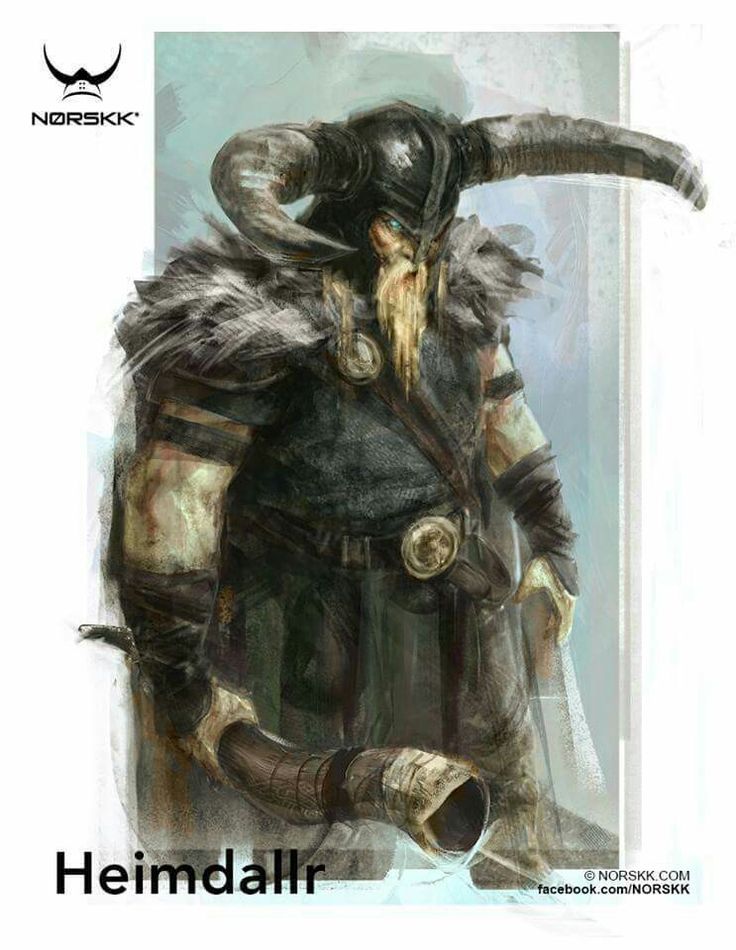
I don’t know, when it comes to my four theological objections to Christianity, I feel like the god Heimdall guarding the Bifrost Bridge.  Most of the time I seem to be just standing there waiting for something to happen and nothing does. I am not really looking for a fight but I think I have laid it out there what I feel are the four major problems with the Christian theology are and why they basically make it so the whole thing is just another man-made attempt to understand god that is flawed and failed. The result has been crickets.

Simple Restatement of my Four Theological Objections to Christianity:

  1. The Bible’s Inspiration by God – it is not proven, nor can it ever be.  It seems highly unlikely that the Bible is the product of a supreme being but rather the product of men. It’s divine inspiration is asserted but never proven.
  2. Sin is an Imaginary Man-Made Problem –   Like the Bible being inspired, Mankind being sinners and certain behaviors being sinful is asserted but never proven.
  3. The Cross and the Empty Tomb – an imaginary solution to an imaginary problem.  I would also say that such a solution with its suffering and death seems sadistic and unloving.  Not the product of a supreme being.
  4. The Justice of the Biblical God is Very Suspect – The scale of justice for the god of the Bible is very unbalanced when you rationally consider some of his actions in the Bible and the doctrines concerning hell and final punishment.

When I first laid these out last summer I did get some feed back, but it was clearly half-hearted and I answered the questions and objections they had to the point apparently that they had no response. This lack of response is not surprising, when I was a Christian I would read Christian apologists looking for answers to these very questions and they really had nothing.  The problem with the apologist is no matter how they try, they assume that the Bible is inspired, sin is real, redemption is real and god is just.  They don’t really see the need to address these issues because most of them are not really listening to those that object to Christianity.  They listen only to pick the battles they can easily win when they see objections to their faith, they tend to ignore the ones that are more difficult.

Time to Look Through the Eye:

Faith:

I refuse to return to having faith in Christianity, if those that practice it cannot provide sufficient evidence that the Bible is inspired, that sin is objectively real and that the solution the god of the Bible has for it is both rational and just. As much as I know Norse mythology is mythology, I actually find it easier now to believe that its’ view of the universe and the gods and goddesses solution to life and living is more in line with reality than Christianity until that happens. I have faith in myself, my family and the creator’s design.  Anything beyond that requires proof.

Religion:

It speaks to Christianity’s failure as a religion when it sees someone walk away from the faith and it comes up with doctrines and apologetics that basically shrug its shoulders and say ‘that is just the way it is’.  Calvinism is notorious for this fatalistic bullshit, but the fact that other branches of the Christian faith have this – ‘well, there is nothing I can do.” on the face of something that should have a response.  Well, then you have just shown to me that perhaps your religion, that you say should lead you to compassion for the lost, is also complete bullshit.

Theology:

Theologically speaking the subjects of special revelation, salvation, god’s nature and final punishment seem to be central to the Christian faith. If no good answer can come when it is proven these are inconsistent and quite frankly paint a picture of a god as 1) a sadistic torturer of his own son when He could have simply forgiven us, and 2) an unjust god who takes our whole lives and destroys them, torturing us forever,  simply because he is like a political snowflake who gets offended because we did something he doesn’t like. Perhaps he should develop some emotional maturity and realize he created man and he knew what he was capable of, so why get upset about it? Maybe should forgive them the same way you expect them to forgive each other – without condition. Or perhaps we should just conclude that the god of the bible is flawed and inconsistent because he is the product of the flawed and inconsistent thoughts and feelings of the men who wrote the Bible.

Spirituality:

The real kicker for me right now, is that I fell more alive spiritually speaking than I ever did when I was a Christian.  This break away has freed me from the shackles of religion and guilt and I don’t think I can recommend something more highly if you want joy and peace.  No more of the constant “You are not good enough.” No more of the psychological abuse of telling people they are garbage and God hates them until they turn to him. No more of using religion to manipulate the behavior of people, excluding myself from certain people, and justify interfering in people’s lives.  Shit, I feel like I actually have found spiritually what I was looking for all along.  The Freedom that comes from being liberated from religious shackles and nonsense.

Conclusion:

My problems these days are far more practical.  Spiritually, I am free.  Believe that or not.  My issues of struggle are family, relationships, career, life and enjoying the world.  The constant struggle of wrestling with this imaginary thing called sin, which was nothing more than me being taught to loathe and hate parts of myself, is gone.  I don’t struggle trying to destroy part of myself anymore.  I embrace it and seek to use that part of myself to make me stronger. My needs and wants are not sinful, they just are.  They are part of who I am and I accept that. I embrace them not as enemies but as allies.

In the meantime, my objections remain. And I wait.

Continuing to Walk the Path,

The Rabyd Skald – Wandering Soul, Bard and Philosopher. The Grey Wayfarer.

Skaal!!!

Crossing Bifrost – Races and Creatures – Giants

Happy Saturn’s Day

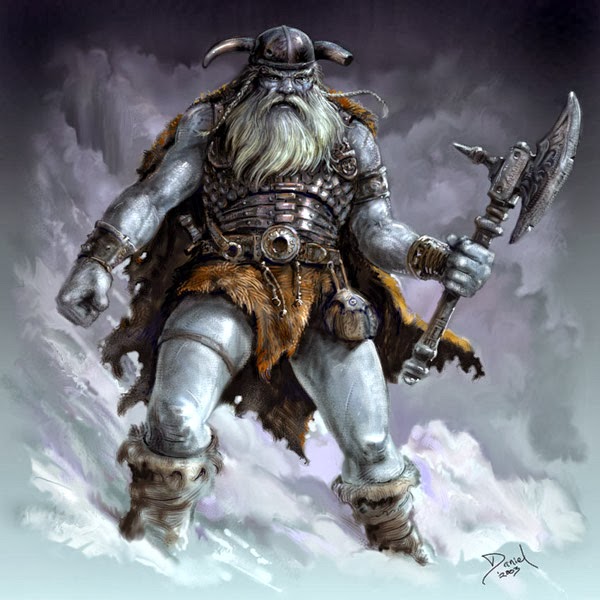
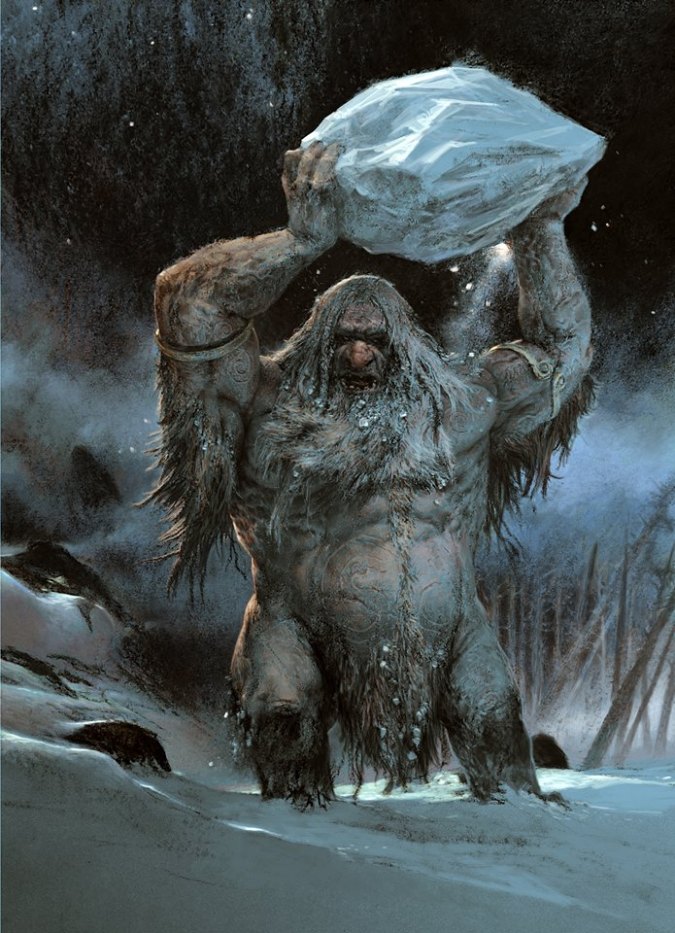
I suppose the imagery of a giant is pretty universal but as we will see there is a controversy about it when it comes to Norse Mythology. Giants are the primary antagonists in most of the stories of the gods in Norse mythology.  The frost giants take prominence but there are also other types of giants.  Dungeons and Dragons 5th edition’s Monster Manual lists six types of giants – Cloud, Fire, Frost, Hill, Stone and Storm.  It might be argued that all of these have some  from ideas found in Norse mythology.

See the source image

But the question starts pretty early as regards if the Norse people actually conceived these giants as ‘giants’.  The problem is one of translation and when Christians began to translate the word for ‘giant’ they may have bastardized it by adding the Greek mythology concepts and used the word for ‘giant’ that reflected this change.  What you see then is a mutation of the original Norse Idea and the Greek idea of titans.

See the source image

The original concept in the Norse may simply have been beings that represented the forces of Chaos. When you look at some of the giants you get that – Storm, Fire, Frost, Hills, Stone and Clouds are forces of nature that are both large and powerful.  Both needed for survival, but also feared because of their destructive nature at times.  The “giants” are simply personification of these forces.  They may or may not have been large humanoids to the Norse people.  It would make more sense if they were not.

See the source image

The reason I say it would make more sense if they were not, is  the simple fact that the gods and goddesses mate with giants and produce offspring. Sex between two individuals of great difference in size becomes problematic, unless the Norse people didn’t really have the concept of giants being large humanoids but rather simple humanoids that personified certain powerful natural forces.  To the Norse people the gods and the giants may simply been the same size just representing on the one hand forces of order and civilization (the gods), and on the other, the raw natural forces of the world (the ‘giants’).

What I am saying is that the whole notion of these ‘giants’ being large humanoid like creatures might be a later addition.  This would explain why later writers had to give some of the gods the ability to shape shift and change size.  But the original myths may not have had this at all. The my simply have been referring to ‘giants’ as those being who represented the great powers of nature.

See the source image

To me this makes the parings of some of the gods and giants interesting because it represents symbolically the need for the forces of civilization and humanity, if you will, to sometimes cooperate and draw strength from the chaotic forces of nature.  That sometimes the ‘children’ of these paring represent both sides of that equation such as Loki pairings with the giantess that produced Fenrir, Hel,  and Jormungandr.  All of these Children have their chaotic element but there is also the ability to think and speak beyond the base animal that they represent in the case of Fenrir and Jormungandr. Hel herself is human like but represents that primal force of Death, but also her realm is orderly and well thought out.

It is why in Norse mythology all of the gods and giants are the product of a an original giant.  That out of the primal forces of nature came the forces of order and chaos. Both are necessary and both can be in conflict or in love (lust) for each other.  To me it speaks of how the Norse people could recognize that; in all things, some necessary things were present. Fire is a primal natural force that is dangerous; but without it, civilization and technology is simply not possible. The earth and hills can be wild and dangerous places; but without the earth we mine and the trees we cut down, we would not have tools or shelter. The mythology reflects this idea of necessary harmony, even tough at times those forces are a threat to each other.

See the source image

In our world the giants represent much the same.  Large chaotic forces that must be fought and overcome. The show up in a lot of places in fantasy mythology.  But the idea of being primal natural forces is pretty interesting and we see that too.  For me though I prefer if the giants remain as the larger than life humanoids. It just makes the battles more epic. Courage is a necessary thing when facing them. Every movie or book that uses them reflects this.  Or on rare occasions we find a giant that is actually gentle who desires to help but his great power can unintentionally cause harm.  Thus even when we bend such forces to our will, there is still a danger because of their nature.

All important lessons taught to us through the giants.

The Rabyd Skald – Wandering Soul, Bard and Philosopher. The Grey Wayfarer.

Skaal!!!

Crossing Bifrost – Gods and Goddesses – Thor: God of Storms

Happy Saturn’s Day

Seeing I talked about him in my post on Odin last week, I figured I would talk about Thor directly this week.  Thor – God of Thunder, God of Storms. Odin is the god of rulers and leaders.  Thor is the god of the warrior and the common man.  Even in Viking times that made him more popular.  This is probably why more stories have survived about him than any other.  People loved Thor, but they feared Odin because he was the judge of the dead, along with the Valkyrie.

Thor is probably the most well known god of the Norse pantheon today becasue of comic books and movies. He is far more likely to go on action packed adventurers in our world and so people see him doing things actively and often violently. Odin is far more subtle and a master strategist.  Thor is neither. A great example of this is when he wakes up to find his wife’s hair missing. He gets up, surmises that Loki had something to do with it and then goes and physically threaten Loki to do something about it.  Odin probably would have found a way to fix the problem himself through magic and then he would have found a way to get Loki back that was far more subtle.

Thor is the god of thunder and storms.  His wife Sif is the goddess of the earth which is a common paring in most myths.  The rain watering the earth and bringing life is a common concept and it often plays itself out in rain/storm gods being paired with earth/nature goddesses. Thor’s exploits are long but the most notable are:  He welds Mjölnir (Lightning), the hammer of the gods. He is noted for his many battles with the Giants and with the world eating snake  Jörmungand, who he will battle at the and of the world Ragnarok.

Image result for norse mythology thor

Thor had many other powers, including healing,  He is said to be able to drink more mead and down more food than any other god. In mythology, he is not a blond but a red head.  He also possess the stereotypical hot-headed anger of the red head.  He wears a belt that doubles his already considerable strength.  If you are looking for a god that was a man’s man, then Thor is your god.  He was the kind of man you wanted along side you in battle and the kind of man you wanted to drink and party with as well. Not so oddly, he is also associated with fertility and was often evoke a blessing marriages for fertility.  But part of that reputation was earned outside of marriage with the fact he had many children and a lot of them were not Sif’s.

Image result for thor comic art

Our concept of Thor in our modern day is largely influenced by Marvel Comics.  Thor is a blond, blue eyed viking type.  The movies and the Comic make him very much the noble hero and try to lessen the fact that he was hot headed, slept around and partied like a boss. He is far more noble in the comics version, than he is in the mythology.

See the source image

That said I did like the fact that Chris Hemsworth decided to work out to play the character instead of doing the CGI muscles thing.  I think he was a good choice.  It is just our modern world isn’t ready for Thor as he was in mythology, because quite frankly he is fully masculine and makes no apologies for it.  Marvel’s Thor tends to be a little more pretty boy than masculine warrior.

The Thor of mythology is a little rough around the edges, where Marvel’s Thor is polished and presentable. You would be proud to take Marvel’s Thor home to your parents; if you were dating him, and they would think he was such a nice young man. The Thor of mythology, you might have to explain why the fridge is empty, the alcohol is all gone and perhaps why both you and your sister are knocked up with the same due date.

I guess I like characters though that have a little more of a subtle grey side.  Thor in any context doesn’t really have that.  He leaves that sort of thing to Loki. That’s why while I like Thor, I don’t consider him my favorite. Odin still has the honor of being my favorite Norse god. Thor however still inspires a lot of respect for his courage and loyalty to his friends.

The Rabyd Skald – Wandering Soul, Bard and Philosopher. The Grey Wayfarer.

Skaal!!!
Crossing Bifrost – Gods and Goddesses – Odin – The All Father

Happy Saturn’s Day

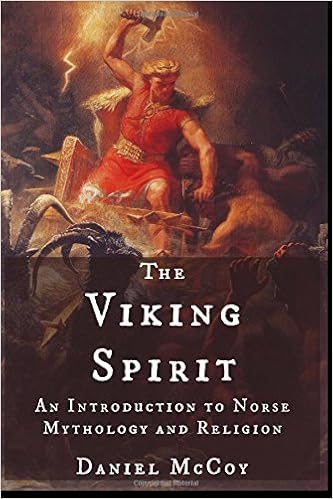
From this point on I may jump around a bit when to comes to topic on Crossing Bifrost.  Mostly now I just want to write on what topics interest me in Norse mythology.  I am currently reading a book call The Viking Spirit by Daniel McCoy and I want to acknowledge his contributions to my knowledge on this topic.  He is also connected to a website called Norse Mythology for Smart People which I can heartily recommend.

Image result for the viking spirit

So with acknowledgements out of the way, let’s tackle Odin, The All Father.

Odin is the supreme God of the Norse Pantheon.  He probably isn’t the most popular deity even back in the days of the Vikings.  Thor probably has that honor and one of the observations I can make is that this is probably the notion that the stories related to Thor are very common man/warrior stories whereas Odin’s tales are one of a leader taking responsibility for his sphere of influence and doing what is necessary to get the job done.  I got this feeling just reading them. I guess I can see McCoy’s observation that Odin probably appeals more to the aristocrat while Thor appeals to the soldier is probably dead on.

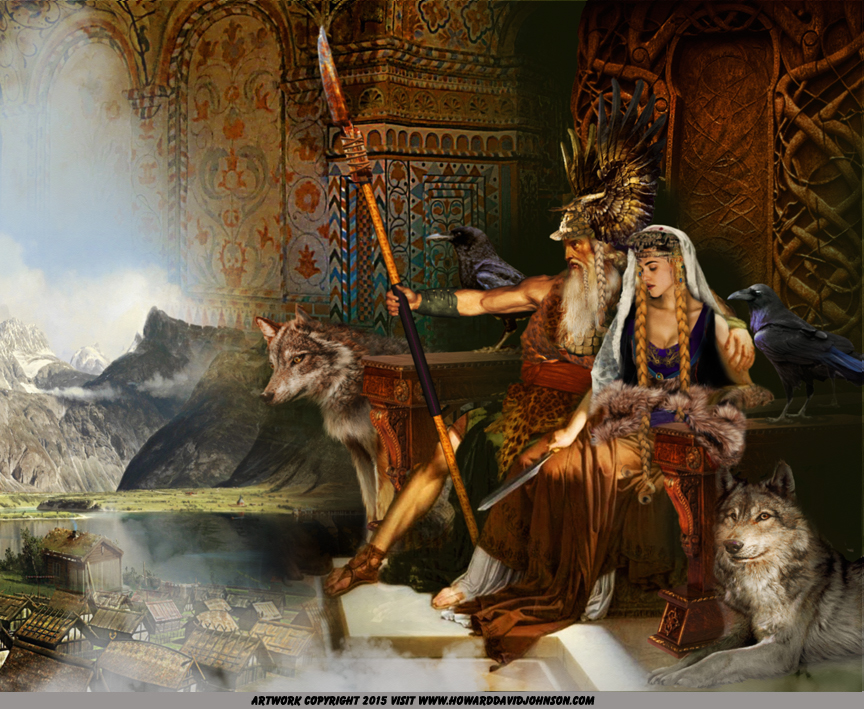
Odin takes a lot of different forms and take on a lot of different roles to get the job done. He is not just a king sitting on the throne like you see with a lot of pantheons.  Odin gets his hands dirty.  You see this probably most of all with him donning grey robes and wandering the world looking for the knowledge he needs to forestall Ragnarök.  He isn’t afraid to engage in deception to make this happen either. In short, Odin can be the noble warrior god, but he is also a wizard of the first order who uses his brains as much as brawn. He is the smart and clever strategist of the gods and that is why he sits on the throne.

See the source image

Odin’s accomplishments in the mythology are legion and his mentions in the texts are equally massive. I simply don’t have the space here to list them all. The most notable is his creation of the first two humans (Thus All-Father), His hanging on the world tree to gain knowledge of the runes, his sacrifice of his eye to gain even more knowledge. He leads the Wild Hunt and gains from the Valkyries half of those slain in battle. Mostly though you see his constant struggle to forestall the end of the world – Ragnarök.

His personality is a little shifty.  We would probably say that Odin is shady as fuck at times.  He engages in bets with his wife and can be quite deceptive.  But other times, he is the only brave warrior standing between the world and complete destruction, so you have to give him his dues as the creator and protector of mankind. If he has a sphere of power it is war, ruling and knowledge. In all these he excels.

See the source image

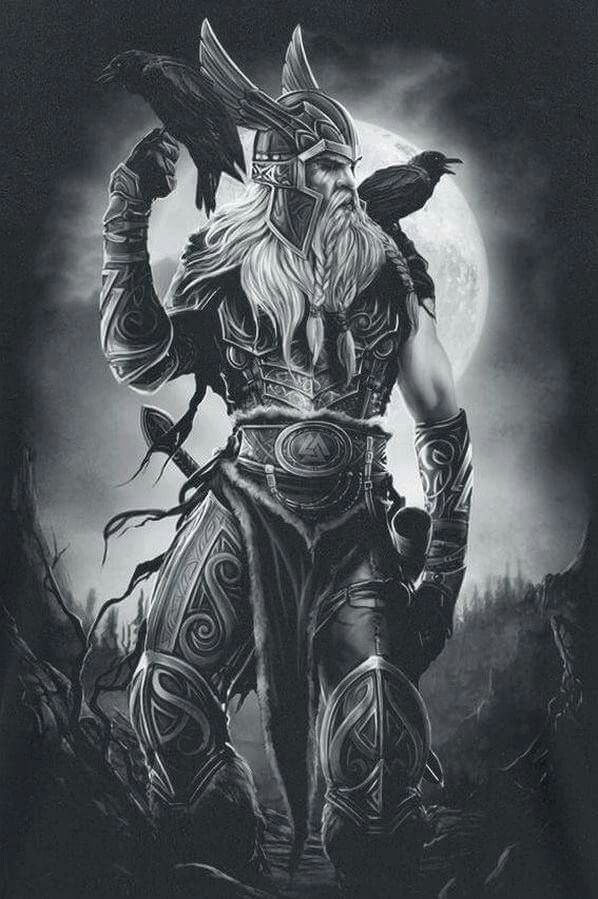
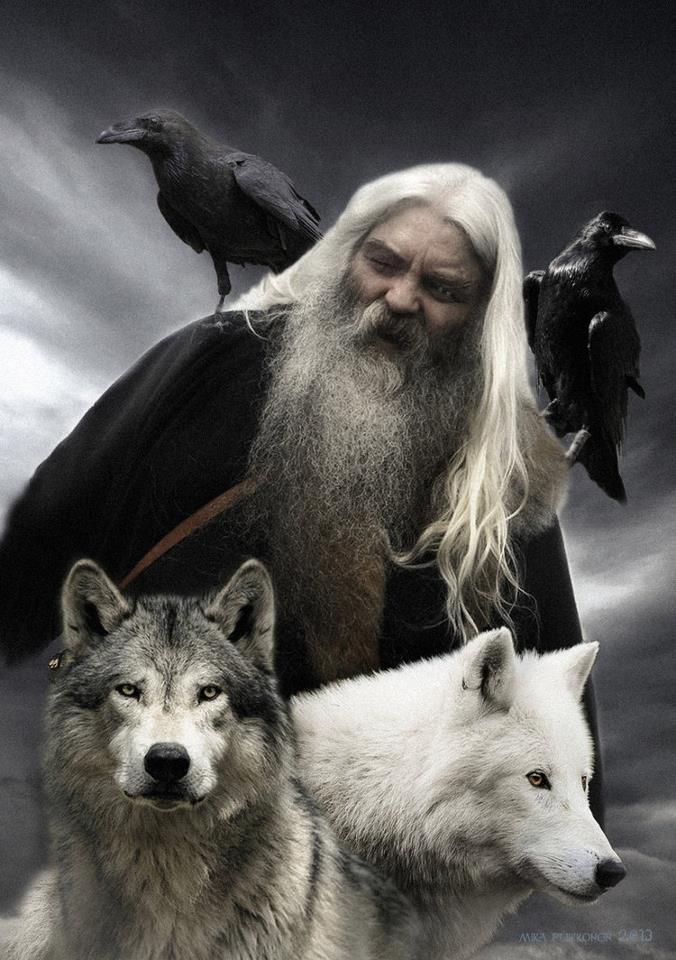
Personally, he has always appealed to me more than the other gods in the pantheon.  His image of the Grey Wanderer I have of course borrowed for the main theme of this blog. His companions of the ravens and wolves and his sacrifice are his eye are part of this blog as well. I like the idea of a grey pilgrim walking the world in an endless quest for knowledge, and so I resonate with Odin.

It could also be said that I find creative ways to interpret the virtues. Odin does that too and I find his example far more pragmatic about this than say Thor. For instance, Truth is a part of the Nine Noble Virtues, but that doesn’t mean I wouldn’t lie to someone who I found had in the past been deceptive to me. In battle, deception is part of the game and strategy of war, so I am not afraid to use it. Odin is dangerous on a much higher level than Thor because Virtue can be interpreted in many different ways and he sees that.  This is very unlike Thor who will just choose to rush in without thought and get his ass kicked, if he wasn’t protected by magical means. Odin is about the glory of victory; Thor is about the glory of battle.  Yes, that is a fine line but it is a significant difference. Thor just wants to fight, Odin wants to win.

See the source image

Popular culture when it comes to Odin seem to me more subtitle. I mean Marvel Kind of finally brought him out in a grand way with Thor, but over the last decades I have not seen many overt references, but rather his imagery is invoked far more than his actual name.  Tolkien used his imagery when we think of Gandalf the Grey. Characters who sacrifice to gain knowledge are in his spirit and there are many of these.  Ben Ken-obi, Yoda,of Star Wars, etc are like this too with their commitment to knowledge.

I suspect that I; the Grey Wayfarer, will walk in his metaphorical footsteps for some time to come.

I remain,

The Rabyd Skald – Wandering Soul, Bard and Philosopher. The Grey Wayfarer.

Skaal!!!

Crossing Bifrost – Norse Culture and History – Belief in Valhalla

Happy Saturn’s Day

I will probably do a closer look at Valhalla in the future when I consider things of the Norse World but right now I want to deal with the issue of the afterlife, because it probably had one of the greater effects on the Norse mind than many other things. The notion that any culture has about the afterlife often affects how that culture interacts with others and how the people act in the face of death.

See the source image

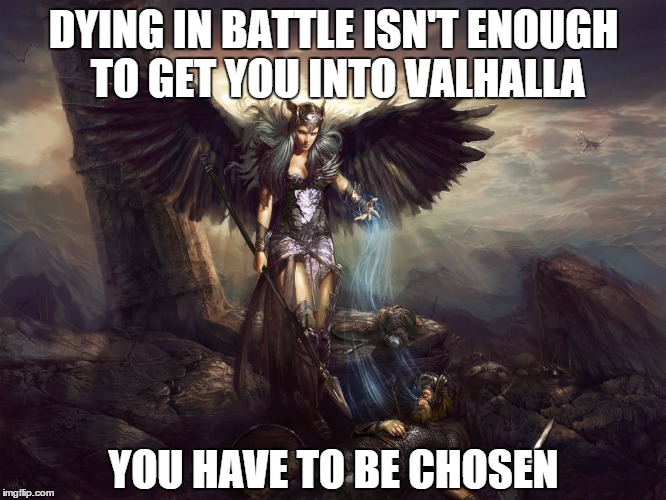
It is a pretty simple notion really, if a Viking faced his death bravely and died in battle, then the Valkyrie would come and take his soul to Valhalla.  Valhalla was a place of Viking pleasure.  Read into that, a place where one would know the glory of battle each day and at the end of it, one would sit down to mead, a feast with Odin, and beautiful women to bed as night fell. Although Valhalla is not limited to the men as brave women found their way too.

See the source image

The question of what effect this would have on a society’s mindset is something to consider. The Vikings were certainly innovators in technology in the longship and navigation at sea.  They could have turned those innovations to peaceful trade exclusively, if they had wished.  They didn’t do that.  Instead they would often raid a country first to demonstrate power and have Vikings who needed land take it. Then they would negotiate trade deals that had the force of negotiating from a position of strength.  Part of that is the notion of Valhalla that the warriors would take into battle. They were either gong to gain great glory in death, or a very comfortable life after victory. Pretty good motivation for Viking  leaders and ship captains to get new crew members.

See the source image

I would probably submit this belief in Valhalla was the main motivation for Viking expansion right along side a growing population that need to emigrate.  The second sons and following that were not going to inherit anything from their fathers. So they boarded a viking ship to seek their fortune; but as a back up plan if the died in battle, the earned Valhalla. That said, there were probably some who were seeking Valhalla and its pleasures more than a better life in this world.

See the source image

As a person who has studied religion and faith and the affects of the same on the human psyche, I can tell you what a person believes about the afterlife greatly affects not only how they face their death, but how they live their life. The Vikings seem to have this two-fold nature.  One is to live bravely and virtuously as possible so no matter what death they might face, they will be welcomed to Valhalla, but at the same time they seek a glorious end to guarantee Valhalla. It isn’t enough to die in battle, you also have to be deemed worth by the life you lived up to your death and how you died in battle.

See the source image

For myself, I am not too sure about Valhalla.  As a Deist most religions, including the Norse religion are subject to skepticism. That said, I cannot deny that belief in the afterlife in general is a powerful motivator.  It has a way of giving meaning to life and depending on how one achieves the best in the afterlife, it will affect how one lives.  For the Viking Warrior, it would have driven him to courage. When you board a ship and go to an unknown land to fight a battle, you need a lot of courage. In this culture a brave man was far more valued than any other kind. The beliefs surrounding Valhalla demonstrate this probably better than any other part of their culture.

I remain,

The Rabyd Skald – Wandering Soul, Bard and Philosopher. The Grey Wayfarer.

Skaal!!!

Crossing Bifrost – Norse Symbols and Objects – The Valknut

Happy Saturn’s Day and Happy Disting.  Let’s all remember those mothers and women who passed on before us, and the beginnings of spring in which there is new life even in the ice and snow.  

In looking at symbols of the Norse people this one seems to have a long origin and goes back to possibly the 9th century.  It is composed of three interlocking triangles. It can be found on gravestones and in archaeology in various places from the Viking Age.  The Norwegians introduced the idea of it meaning ‘knot of those fallen in battle’ long after the Viking age was over but it could be true.

What does it mean?  We don’t know really.  It is connected with the dead in Viking culture, because it appears on gravestones and viking funeral ships. Representations of Odin appear with it, so it is often thought to be connected with him. Mostly though we get the idea that this symbol for the Vikings was connected with death.

That hasn’t stopped modern people from running with it and giving it their own meanings.  Currently it is connected withe the revival of heathen practices among people with Norse and Germanic decent. It has come to symbolize other things in the modern mind.  But the one thing it seems to maintain is its association with the Vikings and their death rituals. Many theorize a connection with deep strong magic in the Viking culture associated with death.

For me and many others I think, the Valknut symbolizes the Nine Noble Virtues (NNV) the best.  It is basically three interlocking triangles, total of nine sides that form a single symbol.  Each triangle has come to mean one of the higher virtues for me and each side one of the NNV.  The whole thing stands together as one symbol representing my total philosophy.  In the end it makes a great meditation focus for me. I have also seen it used in conjunction with the nine worlds.

I am well aware of the fact that there is one white supremacist group that uses this as their symbol but I think they pervert it. It never had any connection to white supremacy until they used it this way, and I would say it is a common practice of race oriented groups of all kinds to take good and noble symbols and pervert them.  The most notorious one being the swastika which originally was a symbol of balance and harmony.  Hitler perverted it. Mostly though for the Valknut, I stand with a lot of other pagans in my defense of the symbol representing a heritage without racial hatred. It should be noted the symbol is used by many other non-racist organizations and companies. Including ones that actively stand against this racism.

Image may contain: text

In the end the symbol has a lot of mystery and so it can be given a lot of meanings and perhaps that is its greatest strength. It allows the individual the freedom to think what they wish about it and give it the meaning that best works for them. For me it is a reminded of the virtues I place value on and try to practice.  So it remains a constant reminder to me of that and that, because of its connection with death, I should be remembered for the noble life I lived because of following the virtues to me it represents. I wear one on a necklace around my neck these days.  A reminder of the mysteries of following the NNV and walking as a pilgrim through life.

I remain,

The Rabyd Skald – Wandering Soul, Bard and Philosopher. The Grey Wayfarer.

Skaal!!!
Odin’s Eye – Pagan Holidays – Oimelc and Disting (February 2nd)


Happy Thor’s Day

Discussion:

Interrupting the normal order of things to make remarks about pagan holidays.  This time of year we shift from The time period of Yule which began in December to the time of Imbolc or Oimelc (it has a lot of names, depending on the pagan culture it comes from).  The day that kicks this off is Disting which is February 2nd but it really starts at sundown on the 1st.  This time begins the time of Spring and looking forward to new life.  The day Disting is about the celebration of the souls of women in your family and this was the traditional time that lambs were born to shepherds. So the beginning of life begins with motherhood, even if there is still snow covering the ground.  It is a time of celebrating cold, ice, healing and the hearth.

In Viking myths this may refer to times where the Ymir gave life out of the ice.  There is also a lot reference to any god or goddess celebrating life, hearth and planting and each of theri spheres is celebrated as well. It’s a time of preparation; so as Winter ends, the spring activities are ready to begin.  In Viking society “The Thing” happened at this time as well, which is the time of law and justice.

Mostly though Disting itself is about honoring mothers and grandmothers who have passed on but who still watch over the generations.  There is an idea of respecting ancestors of the female side of the line.  In this regard I have many women who have passed on that I want to remember.

Time to Look Through the Eye:

Faith:

I suppose when one considers ancestors there is a discussion of the afterlife. Over my time as a Christian, I was always sure of what this entailed, but these days I have to concede that no one really knows what lies after death, except maybe the dead themselves.  Assuming there is anything to know.  My aunt who was a great mother and my grandmother Alice fit the motherhood motif of this Holiday. If the pagans are right, then perhaps they both watch over all of us.

Religion:

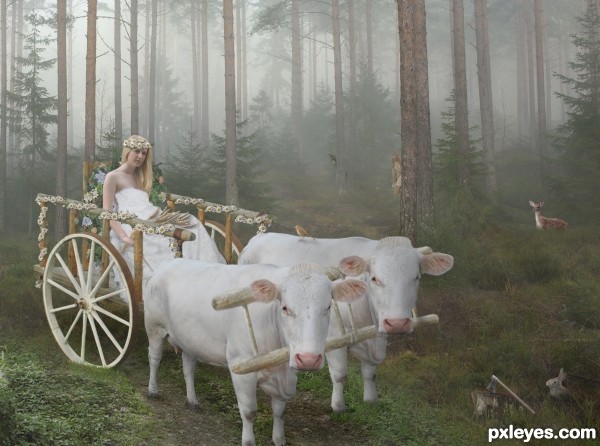
There is a simple but profound ritual connected to Disting. It is above all a cooking holiday.  The Norse Goddess Nerthus being celebrated here. She is the goddess of fertility peace and plenty. Most of the ritual involves cooking of bread, feasting, celebration and  lighting of red candles for the mothers who have passed on. Given that chariot riding Nerthus is a fertility goddess, I also imagine couples might pray at this time for children and might go home and have sex in honor of the goddess and the possibility that she will bless them.

Ritual religion has always been a problem for me, but I can get into the spirit of winter merrymaking and celebration of women who were mothers who have passed on.  There is a spirit to celebration of the beginnings of life I can respect here.

Theology:

There is probably a theology of after life in every major religion.  The specifics vary widely.  I can only say that the door to the afterlife is death and none of us really know what is on the other side. I do believe there is something there, but that is all it is – belief.

What Disting does point out theologically is that in the case of sexuality, pagans are very much about masculinity and femininity .  There is no gender fluid but two sexes both strong and clearly defined, but there is also a lot of room to express both culturally in may ways.   What you have is an equality of sexuality that is dual and so far in my studies I would have to say balanced.  This holiday is about celebration of those feminine sexual traits that we consider honorable, and that is something I can relate to very much.

Spirituality:

The spiritual side of me can at least remember the things about women of my family who have died, and it keeps them alive in memory.  That is a good thing to do.  It is important to remember that legacy isn’t simply genetic.  That there is a spiritual side of motherhood and femininity that is celebrated in my heart with this holiday and on February 2nd I will probably take a moment to remember those of my line who were great mothers and examples of being good, strong women.

Conclusion:

I like these pauses where I look at the pagan holidays and seasons.  The pagans have a better understanding of the cycle of regular change better than most people.  I like that they really have six times of year and holidays to kick them all off.  There is also a closer understanding to real life with the pagan side of me, and these holidays bring that out.

Continuing to Walk the Path,

The Rabyd Skald – Wandering Soul, Bard and Philosopher. The Grey Wayfarer.

Skaal!!!

Crossing Bifrost – Gods and Goddesses – The Norse Pantheon


Happy Saturn’s Day

The center piece of course of Norse mythology is the characters that play on its stage and that is the Gods and Goddesses of the pantheon.  The interesting thing about the gods and goddesses of Norse mythology is that they are very real.  Some critics of such pantheons say that these gods are all too human, but then again so is the jealous and vengeful god of the Bible. The point of such stories is not to be historically accurate or factual but to be morality plays that people think on.  Religion dwells in the realm of ethics and one has to wonder if the stories are the smart clergyman’s way of illustration of the values people are trying to pass on.

The Norse God’s family tree is complicated.  Like most myths the central characters are not the first generation.  Rather they are often the third and fourth generation.  There is also the complication of the fact that the Norse Pantheon also has two separate races of gods the Aesir and the Vanir.  Plus the Gods often mate with the giants producing offspring.  So most people can relate to such gods as the whole family question seems to be pretty relative. The whole Vanir /Aesir question seems to be the result at least as far as I understand it of two mythologies of different parts of the Scandinavian / Germanic world merging.  The result is a little confusion but it makes for an interesting story in and of itself when Freya, who is Vanir, is sent as an exchange to Asgard which is the home of the Aesir.

The stories of the Norse Gods are quite extensive but they have a couple challenging issues. 1) The goddesses do play prominently very often and so their personalities as far as characters in the story or even a full idea of what their sphere and powers are is sometimes missing. 2) There are gaps in the stories like there are supposed to be more of them but they were not written down. My guess is that there are tons of stories that were told but only a few were preserved.

From my perspective as a writer this is a blessing in some ways because I can fill in the gaps when I use Norse mythology and no one can really bitch about it. I can for instance take what little is known about the goddess Hel for example and then fill in the gaps with my own imagination which is what I did in this post: The Grey Wayfarer (Fantasy Serial) – Chapter 5 – Evil Intent (Hel).  I can also do this with other blank spots in the story and characters.  So Norse mythology becomes a rich backdrop that my imagination as a writer can fill in the blank spots. It is primarily why The Grey Wayfarer will center on female goddesses because I can fill in the gaps and there are a lot of gaps.

In popular culture of course the Norse Pantheon is prevalent from the comics all the way to books and movies and has been so for a long time. The influences of this pantheon are seen in other characters indirectly as well.  JRR Tolkien’s Gandalf the Grey is certainly inspired in part by Odin.  There are simply tons of this kind of thing in fantasy literature and that is kind of my reason for delving into it.  To find my own inspiration for my own characters and writing.

There is also the fact that a religion built around a warrior culture is fascinating.  It is amazing to me how many of this pantheon are gods and goddesses of battle or war. I would say very few of them could not be invoked before a battle by a Viking, and that makes conflict a central aspect of the pantheon.  War and battle are common but also politics and diplomacy. Adventure in these stories is often high and powerful.

In the future the Gods and Goddess’ section of Crossing Bifrost will center on a singular god or goddess.  There basically will be dossier of them and then some thoughts about them from my perspective.  My goal is to draw inspiration with Crossing Bifrost and this section will be no different. I will probably start with Odin of course and then work radially out from him.  It seems if there is one thing that binds the whole thing together is the All-Father.

As always I claim no expertise here.  I am still learning and reading but I want to keep a record of my thoughts as I do.  The goal of Crossing Bifrost is to record my journey in understanding this rich mythology, not necessarily to educate.  If while I am doing that you are inspired and learn something then that is a bonus for me.

I hope you continue to enjoy this.

The Rabyd Skald – Wandering Soul, Bard and Philosopher. The Grey Wayfarer.

Skaal!!!