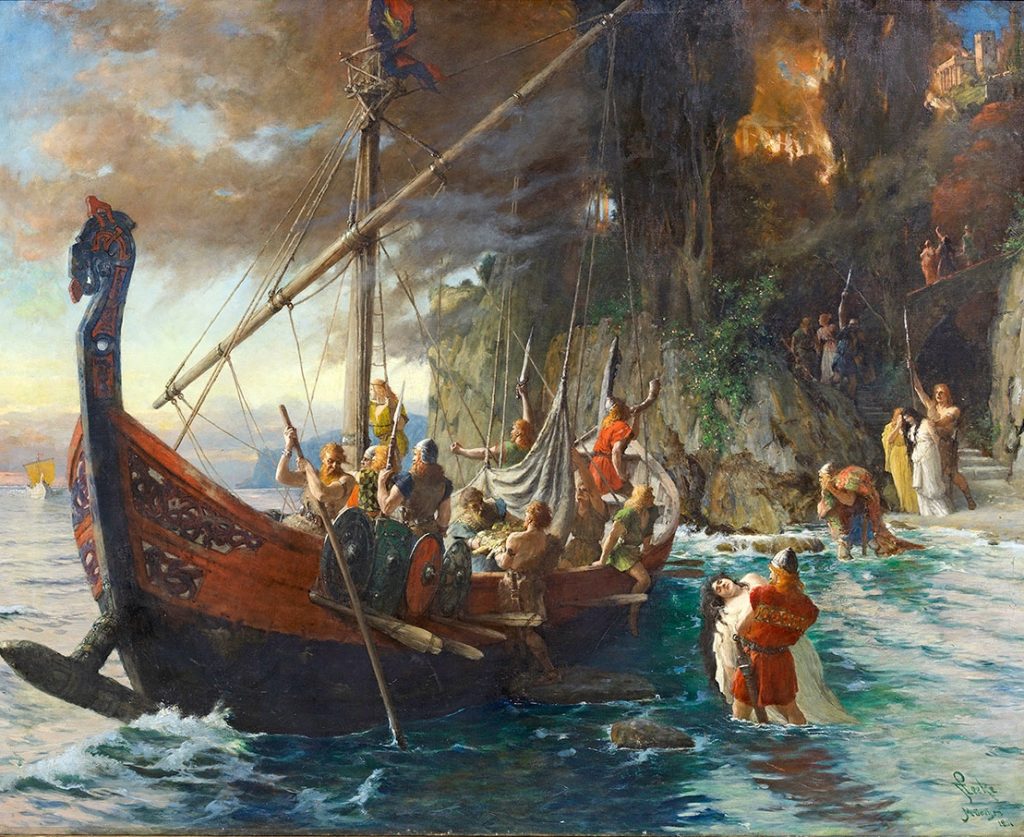
Of Wolves and Ravens – Self-Reliance: Leaned Out and Building Strength

Happy Tyr’s Day

Discussion:

The thing about the Nine Noble Virtues (NNV) is that the definition of self-reliance is simply ‘the spirit of independence’ and I find the simplicity of that definition to be its greatest strength. The rest of the virtue simply extends that out to the family, tribe and nation but the definition is that self-reliance is ‘the spirit of independence’. Independence is defined as free from outside control, not dependent on another for living and subsistence and thinking and acting for yourself.  To be self-reliant means to embrace the process by which you live in freedom of choice, lifestyle and thought.

There is probably no virtue of the NNV that I resonate with more. Liberty and the freedom that goes with it, is something I hold very dear. I get more angry about people trying to control me, make me dependent on them or trying to tell me what to think and do than anything else. I will not be controlled.

I also get mad when I watch people in my country casually sacrifice their rights and freedoms on the altar of security.  Dependence makes you less secure not more secure. You want security? Embrace the spirit of independence that allows you to secure as much of it as you can for yourself and by yourself. There is really no true security in his world, so live free so that way you at least you will have a wonderful life without fear.

There are two obstacles to self-reliance and both of them are internal.  1) Is to attach to many things to yourself, so that you are so obligated to other things and people who you never really can make a choice about what you want.  2) To not strengthen yourself enough to stand on your own. I say both are internal because to become dependent involves a choice to do so.

To the Wolves and Ravens:

Needs (Geri):

People thrive more in freedom.  They become more of what they are capable of, when they have the liberty and freedom to pursue what makes the happy and fulfilled. Now, I don’t care what circumstances surround you, this need can always be fulfilled.  The government, religion and other factors really cannot bind a truly free person. The Virtue is always livable.  It is something we need.

The problem with this is we need to spend time strengthening ourselves and not weighing ourselves down with obligations that really do not serve us.  We should act on what gives us Joy rather than what others think we should do. It is why I embrace minimalism as a part of my philosophy. It allows me to lean myself out so that I can concentrate more on strengthening the things that give me joy.  I will talk more about the aspects of my minimalism the next cycle, but if there is any key to maintaining an attitude to independence, it starts there.

Wants (Freki):

Yes, I want self-reliance.  The one thing that I have learned is that dependence can lead to disaster.  I was very dependent on others in my last job; and quite frankly it is what bit me in the ass in the end, because those people proved untrustworthy.  I want to be in a place that even if relationships turn out to be false again, it doesn’t throw me off because I am not dependent on them.

Reason (Huginn):

Reason tells me that I must make decisions that regularly reflect on the question of do I need this or do I want this?  To many times we are following the impulses of what we want without thought of how dependent we are becoming on others to get them.  We also don’t think of how that new thing or relationship might make us obligated to the point we lose some of our freedom. I need and want self-reliance and we will not get it by simply following our impulses.  We need instead to be very deliberate about our choices in who we are in relationships with and what things we take on responsibility for.  That requires thought every time.

Wisdom (Muninn):

Wisdom tells is that liberty, freedom and self-reliance are precious things that need to be guarded and maintained. They are not easily won and so they should not easily be discarded. This constant vigilance of mind and heart is the price for it, but the benefits are truly better than the alternative.

Conclusion:

Self-reliance is something I strive for.  I have to on the one hand not bring anything in my life that drains it and I also have to strengthen myself in ways so I can maintain it. There is a constant battle here but one that is well worth it at the end of the day.

I remain,

The Rabyd Skald – Wandering Soul, Bard and Philosopher. The Grey Wayfarer.

Skaal!!!
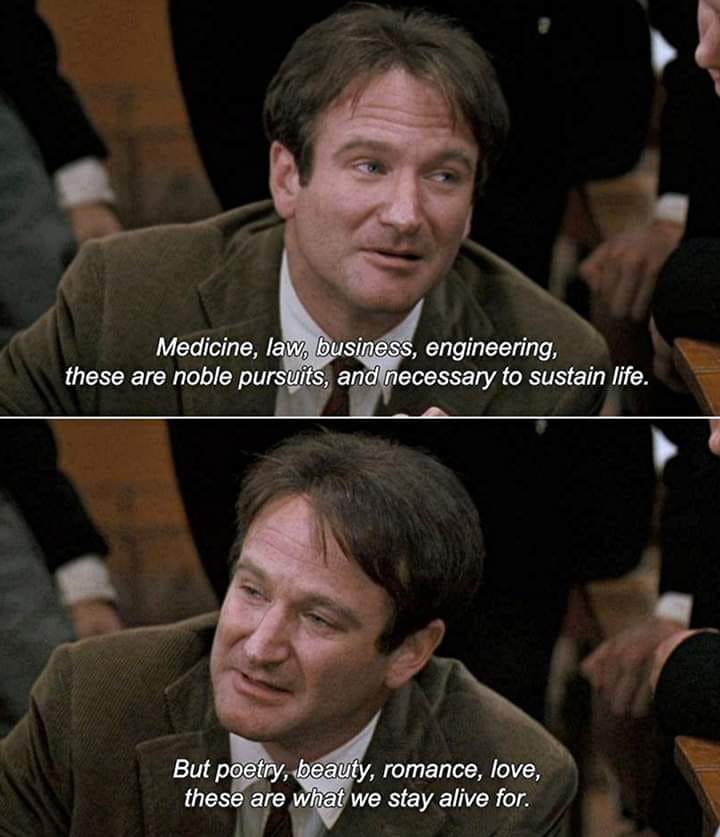
The Pagan Pulpit – Robin Williams – What We Stay Alive For

Happy Sun’s Day

Announcements:

We don’t pray here – we figure God, the gods and goddesses, or whatever powers that be either know already, don’t give a fuck, or are busy with more important matters than our petty stuff. We also kind of assume that they expect us to do stuff that we can do for ourselves, and that we will do them ourselves and not be lazy. We also believe in being good friends, so we don’t presume on our friendship with the powers that be by asking them all the time for stuff while giving them nothing in return.

We also don’t take an offering here.  We figure the powers that be probably don’t need it.  Let’s be honest, offerings are not giving to the divine powers, they are given to an organization to support it.  Just being honest. God, the gods or whatever never see a dime, farthing or peso of that money; it all goes to the church, mosque or shrine.

Opening Song: “Blame Canada” by Robin Williams (South Park)

One of my favorite moments of Robin’s career and oddly enough a song I have been singing from time to time these days.  I play a lot of a PC game called The Long Dark.  it basically an apocalypse simulator where a freak magnetic storm destroys all electronics and your plane crashes in the Canada wilderness.  You task is simply to survive as long as possible. As I am trekking along trying to find the next resource to survive I find myself on occasion remembering this song and singing the verse of it.

Poem: “Slow Dying Flower (poem about Robin Williams)” by Shay Callow


He was the brightest star the world had ever seen,
but no star can burn bright forever, although that was unforeseen.
He was a man who brought joy to all those around him,
so that he never had to show them how his life was grim.
He made them laugh until their stomachs hurt,
even though inside he was full of despair, sadness and disconcert.
Like a clown, his smile was painted on,
only when he removed it did you see the wretchedness in his deep blue eyes; that’s when it dawned
that he was a slow dying flower,
fading petal by petal and losing power
until the day he’d been poisoned enough by this ghastly world,
and he died once and for all by his own hand – that’s when the truth of his life really unfurled.

Meditation:

Image may contain: sky, text, outdoor and nature

Song of Preparation: ‘Why Do We Read and Write Poetry’ by Robin Williams (scene from Dead Poets Society).

I figured the man who said the quote today should be the one to say it. plus he adds his own commentary which is nice. It is a great disappointment to me that Robin didn’t win the best actor award in a leading role. He should have with this performance.

Text: What We stay Alive For – Robin Williams

“Medicine, law, business, engineering, these are noble pursuits and necessary to sustain life. But poetry, beauty, romance, love, these are what we stay alive for.”

Robin Williams – “Dead Poets Society”

Sermon:

“O captain, my captain!”  I can’t tell you how much the Dead Poets Society shaped my life.  I still difficulty watching it as it is very sad, but if has a theme it is what Robin’s character is trying to get across the entire movie – seize the day, live life, find something that makes life worth living. Write your verse and make it a good one.

I have long taken the message of this movie to heart and this quote reminds me of something I need to remember.  There are many things we do to sustain our lives but there also needs to be the things we live for otherwise life isn’t worth a damn. There are many things that are noble pursuits but if you can’t get up and have something to live for then you’re going to struggle.

In my life right now i have spent a lot of time setting goals and establishing the discipline I need to achieve them. But I can’t say the overall aim is simply to live.  To exist. There is something in life we must have a a passion for or the reason to live will run out and we will find ourselves much like Robin himself. With no reason to continue.

I  for all I am worth that no matter what life throws at me I remember that what I may be doing in life that is noble and good, I remember I need something to stay alive for.  So reason beyond life’s purpose being life itself.  To go from being alive to living life. May we all find that.

Closing Song: Friend like Me – Robin Williams from Aladdin 

I don’t know that I will ever be able to look at Aladdin the same way again or in particular the genie without thinking of Robin Williams.  This performance and animation are some of his best work. It is a pretty unforgettable song

Parting Thought:

Image may contain: 1 person, text that says 'People Will Quit On You! Truth Inside OfYou You gotta get up everyday and make sure you never quit on yourself.'

If I take any inspiration from Robin’s life it is to always make sure I get up and not give up on myself.  Something we all need to remember.

I remain,

The Rabyd Skald – Wandering Soul, Bard and Philosopher. The Grey Wayfarer.

Skaal!!!

Crossing Bifrost – Gods and Goddesses – The Norse Pantheon


Happy Saturn’s Day

The center piece of course of Norse mythology is the characters that play on its stage and that is the Gods and Goddesses of the pantheon.  The interesting thing about the gods and goddesses of Norse mythology is that they are very real.  Some critics of such pantheons say that these gods are all too human, but then again so is the jealous and vengeful god of the Bible. The point of such stories is not to be historically accurate or factual but to be morality plays that people think on.  Religion dwells in the realm of ethics and one has to wonder if the stories are the smart clergyman’s way of illustration of the values people are trying to pass on.

The Norse God’s family tree is complicated.  Like most myths the central characters are not the first generation.  Rather they are often the third and fourth generation.  There is also the complication of the fact that the Norse Pantheon also has two separate races of gods the Aesir and the Vanir.  Plus the Gods often mate with the giants producing offspring.  So most people can relate to such gods as the whole family question seems to be pretty relative. The whole Vanir /Aesir question seems to be the result at least as far as I understand it of two mythologies of different parts of the Scandinavian / Germanic world merging.  The result is a little confusion but it makes for an interesting story in and of itself when Freya, who is Vanir, is sent as an exchange to Asgard which is the home of the Aesir.

The stories of the Norse Gods are quite extensive but they have a couple challenging issues. 1) The goddesses do play prominently very often and so their personalities as far as characters in the story or even a full idea of what their sphere and powers are is sometimes missing. 2) There are gaps in the stories like there are supposed to be more of them but they were not written down. My guess is that there are tons of stories that were told but only a few were preserved.

From my perspective as a writer this is a blessing in some ways because I can fill in the gaps when I use Norse mythology and no one can really bitch about it. I can for instance take what little is known about the goddess Hel for example and then fill in the gaps with my own imagination which is what I did in this post: The Grey Wayfarer (Fantasy Serial) – Chapter 5 – Evil Intent (Hel).  I can also do this with other blank spots in the story and characters.  So Norse mythology becomes a rich backdrop that my imagination as a writer can fill in the blank spots. It is primarily why The Grey Wayfarer will center on female goddesses because I can fill in the gaps and there are a lot of gaps.

In popular culture of course the Norse Pantheon is prevalent from the comics all the way to books and movies and has been so for a long time. The influences of this pantheon are seen in other characters indirectly as well.  JRR Tolkien’s Gandalf the Grey is certainly inspired in part by Odin.  There are simply tons of this kind of thing in fantasy literature and that is kind of my reason for delving into it.  To find my own inspiration for my own characters and writing.

There is also the fact that a religion built around a warrior culture is fascinating.  It is amazing to me how many of this pantheon are gods and goddesses of battle or war. I would say very few of them could not be invoked before a battle by a Viking, and that makes conflict a central aspect of the pantheon.  War and battle are common but also politics and diplomacy. Adventure in these stories is often high and powerful.

In the future the Gods and Goddess’ section of Crossing Bifrost will center on a singular god or goddess.  There basically will be dossier of them and then some thoughts about them from my perspective.  My goal is to draw inspiration with Crossing Bifrost and this section will be no different. I will probably start with Odin of course and then work radially out from him.  It seems if there is one thing that binds the whole thing together is the All-Father.

As always I claim no expertise here.  I am still learning and reading but I want to keep a record of my thoughts as I do.  The goal of Crossing Bifrost is to record my journey in understanding this rich mythology, not necessarily to educate.  If while I am doing that you are inspired and learn something then that is a bonus for me.

I hope you continue to enjoy this.

The Rabyd Skald – Wandering Soul, Bard and Philosopher. The Grey Wayfarer.

Skaal!!!

Odin’s Eye – Problems with Christianity – The ‘Christian Nation’ Myth

Happy Thor’s Day

Discussion:

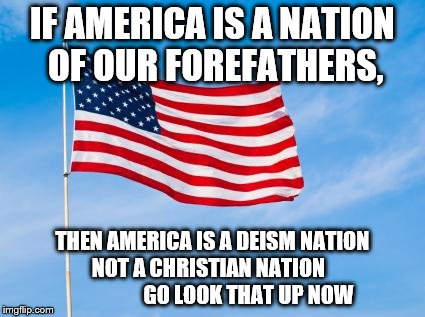
I have book on my shelves called “The Myth of a Christian Nation” by Gregory Boyd.  I know there is a rebuttal book out there to it and one day I have plans on reading both of them, but I stand with Boyd on this issue. I have read many of the founding fathers and there was little said at the founding of the nation about it being a Christian one. In fact part of the issue with the first amendment is this very thing – preventing any state religion including Christianity. No matter how much Christians would desire this to be true, it is not. If anything this is a deist nation or a secular one by design.

See the source image

In truth at the founding of the country under the current constitution, Christian preachers actually decried the fact that the document didn’t make Christianity the state religion.  The called the government it created ‘godless’. What we have is a nation founded on enlightenment principles which would make us more deistic and not Christian at all, as deists in general distrust religion including Christianity.

See the source image

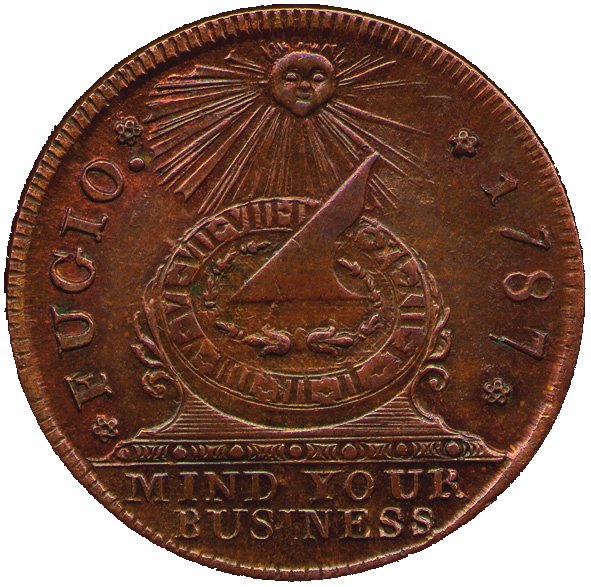
Most of this mythology can actually be traced back the 1950s.  Yes, that recent because that is the time when people still fresh with the accomplishments of WWII with its patriotic fervor and feelings of threat from ‘godless communism”.  To combat this a lobbying movement started to do a lot of things, but some of the results were “under God’ in the pledge of allegiance; which basically excludes those who don’t believe, and “In God We Trust” which replaced “Mind Your Business” on the money.

See the source image

The results of this is a generation who grew up with both of these things and many of them will tell you they have always been there; but they haven’t.  Personally the old pledge was far more inclusive and the motto “Mind Your Business” would have been a better lesson of “Mind Your OWN Business” which would probably lead to less offended people these days.

See the source imageThe main issue for me is as I watch Christians, is that they use this myth to justify political involvement. To press a Christian agenda on the nation like they were trying to get it back to its roots.  The roots of this nation were never Christian to begin with and the problems this has caused far outweighed the benefits. It pretty much has caused more division in the nation than it ever has unity. I realize I am suggesting that perhaps Christians would be better off dropping the myth and most of them will not listen, but the truth of it is – the Christian nation myth is just that a myth. Believing in mythology as if it is fact has never done anyone any good.

Time to Look Through the Eye:

Faith:

The painful truth is you cannot make anyone believe something by force.  No matter what draconian measures are taken to order people’s behaviors, their beliefs will always remain their own.  Their thoughts and feeling on things are their own.  Faith cannot be forced and it is the height of folly to think otherwise. People believe what they want to believe and to try to make them believe something else by force is sheer folly. You can only cause outward behavior to line up with your faith’s moral rules. This does not have the effect that is intended; which it to make the person believe, but rather it creates resentment and often underground activities that break those moral codes. The moment people can shake those moral codes off they do.  Religious dictatorships end in revolution and rejection as historically they are the most brutal along side of communist ones.

Religion:

See the source image

Historically, there is really only one reason to claim something is about God and that it to give you such moral authority, that people never question your real motives. Christians invoking the Christian nation myth, often claim that their actions are trying to get the nation back to its roots. But the root of this nation are deistic and rational, not Christian and emotional. Christians use the myth (which is a falsehood) to secure certain support politically and this is more about marrying their religion to the state which is something the 1st amendment strictly forbids.

Theology:

I have never been sure about the theology of this.  Part of Catholic theology has had the theology of violent overthrow of government that oppressive, but this theology has never been official sanctioned. On the flip side if one can through democratic means enlist this idea then the church has never been reluctant to join themselves to the state with past theologies like the divine right of kings and for Protestants in America – manifest destiny. Almost always the theological paring of faith and state has disastrous consequences for some other group of people who the people of faith dislike. They then use the state to not only do the dirty work of oppression but often engage in murder, theft and rape while they do so.

Theologically speaking, Christians some to forget that whole ‘love thy neighbor’ commandment.  Through their marriage to the state they can eliminate their enemies and opponents using the state, while all the while claiming to love the people they are eliminating. It’s a relationship that allows power while at the same time claiming something else. No church-state marriage has ended without they happy couple destroying someone else that the church claims to love, while at the same time sanctioning the state doing the killing.

Spirituality:

I don’t have time for this anymore.  My main concern as a deist is that all faiths have equal voice and that no one faith gains so much power it can eliminate the others. Spiritually my humanism hits here as well.  I was Born on Earth, I am one member of the human race. My politics are to be free and let others be free as well. My religion is simply to love. Yeah, that sounds actually like more of what the founders were aiming for and doesn’t involve propagating the mythology of the United States being a Christian Nation.

Related image

Conclusion:

I used start each church service with the pledge of allegiance, and we were very patriotic.  I however knew for a long time that the Christian nation thing was a new addition historically.  I am ultimately glad to be rid of it.  It doesn’t need to be Christian nation to be a good nation.  It needs to respect my rights and liberties and the rights and liberties of my fellow citizens more than anything else.  Part of that is not allowing Christianity to be the state religion because as always it will abuse such power. This myth is one of the ways it seeks such power and it needs to be called out for what it is – mythology.

Continuing to Walk the Path,

The Rabyd Skald – Wandering Soul, Bard and Philosopher. The Grey Wayfarer.

Skaal!!!

Crossing Bifrost – Races and Creatures – Dökkálfar (Dark Elves)

Happy Saturn’s Day

Dark elves in Norse mythology are the elves that live under the earth. The are called Dökkálfar in the Scandinavian tongue. They dwell in Svartalfheim which is realm just under Midgard.  It is one of those realms that is debatable as this is not one of the nine worlds in some people’s’ minds.  But it a realm that is perhaps part of another.

All elves are kind of demi-god in status and the Dark Elves are no different.  They have incredible powers and the dark elves had powers that as time went by became more malevolent in nature than benevolent like the light elves that dwell in the realm above Midgard. The dark elves are described initially as swarthy. But as time goes by you get the pale red-eyed version that is common today in most people’s minds.  They were also connected to the realm of Helheim and the dead.

These dark elves were often connected to wrong things happening.  From tangled hair to strokes, they were the cause of these things.  They had a dark and strange magic to them. As Christianity became more prevalent they became associated with the underworld.  Mostly this is what causes confusion about the dark elves. because they are not always seen as malevolent. but often are cast as the outcast role as well.  A cursed but powerful race is a common theme.

In modern times this plays out in probably the two best known examples of dark elves – The Drow in the Dungeons and Dragons universe which are malevolent worshipers of the Spider Queen and the Dunmer in the Elder Scrolls universe which are more of a changed and cursed race.  Outcasts and mistrusted though is a common theme for both because both races have some unique and at times troubled morality.

The inspiration for both these and other incarnations of the dark elves stretches back into Norse mythology with the Dökkálfar. When you read about Drizzt in Forgotten Realms or are playing your Dunmer character in Skyrim, you are part of a tradition of a race of beings that stretches back to the middle ages.

From a writing standpoint, I have used dark elves very infrequently. I hesitate because this race is often complex and more that the simple black and white most races have with morality.  Is there hatred of the surface dwellers justifiable?  Is the curse placed on them of being mistrusted justified?  It becomes a complex riddle when developing characters especially when you are trying to create a main protagonist that is a dark elf. I am looking to my first novel for publication and I am thinking of a dark elf character as the main protagonist.

Contrary wise, next to the Nords, my favorite Skyrim Race is the Dunmer. I play dark elf characters quite a bit.  Mostly because they can be very Chaotic and freedom loving and also remain completely flexible as far as goods and evil, so they can do good and evil quests with equal rational reasons for their character development.

I find them fascinating and as protagonists and antagonists the one thing you can say is they are formidable advisories. I don’t imagine that they will part from the realm of fiction anytime soon. For that I am very glad.

The Rabyd Skald – Wandering Soul, Bard and Philosopher. The Grey Wayfarer.

Skaal!!!

Odin’s Eye – Bible Problems: General Issues and Introduction

Happy Thor’s Day

Discussion:

Odin’s Eye is about a lot of things but every eight weeks or so one thing it will be about is taking on the Bible.  I fairly sure that my Alma Maters of Trinity Bible College and Asbury Theological Seminary will not be proud of me during these posts, because I will be using knowledge I gained from earning my degrees with them and then turning it against them, but I know I am not alone in this department with either.

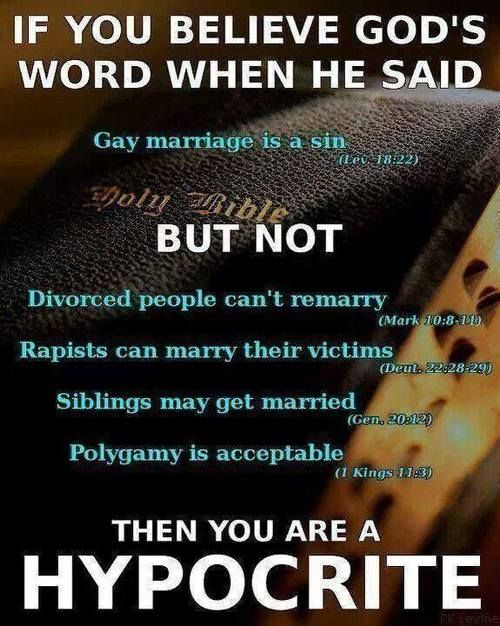
The amount of people who go to school to become ministers or Bible scholars and then turn their back on the faith is legion.  In fact, one of the atheist contentions is that the Bible itself is one of the best breeding grounds for atheism or at least non-belief in Christianity is probably true.  When you read the Bible objectively through the eyes of reason; you have to conclude ultimately it is a work of human beings and whether or not the divine has anything to do with its existence is pretty much a matter of opinion and blind faith.

See the source image

I am not an atheist, but I get the contention and it is valid.  In general, the Bible has some very basic problems that in my opinion point not to a divine authorship but a human one where human beings are giving their opinions about how god operates, giving an account where the author believes he (there are no female authors of the Bible) or someone else encountered God or wrote with the intention of ordering society using God as the authority to hush opposition to their plan. The nature of these problems are as follows:

  1. Contradictions – I spent the majority of my time as a Christian scholar and minister trying to explain contradictions in the Bible.  To be fair sometimes a contradiction is not always present where one is said to exist, but there were many that I simply had no answer for.  The bible does on occasion say two things about the same thing  and there is a direct contradiction. Many Christians point to the idea of people taking these things out of context, but I would say I have taken context into consideration several times and still find a contradiction.
  2. Confirmation Bias –  The Writers of Scripture want the God they are describing to exists.  They want to the resurrection to be true, etc. So they never really address questions that a skeptic would ask. Questions that would help their case if they answered them, but because they are not asked or answered, it just shows bias.
  3. Timeline issues – Like it or not some things don’t mess with each other from a timeline perspective. When I was teaching life of Christ, the one area that gave me the most timeline fits was the resurrection itself. The accounts of who and where Christ appears and in what order vary widely.
  4. Historical – despite my Bible college apologetics professor’s assertion that the Bible is grounded in history; much of that is either unproven or there is a historical record, archaeology, etc. that contradicts the Bible.
  5. The Bible doesn’t live up to its own standard of confirmation of fact – the ‘two or three witnesses’ standard does not always hold up with the Bible itself for establishing every fact. Most events in the Bible are stand alone with no other account of them existing in the Bible itself or in the world for that matter.
  6. God contradicts himself or it seems that God cold have done things in a far more simpler way – the moral questions of the Bible’s god are at times overwhelming. This includes everything from the treatment of women to God plain out not following his own standards for ethics and justice.

I could go on and on, but whenever you see and Odin’s Eye with the Subtitle – Bible Problems; know this is where I am going to take the Bible and be very critical of it.  I am not doing this to offend, but to point out how very questionable it is for the Bible to be a special revelation of God, but more a collection of men’s opinions and accounts of the almighty that should raise an eyebrow, not inspire devotion.

Faith:

People ask me then where my faith is when it comes to the Bible.  It’s not the Word of God to me. It might contain some observations that might help me understand the divine as a deist, but it certainly is no longer the divine special revelation I once thought it was. I think the notion of ‘special revelation’ is man-made so people can say something is of God when really it is just a man-made idea.

Religion:

If the bible is not special revelation, then the basis for most of the Abrahamic Religions is non-existent.  In these religions what we see most is them using ‘holy’ scripture to justify their existence and their use of force and religious ‘ethics’ to control the behavior of others.  Sorry there i\s a great deal of truth to the idea all religions are cults and engage in cultish behavior to control and just because it has it has a billion followers doesn’t make this less true.  Once you find yourself in the authoritative position to disperse the ‘proper’ interpretation of the bible, that gives you an incredible position of power over those who blindly believe. Religion thus cannot be trusted because it is very much about power and control most of the time.  It is why I have sworn them all off.

Theology:

Theologically speaking the so-called ‘special revelations’ might have some good theological observations at times, but I can get no confirmation as a deist that they are true and never will.  The real challenge to me in theology now is that I know I will die ignorant of the truth of the divine, but I am OK with that. Ignorance simply is, the question is what to do about it. Sometimes the thing to do; the only thing you can do based on the nature of the questions, is accept being ignorant.

Spirituality:

I would say over the years the Bible has been a tool of spiritual enlightenment.  But so have my weightlifting sessions, my hikes in the woods and my reading of other books.  I can’t say anymore that The Bible is my authority of faith and practice, nor would I say that I consider it a superior form of knowledge over all others.  It is one voice of many and sometimes I think what it says contains the truth and other times I think what it says is bullshit.  But that is true of pretty much everything I read so…

Conclusion:

My Bible; that I preached from not so long ago, sits on my shelf. I don’t think I have opened since that last Sunday.  It sits currently between The Armchair Economist and The Picture of Dorian Grey.  I suppose the irony of that, and the fact my last sermon was on adultery while I was engaged in an affair, will sit with me forever. I also have no intention of allowing it to be master over me anymore.  Where I walk, I take steps on my own and quite frankly I think my life is better for it. The Bible for me now is a collection of works that sometimes inspires wisdom and other times makes my eyebrow raise. But mostly it is just another book to me now as journey onward.

Continuing to Walk the Path,

The Rabyd Skald – Wandering Soul, Bard and Philosopher. The Grey Wayfarer.

Skaal!!!

Crossing Bifrost – The Norse World: Yggdrasil – The World Tree

Happy Saturn’s Day

Today I want to look at the universe from the perspective of Norse Mythology.  Basically, the Norse and Germanic people looked at the universe as one big tree.  I will get into the creation myths of the Norse people later.  Mostly this post is about the world as they understood it; basically, how they thought it was.

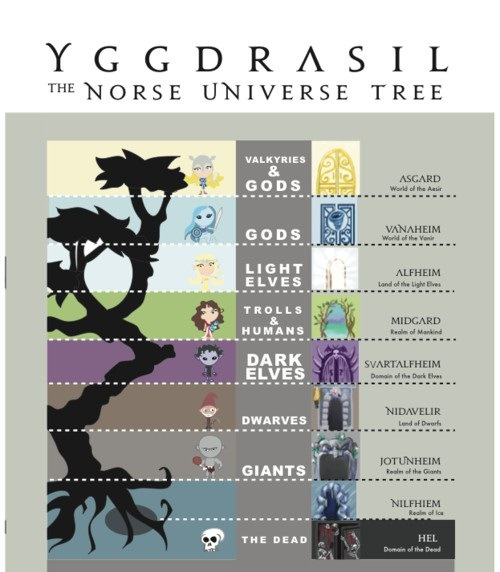
Yggdrasil is the central tree of the entire cosmos.  It is a living ash tree and considered as such to be very holy.  Ash being very sacred to pagans.  It is an immense tree that either connects the nine worlds or each part of the tree is the nine worlds depending on the viewpoint.  I can see the theological debates in the Norse people starting with this one.

The tree itself is where everything happens when it comes to the gods and their dealings with other immortals and mortals.   The tree is supported by three immense roots that are each connected and thus fed by three major springs.

The god Odin claims in the mythology to remember when the world tree was small and young. It is also the tree he hung from for nine days to gain knowledge of the runes to aid him in his fight during Ragnarök. Based on how it is described in the ancient sources I would say I would lean toward the idea the world tree connects the nine worlds and probably serves as their skeleton that holds them together. When you also consider that the Bifrost Bridge itself connects the tree to other worlds like Asgard you begin to see this notion as well.

The notion of sacred trees is very strong in a lot of mythology. The idea of a Tree of Life is pretty much central to the three Abrahamic Religions.  Trees that provide life figure prominently in many other mythologies from Ancient Middle Eastern religions to China to Hinduism. The idea of sacred trees is very universal. It is no surprise here to me that the Tree of Life is literally the tree of all life.

For my purposes at this point it is important to establish that the Norse people believed that by traveling the tree one could travel between the nine world.  You could also do this by traveling the Bifrost Bridge, but mostly you see gods and goddesses travel the branches and roots of the tree from one realm to another.  Each of these nine realms or worlds was home to different races and each had a different nature.  as we further look at the Norse World we will look at each of these in detail later.

From a literature perspective, this notion of a world tree still plays prominently. In fantasy, Tolkien’s elves live in such trees and his mythology starts with two trees. This idea of sacred trees is central many other stories. I have used it myself as part of a story involving a dryad, although you can no longer read it.  My point is that this notion of old, living trees being the source of life and central to humanities existence is very human.

I imagine the source of such mythology is when a child asks how long a certain large tree in their life has been there.  Grandmother looks at the child and tells them that she can’t remember a time it was never there. She then tells the story of how she asked the same question of her grandmother and got the same answer. It doesn’t take much to start to believe the tree has always been there and always will be.

In the end, it is said that Yggdrasil will hide the last two survivors of Ragnarök and it and those two survivors will be the seeds of a new world and a new time. The tree lives on no matter what the end of the world scenario plays out as being.

The Rabyd Skald – Wandering Soul, Bard and Philosopher. The Grey Wayfarer.

Skaal!!!

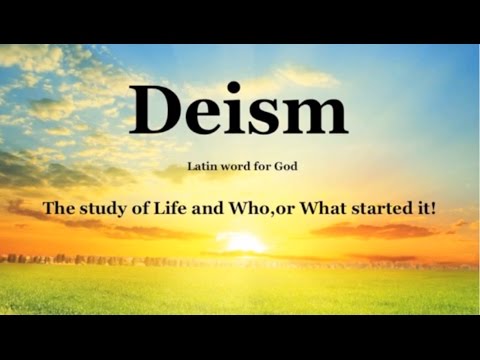
Odin’s Eye – My Deism


Happy Thor’s Day

I suppose my belief system is a little complicated. However, at its root or its central tenet is being a deist. However my deism, is not of the same flavor as most people would think of it; nor is it classical deism. Some of the things classical deism upholds, I have modified a little.

  1. Deism would maintain at single creator based on reason.  I would say based on reason, you can’t dismiss the idea of a group of powerful beings being the creators following a common plan or that the universe itself is the creator. I hold out a lot of possibilities here as far as what the guiding force behind our origin might be, if any.
  2. I do maintain with the deists that there is an order and complexity to the universe that imply a creator or creators of some kind.
  3. I agree that there is a limit to human knowledge and understanding that makes it hard; if not impossible, to understand the full nature of the divine.
  4. What ever divine power or powers exist have given man his faculties to both create and uphold his own ethical and moral principles.
  5. Human beings should indeed be free to find, know and worship these divine force or forces in their own way. All views of the divine are to be respected as long as they don’t violate the rights of others.
  6. All human beings are equal creations of this divine power. As such they are accorded rights based on that natural equality.  I do have some things I debate about rights at this point though. More on that at some other time.

Faith:

As far as faith in the divine goes, I have faith that something exists at the present.  I have an active faith in the existence of something divine. I must state for the record, that I can no longer dismiss the notion that the atheist might be right but at the same time I simply do not think humanity has achieved a level of knowledge that can say – “There is No God” with 100% confidence. I believe there is something out there that we cannot comprehend and that no religion can truly explain.

Religion:

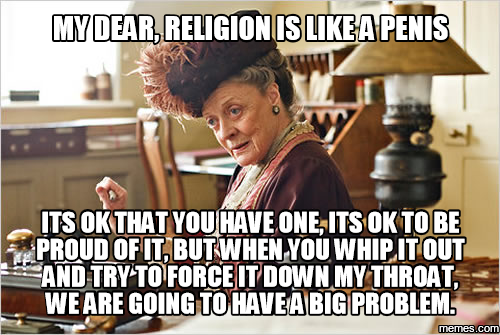
I maintain that people have their right to any religion they like including the right to not have one at all.  I draw the line however with any religion whose followers want to impose their views, ethics and moral code on others.   If you use your religion to justify harming others or force them to take certain actions because of it; I would say that is wrong as well. Religion is very much like a penis, as one actress in a movie remarked, and should have the same societal limitations.

See the source imageTheology:

As a long time theologian ( yes, I have degrees in Biblical Studies and Theology), I used to rely on special revelation; namely the Holy Bible of Protestant Christianity, for my foundation for my work in theology.  Having come to recognize fully that the Bible is a fully human book and that the divine has little to do with, I have to look at how to understand the divine differently.

There is no such thing as special revelation in the sense any so-called holy book is a direct revelation of God. You might find the divine revealed in the human thoughts that are presented in such books; as the authors discuss and tell you what they think about the divine, but those thoughts are human not divine.  To do theology as a deist, I am left with my own reason as I observe the world around me.  I am left with my human facilities alone as I observe and think about the divine.  Part of that is perhaps looking at religions to find certain foundational beliefs common to all that can be helpful in this process, but no one stands the divine better than another.  They all may have some truth, but none of them have THE TRUTH.

Spirituality: 

Deism allows me to engage one other thing and that is to explore the possibility that there is more to humanity than the biochemistry we are left with, if we remove the divine from the equation.   That there is a possibility that man is more than body, mind and emotions but has a spiritual side and an immortal soul. I probably engage this with my more pagan side of my belief system, but it is deism that opens the door to it.

Conclusion: 

I have fully embraced the notion of pursuing the real divine that actually exists without special revelation.  Natural revelation makes things far more interesting and to be honest, more difficult.  But there is a greater honesty to deism as compared to religious pursuits of the divine that I used to embrace.  Only time will tell where this will lead me.

I remain,

The Rabyd Skald – Wandering Soul, Bard and Philosopher. The Grey Wayfarer.

Skaal!!!

The Pagan Pulpit – Freedom and Moral Responsibility

Happy Sun’s Day.  Back to the Pagan Pulpit as normal. 

Announcements:

We don’t pray here – we figure God, the gods and goddesses, or whatever powers that be either know already, don’t give a fuck, or are busy with more important matters than our petty stuff. We also kind of assume that they expect us to do stuff that we can do for ourselves, and that we will do them ourselves and not be lazy. We also believe in being good friends, so we don’t presume on our friendship with the powers that be by asking them all the time for stuff while giving them nothing in return.

We also don’t take an offering here.  We figure the powers that be probably don’t need it.  Let’s be honest, offerings are not giving to the divine powers, they are given to an organization to support it.  Just being honest. God, the gods or whatever never see a dime, farthing or peso of that money; it all goes to the church, mosque or shrine.

Opening Song: Freedom – Alice Cooper:

I suppose it was only a matter of time before Alice Cooper made his way to my  pagan pulpit songs.  I love this video more than the song as it was the spectacle that was a show by Alice. His musicians were buff too.    Mostly its the line – free to rock and free to talk.

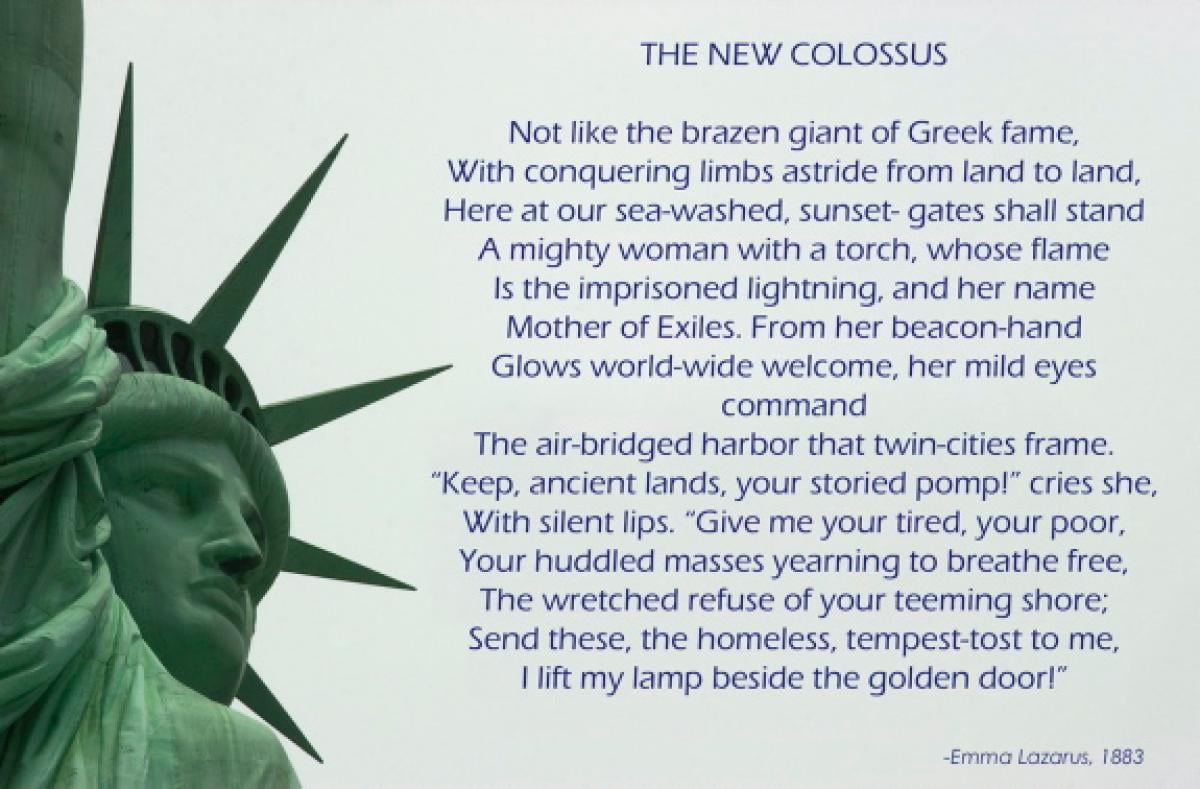
Poem: “The New Colossus” – Emma Lazarus

Image result for the new colossus

I have always loved this poem.  It seems these days to many Americans forget that most of us started as refuges and refuge from other lands. Liberty is why people came here and it should still be true that all who seek liberty should be granted it.

Meditation:

Image may contain: one or more people, meme and text

Song of Preparation: Free Fallin’ – Tom Petty:

Miss Tom Petty but his song live on and this one has been a favorite of my when I am free-falling in my thoughts.

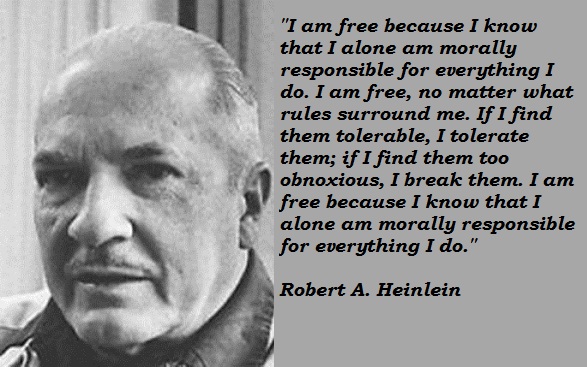
Text: I am Free – Robert A. Heinlein

“I am free, no matter what rules surround me. If I find them tolerable, I tolerate them; if I find them too obnoxious, I break them. I am free because I know that I alone am morally responsible for everything I do.” – Robert A. Heinlein

Sermon:

It was only a mater of time before I got to a quote from Robert Heinlein.  The science fiction writer from the Golden Age of Science fiction was also a libertarian, nudist and political philosopher but he is most known for his science fiction which did have a profound impact on society particularly A Stranger in a Strange Land which influenced 1960s thinking and The Moon is a Harsh Mistress which cannot be underestimated in its influence on  the United States landing on the moon in 1969.

Mostly as I read him, I find an unshakable understanding of the value of human freedom and liberty. Part of this is his rugged belief in the individual needing to be self-sufficient and in that I am completely in agreement with him.  I have been a kindred soul of Mr. Heinlein since I first discovered him back in Bible College.

I meditate on this quote often.  When I was Christian I used to have the belief that people either did what it right out of love for someone else or out of fear of punishment.  For most people I think this is still true, but I think the real problem with both of these is that they are lower forms of moral motivation.  Both of them lack an understanding of freedom and liberty as a motivating factor.  Love of freedom is a higher motivator I think and causes one to be moral even when no one is watching.  Or even when everyone is watching.  Love for others implies I only act morally when I perceive others might be affected negatively.  Fear implies that I only act morally because I want to avoid punishment. Both are outside forces making me be moral; they are not me acting on my own internal morality or taking responsibility for myself in my decisions.

There is a great deal of difference when someone act morally regardless of consequence.  The essence of Heinlein’s quote is that the rules don’t matter.  Love or Fear doesn’t matter.  What matters is regardless I am free to act and in the end it is not love or fear that makes my actions moral but that I choose in freedom what to do. The moral responsibility is mine, regardless of love or fears I might have.

I take responsibility for my actions because they are mine and no one else’s. By the same principle, I don’t take moral responsibility for the choices another makes.  Those choices belong to them; not me.  It is why in relationships, the moral choice question disappears when people are coerced or forced to do something through law or fear. If they are manipulated to a choice, then that is also not a choice in freedom.  It’s why as Libertarian I feel the real immoral forces of this world are the misuse force, threat of force and fraud.  Nothing can be moral when it is influenced by these actions.

If it requires fear or love to be moral, then I am basically saying I have no internal morality.  But once I understand the line: “I am free because I know that I alone am morally responsible for everything I do.”  Then I know I am acting freely moral because I have chosen it; not because I was forced or manipulated to it.

I dwell on this quote a lot, mostly because I have been accused of manipulation.  I don’t think people know how repugnant that idea is to me. Too many people live in the love and fear dynamic, and  so they assume I do as well.  I don’t.  I take responsibility for my part in things; but if there is another person involved, they are responsible in equal measure to me.  That’s why my marriage being rocky in the past was both of us.  My affair this summer was both of us. I gladly take my responsibility for my part in both of those things as that is the morally right thing to do, but I hold the other side of both of those relationships responsible for their part in it as well. I don’t let them off the hook for what they did. Some people don’t like that.  Tough rocks.

As I move forward, I want this understanding to guide my decisions.  It lines very much with my concept of honor.  It is not fear of law or god that motivates me.  It is not love for others that motivates me.  It is my own sense of personal honor that I alone am morally responsible for my actions that matters.  Nothing more; Nothing less.

Closing Song: Let it Be – The Beatles:

The Beatles sooner or later would have made the Pulpit, but this week this song seems appropriate to me.  Let it be.

Parting Thought:

Image may contain: one or more people and text

Yes, it is.  Something I am trying to come to grips with lately.

I remain,

The Rabyd Skald – Wandering Soul, Bard and Philosopher. The Grey Wayfarer.

Skaal!!!
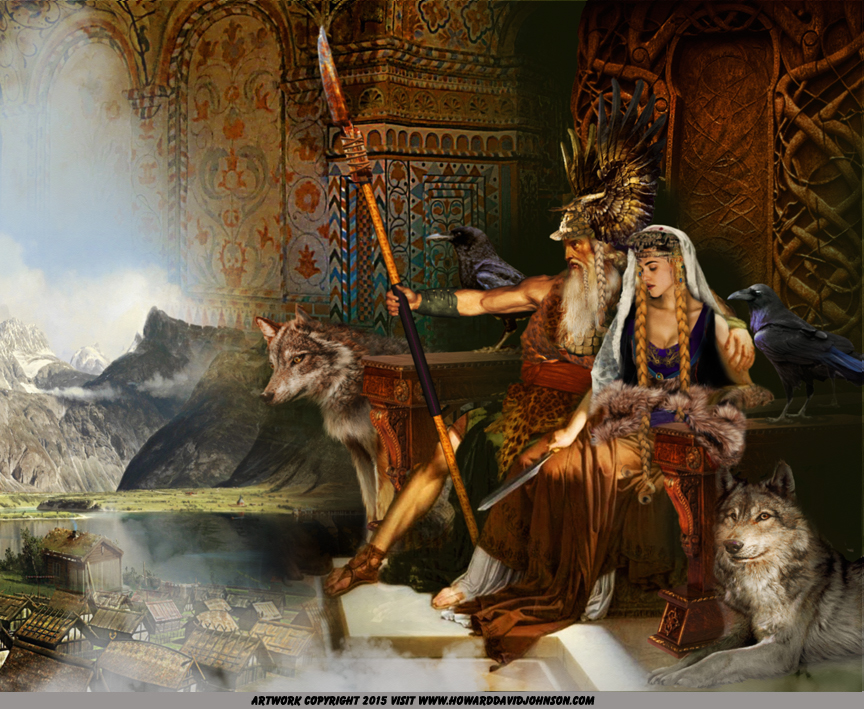
Crossing Bifrost – Why Norse Mythology?

Happy Saturn’s Day

I became interested in Norse mythology as a teenager.  It was a combination of two factors.

Firstly, I played Dungeon’s and Dragons – 2nd edition.  One of the realms I created as a Dungeon Master at the time was a Norse like realm with the Norse Pantheon in full power.   My character from that realm was what would now be considered a Tempest Priest of Thor named Thane True-Blade.  He had a brother Karic True-Blade who was a devoted follower of Tyr and a fighter.  There was a female thief named Sylvia who was more or less devoted to Loki. You get the idea.

Secondly, there was the Marvel Comic world with Thor the comic book.  No, I haven’t seen the movies.  Reason? Because while the comics and D&D were instrumental in getting me involved in Norse mythology, I soon fell in far greater love with the actual mythology, than how it has been used or inspired other things.

I start each post on The Grey Wayfarer with “Happy Thor’s Day” or “Happy Frigg and Freya’s Day”  This is an example of one of those inspirations.  Our days of the week have four of them that are direct references to Norse gods and goddesses.  It could be argued that Sunday and Monday are as well, but they are also generic references to the Sun and Moon. So we could be dealing with Apollo as much as Sunna/Sol and Luna as much as Mani, depending on which mythology you want to credit. But Tuesday, Wednesday, Thursday and Friday all have direct reference to Norse mythology.

It is these references along with many others in the western world that draw me to Norse Mythology,  Christianity didn’t erase them all and in fact sometimes embraced them and made them their own.  Our recent celebration to Christmas; for instance, is full of things that are borrowed and plan out stolen from Norse Yuletide.  Those symbols had other meanings but Christianity has taken them and repackaged them for their own use.  I find it however interesting what has survived and why.

Much of western culture and heritage is Norse and no, I don’t find that anything to be ashamed of. In fact, there is a lot to be said for the lessons that Norse Mythology were teaching to its people. Religion shows what cultures value and try to pass on and so studying Norse mythology can help us see what those values were and how they were taught generation after generation.

Unlike the atheist who does not see any value to religion, I don’t take that course.  Religions develop for reasons and not all of them are about manipulation or control.  Part of paganism for me is that there are ‘universal’ truths and principles that religion guards and promotes which benefit society and often at some point they are turned into religion or become part of a religion mostly in an effort to preserve them. Religion for years was also the place where science at a low-level and philosophy was created and preserved and part of that is mythology.  Stories that illustrate those principles and truths. Stories that teach are the stock in trade of mythology and that is not always a bad thing.

There is also the simple fact the Norse Mythology has had tremendous impact on modern culture particularly pop culture involving fantasy writing and movies.  Elves, dwarves, giants, etc. all owe their inspiration to Norse mythology. Comics, movies, art and many other things draw on Norse Mythology.  My writing is definitely influenced by it and has for a long time.  But I am not alone there – Tolkien, CS Lewis, Robert Jordan, and many others join me in that regard.

There is also the fact that  I simply find the Vikings bad ass warriors and a lot of why they did what they did was their mythology.  It is a mythology formed in the harsh realities of the ice, snow and cold of the North.  I understand how these relate all to well having lived in the North of North America all my life.  So I suppose there is a natural resonance with such mythology for me as that mythology of the Norseman provides a common ground. A spiritual connection based on a commonly understood environment, if you will.

My methods of approaching this are much less systematic as those of say Odin’s Eye or Of Wolves and Ravens.  What I think I will find more beneficial is a topical rather than chronological methodology in Crossing Bifrost.  Topic Headings will include, but are not limited to, the following.

The Norse World – Yggdrasil (The World Tree) and Its Realms – Asgard, Midgard, Hel, etc.

Norse Races and Creatures – Elves, Dwarves, Giants, etc.

Norse Gods and Goddesses – Odin, Freya, Thor, Frigg, Loki, etc. This would also include god monsters like Fenrir the Great Wolf and the World Serpent Jörmungandr.

Norse Symbols and Objects – Thor’s Hammer Mjolnir, The Valknut Symbol ,etc.

Norse Culture and History – Probably a little more difficult to define  but topics here might involve how the Norse Mythology influence Viking Culture and History.

Basically I will probably have a sub page under Crossing Bifrost for each of these where appropriate and them probably follow an alphabetical listing on each sub page itself.   The one requirement basically is that it has to relate in some way to Norse Mythology to be posted here.

Hope you enjoy my journey of discover on this subject. If you learn something along the way – well that is good too.

I remain,

The Rabyd Skald – Wandering Soul, Bard and Philosopher. The Grey Wayfarer.

Skaal!!!