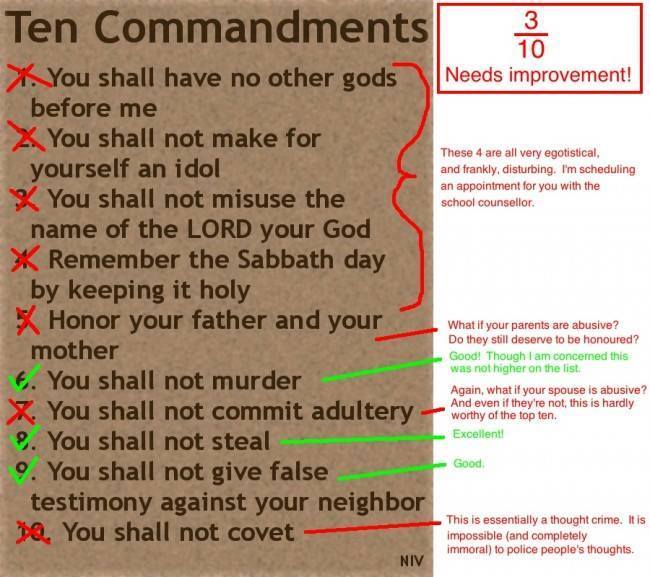
“Revising the Ten Commandments – Part 1 – What Needs to Go” – The Rabyd Skald

Happy Sif’s Day

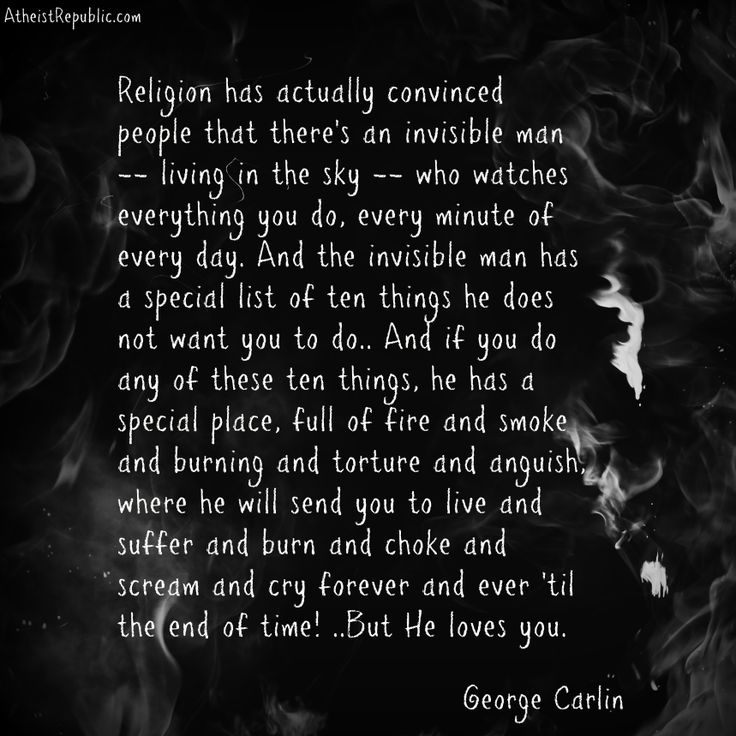
Well, we are coming to the end of the first year of The Grey Wayfarer and I thought I would do some things that are special for the final few days.  One thing I have been doing in my spare time is looking at videos of people revising the ten commandments from George Carlin to Atheists like Christopher Hitchens.  I have been thinking as my last public hurrah with being critical of Christianity (I am writing a book for publication on this, so from now on when I am a critic of my former faith, I expect to get paid for it), I should do the same. This will be in three parts:

Part 1 – What Needs to Go

Part 2 –  Positive Replacements

Part 3 –  Further Additions and Final Copy

The Ten Commandments are found in several places.  But I like Deuteronomy 5 the best:

# 1 – ‘I am the Lord your God who brought you out of the land of Egypt, out of the house of slavery. ‘You shall have no other gods before Me.

Well except this would have been a perfect time to abolish slavery in the whole of Israel as a testimony to its evil. It would have been symbolic of deliverance for the whole nation to be entirely free with no slavery at all. That does not happen as later commandments basically reaffirm slavery as legit and God’s people over and over to be slaves and bondslaves.  Bondslavery being condoned as a form of slavery where a person has Stockholm Syndrome so bad they wilfully become a lifelong slave.

In addition, this seems to be god trying to make people worship him instead of showing he is the only god and worthy of respect. It seems egotistical on god’s part and it is. More likely was written by a man who wanted his reign not to be questioned so he basically creates a God that is unassailable then says his reign it divinely appointed.  Yeah. goodbye.

#2 – You shall not make for yourself an idol or any likeness of what is in heaven above or on the earth beneath or in the water under the earth. You shall not worship them or serve them; for I, the Lord your God, am a jealous God, visiting the iniquity of the fathers on the children, and on the third and the fourth generations of those who hate Me, but showing lovingkindness to thousands, to those who love Me and keep My commandments.

  1. This pretty much the most ignored command in all of the ten.  I mean go to any Catholic church.  But it goes much further than that – no creativity is allowed here which pretty much gets rid of creative thinkers.  Great way to keep people dumb and compliant.
  2. God is jealous but later calls jealousy a sin. No contradiction there.  Yeah, right.
  3. How is it just to punish children and grandchildren and great-grandchildren for crimes their parents committed. Talk about being a bully.  No standard of justice that is just would do this.  There is also no reverse promise that if one generation is faithful, then the children, grandchildren, and great-grandchildren would be blessed.

Goodbye.

#3 – ‘You shall not take the name of the Lord your God in vain, for the Lord will not [j]leave him unpunished who takes His name in vain.

I have literally heard hundreds of interpretations of what this means. and none of them makes sense.  Of the commandments, it is the most nonsensical and controversial as far as meaning. Goodbye.

#4 – ‘Observe the sabbath day to keep it holy, as the Lord your God commanded you. Six days you shall labor and do all your work, but the seventh day is a sabbath of the Lord your God; in it you shall not do any work, you or your son or your daughter or your male servant or your female servant or your ox or your donkey or any of your cattle or your sojourner who stays with you, so that your male servant and your female servant may rest as well as you. You shall remember that you were a slave in the land of Egypt, and the Lord your God brought you out of there by a mighty hand and by an outstretched arm; therefore the Lord your God commanded you to observe the sabbath day.

Sounds good on the surface until you read the whole of all the sabbath laws and realize this is more about draconian totalitarian control than rest. One guy is literally killed for gathering sticks on the Sabbath. How is that eye for an eye? More like a scratch being punished by a stick to the eye. Interestingly enough Jesus does contradict this command and it is the only one the disciples and Jesus break even though he tells everyone that not one jot or tittle will pass from the law. Due to conflicting observation and overkill in punishment – Goodbye

#5 – ‘Honor your father and your mother, as the Lord your God has commanded you, that your days may be prolonged and that it may go well with you on the land which the Lord your God gives you.

You have to ask yourself if the man who wrote this had an ironic tone as the punishment, for being a rebellious kid, was death, and it would be your parents that killed you  ‘Days might be prolonged’ indeed. Talk about training for someone to be an abject slave to their rulers, you don’t get better than this.  The potential for abuse is strong in this one as I have seen it firsthand.

If a parent wants honor they should earn it by being a good parent and quite frankly not demand it because of position but earn it by their character. You chose to have children so you are responsible for them.  You shouldn’t have them simply to have servants.  Goodbye.

#6 – ‘You shall not murder. 

Finally, one we can keep. But every law code has this idea and quite frankly it seems to be what we would call – ‘Duh’. I am glad it doesn’t stop all killing as perhaps someday a just war will be fought and self-defense should have killing allowed.

#7 – ‘You shall not commit adultery.

I am going to say what a lot of other commentators say on this one.  There wasn’t something you could have put here that was a more significant issue?  Like, say you should not have a slave or another bigger issue.

The punishment is pretty severe here too – death.  From painful experience, I can say adultery has its own consequences that are quite sufficient. Another case of “How is this eye for an eye?”  Goodbye.

# 8 – ‘You shall not steal.

Another one that is quite frankly – Duh and no real revelation. Law codes older than this one has this in it.  Plagiarism at its finest.

# 9 – You shall not bear false witness against your neighbor.

Somewhat ahead of its time but not completely as it seems we have another ‘duh’ command here.  Lying to get an innocent person in trouble seems to be self evidently wrong.  Funny how the three I have kept either don’t require a divine entity to tell you them because it is obvious they are good, or that they seem to be in other law codes before this one already.

#10 – ‘You shall not covet your neighbor’s wife, and you shall not desire your neighbor’s house, his field or his male servant or his female servant, his ox or his donkey or anything that belongs to your neighbor.’

What could be more Orwellian and totalitarian than thought crimes?  The second commandment makes you give up creative thought and this one makes you give up thoughts of any kind of desire.  Making you content with your lot in life even though it sucks.

It is also misogynist as fuck.  ‘Wives as possessions’ is so hot in the bible and the Law of Moses in particular. Property, not people – women equal to cattle is implied.  Goodbye.

We have THREE Survivors:

‘You shall not murder.

‘You shall not steal.

‘You shall not bear false witness against your neighbor.

So the ones with the moral equivalent of ” Duh, No Shit.” made it.

Hmm.  Need to replace seven of these bad boys. In Part Two we will do that.

I remain,

The Rabyd Skald – Wandering Soul, Bard, and Philosopher. The Grey Wayfarer.

Skaal!!!

“Heimdall – Guardian of Bifrost Bridge” (Asatru – Part 11) – The Pagan Pulpit

Happy Sol’s Day

Announcements:

We don’t pray here – we figure God, the gods, goddesses, or whatever powers that be either know already, don’t give a fuck, or are busy with more important matters than our petty stuff. We also kind of assume that they expect us to do stuff that we can do for ourselves and that we will do them ourselves and not be lazy. We also believe in being good friends, so we don’t presume on our friendship with the powers that be by asking them all the time for stuff while giving them nothing in return.

We also don’t take an offering here.  We figure the powers that be probably don’t need it.  Let’s be honest, offerings are not given to the divine powers, they are given to an organization to support it.  Just being honest. God, the gods or whatever never sees a dime, farthing or peso of that money; it all goes to the church, mosque or shrine.

Theme Song: ‘Heimdall” – Nordic Folk Music:

Meditation:

Image may contain: one or more people, people sitting and text

Never, ever stop learning.

Text:

See the source image

If you want more details about Asatru, I can’t recommend this book enough.

Sermon: 

I remember that my introduction to Norse mythology as a child actually started with Heimdall and actually the book above also when it starts looking at the Norse gods of Asatru also starts with Heimdall. Heimdall is the god that guards the way to Asgard – The Bifrost Bridge. The rainbow bridge that connects Asgard to Midgard.

Heimdall is the god of light, guardians, the coast as he is the product of Odin and the nine waves of the sea.  He lives in his fortress above the entrance to Asgard.  He has a sword and a horse.  Most notably he is the god which is considered the most benevolent to mankind as he is involved with them.

The image one might get of Heimdall is a man who sits and guards the bridge day after day but in fact, he seems to travel a bit and be very involved in mankind’s plights.  It is also believed by scholars that he was once more important that he seems to be today.  The Norse people held him in high regard as he was said to be the father of many human children so it was said he was an ancestor to many.  I remember when I watched Vikings the TV show it was this idea that was invoked when a man and woman were having a dispute about her child because it seemed the child was not the product of their marriage but the visist of a stranger. The ruling woman made the judgment the child was the child fo Heimdall and thus the family was blessed.

The followers of Asatru do have high regard for Heimdall despite the fact his role with the gods is slight.  Basically waiting to blow his horn to signal the attack of the giants during Ragnorak on Asgard and then to guard Bifrost with his life. This vigilance and connection with mankind in the rainbow, the coast and the ridges above the seas is however ever-present.  Something that is to be admired.

I am reminded that not all virtue is glamorous. There is nothing more boring and yet so necessary as guard duty.  Heimdall for his part takes on his task of guarding Asgard and the Bifrost bridge with a sense of fidelity and discipline that few can match. His story definitely also has the connection to humanity that is truly personal as he is the ancestor of many.  I find it interesting that the Norse people had no problem with the fact that he seems to have no wife yet fathers human children and they considered themselves blessed for it.  Despite what we do know there is still a lot of mystery to Heimdall which I find intriguing. Mostly his personality seems interesting but he so quiet he reveals little and his name’s meaning is unknown.  I connect with him however as his job as the guardian of Asgard connects to my first name Edward very well – ‘The guardian of prosperity’ seems to fit us both.

Parting Thought:

Image may contain: one or more people and text

I remain,

The Rabyd Skald – Wandering Soul, Bard, and Philosopher. The Grey Wayfarer.

Skaal!!!

“Thor: Thunder God” (Asatru – Part 9) – The Pagan Pulpit

Happy Sol’s Day

Announcements:

We don’t pray here – we figure God, the gods, goddesses, or whatever powers that be either know already, don’t give a fuck, or are busy with more important matters than our petty stuff. We also kind of assume that they expect us to do stuff that we can do for ourselves and that we will do them ourselves and not be lazy. We also believe in being good friends, so we don’t presume on our friendship with the powers that be by asking them all the time for stuff while giving them nothing in return.

We also don’t take an offering here.  We figure the powers that be probably don’t need it.  Let’s be honest, offerings are not given to the divine powers, they are given to an organization to support it.  Just being honest. God, the gods or whatever never sees a dime, farthing or peso of that money; it all goes to the church, mosque or shrine.

Theme Song: “Thor’s Thunder” – Nordic Style Folk Music

Meditation:

Image may contain: 1 person, beard, text and outdoor

If there is one change in my life that is true, respect is now earned. I don’t just give it to anyone and I don’t care if you are in authority or power, you have to earn it by your character, not because you demand it.

Text:

See the source image

If you want more details about Asatru, I can’t recommend this book enough.

Sermon: 

Odin might be king of the gods of Norse mythology, but Thor is definitely the favorite son of Asgard.  Odin was a favorite of rulers and sages, but Thor is the god of the common man and warrior.  He is the bringer of rain and his voice thunders like the thunder he controls.  There is probably no more famous weapon in Norse mythology than Mjolnir his hammer which is considered the most important weapon that will be used in the defense of Asgard.

In mythology, Thor is a red-bearded powerful man who can drink, fight and eat better than anyone.  He often travels with Loki and they have several adventures together.  His cart is pulled by two goats, which can be eaten each night and if all their bones recovered can be resurrected the next day.  He is today and back then the most popular of the Norse deities.

Heathens, followers of Asatru and many others can be seen wearing the hammer of Thor. This hammer to many represents the heathen faith. To the modern heathen, he represents strength, courage, and life as the giver of rain and healing.  He is often invoked in oaths because unlike Odin, only his enemies need to fear him.  Prayers to him are often for rain and strength.

For me, you will find me wearing one of my two thor’s hammers pendants on a chain around my neck every Thor’s Day as a gesture of respect to all heathens and pagans.  I like Thor and his stories are some of the most inspiring and entertaining. He interaciton with Loki very humorous at times.  For those looking for an example of courage in th face of tremendous challenges, look no further than Thor.

Parting Thought:

Image may contain: 1 person, beard, text and outdoor

Never give up.

I remain,

The Rabyd Skald – Wandering Soul, Bard, and Philosopher. The Grey Wayfarer.

Skaal!!!

“A New Pattern?” – Odin’s Eye

Happy Thor’s Day.    

Discussion:

When I started this blog, I intended Odin’s Eye to be about my spiritual journey.  Probably more about my change in spiritual viewpoint or vision.  The pattern I established was pretty straightforward at the time although I established it a month or two after I started:

Deism, Bible Problems, Humanism, Christianity Problems, Paganism, Religion Problems, The Wayfarer’s Spiritual Side, My Theological Objections to Christianity Revisited.

I also established that on every pagan holiday, I would stop and comment that week on it.  That has been a fun journey in and of itself.  But it is also about to come full circle with the closing of the first year of this blog on September 30th.  Fall begins on September 22 and the pagan holiday is Mabon or for Vikings – Haustblót.  After that, the cycle starts again on October 1st.  I intend to continue to talk about pagan holidays but I want to get as truly Viking as I can the second time around.

Outside this though, I have had a pretty good debate running with myself about changing the pattern of the posts for Odin’s Eye.  Most notably do I want to go through the whole Chrisitntity issues again?  I am thinking of saving all that for a book or two, so what really is the purpose of Odin’s Eye? Well, it is about spirituality and my spiritual journey. At the same time, it is a place to pose spiritual questions to myself and perhaps you the gentle reader.  I guess the main thing is to stop talking about the spiritual past and embrace the spiritual present and look to the spiritual future.

My first step in revising the pattern was to eliminate the negative in a lot of ways and also to get rid post types that go over old ground.   This leaves:

Deism, Humanism, Paganism, The Wayfarer’s Spiritual Side

The more I thought about it though, the whole deism and humanism questions are pretty settled for me and boil down to two fundamental truths. 1) I hold the possibility of divine power or powers, and 2) I believe that to solve human problems, humans are going to have to do it themselves.  The powers might help or might not, better to be self-reliant first.  I am not sure I really need to discuss these anymore with myself.  I side very much with enlightenment thinking for my rational and more practical side. But eliminating these two posts leaves me with only two:

Paganism, The Wayfarer’s Spiritual Side

I don’t think that is sufficient enough of a rotation to keep me off my soapboxes.

It is really the whole Asatru and Pagan side I struggle with more. Getting a grip on the wisdom and intuition side of things that involve is the struggle now.  It is the nature of this struggle I would rather talk about now.

If I go the spirituality and paganism route the list of topics changes dramatically and gets quite long actually.  The thing is that some of my other post types handle a lot of this but what lies outside on the fringe where Odin’s Eye can help me come to a better understanding of these issues. I began to realize after while this topic is so big, and for me largely unexplored, there is really no way to establish a pattern.

So I am going to do something uncharacteristic for me.  Be open each week to any topic with only the boundary of it has to be something spiritual that is not necessarily covered by other things I do on the blog. I short these topics are going to come more from my times of meditations than a rational pattern that I simply follow.  I am opening myself up once a week to letting the topic be spiritual in nature and not chosen so much as it becomes an interest through meditation.

I am going to remove one filter for the Eye and replace it with another. Religion needs to go as it is negative in a sense, filtering out the religious aspects of things was a part of looking through the eye.  I no longer seek to do that, but discover the fuller spiritual truth of something.  I am going to replace religion with meditation.

Time to Look Through the Eye:

“To see the truth, change one eye for another”

Faith:

When I put any subject through the filter of faith, what I am asking at that point is what I believe about that subject?  The introduction tells people what I know about a particular subject, but faith is an exploration of what I believe about it. The idea is to set up where I am, then the other three filters follow which will possibly change that belief.

Meditation:

Meditation is the first filter.  It is calming my mind and opening up to what the powers, universe, whatever might inspire me to think about that topic.  Words, questions, thoughts, etc. that come from my times of meditation on the subject.  Then asking how these affect my beliefs about it.  It going to require me to keep my paper journal handy during every meditation session, but I think it will be worth it.

Theology:

Once I get to this question it is more about how this topic influences my understanding of the divine. Simple but a necessary question for me as someone who still practices theology. For me, the delving into the spiritual side of things is motivated in part by theology and understanding the divine.

Spirituality:

This is putting everything in a context filter.  How is my overall understanding of spirituality affected by this now?  Have my beliefs about this subject changed due ot putting it through my spiritual filters? What is my overall spiritual viewpoint now?  It is the bringing it altogether filter.

Conclusion:

I, of course, will have some concluding remarks about each subject and I might pose a few questions for you the gentle readers that might have a greater understanding of certain subjects I am struggling with. A good post wrapup will be what I am looking for here.

I am hoping these changes will be effective in helping all of us understand the spiritual side of life better.  Of Wolves and Ravens is about philosophy, but Odin’s Eye is about Spirituality and as such needs to have more spiritual methods of finding what to talk about.

I remain,

The Rabyd Skald – Wandering Soul, Bard, and Philosopher. The Grey Wayfarer.

Skaal!!!

“Idunn – The Renewer” (Asatru – Part 8) – The Pagan Pulpit

Happy Sol’s Day

Announcements:

We don’t pray here – we figure God, the gods, goddesses, or whatever powers that be either know already, don’t give a fuck, or are busy with more important matters than our petty stuff. We also kind of assume that they expect us to do stuff that we can do for ourselves and that we will do them ourselves and not be lazy. We also believe in being good friends, so we don’t presume on our friendship with the powers that be by asking them all the time for stuff while giving them nothing in return.

We also don’t take an offering here.  We figure the powers that be probably don’t need it.  Let’s be honest, offerings are not given to the divine powers, they are given to an organization to support it.  Just being honest. God, the gods or whatever never sees a dime, farthing or peso of that money; it all goes to the church, mosque or shrine.

Theme Song: “Idunn” – Trobar de Morte

Meditation:

Image may contain: text

You either understand or you don’t.

Text:

See the source image

If you want more details about Asatru, I can’t recommend this book enough.

Sermon: “Idunn – The Renewer”

I know people might have been expecting Frigg, but  Idunn is the goddess of spring, renewal, and youth. She is the wife of Bragi – the poet of the gods. I place her prominently because, to the followers of Asatru, she has become the patron goddess in many ways of the renewal aspects of Asatru. She is the one who is the most instrumental in the rediscovery and renewal of the old ways and making them new again.

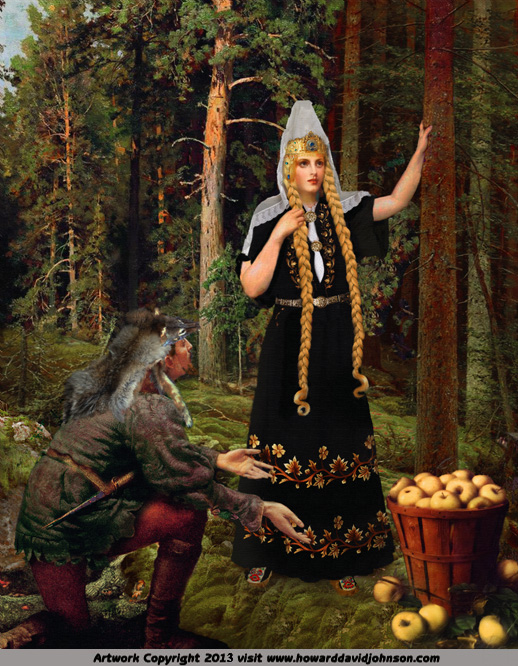
In mythology, she figures prominently as the keeper of the golden apples of youth.  When a god or goddess began to fade and begin to look old, they would come to her and take an apple and eat it.  Their youth would then be restored.  In the one-story where she figures prominently, she is the object of the giant’s desire, and she is captured by them thanks to Loki.  Loki then is charged with rescuing her and he does.  She is the wife of Bragi – the poet of the gods.

I like this version of not only renewal but the view of the gods.  Even their immortality has a requirement from the universe for it to exist. It is not simply just there but requires renewal and that is the job of Idunn to grow the apples of youth and provide them when needed.

Rebirth and renewal and pretty universal pagan concepts.  They appear in almost every mythology and are always considered in some ways vulnerable. That said, they are vulnerable not because they can be destroyed, but because they have requirements or locations which can be controlled by multiple people or things.

As spiritual concepts, renewal and rebirth are good ones. I know of no practitioner of paganism that at one point or another didn’t realize their need for a renewal of spirit or a rebirth moment from time to time. Stagnation and death are forces in this world and to avoid them requires renewal and rebirth.

To the Asatru movement, Idunn is a patron goddess who is thanked for her efforts in helping the Asatru being reborn and being given new life.  To many, she symbolizes the rebirth of Neo-Paganism.  In a sense, Asatru has been allowed to take a bite of the golden apples and be renewed after a long absence.

For me personally, the image and story remind me of several lessons:

1) I am engaged in a bit of a rebirth process for myself right now and as a 50-year-old man, it is a hard process.  But rebirth and renewal are absolutely necessary if life is to continue.  Change is a necessary part of life.

2) That what is precious should not only be honored but guarded.  I look at the Asatru Movement and think also that while renewing and growing, it needs some sort of way to preserve it.  The old ways were lost once before and perhaps finding a way to preserve this way of life against that possibility again is a good idea.

3) It also has to be concluded that in renewal, new things will be needed.  There is simply too much lost, so the gaps will have to be filled with new ideas and concepts. New ways of doing things coupled with what we know of the old. Rebirth and renewal have that aspect as well.

Hail Idunn!!!

Parting Thought:

Image may contain: one or more people, beard, text and closeup

I remain,

The Rabyd Skald – Wandering Soul, Bard, and Philosopher. The Grey Wayfarer.

Skaal!!!

“Objections to Christianity – The Justice of the Biblical God – An Unbalanced Scale” – Part 4 – (Revised August 2019) – Odin’s Eye – Theological Objections to Christianity

Happy Thor’s Day.  

August 2019 Revision Notes:

It has been almost a year since I wrote these originally starting in November of 2018.  When I got to the rotation in Odin’s Eye the last time where I was going to deal with these objections again, I saw no need for revision but rather simply laid it out there that no one had responded to them to that date and moved on into the rest of the Rotation for Odin’s Eye. 

This time though I feel that I need to spend four weeks of Odin’s Eye doing some revisions that will either clarify my position, add some other thoughts or edit for other issues.  Such edits will be marked by italics.  When archived, they will appear under the original post on this Page: My Four Theological Objections to Christianity

 Mostly though this is a cut and paste with some revisions. As the series goes on there will be more revisions as I can see the need for things to change a bit in the other three objections.

In part four, I felt the need to add a few paragraphs for hopefully a clearer explanation. But also there are some additional arguments that trouble me about the whole afterlife thing with Christianity. I also completely rewrote my conclusions. 

Introduction:

I am wrapping up my four main theological objections to Christianity with the simple but profound fact that the god of the Bible is very suspect in as far as whether or not he is just and acts with justice. I would go so far to say that the god of the Bible does not follow his own clearly stated guidelines for justice – 1) “Eye for eye, tooth for a tooth” and 2) Restitution Included. Namely that the punishment should fit the crime and that restitution when merited should be offered.  This is the standard of justice found in the Torah or Law of Moses. Jesus of Nazareth takes this on in the Sermon on the Mount in Matthew 5-7 pointing out that the principles of justice were still valid and in fact because things should be done for the love of God, they were even more challenging.  God expects Christians to still be just and follow his principles of justice. The issue is: does the god of the Bible follow his own rules.  I would say not.

Faith:

From a standpoint of my own faith, the biblical god’s justice, and in particular the doctrine of Hell, has always been a problem.  My standard answer throughout my days as a pastor to others that asked was that the justice of God was a mystery.  That someday, we would know it all and see that this god was just to send people to hell.  Even if they were people who we loved and who this god claimed to love. But it was more than that as some of the stories of god executing justice were a little lacking justice themselves.

Job’s trial is a good example where God allows the Devil to kill all of Job’s children and servants save a few and does it simply to test Job to see if he will remain faithful.  The Biblical god’s answer of – “I am god, that’s why.” is a little lacking in reasoning for a supreme being for one and the whole situation is lacking in compassion not just for Job but for all the people slain for another.  They all lived and died simply to satisfy a bet between the Devil and the almighty is a little much to reconcile with the idea of God is love.  Stuff like this definitely tests your faith and it should.

Religion:

The thing is most religious responses to the justice of God dilemma is either to cite ‘mystery’ (read – I don’t have a  reasonable answer, so I am going to punt) or our ignorance.  Simply put they both attempt to give a god a different standard of justice than we follow.  How convenient, but also telling that we cannot even use the standard of justice of ‘eye for an eye’ with the biblical god. The very standard that this god gives, he does not follow.

The fact that I used to come up with this double standard for god myself bothered me for years when I realized that is what I was doing.  A standard of justice is only viable if it is evenly applied to all.  It should be logical and consistent enough that it CAN be applied to all without exception. We have learned not to tolerate double standards between those that lead and those that follow, so why here?  Why does this god of the Bible get a free pass for being hypocritical?

Religion does its damnedest to keep us from seeing this, and it does it by trying to make God so high his different standard of justice is justified.  It sounds like a ruling religious class seeking to justify why they can impose rules on others that they don’t have to follow themselves.  After all, they are ‘men of God’ and so as Cardinal Richelieu points out in the Three Musketeers movie in 1993 – “The Cardinal is not subject to the laws of men”.  Easy to justify if you create a different standard of justice for your god and you then say you are subject to that standard, not the standard of men.

Theology:

But the Biblical God fails theologically and it comes out best in the doctrine of Hell and final judgment.  Everything we will do is in a short temporal time of existence but everything about the final judgment of the god of the Bible is eternal.  In short, this god is going to punish us in a way that is eternal and permanent for our behavior in temporal and non-permanent existence.  This includes annihilation and eternal punishment views.  The only thing that might save Christianity here as far as theology is actually the idea of purgatory where the punishment is redemptive and non-permanent.  But even here there is a postulate that punishment can last centuries compared to the shortness of life.

So being burned like the rich man is said to be burned is somehow eye for eye and tooth for a tooth?  In that story, the rich man is burned not because he defied god but because he had a good life and Lazarus was rewarded because he had suffered in life.  Go look at the story (Luke 16) yourself, this is the rationale that is given.  So because a guy had it good he is punished with burning fire?  How is this eye for an eye? Justice would have been to have the two trade places for a second life, not that he is burned for a long time.

There is little justice in this story, just a god who on the one hand in the Old Testament tells people who prosperity is a sign of God’s blessing and then turning around and saying though that if you do become prosperous, the biblical God is going to burn you as punishment for it.  In a full analysis of the biblical account not only are there many accounts where god’s justice is a little suspect but where he violates the very rules he sets forward because he gets jealous or angry. Like the other mythologies, the biblical god is very human and reflects probably more of the attitude of the author of that particular passage than the almighty that actually might exist.

More troubling to me recently in August of 2019 is the fact that no theology of damnation other than purgatory by the Catholics, and even then it only works for Catholics, allows people who gain heaven to appeal for those that they love in Hell for God to be merciful.  I have to ask what kind of compassion anyone has that would allow their loved one to burn for all eternity?  I mean if someone I love like my children or grandparents were in the eternal lake of fire and I knew this, I would have enough compassion on them to be in front of God every single moment of eternity begging for his mercy for them. How can you even say you have a compassionate heart if you believe that your fellow human beings are going to be burned forever and ‘that’s just the way it is.”

But that brings up a question of God’s mercy.  Could you burn one of your children, parents, friends, etc. with fire forever simply because they violated your rules or didn’t believe something you told them?  For me, that is definitely a ‘no’.  My love for them far exceeds my desire for them to be under my control and doing things as I wish or that they absolutely believe me.  If that is true for me, why is God then an unmerciful bastard about this? How is it that he the God that IS Love, has less compassion for some of his children than me? Perhaps because he is a concoction of men who were in power that desired to control through fear? Yeah, I would bet that is it. 

Spirituality:

See the source image

For me personally, I come back to the quote I have used before.  If the god or gods are just then they will judge us based on the virtues we lived by.  If they are not just, then they do not deserve to be served.  If there are no gods then, we should live in such a way as to be fondly remembered. I worry less about an afterlife; because regardless, it is this life I must live either way.  I choose to live based on virtue because, in the end, it is all I really have.  My own personal responsibility for the life I live is mine alone. Cue Robert Heinlein.

See the source image

Conclusion:

I will revisit these objections in the future with other thoughts.  For now, if anything, these objections have gotten stronger and more detailed and still form a bedrock of why I think not only is Christianity a bad Idea, but I am now convinced it is largely a fraud. I would also contend that it has been used, much like Islam and Judaism as well, to deceive, control and manipulate others. 

The most troubling thing to me is I know many Chrisitan friends and former friends have read these and you know what?  Crickets. Silence. My eternal fate is not so important that they would even try to answer.  Perhaps the real truth is that these objections have no answer and the basically constitute the god Yahweh to the rest of mythology and as another concoction of men and his flaws simply are a reflection of their thoughts about him being flawed. Because they had flawed standards of justice and ulterior motives, the God they created’s execution of justice reflects this. 

It also speaks to the real beliefs of Christians.  I know for a fact, that many do not actually believe. I was minister for 20 years and I lost track of the number of people in my churches who when questioned, basically had done one of the following: 1) They had picked and chosen what parts of Chrisitan doctrine or the Bible they liked and discarded the rest.  2) They didn’t really actually believe anything, they just went along with it for the community and to keep family happy. When questioned further, it all came back to one of what I call my four objections in some form as to why they didn’t believe or what they had chosen to discard.  It for all of them had basically become tradition, not real faith or spirituality. 

This to me now is the most damaging thing – why have spirituality in your life that is not genuine?  Why do you have a part of your life basically be a fraud? Would it not be better to be truly honest with yourself about where you are spiritually speaking?  It is my four objections that started me on the path to honest spiritual reflection and being truly who I am.  I am now better for it and a better person in many respects.  Mostly, I have stopped being a liar.  This is the first real step down the path to finding truth.

I remain,

The Rabyd Skald – Wandering Soul, Bard, and Philosopher. The Grey Wayfarer.

Skaal!!!

“Odin – The All-Father” (Asatru Part 7) – The Pagan Pulpit

Happy Sol’s Day

Announcements:

We don’t pray here – we figure God, the gods, goddesses, or whatever powers that be either know already, don’t give a fuck, or are busy with more important matters than our petty stuff. We also kind of assume that they expect us to do stuff that we can do for ourselves and that we will do them ourselves and not be lazy. We also believe in being good friends, so we don’t presume on our friendship with the powers that be by asking them all the time for stuff while giving them nothing in return.

We also don’t take an offering here.  We figure the powers that be probably don’t need it.  Let’s be honest, offerings are not given to the divine powers, they are given to an organization to support it.  Just being honest. God, the gods or whatever never sees a dime, farthing or peso of that money; it all goes to the church, mosque or shrine.

Theme Song: Old High German: Wotan chant

This is actually a chant that is found on a site that teaches people about the German language and the translation is in the description. Wotan is another name for Odin.

Meditation:


Image may contain: text

To be truly spiritual and even a genuine person in general, one needs to recognize that each person’s question of who they are and what they should be doing is individual. The question is different for all of us and the riddle of life is answering the one we actually have, not the one everyone says we should have.

Text:

See the source image

If you want more details about Asatru, I can’t recommend this book enough.

Sermon: “Odin – The All-Father”

Odin, Wotan, etc. He is known all across the Scandinavian and Germanic world by many names. A couple things are clear in all the stories and myths.  1) Odin is the chief deity and 2) He is very unlike the other supreme deities like Zeus and Jupiter in that he does not lord it over people or rule by decree.  Rather, he takes on the problems himself and does what he needs to do to overcome them.  He leads by example more than orders.

It is only natural that Asatru would embrace him.  From a spiritual standpoint, his essence is summed up very well in the title ‘All-Father.”  To the followers of Asatru, Odin is the speaker of the Havamál a collection of his wise sayings.  He is the god most associated with words and language so it is no surprise that he has many names.

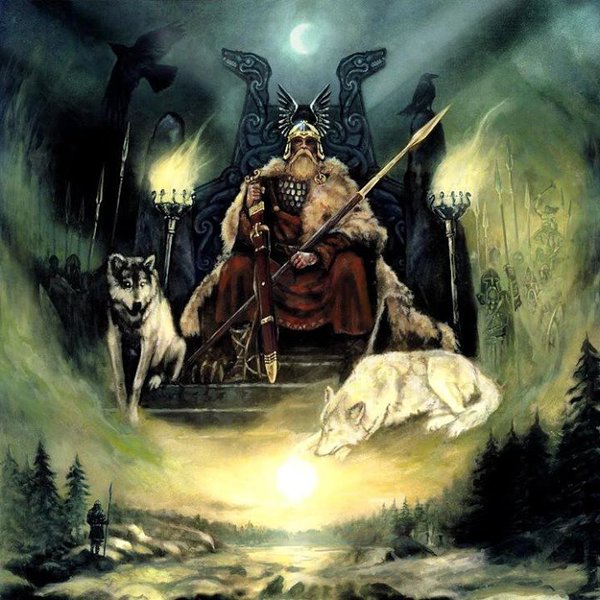
Paxton rightly points out there is a duality to Odin.  One the one hand there is power, anger, war, and aggression on the other side there the god of magic, wisdom and spiritual deepness.  On the one hand, you have the armored king on his throne with spear and crown.  On the other hand, he is also the grey cloaked, broad-brimmed hat-wearing wanderer.  There is an air of power and mystery to Odin as he is both warrior and mage.

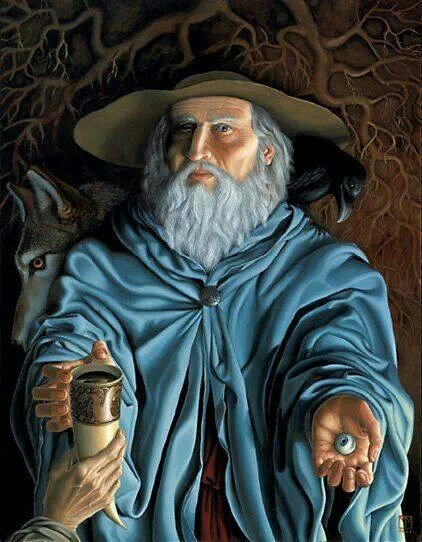
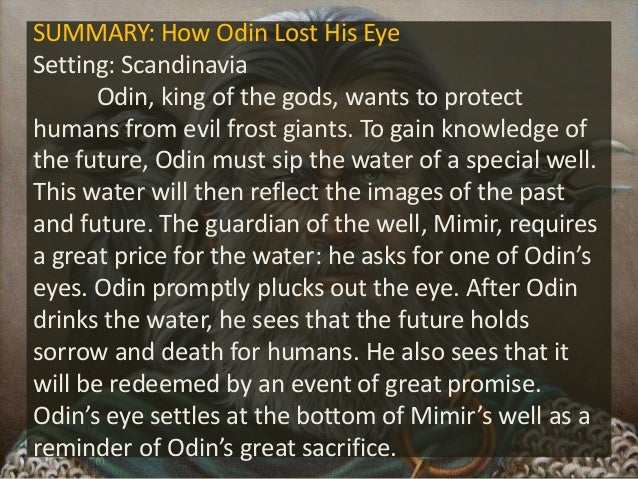
His accomplishments in the mythology are large.  1) All-Father – creator of mankind. 2) He is king of the gods, but in practice, he seems to be more of a chairman of the board of gods.  Each god or goddess being fiercely independent. 3) He trades his eye for wisdom and foresight. 4) He acquires the Mead of Poetry from giants. 5) He hangs from the world tree upside down for nine days to discover the knowledge of the runes. Odin, in short, has a bad-ass list of accomplishments in Norse Mythology. He is also the god who never turns his back on humanity or being a part of wandering among them.

These days, according to Paxton. heathens invoke prayers to Odin still, even if they serve other gods more fervently, they still pay respect to the All-Father.  Most Odinsmen and Odinswomen are people who work with words.  Paxton advises against, however, asking him for victory.  He is, after all, a god that is even willing to sacrifice himself for the greater good.  He expects the same from his followers and would have no problem leading one into defeat if it meant forstalling Ragnarok.  He is a strong and powerful figure and is treated with respect by the followers of Asatru.

As I mentioned before, I don’t think one needs to actually believe in the Norse Gods as real to be a follower of Asatru.  What you do have to respect is how their stories pull you back to your ancestors’ view of the world and what they valued. When it comes to the ideas they valued most in a leader, Odin is the perfect representation. He is strong, listens to the counsel of others, is willing to take the lead and sacrifice himself to get what he needs to be successful.  When a battle comes, he leads from the front. He speaks little but acts boldly whether those actions are out in the open or clandestine. He has the long term in mind. The greater vision if you will.

You don’t have to do much more than come to my blog and see the title and the imagery I use for it, to know I place great value on what Odin represents. I would say my image of myself as a man has strong parallels with Odin.  I work to be strong but also wise. I like to read and write mostly because it allows me to hear the counsel of others. If there is some greater good to be achieved, I will sacrifice myself, although I am trying to do that only when absolutely necessary. When battle comes I like to be out front not only leading but fighting along the sides of those I lead.  I never forget where I come from. I prefer to remain quiet and let my actions speak for me. I tend to see the bigger picture and act accordingly.  Odin is if anything a good example of leadership values and characteristics I try to emulate in my own life.

That of course and the image of the grey pilgrim who wanders but is not lost is the whole essence of the blog – The Grey Wayfarer.

Parting Thought:

Image may contain: 1 person, meme and text

I would say some stories I have seen are written in both. Sometimes blood is used as the ink too.

I remain,

The Rabyd Skald – Wandering Soul, Bard, and Philosopher. The Grey Wayfarer.

Skaal!!!
“Pagan Playlist #1” – The Skald’s Lyre

Happy Sif’s Day

Musical Journal:

Well, looking back the last time I wrote about music I was bemoaning a wedding that never took place and the music it might have contained. Since then there have been a couple weeks of other things besides MUsic to talk about so it is probably about time that I got back to it. Music, of course, has a tendency to reflect my feelings.  As I have said many times before if want to fill the gaps between my spoken and written words to know the real me, listen to the music I am listening to as it speaks the unspoken.

In my efforts to make the Pagan Pulpit which appears every Sol’s Day, I started adding a pagan song as the theme song and in the process have discovered a genre of music that I am coming to enjoy listening to from time to time.  There is something that reaches into my spirit and soul with this stuff and taps something long lost to me. Something buried and presumed dead, that this music is reviving inside me.

This music has a quality that is haunting with an air of sadness,  no matter how upbeat it might be.  There is a sadness of loss but at the same time a desire to return to the old ways. To return to the ways of our ancestors out of respect to them. I know I will probably do another playlist as I discover more groups.  For now, what follows is some of the ones I find myself listening to more often and a bonus track to illustrate a point.

Playlist: (with explanation) 

SKALD – Rún:

Basically when you look at the translation of the lyrics on it is about magic and practitioners thereof of old.  It is about awakening the magic that once was. I really like the way this is laid out and played by SKALD.  

English Translation: click here

Einar Selvik – Völuspá:

It is not often that the person who wrote the song and the music performs it and records it.  Better yet in the main video below, he explains it.  The guy has a good set of pipes and that sadness of death and renewal comes out of his voice.

Translation Video:

Live Performance:

Eivør Pálsdóttir: Tròdlabùndin (Trøllabundin):

I don’t care who you are if you don’t think this shows a talented female singer, you are out of your damn mind. The song is about being spellbound.

English Translation: click here

Alchemical Poetry – Song of Odin (A Cappella):

Love this one, talented guy.

Wardruna – Viking War Song – Fehu:

Powerful war song, but you can still hear that deep spiritual sadness.

Bonus Tracks:

Ly O Lay Ale Loya (Circle Dance) ~ Native Song

I include a Native American track for a lot of reasons, but mostly to ask the questions of why all pagan music these days has that element of sadness and haunting to it.  Perhaps it is because so many pagans have felt the sting of conquest.  Of people just trying to defend their spiritual way of life against the rising tide of religions who sought to ‘convert’ them and subjugate them.  That sadness can’t help but come out in their music.

FAUN – Walpurgisnacht

Just for fairness though, this is a pretty upbeat pagan song, but it focuses on a holiday – Beltaine to be exact. It’s hard to be down on a holiday that celebrates the return of spring and has lots of wild activities.

I remain,

The Rabyd Skald – Wandering Soul, Bard, and Philosopher. The Grey Wayfarer.

Skaal!!!

“Objections to Christianity – Part 3 – The Cross and Empty Tomb – An Imaginary Solution to an Imaginary Problem”(Revised August 2019) – Odin’s Eye


Happy Thor’s Day

August 2019 Revision Notes:

It has been almost a year since I wrote these originally starting in November of 2018.  When I got to the rotation in Odin’s Eye the last time where I was going to deal with these objections again, I saw no need for revision but rather simply laid it out there that no one had responded to them to that date and moved on into the rest of the Rotation for Odin’s Eye. 

This time though I feel that I need to spend four weeks of Odin’s Eye doing some revisions that will either clarify my position, add some other thoughts or edit for other issues.  Such edits will be marked by italics.  When archived, they will appear under the original post on this Page: My Four Theological Objections to Christianity

 Mostly though this is a cut and paste with some revisions. As the series goes on there will be more revisions as I can see the need for things to change a bit in the other three objections. In part three, I felt the need to add a few paragraphs for hopefully a clearer explanation. 

Introduction:

I know I will probably get a reaction out of this one and I am not trying to be provocative.  I am simply trying to get people to see the logical problems of Salvation through Christ.  Once you dismiss sin as a made-up concept, you could say that it is really unnecessary to go after ‘God’s’ solution to the problem, but the whole of Christianity revolves around Christ’s work on the cross and the resurrection to save people from sin and from eternal damnation. You might say it is the core doctrine no matter what flavor of Christianity you live by so it deserves some attention.

For the sake of argument, let’s concede sin is real. Then does the solution the Bible presents God has for it make any sense? 

Faith:

Of course, the first thing that can be said is each flavor of Christianity stakes out is how said salvation is achieved with Christ.  The faith versus works controversy starts right away in the first century. James and Paul go at it right in the Bible.  Now I heard multiple explanations from both Protestants and Catholics of why James and Paul are not arguing about the same thing really but they practically quote each other with only one variation.  One says salvation in Christ cannot be of works so no one can boast, and the other one says that without works it is impossible to show faith. No matter how you logically try to get them to be ‘defending the same salvation only from different directions”; it is contradictory.  One is saying that works have nothing to do with salvation, and the other is saying it does.

So what this really shows is that even in the Bible and among early Christians, they had disputes and disagreements about how this works and thus it points to the Bible not being inspired by God, so much as it records those early debates among the faithful about how salvation worked.  That makes the Bible very human and also not the Word of God because if God had actually wanted to tell us how this works; because it seems it would be the most important thing for us to know, he would have made it plain, straightforward and quite frankly non-contradictory.

Religion:

Of course, every flavor of Christianity goes even further with specifics and added on things to the doctrine of salvation in Christ.  The Catholic Church plain out tells you that you can only be saved from death through them and no one else.  Many Protestant denominations will tell you the same.  My former denomination would tell people that they had the whole gospel, not just part of it.  Salvation is complicated by religion because religion seeks to use these ideas to keep people grateful and faithful for telling those people their version of ‘the truth’.

In the end, I would say that each variation of salvation through Christ is presented in a way that helps the group presenting it.  It is done to layout their other doctrinal tenants so their way of thinking about God is central to it all, and thus gives a theological force to everything they believe. Of course, this gives religion the guilt and punishment/reward options it needs to manipulate people. 

Theology:

Religion aside though, my objections are theological – what kind of God do we have, who claims to be merciful and loving, but demands for his followers to be forgiving without condition, but doesn’t do so himself?  It also brings up the question of the ability to forgive in that we are expected to forgive each other without condition because we can, even as sinners. Yet, a holy God can’t simply forgive without sacrificing his only begotten son in one of the cruelest ways ever devised by man.  He must have this sacrifice or he cannot forgive at all, and I must have faith in it and the resurrection or he will not forgive me specifically.  Worse yet if I don’t forgive others as a Christian, he won’t forgive me. He can choose to not forgive others and still be a holy God, but if I don’t forgive, I cannot be saved?  So I, as a ‘sinner’, have not only a greater expectation than my creator; but also I am more capable because I can do this forgiveness without conditions, but he cannot?

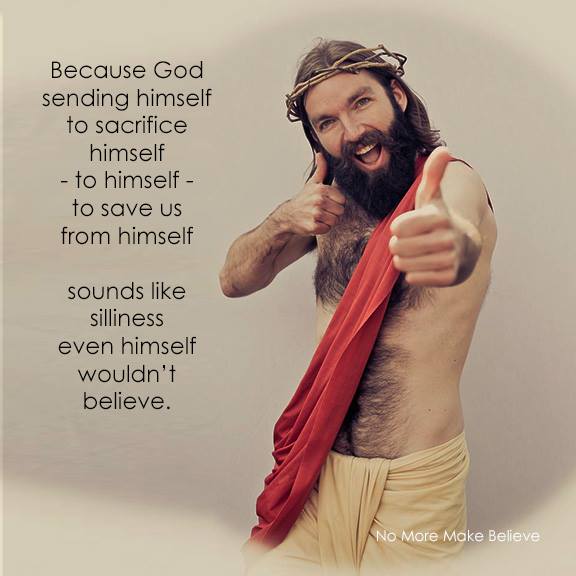
This bit of ‘logic’ pales in comparison to the fact that in order to forgive us he must sacrifice himself to himself, to appease himself to save us from himself. See the problem? Well Ed, what if then the whole doctrine of salvation as it currently stands is man-made and that isn’t the real doctrine of salvation God wanted? How then would we ever know the real one? It seems a little too confusing for something so important as eternal life.  My response that the current one is man-made? – exactly, and that is probably true from the start of Christianity to where it actually stands today.   It seems to me that this idea is just as man-made because a supreme being could have come up with the simple plan to just forgive people. As Jesus is praying in the garden “if it is possible, let this cup pass from me” we would see the opening up the heavens and God saying -“You know what, I have a better plan – let’s just forgive people like I expect them to forgive each other.” That would be just, logical and consistent.

There is also another theological side issue – How much of a sacrifice is it really for Jesus if he knows for certain (which he indicates three times in the gospels) that he will rise from the dead?  Honestly, if he knew that and most people who have faith believe he did and the text certainly seems to indicate he did, then it isn’t that big of a sacrifice? He knows he is not going to ultimately be dead in the end; so why not do it, as there is no ultimate risk to him?  In the end, Jesus is risking nothing himself as God, just going through the inconvenience of temporal suffering.  Why? To make a point? What point would that be, when there is nothing actually sacrificed in the end? He lives and knows he is going to live so why the anguish?

Spirituality:

I guess this leaves me with the question from a spiritual point of view as to what salvation is? Or does it?  I mean, if there is no such thing as sin, there is no need to be saved from it. Of course, then I could be left with the question of what the real divine reality might expect from me?  I guess the only thing then is to live a good life regardless of what that divine reality might be. Marcus Aurelius rightly observes, in my opinion, this in his famous quote on the good life.

See the source image

Of course, you are kind of left to things yourself as to define what virtues you will live by to attain that good life. In short, what is defined as a good life is left to you.

Conclusion:

The implications of losing the whole notion of sin and a need for salvation have been very liberating. There is no guilt or shame in my heart or mind at all these days.  I do try every day to be a better man than I was the day before. This, I have found is a far better way to live. 

Better yet, is discarding the notion of a loving God who also sends people he loves to hell.  Because the god of the Bible seems to have some major issues with justice, but that is the subject of the next post.  

I remain,

The Rabyd Skald – Wandering Soul, Bard, and Philosopher. The Grey Wayfarer.

Skaal!!!

“Belief in the Norse Gods (Asatru Part 6)” – The Pagan Pulpit

Happy Sol’s Day

Announcements:

We don’t pray here – we figure God, the gods, goddesses, or whatever powers that be either know already, don’t give a fuck, or are busy with more important matters than our petty stuff. We also kind of assume that they expect us to do stuff that we can do for ourselves and that we will do them ourselves and not be lazy. We also believe in being good friends, so we don’t presume on our friendship with the powers that be by asking them all the time for stuff while giving them nothing in return.

We also don’t take an offering here.  We figure the powers that be probably don’t need it.  Let’s be honest, offerings are not given to the divine powers, they are given to an organization to support it.  Just being honest. God, the gods or whatever never sees a dime, farthing or peso of that money; it all goes to the church, mosque or shrine.

Theme Song: “The Pagan Norse” – Burnt Page Films:

Meditation:

Image may contain: 1 person, text

Even death is just an epitaph to your story as your legacy and influence can have an effect long after you are gone. But while you are alive the story is still being written and you can have an effect on the end of the story and what that legacy will be.

Text:

See the source image

If you want more details about Asatru, I can’t recommend this book enough.

Sermon:

As we head into the second part fo our text, a sermon is in order about belief in the old gods, but first, a disclaimer from myself as this is the part of Asatru I have the ‘hardest’ time with.  I don’t have a problem with people believing in the Norse gods any more than I have a problem believing in Christ, but I find that the actual existence of such divine beings as Odin or Christ for me needs to be defined. For me, this would be a belief for me that is more about the personification of divine or spiritual forces, not a belief in an actual being known as Odin or Thor. It’s kind of like saying Spiderman exists.  Is there a real guy that is named Peter Parker with spider powers? No.  But there is a creation in the literature that is a beloved comic character that teaches life lessons and personifies certain very human ideas. That is very real.

I think the same is true for all the mythologies.  Certain cultures created stories that reflected their values and there was a perceived need to have these values preserved and restated through myth.  The Norse people were no different in this regard. Whether Odin and Thor actually exist is irrelevant to me as this part of Asatru, it is the values and virtues they portray in their stories that matter to me.  In that respect, the gods exist and the had an influence on my ancestor’s lives and that is enough for me.

For followers of Asatru, there is an identification with gods that is often individual and very personal.  Some followers of Asatru worship all the gods, but they’re always a favorite god for many which earn that follower a title – ‘Thorsman’ or ‘Freyawoman’ or some other title with the god’s name.  I don’t think you have to do much more than look at this blog to see what god would be in my title. I am an Odinsman.  Not the warrior Odin in his hall so much as the wanderer looking for knowledge and wisdom.   It is an image that inspires me and motivates me.

See the source image

Asatru is about the Norse gods in the end and their worship and veneration.  It is about honoring them and what they stood for. This is something one can accomplish without necessarily believing in a literal Thor, Freya or Odin. Religion is ultimately a personal construct that you can share as a community construct. Many followers of Asatru are also like myself in that we are returning to the faith of our ancestors.  A faith that was taken from us by the invasion of Christianity and now we have the freedom to once again embrace.

In the coming weeks, we will be looking at the spiritual significance of many of the gods to the followers of Asatru.  Essential Asatru does this by first covering the gods and then the goddesses, I will be going back and forth to maintain a little more male/female balance. In some cases, I will probably combine a few of the gods and goddess together.  This will be done when there is little known about them or that the combination has a significance in the mythology.

Parting Thought:

Quit explaining your life, live it.  Those that love you will give you the freedom to be what you want to be because they love you.  Haters?  Fuck ’em.  They get silence.

I remain,

The Rabyd Skald – Wandering Soul, Bard, and Philosopher. The Grey Wayfarer.

Skaal!!!