“Asatru and Fidelity” – Of Wolves and Ravens – Fidelity

Happy Tyr’s Day

Discussion:

“Fidelity is the will to be loyal to one’s Gods and Goddesses, to one’s Folk, to one’s self, and loyalty to one’s friends was as valued as highly as loyalty to one’s family.”

Principle: Be loyal to those who have been loyal to me.

Fidelity or Loyalty, also known is Asatru as Troth, is something in certain areas I have struggled with from time to time. That said, when I was first embracing the Nine Noble Virtues after my recent affair, I didn’t list it as number one or even two as the virtues I needed the most.  It actually finished in the middle much to some people’s surprise at the time.  I will get to why I assessed Fidelity at that level in a moment.  The real issue first is what is fidelity?

This is the only time I found the website Ravenbok a little disappointing because they focused on two issues marriage and loyalty to the gods. In marriage, the point out the obvious in the idea of sexual fidelity and loyalty to one’s vows to one’s spouse.   They do that being loyal to the deities of Asatru might be challenging.

My definition of Fidelity goes much further than that, and recent experience has allowed me to visualize and define it much more completely.  My definition includes the following loyalties to be aware of: The divine, family, self and friends. One principle comes from the definition that friends are treated like family in the case of loyalty.  The other principle is my stated principle which is to be loyal to those who have been loyal to me.

It is this reciprocal understanding of loyalty that is instinctual to me and it is a double-edged sword. First, it is inherent to my being.  My personality type (INFJ) is focused on this idea of standing for each other and reciprocal loyalty, to violate this would be a violation fo who I am in a lot of respects.  It is not impossible to do, but very difficult.  It means that usually, it will be the other person who breaks faith with me before I break faith with them. That I have only broken up with one girl in all my years of dating before I got married, the rest broke up with me. Universally ‘friends’ walk away from me before I have ever walked away from them.

The other edge to the sword is to understand my loyalties are interconnected but loyalty to self is essential to maintain balance. I often maintain loyalties to others at the expense of loyalty to myself and that usually ends in disaster. By making sure it is central and all other loyalties are related to it, I can overcome this, but it takes a lot of thinking to make sure I am being loyal to myself.  It is not as instinctual, so I have to work at it.

In the end, it is not if I will be loyal or show fidelity in a relationship, but why that matters and that is why I ask why I am in each relationship constantly now. It all centers on if that relationship also reflects loyalty to self now.  If it doesn’t then there is something wrong with it that can lead to problems. To fix it, I need to ask how I can change the relationship so the fidelity in it is reciprocal again.  If it can’t be changed, then it is time to acknowledge that it might be that the other person is disloyal and the relationship needs to be abandoned rather than me showing blind loyalty to it.  Time to walk away before I get hurt.

It is treating myself like a human being and being loyal to myself is a new learning process when it comes to loyalty.  In this case, thinking of loyalty in terms of the wolves and ravens helps a lot and gives me the visualization I need most of the time.

Website: Ravenbok – The particular page is: The Values of Asatru

To the Wolves and Ravens:

“Feed the Wolves, but Listen to the Ravens first.”

Needs (Geri):

I never made any progress in understanding fidelity until I learned that seriously considering what I need and want is important.  Learning to feed the wolves is important because if they don’t get fed they go rogue on me.  The morph into a monster that.  In order for my relationship and the fidelity that is in them to bring virtue and strength, what I need has to be equally considered with the other person.  If I don’t consider what I need in that relationship, it will fail in the end because the wolves will become famished and then lash out.

Wants (Freki):

This includes not just need but want.  If I find myself giving up my goals and desires more often than the other person this is going to be a problem in the same way as needs can become a problem.  I would say learning to feed the wolves is the best way to keep them from going wild, from becoming so hungry the consume me and those I love.  This forms the best way for me to understand loyalty to myself.  “Feed the wolves”

Reason (Huginn):

Yes, reason does say to be considerate of the needs and want of others in relationships and the nature of loyalty.  Fidelity, however, is a two-way street and my problem is not showing loyalty but in making sure I receive it in return. That by being loyal I am not losing myself.  Fidelity is about being true to all relationships and that includes the one you have with yourself.

Wisdom (Muninn):

Finding the wisest path that offers loyalty to self while maintaining loyalty that is reciprocal is the challenge these days. Learning that loyalty to myself is important is one thing, living it given it is more natural for me to sacrifice than to embrace my needs and wants is not a natural act. It however essential as I have learned from painful experience. The big challenges remain: 1) What do I mean by loyalty to the divine? and 2) What level of loyalty to myself is required that finds balance with loyalty to others? It is these two questions that keep me writing and meditating.

Conclusion:

I am still learning, but I can’t deny the value of the view of Troth or Fidelity that the followers of Asatru have.  I have been asked by some why I came back to my wife and from her side, it was the end of denying she was part of the problem. From mine, it was meditating on the value of the virtue of loyalty and coming to a painful realization that the problem was not loving my wife enough, but loving myself enough so I could love my wife enough.  Only time will tell if I learn this enough and fast enough to make all my relationships stronger.

Still Walking,

The Rabyd Skald – Wandering Soul, Bard, and Philosopher. The Grey Wayfarer.

Skaal!!!
“Revival – Asatru (Part 5)” – The Pagan Pulpit

Happy Sol’s Day

Announcements:

We don’t pray here – we figure God, the gods, goddesses, or whatever powers that be either know already, don’t give a fuck, or are busy with more important matters than our petty stuff. We also kind of assume that they expect us to do stuff that we can do for ourselves and that we will do them ourselves and not be lazy. We also believe in being good friends, so we don’t presume on our friendship with the powers that be by asking them all the time for stuff while giving them nothing in return.

We also don’t take an offering here.  We figure the powers that be probably don’t need it.  Let’s be honest, offerings are not given to the divine powers, they are given to an organization to support it.  Just being honest. God, the gods or whatever never sees a dime, farthing or peso of that money; it all goes to the church, mosque or shrine.

Theme Song: ‘Herr Mannelig’ – Garmarna


Image may contain: 1 person, text that says 'Crazy World YOU DON'T HAVE A RIGHT TO THE CARDS YOU BELIEVE YOU SHOULD HAVE BEEN DEALT. YOU HAVE AN OBLIGATION TO PLAY THE HELL OUT OF THE ONES YOU'RE HOLDING.'

The situation is always changing and it is not always in your favor.  Regardless there is always the best way to play your hand and it is your obligation to find it.

Text:

See the source image

If you want more details about Asatru, I can’t recommend this book enough.

Sermon:

It is hard to say when the revival of the interest in Pagan Norse Religion really began. In some cases, we might say that it was preserved through family traditions and merging pagan traditions with Chrisitan ones. There was also a limited amount of writing done by historians and literature experts on Norse Mythology and religious practice.

Some argue that it was the early 20th century with the interest in Germanic ancient culture by the Germans that saw the start of it.  It is also a criticism that it might be colored by the Nazis but it is probably more likely to be the case of the Nazi’s using cultural trends to their advantage as far as PR.  Symbols and history are often coopted by those that rule to form a romanticism they tap into.  The romanticism though already existed because a lot of it can be traced back to the 19th century long before the nazi’s perverted the mythology and the Swastika.  I and many other people who study Asatru and history would say the chief deity of the Nazi party was Adolf Hitler himself, not Odin, Thor or Tyr.

In any case, in the last 70 years or so a revival of interest in ancient Northern European mythology has arisen.  Becoming more popular, as Diane Paxton observes, starting with the writings in England with Tolkein and CS Lewis. Robert E. Howard with Conan chimed in during the 1950s.  Is it any wonder that I have an interest in this mythology when what sparked my interest was these great writers and my own heritage.

In 1969, the same year I was born, the Odinist Fellowship was founded, followed by Viking Brotherhood in 1971 and Asatru Free Assembly in 1976.  All in America. In Iceland, Asatru became an accepted religion by their parliament in 1973 thus opening up the most direct route to a religious revival of ancient ways through Asatru.

What has followed has been a process of Norse paganism in Asatru arising and organizing into various groups. The 1990s saw a great deal of expansion and development. Publications and books are becoming more and more frequent.  I would say interest has been revived and increase due to the television series Vikings among many others.

For me, my personal story of ‘conversion’ to Asatru is a long one.  Like I said, I loved fantasy books from an early age. devouring CS Lewis, Tolkien, and Howard. Conan became a favorite hero of mine along with Gandalf.  I was a Dungeons and Dragons player and Dungeon Master for many years and that has this culture and religion as a large part of it.   The more I learned the more it fascinated me.  I suppose the crisis moment and conversion point would be me leaving Christianity for good last year and realizing my need for a new code of conduct.  I looked at many warrior codes, but Asatru appealed more than all of them because of this connection to my culture, history, and interests. My pagan tendencies tend to line up very much with Asatru.

This ends part one of my Asatru analysis.  Next will be a discussion of many of the Norse gods and goddesses and their significance to the followers of Asatru.

Parting Thought:


Image may contain: one or more people, beard and text

Paganism does have some bit of a ‘dark’ side.  In that, most of us will do terrible things if the ones we love are threatened.  There is no turn the other cheek or forgiveness without restitution.  And if the person opposing us doesn’t offer us restitution or threatens to take what is ours, then we can get such restitution by other means.  You might say justice has a different meaning to us.  Your best course of action in dealing with us is being honest and respectful and mind your own business.

I remain,

The Rabyd Skald – Wandering Soul, Bard, and Philosopher. The Grey Wayfarer.

Skaal!!!

“Asatru and Perseverance” – Of Wolves and Ravens – Perseverance

Happy Tyr’s Day

Discussion:

“Perseverance is the ability to stand up and return from defeat and failure”

Principle: Keep getting up after every defeat or failure.

It seems simple enough, doesn’t it?  Keep getting up no matter how hard life knocks you down, you put your feet back under you and stand up.  I can tell you from long experience, this is more a matter of will than anything.  The world can be a hostile and difficult place to try to achieve something.  If you fail to get up, you will join the long list of people who did not do so and now dwell in mediocrity and obscurity.

Of all the virtues, I find this one the most natural to myself.  Not to say that it isn’t tested on a regular basis, but I faced my first real test of perseverance in high school on the football field.  But four years of hard grinding practices designed to make you quit, then break you down and then build you back up.  Never missing one practice just for the chance to play a game.  For my chance at Friday Night Lights and the glory therein.  I never got much playing time, but the lessons of getting back up and to keep working never left me.

Website: Ravenbok – The particular page is: The Values of Asatru

To the Wolves and Ravens:

“Feed the Wolves, but Listen to the Ravens first.”

Needs (Geri):

The failure to persevere means one thing.  You are done.  To not be done you have to get up and try again.   If I can’t get you to understand this basic concept perseverance teaches, then nothing else is possible. Never quit is the start fo all success.

Wants (Freki):

It is the success that leads us to why we want perseverance.  If we don’t quit, if we keep getting back up, then success will happen eventually. Maybe not in the way we want or to the degree we want, but no opportunity for success involves laying on the ground and waiting for it to come to you. If you want something you have to go get it and if you get blocked, inhibited or nocked down, you have to keep trying. To get what you want is going to involve getting back up.

Reason (Huginn):

In my studies, I have never noted a person who didn’t fail from time to time.  Most of the successful people I know failed sometimes many times.  Reason suggests that failure is not the enemy of success but the builder of the virtue of Perseverance if you embrace it.

Wisdom (Muninn):

If experience teaches wisdom, then perseverance seems to be its main avenue.  It is the primary experience of getting up after every failure that leads to the most wisdom and success.

Conclusion:

I have little problems with perseverance.  I think this last year would stand as exhibit A from my life for that.  My strength has come from never giving up no matter how dark Life or The Grey gets. I keep walking and getting up and walking.

Still Walking,

The Rabyd Skald – Wandering Soul, Bard, and Philosopher. The Grey Wayfarer.

Skaal!!!

“The Christian Invasion – Asatru (Part 4)” – The Pagan Pulpit

Happy Sun’s Day

Announcements:

We don’t pray here – we figure God, the gods, goddesses, or whatever powers that be either know already, don’t give a fuck, or are busy with more important matters than our petty stuff. We also kind of assume that they expect us to do stuff that we can do for ourselves and that we will do them ourselves and not be lazy. We also believe in being good friends, so we don’t presume on our friendship with the powers that be by asking them all the time for stuff while giving them nothing in return.

We also don’t take an offering here.  We figure the powers that be probably don’t need it.  Let’s be honest, offerings are not given to the divine powers, they are given to an organization to support it.  Just being honest. God, the gods or whatever never sees a dime, farthing or peso of that money; it all goes to the church, mosque or shrine.

Theme Song:  “Viking War Song – Fehu” – Wardruna 

Meditation:

Image may contain: text

There have been a lot of really shitty things that were legal for people to do. Legal is no metric for right and wrong. Truth and Justice are not about what is legal.

Text:

See the source image

If you want more details about Asatru, I can’t recommend this book enough.

Sermon:

It is at this point, that I hope that why I am going through the history of the Germanic/Scandinavian religion that it will be clear why the modern movement of Asatru is necessary as a reconstructionist effort. The main cause is that the Christians were very good a wiping out paganism for the most part. It certainly made sure that whatever aspects of paganism that survived had to 1) go underground or 2) hide in the midst of Christian tradition.

As a former Christian pastor, I lived with a couple very terrible bits of historical revelation.  1) That the spread of Christianity was due in large part to missionary efforts that involved bribery, diplomacy and violence more than the truth of the religion as it stands on its own, and 2) That these tactics have continued to the present day.  There is what Jesus taught and what Christianity does to spread the faith, and they are miles apart. Light years really.

Paganism in the middle ages started to face a new invasion from a religion that was relentless in its missionary zeal.  The basic tactic of Christians was to approach a ruler and offer them salvation in the church. The offer was often sweetened by the fact if that ruler was facing an opponent that was difficult or wanted some sort of help in a conflict they were having with a neighbor, conversion to Christianity brought church financial support as well as the support of Chrisitan allies as they went after those ‘unwashed’ heathens.

Inside each new ruler’s country then the process would start of identifying pagan practices, making them illegal and then purging the pagan practices and if necessary the pagans themselves. There are stories that survive of the slaughter of heathens on a grand scale, destruction of pagan sacred sites and the seizing of pagan property which found its way either into the church’s hands or the ruler of the country. There came a tipping point in Europe where it was either join the church or die and many chose to join the church.  A few brave souls chose to die with honor along with their countrymen.

The problem for those who now follow Asatru with all this is that Christianity was very effective in wiping out a lot of the old ways to the point that much has been lost. Asatru is a reconstructionist movement at its heart trying to search out and find things that were lost and then restore them.

It is only recently in the history of the world that some countries have added the Norse/Germanic religions to their list of accepted state religions and thus opening up even the ability to try. For the most part up until then, pagan practices survived by bastardizing their practices by combining them with Christian ones.  See Easter’s bunny and Christmas’ trees and lights.  Or they went underground passed secretly from one generation to the next. Some things survived in ancient writings and mythology. This is why Asatru is necessary as it is trying to put back into place what has long been lost.

For myself, I knew all these things as a Christian for many years about what my faith had done but justified it.  Now, I call it out for what it is – gross hypocrisy.  I would also say that Christianity has acted in greed, malice, and lust but called it manifest destiny, the divine right of kings (government), and missionary zeal. They really should be ashamed of their history, but they go on merrily talking about how loving and humble they are and a force for ‘civilization’. There is nothing very civilized about running a sword through someone simply because they have a different faith than you.

The problem for me is I live with a Chrisitan and my family is mostly Christian.  They are good people and for the most part ignorant of their religion’s history.  That said, I know that their faith has blood on its hands going back quite a bit and in some contexts, they would, because of their faith, do some pretty shitty things to others. For Me, Asatru is about getting back to my spiritual roots before Christianity came into my ancestors’ lives and changed things.  It is about finding that which is lost and restoring it back to my weary soul.

Parting Thought:

Image may contain: outdoor and text

An obvious note in Asatru.  Loyalty is, but not obedience. That belong to the religions that expect blind loyalty and servitude.  We are free people and respect and allegiance are earned.

I remain,

The Rabyd Skald – Wandering Soul, Bard, and Philosopher. The Grey Wayfarer.

Skaal!!!

“Asatru and Discipline” – Of Wolves and Ravens – Discipline

Happy Tyr’s Day

Discussion:

“Discipline is the willingness to be hard on oneself first and then if needed help with the development with others, so that greater purposes may be achieved.”

Principle: Apply discipline to every aspect of life that it can be applied.

I have to give the website Ravenbok credit for their views on Discipline and their contrast with legalism because it is spot on. Discipline is about being hard on yourself first and letting others be free to do as they see.  The disciplined person seeks to improve themselves and doesn’t presume to have the answer when it comes to others.  The disciplined person is motivated by the happiness he finds in changing himself to be a better person. To be disciplined requires one to focus on self.

The legalist, by contrast, thinks happiness will be found in changing others into their vision of what they think is fair or right.  So they attempt to dominate and control through law in its various political and religious forms.  The legalist disciplines others but does not lift a finger to discipline himself.

That is not to say that as a leader the follower of Asatru does not discipline those under him or lead them in disciplined activities to improve the company or team.  The main thing is that the disciplined person leads from the front by disciplining himself first and never asking people to do something they have not demonstrated a willingness to do themselves. To achieve greater purposes requires people who focus on changing themselves first and then each other through example, not coercion.

“It is the exercise of personal will that upholds honor and the other virtues and translates impulse into action. If one is to be able to reject moral legalism for a system of internal honor, one must be willing to exercise the self-discipline necessary to make it work.”

Website: Ravenbok – The particular page is: The Values of Asatru

To the Wolves and Ravens:

“Feed the Wolves, but Listen to the Ravens first.”

Needs (Geri):

I very much need discipline for a lot of reasons but mostly it keeps me walking life.  There is a connection between Perseverance and Discipline that is so integral to my self-concept that I need the discipline to keep putting one foot in front of the other.  Without the disciplined action, I have done all these years to improve myself, I doubt very much that on a couple occasions, I would have gotten back up.

Wants (Freki):

Discipline is also something I want as the actions of it allows me to focus on the one person who can make me happy – me.  Discipline is what helps me make progress on me and do something else that is essential – mind my own damn business when it comes to others.  I can only change me and I would be presumptuous to think that I have the right or the knowledge to effectively change others without demonstrating how that change works in me first. Self-Discipline taught me that.

Reason (Huginn):

It is an emotionally immature person, in my humble opinion who seeks to control others.  Even if said person has good intentions, they will probably cause more harm than good because they are not knowledgeable in and of themselves to know every possibility or what the other people might consider good.  Reason says it is better to focus on self so that one is not a burden to others and to be in a position to help.  You don’t do that by forcing others to be charitable for you.  You do it by disciplining yourself so you can be charitable yourself.

Wisdom (Muninn):

I think the path to wisdom and thus happiness is the road which requires a disciplined mind and pace to walk it.  The wise man is a disciplined man and visa versa.

Conclusion:

On a more personal note, discipline gives me a lot of tools that I fight The Grey with.  Depression often takes a lot of tools to beat it.  Most of them are formed and created through discipline. My victories will come, but with every one of them, I will look back and say that discipline gave me the skills, strengths, and abilities to win them.

The Rabyd Skald – Wandering Soul, Bard, and Philosopher. The Grey Wayfarer.

Skaal!!!

“Viking/Germanic Paganism – Asatru (Part 3)” – The Pagan Pulpit

Happy Sun’s Day

Announcements:

We don’t pray here – we figure God, the gods, goddesses, or whatever powers that be either know already, don’t give a fuck, or are busy with more important matters than our petty stuff. We also kind of assume that they expect us to do stuff that we can do for ourselves and that we will do them ourselves and not be lazy. We also believe in being good friends, so we don’t presume on our friendship with the powers that be by asking them all the time for stuff while giving them nothing in return.

We also don’t take an offering here.  We figure the powers that be probably don’t need it.  Let’s be honest, offerings are not given to the divine powers, they are given to an organization to support it.  Just being honest. God, the gods or whatever never sees a dime, farthing or peso of that money; it all goes to the church, mosque or shrine.

Theme Song: “Song of Odin (A Cappella)” by Alchemical Poetry 

Damn son, this kid can sing and all the parts too.  Salute.

Meditation:

Image may contain: text that says 'THE LION AND THE TIGER MAY BE MORE POWERFUL, BUT THE WOLF DOES NOT PERFORM IN THE CIRCUS #5 fivereason.com'

It depends very much on what you value: power at the cost of freedom or freedom which has a power all its own.

Text:

See the source image

If you want more details about Asatru, I can’t recommend this book enough.

Sermon:

My purpose for going through the history of paganism in regards to Asatru is to assess whether it is possible that the current practitioners of Asatru have as a genuine foundation the beliefs fo old.  It is also to point out that once we hit the Christian invasion that for the most part religion was not a cause for people to fight so much as needs and wants  That would change with Christianity’s arrival.

It can be simply stated that as the area entered the Viking era, religion had become far more sophisticated. The pantheon much more developed and regional differences smoothed over.  To the area’s credit, it seems that any religious differences were actually swallowed up by the mythology itself where the Vanir and Aesir both made peace and one pantheon formed.  Rituals evolve and the priesthood of the pagans established.

With the fall of the Roman Empire, the areas did gain some distinction as the Scandinavians pretty much became separated and developed their own lines of religious thought while the Germanic peoples on the continent continued to be influenced by the Empire’s final gasps.

What the Viking people became was a culture based on the old gods, fishing, herding, and some farming.  They became very adept at either trading for the other things they needed and raiding for the rest. Their gods evolved to reflect their culture and became integral parts of it with festivals, rituals, and calendar.  The population grew and the Viking leaders began to adopt the style of government on the continent known as feudalism.  This caused migration and that lead to the Vikings doing their raiding more and more frequently not just for loot but for land.

The one thing religion did id create a ‘professional’ clergy for the gods.  The hof was a place where the gods were worshiped and the idea of being a friend of the gods or a particular god is born.  Being  ‘Thorsman’ of “Maiden of Freya” is reflected in this time and some Scandinavian names still reflect this. The idea of worship in one place – the hof while the rulers were in their ‘hall’ was in some respects the first ideas of religion and state being separate but integrated.

For my part, I like this part of history because everything is unspoiled by Christianity. If I had lived then, I would be an Odin’s Man and perhaps a teller of tales –  A Skald. It would have been my desired profession to keep the stories alive. It makes me wonder if one of my ancestors was a skald or bard.

This, of course, would all change as the pagans and Christians would begin to clash.  But it should be noted that modern practitioners of Asatru look a lot to this time for their inspiration. More on these things in the coming weeks.

Parting Thought:

Image may contain: 1 person, beard and text

There will always be someone better than you at something. The quest we should be on is self-improvement. The only competition we should have is what we were yesterday.

I remain,

The Rabyd Skald – Wandering Soul, Bard, and Philosopher. The Grey Wayfarer.

Skaal!!!

“Early Pagan Culture – Asatru (Part 2)” – The Pagan Pulpit

Happy Sun’s Day

Announcements:

We don’t pray here – we figure God, the gods, goddesses, or whatever powers that be either know already, don’t give a fuck, or are busy with more important matters than our petty stuff. We also kind of assume that they expect us to do stuff that we can do for ourselves and that we will do them ourselves and not be lazy. We also believe in being good friends, so we don’t presume on our friendship with the powers that be by asking them all the time for stuff while giving them nothing in return.

We also don’t take an offering here.  We figure the powers that be probably don’t need it.  Let’s be honest, offerings are not given to the divine powers, they are given to an organization to support it.  Just being honest. God, the gods or whatever never sees a dime, farthing or peso of that money; it all goes to the church, mosque or shrine.

Theme Song: “Ancestors” – Lila Lilly


Meditation:

Image may contain: 1 person, beard and outdoor, text that says 'Proud Odin's Sons When I give you my time I'm giving you a portion of my life that I can never get back. Please don't make me regret it.'


People’s time has value.  Learn to respect that and you will go a long way to understanding how to properly influence people without manipulation or coercion. Also by making people respect your time you will go a long way to learning to respect yourself.

Text:

See the source image

If you want more details about Asatru, I can’t recommend this book enough.

Sermon:

My focus as I read the book in this first section on Asatru’s ‘history’ was to note at what spiritual concepts were being developed.  As the people migrated but as agriculture also became more prominent. People began to settle but some continued to move around and engage in trade. Governments began to form as a way to deal with human interactions and threats.  In all of this spirituality and religion began to develop.

In all of this certain spiritual concepts and ideas were started and began:

  1. The hearth or fire becomes sacred both to spirituality and religion at this time.  The fire was life and progress but also dangerous so it had that mysterious quality to our ancestors that they began to see as spiritual.  Home and hearth develop at this time as more than just nice feelings but as the center of belief in the gods.
  2. Various pantheons began to spring up all over Northern Europe and the idea of being spiritually inspired becomes common.  It is the nature of many of the words that mean inspire that also correspond to the god Odin as his name and the root of ‘inspire’ are the same.
  3. The number three becomes sacred.
  4. There is some evidence that by the bronze age, a trained priesthood existed.
  5. Magic as a concept begins and is practiced.

In the Norse lands, you begin to see the development of rituals involving ships, wagons, phallic men with weapons. There is a golden-haired goddess.  You see carved representations and pictures that probably represent the earliest forms of Odin, Thor and Freya worship. Marriage rituals are started here.

The point of all this is to point out that Norse ancestors were developing a fairly sophisticated form of religion and spirituality long before Christ and Christianity.  Long before any of the invasions by the Abrahamic religions.  The people that would become the Vikings, were very much about the hearth, home, fertility, and being courageous in battle.  What we need to understand is that no one was forced into this, it is simply what happened as these people looked at the world around them and tried to find answers to the things they didn’t understand.

Pagans respect each individual own spiritual walk.  They don’t impose their views on others because that is not how their religion developed.  Each person participated as much as they wished in the way they wished.  You actually see this very early on. It is a deep understanding of these ancestors that Asatru takes as its roots.

Parting Thought:


Image may contain: one or more people, beard, text and closeup

What you are is apparent to everyone.  Live your life and the accolades will come to you as you deserve them and who you are will be apparent.  No need to brag about it.  Those that do are often lying.

I remain,

The Rabyd Skald – Wandering Soul, Bard, and Philosopher. The Grey Wayfarer.

Skaal!!!
“The First Heathens – Asatru (Part 1)” – The Pagan Pulpit

Happy Sun’s Day

Announcements:

We don’t pray here – we figure God, the gods, goddesses, or whatever powers that be either know already, don’t give a fuck, or are busy with more important matters than our petty stuff. We also kind of assume that they expect us to do stuff that we can do for ourselves and that we will do them ourselves and not be lazy. We also believe in being good friends, so we don’t presume on our friendship with the powers that be by asking them all the time for stuff while giving them nothing in return.

We also don’t take an offering here.  We figure the powers that be probably don’t need it.  Let’s be honest, offerings are not given to the divine powers, they are given to an organization to support it.  Just being honest. God, the gods or whatever never sees a dime, farthing or peso of that money; it all goes to the church, mosque or shrine.

Theme Song: ‘Tròdlabùndin (Spellbound)’ – Eivør Pálsdóttir

This is as mysterious and beautiful as a beautiful naked woman in the moonlight.

Translation: https://lyricstranslate.com/en/tr%C3%B8llabundin-spellbound.html

Meditation:

Image may contain: text that says 'You gotta train your mind to be stronger than your emotions or else you'll lose yourself everytime.'

Text:

See the source image

If you want more details about Asatru, I can’t recommend this book enough.

Sermon:

It is hard to say when the first pagans reached out with their inherent spirituality to try to understand the spiritual world around them. It is known that in roughly 9000 BC as the Ice Age was receding, the first peoples walked into Scandinavia. Basically a hunter and gatherer culture. They revered the nature that was around them and respected it for the wild and untamed thing it was.  In discussions on the belief of Giants, the idea that the giants were big monstrosities is debated.  What is not debated is that they represented powerful forces of nature – Storm, Hills, Fire, Ice, etc. It is clear these early people respected them – and feared them.

Resources were abundant so hunting, and fishing and gathering continued for some time before agriculture set in. Ancestor worship started in the whole of the Germanic areas of the world. Respect for those who had paved the way and also spirits of nature were worshiped depending on where people were. As they became more sedentary with agriculture, long term relationships with nature spirits developed and more formal worship practices developed as people had more time because of agriculture.

It is this dual purpose in paganism that you see throughout all of them.  Respect for the power of the forces of nature on the one hand and yet respect also for the legacy of ancestors who learned to tame those forces and bend them ever so slightly for the will of man. It is this last part that leads I think to the creation of the gods and goddesses. Reveared ancestors go from local hero to legend to diety. It makes me wonder sometimes who the real Odin was.

For myself, I can respect the lessons here. Up here in the north, if you don’t respect the power of a blizzard, they will find your corpse frozen in the morning.  Every year, I am reminded of the power of nature in the southern states as Hurricane season hits. At the same time, I can respect the foundation of the past and build on it knowing that men and women of old carved out human existence with their bare hands and have handed their legacy to me at this time.  Someday I will hand it off to the future. In both cases, one cannot be anything but humbled.

Parting Thought:

Image may contain: 1 person, smiling, beard, text that says 'Proud Viking I'm sorry if you don't like my honesty but to be fair I don't like your lies.'

Truth is a difficult concept for some. I don’t hang around them.

I remain,

The Rabyd Skald – Wandering Soul, Bard, and Philosopher. The Grey Wayfarer.

Skaal!!!

“Asatru – Norse Paganism – Introduction” – The Pagan Pulpit

Happy Sun’s Day

Announcements:

We don’t pray here – we figure God, the gods, goddesses, or whatever powers that be either know already, don’t give a fuck, or are busy with more important matters than our petty stuff. We also kind of assume that they expect us to do stuff that we can do for ourselves and that we will do them ourselves and not be lazy. We also believe in being good friends, so we don’t presume on our friendship with the powers that be by asking them all the time for stuff while giving them nothing in return.

We also don’t take an offering here.  We figure the powers that be probably don’t need it.  Let’s be honest, offerings are not given to the divine powers, they are given to an organization to support it.  Just being honest. God, the gods or whatever never sees a dime, farthing or peso of that money; it all goes to the church, mosque or shrine.

Theme Song: “Alfadhirhaiti” – Heilung

Little mood music for you.

Meditation:

Image may contain: 1 person, beard, text that says 'Proud Viking You don't lose friends, because real friends can never be lost. You lose people masquerading as friends, and you're better for it.'

Text:

See the source image

Sermon:

I am beginning a series here of an indeterminate length. I have just finished the basics of Paganism that all pagans share. I want to move into my own particular brand of paganism I have chosen for myself – Asatru. This is the path of Norse Paganism which is in some ways old as time and in other ways new.

I will be referencing a book I am reading Essential Asatru by Diana L. Paxton.  I have been reading this book with a slow measured study for a bit now but I want to start digesting it piece by piece.  I can think of no better venue than the Pagan Pulpit to do some of that and share what I am discovering at the same time.

In this series, I will start as Ms. Paxton does by examining the history of Viking paganism and discuss its recent resurgence in Asatru. I will then talk about the spiritual and religious aspects of Asatru and the in the end talk about the current practice of Asatru in the Modern world. Basically, I am going to follow the book and discuss any interesting points along the way.

Asatru is simply the following of the old Germanic and Norse gods.  It is a dedication to Norse pantheon and to the values they teach.

How old is Asatru?  That is a matter for debate as those that follow it would say it is an attempt to reconstruct an old faith that was wiped out by Christianity after the Viking Age.  To some Asatru is as old as time but the term is also used of people who are modern trying to reconstruct the old ways as well so it has a dual use.

This should be interesting and fun.

Parting Thought:

Image may contain: 1 person, beard, text that says 'Proud Viking The truth is... sometimes you have to do what's best for you and your life, not what's best for everyone else.'

Yep, that is the truth of it.

I remain,

The Rabyd Skald – Wandering Soul, Bard, and Philosopher. The Grey Wayfarer.

Skaal!!!

“Asatru and Industriousness” – Of Wolves and Ravens – Industriousness

Happy Tyr’s Day

Discussion:

“Industriousness is the willingness to work hard, always striving for efficiency, as a joyous activity in itself”

Principle: Work with the enjoyment of work itself.

The followers of Asatru’s Nine Noble Virtues (NNV) have a deep realization of the necessity that virtues cannot e idle.  There is nothing more useless that people who claim certain ideals and qualities but then do not display them.  In truth this virtue in particular cuts against the notion of being hypocritical. If something needs to change or needs doing there is no waiting for the gods or goddesses to do it or if I am deficient in some quality there is no waiting for the powers that be to change me,  I work and do that myself.

For me, I have found that I am very willing to work hard.  Even more so than before I followed Asatru.  Hard work is its own reward at times. I strive to be efficient looking for new and better ways to do things. I look at the situation and try to see the most effective way to order things to do them so that they are done well and as quickly as possible so more can be done in less time.

My struggle is working at all times with the enjoyment of work in and of itself.  I also strive to find a job and a career that suits me the best.  I can work hard at any job you give me. I also want to know the job is challenging to me on all levels because that is what gives me the most joy in my work.   It is what allows me to take the most pride in a job well done.

Website: Ravenbok – The particular page is: The Values of Asatru

To the Wolves and Ravens:

“Feed the Wolves, but Listen to the Ravens first.”

Needs (Geri):

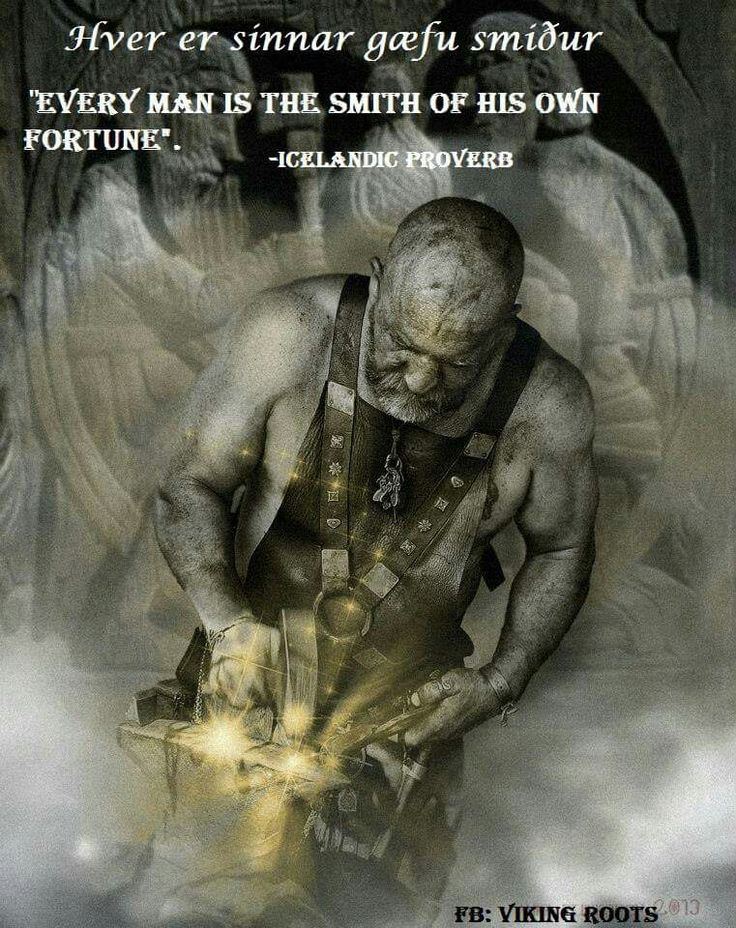
There is the mentality of the thief that seeks to take from others.  There is the counter mentality which is to smith your own life from what you are given.  The first is dishonorable and cowardly. The other is honorable and courageous.  The need to work hard with joy is obvious to me.

Wants (Freki):

I want to work hard because there is satisfaction in doing that gives a lot of honor to my soul.  In addition, I have goals that require hard work so if I want to achieve them I need to get off my ass and go get them. If you want a good life, the first thing to realize is no one is going to give that to you.  You have to go earn it.

Reason (Huginn):

Reason tells me also that hard work leads to a lot of benefits with others.  being the one that people look to and can’t do without, is an advantage in any employment situation. Rationally hard work makes you more valuable to other people than someone who is lazy.  It should also be noted that if you are a boss, those workers under you respect hardworking bosses more than ones who are lazy. Respect of this sort is more valuable than gold.

Wisdom (Muninn):

But more than that, living life to its fullest requires the wisdom of industriousness.  The old adage of working hard and playing hard comes from industriousness.  There is great wisdom in doing all things with effort and striving for efficiency so more gets done in your life in less time.  More is built and enjoyed.

Conclusion:

Hard efficient work in all areas is valuable. Industriousness reminds us that no matter what we are doing to do it with the highest amount of effort and efficiency.  It doesn’t matter if it is devotion to the spiritual, vocational or recreational part of life.  All need good solid effort to make the most of every situation. It is one of the virtues I have learned to enjoy the most.

The Rabyd Skald – Wandering Soul, Bard, and Philosopher. The Grey Wayfarer.

Skaal!!!