“Hel / Hella – Goddess of Death” (Asatru – Part 16) -The Pagan Pulpit

Happy Sol’s Day

Announcements:

We don’t pray here – we figure God, the gods, goddesses, or whatever powers that be either know already, don’t give a fuck, or are busy with more important matters than our petty stuff. We also kind of assume that they expect us to do stuff that we can do for ourselves and that we will do them ourselves and not be lazy. We also believe in being good friends, so we don’t presume on our friendship with the powers that be by asking them all the time for stuff while giving them nothing in return.

We also don’t take an offering here.  We figure the powers that be probably don’t need it.  Let’s be honest, offerings are not given to the divine powers, they are given to an organization to support it.  Just being honest. God, the gods or whatever never sees a dime, farthing or peso of that money; it all goes to the church, mosque or shrine.

Theme Song: “Helvegen – The Way to Hel” Wardruna

Meditation:
Image may contain: one or more people and text
Text:

See the source image

If you want more details about Asatru, I can’t recommend this book enough.

Sermon: 

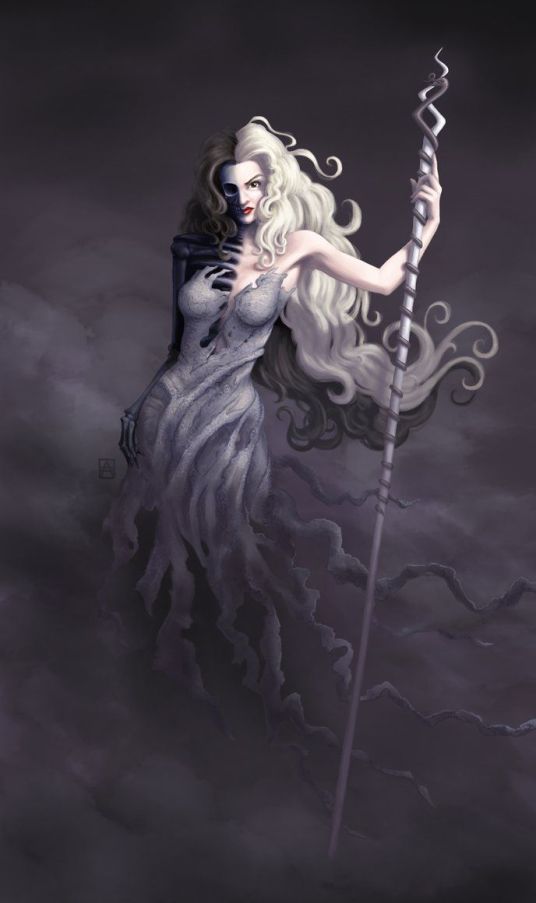
Somewhere along the way the depictions of Hel or Hella, to differentiate her from the realm she rules, became a half beautiful woman and half corpse.  But the original description of her in mythology simply has her half black and half white. The one thing is for sure a lot of elements Christianity crept in as time passed as regards her realm more properly known as Helheim.  She is the goddess of those who die of natural causes and not in battle. Her realm is mainly described as a continuation of this one but forever.  Forever, of course, being defined as until Ragnarok when everything basically hits the reset button.

Hella is in a couple stories of significance.  First, her origin story which has her as the child of Loki and a giantess. It is in this story that she is placed in charge of Helheim by Odin himself.  Her spheres are not pleasant ones – sickness, famine, old age.  Her artifacts reflect all of this.

The other story is, of course, the story of Baldar who ends up, somehow even though he died in battle,  in her realm.  The gods attempt to appeal to her for his release.  Her condition is that every person must weep for his death.  Loki, of course, has a hand in making sure one person does not and  Balbar remains with Hella. She also is in charge of keeping Fenrir the great wolf bound until his release at Ragnarok. It is interesting how much she figures into the story when it comes to the end of things and perhaps that is her real sphere – the end.

To the followers of Asatru, Hella is venerated not as someone to be feared.  She is simply one of the options one might find oneself in when you reach the afterlife.  Her real job is to offer comfort to those who have died and give them rest from the toils of this world.  The people who live in Helheim admire and respect her.

For me, she offers an interesting paradox of a character.  Of dubious origin being the child of Loki, she fills the role fo bastard daughter who finds herself in a position \of power and thus both loved and feared.  Her personality might be a little brooding and gloomy, but given her job who can blame her.

In my writing when I have depicted death allegorically or as a traveling companion to the hero, I find she always takes the form of a woman and I have to say this is due ot Hella’s influence. I see her as not only gloomy and foreboding but with a dark sense of humor who occasionally can find laughter in the ironic particular as regards death.

Parting Thought:

Image may contain: 1 person, text

I remain,

The Rabyd Skald – Wandering Soul, Bard, and Philosopher. The Grey Wayfarer.

Skaal!!!
“Freyr – God of Fertility and Prosperity” (Asatru – Part 15) – The Pagan Pulpit

Happy Sol’s Day

Announcements:

We don’t pray here – we figure God, the gods, goddesses, or whatever powers that be either know already, don’t give a fuck, or are busy with more important matters than our petty stuff. We also kind of assume that they expect us to do stuff that we can do for ourselves and that we will do them ourselves and not be lazy. We also believe in being good friends, so we don’t presume on our friendship with the powers that be by asking them all the time for stuff while giving them nothing in return.

We also don’t take an offering here.  We figure the powers that be probably don’t need it.  Let’s be honest, offerings are not given to the divine powers, they are given to an organization to support it.  Just being honest. God, the gods or whatever never sees a dime, farthing or peso of that money; it all goes to the church, mosque or shrine.

Theme Song: Norse Viking Music – ‘Álfadróttinn’

Meditation:
Image may contain: one or more people and text
Text:

See the source image

If you want more details about Asatru, I can’t recommend this book enough.

Sermon: 

I suppose I should honestly say that Freyr is not a god that I am drawn to in high respect. Odin and Thor definitely still appeal to me more.  That said, Freya’s brother and fellow Vanir appears quite prominently in the stories and was probably second in popularity to only Thor.  You kind of see the dynamic of masculinity in Thor and Freyr as Thor is a warrior and Freyr probably exemplifies everything else masculine from industriousness to sexual prowess and potency.  He is a fertility deity much like his sister Freya.

Historically speaking though the ancestrial line of many of the Swedish kings has its roots in Freyr.  It should be noted that fertility and sovereignty are very much linked in Norse mythology. so the fact he was the god of sovereignty, as well as Odin, is indicative of that.  This points out that Odin is the ruler of the gods but his role is more chairman of the group.  He doesn’t lord it over with decree so much as he leads the discussion and gets concession and compromise.  Freyr’s presence points this out as he is more of a Vanir ‘hostage’ than Odin’s subject, but there he is being worshiped with the rest of them.

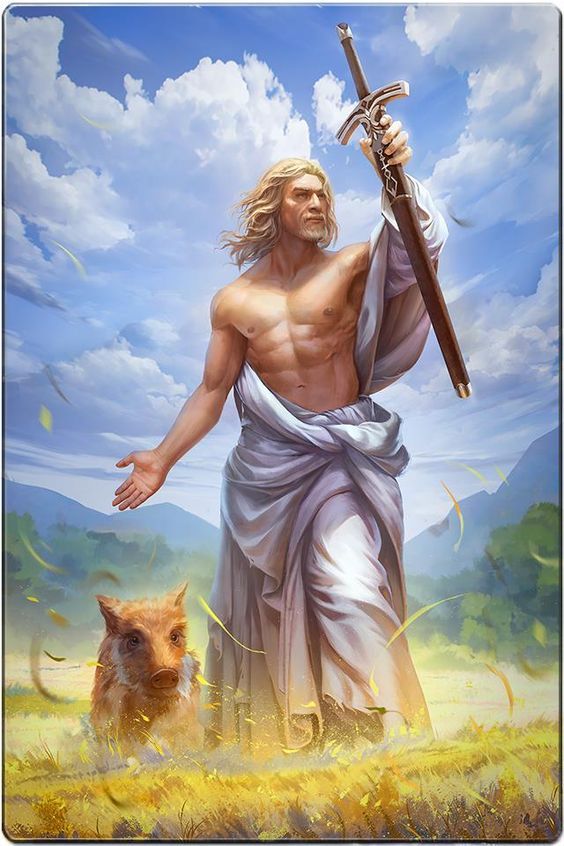
He rides a boar or stallion both indicative of male potency and fertility. His statues often have him represented with a rather large phallus.  He will wield a stag’s antler in the final battle at Ragnarok indicating his close association to nature both cultivated and wild. There is somewhat of a  similar attitude. to him as Freya when it comes to being the wild untamable side of masculinity that she is with femininity.  He would be the kind of man that most feminists would recoil from what he represents but at the same time in his presence their panties would be getting damp because their sexual fantasies would be running wild.

However, he is only known to have had one romance.  Gerd takes a lot of convincing but she marries Freyr and he was forever faithful as far as anyone knows despite his association with fertility.

The modern followers of Asatru envoke Freyr for fertility, potency, and prosperity which is his sphere.  He is very popular among them.  His feasts are the most celebrated and of course feature a boar as the main course.  Those close to the earth – farmers – rever him.

For me as a character, Freyr seems to have the kind of feeling that every male protagonist has in every romance story.  Strong, hard-working, handsome.  Having the effect on women of even the most ardent virgin wanting to give it up for him.  That said his faithfulness to his wife gives this it counter this, where he might be the kind of man every woman wants, but he is devoted to only one, so all they can do is fantasize.

Parting Thought:

Image may contain: meme, text that says 'MAY THE CANDLES ON YOUR CAKE BURN LIKE CITIES IN YOUR WAKE'

I remain,

The Rabyd Skald – Wandering Soul, Bard, and Philosopher. The Grey Wayfarer.

Skaal!!!

“Freya – If You Can’t Lay ‘Em, Slay ‘Em” (Asatru – Part 14) – The Pagan Pulpit

Happy Sol’s Day

Announcements:

We don’t pray here – we figure God, the gods, goddesses, or whatever powers that be either know already, don’t give a fuck, or are busy with more important matters than our petty stuff. We also kind of assume that they expect us to do stuff that we can do for ourselves and that we will do them ourselves and not be lazy. We also believe in being good friends, so we don’t presume on our friendship with the powers that be by asking them all the time for stuff while giving them nothing in return.

We also don’t take an offering here.  We figure the powers that be probably don’t need it.  Let’s be honest, offerings are not given to the divine powers, they are given to an organization to support it.  Just being honest. God, the gods or whatever never sees a dime, farthing or peso of that money; it all goes to the church, mosque or shrine.

Theme Song: “Freya Song” – Sascha Ravendark

Meditation:
Image may contain: meme and text


Text:

See the source image

If you want more details about Asatru, I can’t recommend this book enough.

Sermon: 

Now there is a historical debate as far as the development of Norse religion regarding Frigg and Freya being the same goddess that at some point split in two with one aspect of this goddess being Odin’s wife (Frigg) and the other becoming the hostage of the Vanir along with her brother Freyr being the other, but even if they were once the same they become very different in the mythological stories later.

Freya and Frigg have many of the same spheres: Love, Fertility and prophetic magic. But they diverge as Frigg seems more of a homebody of hearth and home.  Frigg seems to be the aspect of the woman and man would want to settle down with as a wife.  Freya, on the other hand, is the girl you want to party with, fight alongside, and fuck.  Or rather given her far more aggressive nature – let her fuck you. She is very independent and self-reliant much like the cats who are her symbol.

Freya is actually associated with the spheres of beauty, sex and war, things Frigg is far less associated with.  She is a far more aggressive female than Frigg and far more passionate and warlike being also a goddess associated with death.  It is, after all, the goddess who gets to take half the slain in battle to her hall. Captian of the Valkyrie, she is one of the choosers of the slain giving half to Odin for Valhalla and keeping the other half for herself.  I don’t remember where I read this, but one commenter said she really had the motto of = “if you can’t lay ’em, slay ’em”.  She was either going to fuck you or fight you and kill you.

For the followers of Asatru, she represents fertility much like her brother Freyr and is involved in all things productive. But she is also invoked in matters of the heart whether love or conflict. It is said that her worshipers have evidence of their existence long before any others except Odin and her worship was the last to die out when the Christians came. A large testimony to her veneration. She would make a very good goddess for any shieldmaiden.

For me, this splitting of feminine nature seems very necessary.  Frigg being the quiet passionate strength behind the throne of Odin.  But Freya, well she is the openly passionate side of women.  That raw animalistic love and anger that they can be quite famous for. I love both sides and it leads me to believe that this split (if a split actually occurred) might very well simply be a reflection of this understanding.  That man at some point in his life needs a Freya to inspire him with passionate side of women and then needs a Frigg to give him strength as a father and husband. Perhaps it is reflective that no woman can be both of those, or such a woman is incredibly rare even among the goddesses.

Parting Thought:

Image may contain: text

I remain,

The Rabyd Skald – Wandering Soul, Bard, and Philosopher. The Grey Wayfarer.

Skaal!!!

“Tyr – One-Handed Justice” (Asatru – Part 13) – The Pagan Pulpit

Happy Sol’s Day

Announcements:

We don’t pray here – we figure God, the gods, goddesses, or whatever powers that be either know already, don’t give a fuck, or are busy with more important matters than our petty stuff. We also kind of assume that they expect us to do stuff that we can do for ourselves and that we will do them ourselves and not be lazy. We also believe in being good friends, so we don’t presume on our friendship with the powers that be by asking them all the time for stuff while giving them nothing in return.

We also don’t take an offering here.  We figure the powers that be probably don’t need it.  Let’s be honest, offerings are not given to the divine powers, they are given to an organization to support it.  Just being honest. God, the gods or whatever never sees a dime, farthing or peso of that money; it all goes to the church, mosque or shrine.

Theme Song: “Wolf Totem” – The Hu

I discovered this group that has more of a Mongolian feel but the song is titled ‘Wolf Totem’ which, given Tyr’s one story involves Fenrir the great Wolf, seems fitting.

Lyric Video:

Meditation:
No photo description available.


Text:

See the source image

If you want more details about Asatru, I can’t recommend this book enough.

Sermon: 

The god Tyr’s name still lives on every time you say Tuesday.  It is his day and it probably speaks of this god’s importance more than any other than right up there with Odin and Thor. Tyr is much discussion of Tyr’s sphere as it would be simple to say he governs war, truth, and justice but the seems to be a mixing of the three ideas so in truth he may be more the god of trial by combat.  That truth and justice are ultimately played out in martial combat or a trial by combat is what Tyr represents and if there is a god that represents honor, it is Tyr.

Tyr’s appearance in Norse mythology is twofold.  The first is minor in the creation of beer for the gods but it is mentioned that he is the child of giants.  As a spiritual concept, I find this interesting as it seems to be saying that nature’s force has a way of bringing about justice and Tyr is simply a more civilized manifestation of that.

The second and main story that Tyr is known for is the story of Fenrir the Great Wolf.  In that story demonstrates his honor in that he refuses to remove his hand from Fenrir’s mouth and does to get Fenrir to trust the god’s final test of strength with the chain that actually binds Fenrir for Ragnarok.  But before that what strikes me as interesting is he seems to be the only god not afraid of Fenrir.  This actually speaks of the notion some warriors have of honor making one fearless.  Tyr seems to invoke that image in his story rather well.

To the followers of Asatru Tyr, of course, is remembered every Tuesday and his story is one that is repeated to demonstrate courage and honor.  Something that all Asatru followers hold highly given they are two of the Nine Noble Virtues.  I guess I find in the story of Tyr much the same along with the concept of how much are you willing to sacrifice for both victory and honor?  Tyr reminds us all that the price can be very close to home and should not be considered wasted if it leads to a good end.

Tyr is revered by those who seek justice so military and police officers who are Asatru gravitate to him as well as those who seek a balancing of the scales with Christianity.  For myself I find his story inspiring as far as honor and courage.

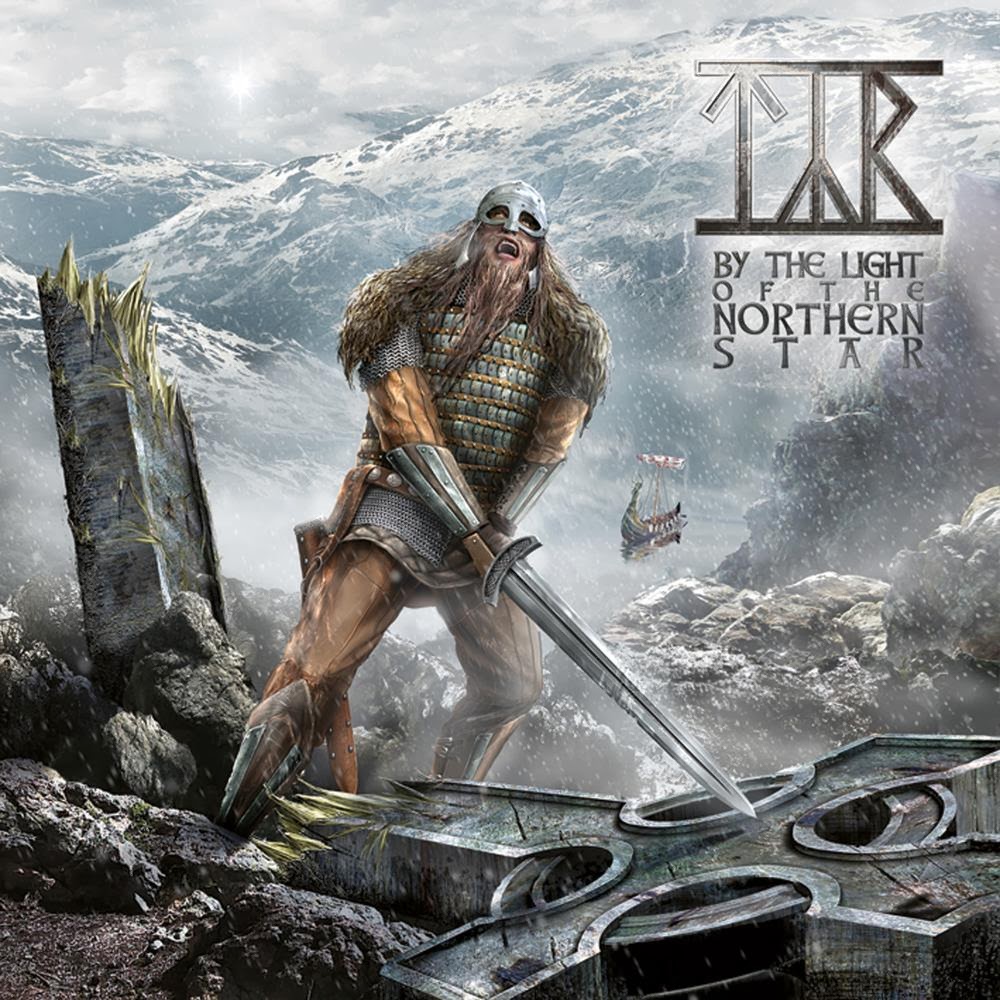
Hail Tyr, God of Truth, Justice, and War!  God of the Northern Star. Hail! 

Parting Thought:

Image may contain: text

I remain,

The Rabyd Skald – Wandering Soul, Bard, and Philosopher. The Grey Wayfarer.

Skaal!!!
“Heimdall – Guardian of Bifrost Bridge” (Asatru – Part 11) – The Pagan Pulpit

Happy Sol’s Day

Announcements:

We don’t pray here – we figure God, the gods, goddesses, or whatever powers that be either know already, don’t give a fuck, or are busy with more important matters than our petty stuff. We also kind of assume that they expect us to do stuff that we can do for ourselves and that we will do them ourselves and not be lazy. We also believe in being good friends, so we don’t presume on our friendship with the powers that be by asking them all the time for stuff while giving them nothing in return.

We also don’t take an offering here.  We figure the powers that be probably don’t need it.  Let’s be honest, offerings are not given to the divine powers, they are given to an organization to support it.  Just being honest. God, the gods or whatever never sees a dime, farthing or peso of that money; it all goes to the church, mosque or shrine.

Theme Song: ‘Heimdall” – Nordic Folk Music:

Meditation:

Image may contain: one or more people, people sitting and text

Never, ever stop learning.

Text:

See the source image

If you want more details about Asatru, I can’t recommend this book enough.

Sermon: 

I remember that my introduction to Norse mythology as a child actually started with Heimdall and actually the book above also when it starts looking at the Norse gods of Asatru also starts with Heimdall. Heimdall is the god that guards the way to Asgard – The Bifrost Bridge. The rainbow bridge that connects Asgard to Midgard.

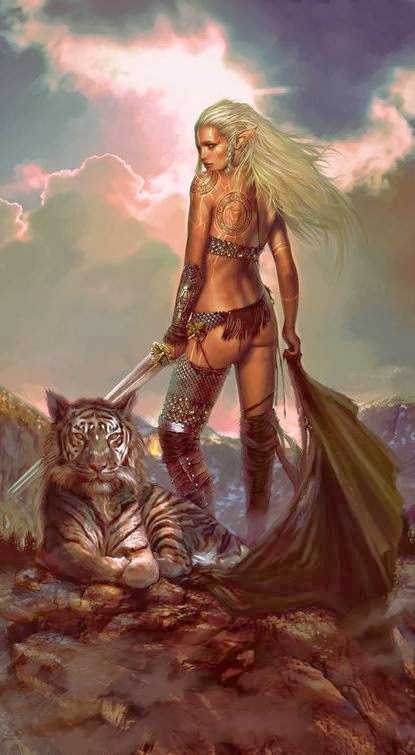
Heimdall is the god of light, guardians, the coast as he is the product of Odin and the nine waves of the sea.  He lives in his fortress above the entrance to Asgard.  He has a sword and a horse.  Most notably he is the god which is considered the most benevolent to mankind as he is involved with them.

The image one might get of Heimdall is a man who sits and guards the bridge day after day but in fact, he seems to travel a bit and be very involved in mankind’s plights.  It is also believed by scholars that he was once more important that he seems to be today.  The Norse people held him in high regard as he was said to be the father of many human children so it was said he was an ancestor to many.  I remember when I watched Vikings the TV show it was this idea that was invoked when a man and woman were having a dispute about her child because it seemed the child was not the product of their marriage but the visist of a stranger. The ruling woman made the judgment the child was the child fo Heimdall and thus the family was blessed.

The followers of Asatru do have high regard for Heimdall despite the fact his role with the gods is slight.  Basically waiting to blow his horn to signal the attack of the giants during Ragnorak on Asgard and then to guard Bifrost with his life. This vigilance and connection with mankind in the rainbow, the coast and the ridges above the seas is however ever-present.  Something that is to be admired.

I am reminded that not all virtue is glamorous. There is nothing more boring and yet so necessary as guard duty.  Heimdall for his part takes on his task of guarding Asgard and the Bifrost bridge with a sense of fidelity and discipline that few can match. His story definitely also has the connection to humanity that is truly personal as he is the ancestor of many.  I find it interesting that the Norse people had no problem with the fact that he seems to have no wife yet fathers human children and they considered themselves blessed for it.  Despite what we do know there is still a lot of mystery to Heimdall which I find intriguing. Mostly his personality seems interesting but he so quiet he reveals little and his name’s meaning is unknown.  I connect with him however as his job as the guardian of Asgard connects to my first name Edward very well – ‘The guardian of prosperity’ seems to fit us both.

Parting Thought:

Image may contain: one or more people and text

I remain,

The Rabyd Skald – Wandering Soul, Bard, and Philosopher. The Grey Wayfarer.

Skaal!!!

“Skadi: Goddess of the Winter” (Asatru – Part 10) – The Pagan Pulpit

Happy Sol’s Day

Announcements:

We don’t pray here – we figure God, the gods, goddesses, or whatever powers that be either know already, don’t give a fuck, or are busy with more important matters than our petty stuff. We also kind of assume that they expect us to do stuff that we can do for ourselves and that we will do them ourselves and not be lazy. We also believe in being good friends, so we don’t presume on our friendship with the powers that be by asking them all the time for stuff while giving them nothing in return.

We also don’t take an offering here.  We figure the powers that be probably don’t need it.  Let’s be honest, offerings are not given to the divine powers, they are given to an organization to support it.  Just being honest. God, the gods or whatever never sees a dime, farthing or peso of that money; it all goes to the church, mosque or shrine.

Theme Song: “Wake Skadi” – RavynStar

Meditation:

Image may contain: text and outdoor

True Story.

Text:

See the source image

If you want more details about Asatru, I can’t recommend this book enough.

Sermon: 

No.  Not Frigg or Freya yet.  I have to deal first with a goddess that probably personifies the north better than any other god or goddess.  Even in the summer, she dominates thought as summer thoughts are dominated with preparation for her arrival and enduring her embrace.  Skadi (Skadhi) – goddess of winter, mountains, wolves, and skiing. It is also believed that her name is the root word for Scandinavia.

Skadi’s story in the mythology is unique in that she was originally a giantess who shows up at the gates of Asgard, demanding restitution from the gods for her father’s death which was largely the responsibility of Loki. The gods agree to restitution and give her her father’s hall.  They also get her to laugh and then she is given one of the gods to marry which she has to pick by looking at their feet.  She pick the pair that is most beautiful thinking they must belong to Baldur, but it turns out they belong to the god Njord, god of ships and the sea.

Their marriage is not a good one.  She hates the sea and he hates the mountains so they hardly spend any time together and accordingly never have sex. She later hooks up with Odin to produce children mostly sons who all interestingly enough are claimed to be the lines of several of the Norwegian kings of the Viking age. Even with this Skadi spends most of her time alone in her mountains, skiing, and snowshoeing while hunting.  She travels with her companion the winter wolf – Kaldr.  She never really forgives Loki for his role in the death of her father and it is she who personally places the snake that dips venom on his face for his role in Baldur’s death.

The followers of Asatru venerate Skadi because of her deep connection to the culture of Scandinavia. She also seems to resonate with women who do jobs or fill roles that are traditionally done by men as she definitely does many things that in the culture of the time would have been considered masculine activities.

For me, the connection to Skadi is more one of spirit.  I got to love a woman figure that shows up and demands her due in the face of incredible odds. Her closeness to winter and wolves, of course, makes her more appealing to me.  In understanding as someone who lives with all four seasons that “Skaldi is Coming”.  A statement that probably existed long before Game of Thrones’ Winter is Coming’.

Winter is something you cannot take lightly.  Our modern world has mitigated a lot of its effects, but I have lived in the north with many winters now and I can tell you it still has a deadly force that must be respected.  Much like a giantess who hunts with the winter wolf. At the same time, the blanket of snow is a comfort to those who embrace her and a reminder that the waters they will provide are so necessary for Spring to be alive. Surviving every winter is a testimony to perseverance and courage at times.

Hail Skadi!!!

Parting Thought:

Image may contain: 1 person, text

Yeah, I know a quote from a Chrisitan on The Pagan Pulpit.  Most people forget that CS Lewis wrote as a skeptic. But in any case right is right and he is right on this one.  The worst people to put in power are moral busybodies who think we should all live like them.  They force us to follow their morality so they can feel better about themselves, even tough they have engaged in the most despicable forms fo disrespect – disrespect of human freedom. That is the very definition of tyranny. As a pagan – yeah fuck ’em.

I remain,

The Rabyd Skald – Wandering Soul, Bard, and Philosopher. The Grey Wayfarer.

Skaal!!!

“Thor: Thunder God” (Asatru – Part 9) – The Pagan Pulpit

Happy Sol’s Day

Announcements:

We don’t pray here – we figure God, the gods, goddesses, or whatever powers that be either know already, don’t give a fuck, or are busy with more important matters than our petty stuff. We also kind of assume that they expect us to do stuff that we can do for ourselves and that we will do them ourselves and not be lazy. We also believe in being good friends, so we don’t presume on our friendship with the powers that be by asking them all the time for stuff while giving them nothing in return.

We also don’t take an offering here.  We figure the powers that be probably don’t need it.  Let’s be honest, offerings are not given to the divine powers, they are given to an organization to support it.  Just being honest. God, the gods or whatever never sees a dime, farthing or peso of that money; it all goes to the church, mosque or shrine.

Theme Song: “Thor’s Thunder” – Nordic Style Folk Music

Meditation:

Image may contain: 1 person, beard, text and outdoor

If there is one change in my life that is true, respect is now earned. I don’t just give it to anyone and I don’t care if you are in authority or power, you have to earn it by your character, not because you demand it.

Text:

See the source image

If you want more details about Asatru, I can’t recommend this book enough.

Sermon: 

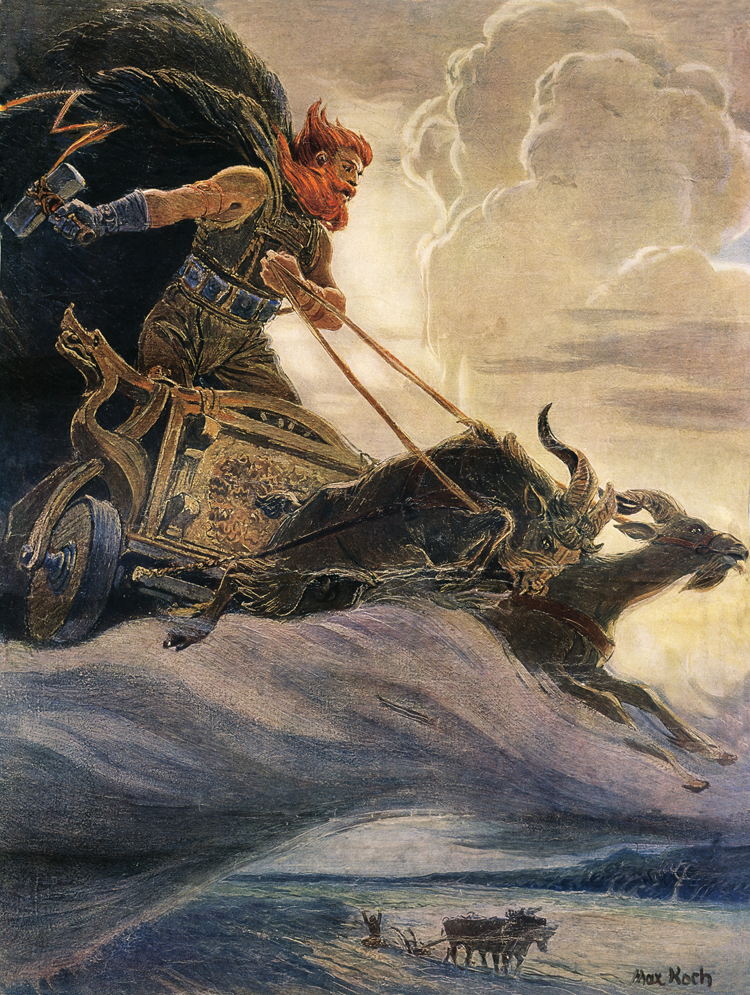
Odin might be king of the gods of Norse mythology, but Thor is definitely the favorite son of Asgard.  Odin was a favorite of rulers and sages, but Thor is the god of the common man and warrior.  He is the bringer of rain and his voice thunders like the thunder he controls.  There is probably no more famous weapon in Norse mythology than Mjolnir his hammer which is considered the most important weapon that will be used in the defense of Asgard.

In mythology, Thor is a red-bearded powerful man who can drink, fight and eat better than anyone.  He often travels with Loki and they have several adventures together.  His cart is pulled by two goats, which can be eaten each night and if all their bones recovered can be resurrected the next day.  He is today and back then the most popular of the Norse deities.

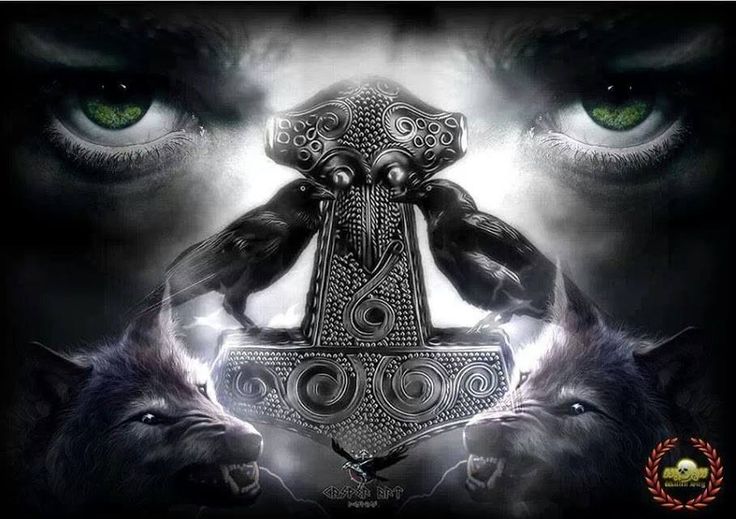
Heathens, followers of Asatru and many others can be seen wearing the hammer of Thor. This hammer to many represents the heathen faith. To the modern heathen, he represents strength, courage, and life as the giver of rain and healing.  He is often invoked in oaths because unlike Odin, only his enemies need to fear him.  Prayers to him are often for rain and strength.

For me, you will find me wearing one of my two thor’s hammers pendants on a chain around my neck every Thor’s Day as a gesture of respect to all heathens and pagans.  I like Thor and his stories are some of the most inspiring and entertaining. He interaciton with Loki very humorous at times.  For those looking for an example of courage in th face of tremendous challenges, look no further than Thor.

Parting Thought:

Image may contain: 1 person, beard, text and outdoor

Never give up.

I remain,

The Rabyd Skald – Wandering Soul, Bard, and Philosopher. The Grey Wayfarer.

Skaal!!!
“Meditations – Bringing it All Back to Center” (Plus Blog Notes) – The Rabyd Skald

Happy Sif’s Day

In closing this out I have two things to talk about at length. One is bringing everything back to the center. Secondly, I have been meditating on blog changes for the coming year as well. Today is the 342 straight day of this blog with at least one post a day. 23 to go and another goal achieved for the year.

Back to Center:

With all this meditation on my various identities: Primary, Secondary, and Side, I wanted to get back to the central purpose of it all. The simple question is: Who am I? There is no single answer. After all this meditation, I can confidently conclude that as a human being I have many facets and I will thus have several identities. Everything comes together into this one central person that is me.

The one polarity shift in identity has been to view myself as primarily a writer and secondarily as anything else that will pay the bills better and allow for writing. This means taking writing seriously and making it my main occupation, which means writing a lot more and doing things that go along with it like reading and research.

My job search can now be even more open than it was before. My main issue here is to find something I can enjoy, will be better than what I have now financially and professionally, and will still give me time to write. I don’t what this is yet and as a wayfarer of life that actually is kind of exciting to me.

My side identities are about me and improving me. They are also about enjoying life so I think that I will be always looking at them. The biggest shift this last year was spiritual, notably that my Primary identity of a Christian pastor is truly scrapped and the spiritual side of me is a side identity which doesn’t mean it is not important, it just means that it is a part of my life, not the most dominant thing anymore. I actually find myself more at peace because of this. Being other people’s spiritual guru just doesn’t appeal to me anymore.

Blog Notes:

This change in primary identity means some changes to the blog and to my disciplines. Writing the non-fiction book and novel now are more primary to me. Blogging needs to be a good writing exercise and provide my public face. Listing off the projects on this blog:

Journal Posts: I need to get back to doing these every week. I have noticed that on the weeks I do not do them, I lose focus. These three posts a week keep me centered on my goals and provided good reminders of the values I hold dear.

The Pagan Pulpit: I think sometimes I write these for me most of all. It helps me learn Asatru a little better each week and reminds me of each week’s spiritual journey. They are a good weekly milestone if you will.

Of Wolves and Ravens: Having a philosophy post once a week has been good as a more in-depth review of my philosophy of life. It has a practical edge to it that I like and that keeps me thinking.

Odin’s Eye: I like the change I made this week to be more open about this and focus more on my spiritual life as it stands instead. Time to move on from the past and embrace the future.

Crossing Bifrost: I have put this one on hold a lot. The more I got into Norse mythology, the more I knew I was not qualified to write about it. I was using it as a learning platform but I still have much to learn on a lot of subjects before I delve into writing on it again.

The Grey Wayfarer (serial): This little fantasy serial I have closed, mostly because I think it will make a good novel idea once I know Norse mythology a lot better.

Rogue Wizard: The Fire of Fury: This one is coming to an end. Time to move on and this series kind of holds on to the past a little. I am thinking of a few more posts to round out the story and it will come to an end.

The Rabyd Skald Posts: These are my posts that talk about issues I am facing in more detail. The Grey and The Wayfarer versions are more in-depth times when I am struggling with The Grey. I also use these to talk about the blog and writing so they come up a few times a month. They are not really scheduled but they form something I do regularly.

Skald Tales and Poems: My poetry is here and there is an open slot for short stories I have yet to use but I think I will soon. This is the short writing projects page and mostly so far it si poems. Poems are a bit of a mixed bag for me personally. On the one hand, they help me release emotion to the universe, on the other hand, they remind me of Miss Salty and that can trigger some things I don’t want to feel sometimes. Hopefully, as time goes on the memories in writing a poem will be more positive.

The Skald’s Lyre: Me talking about the music in my life. I like to do this because it can provide a good self-examination of what I ma communicating outside of writing. Music fills the gaps for me in that regard.

The Book of Rabyd: Largely finished, this project is a collection of sayings and principles I follow. It is always a work in progress as I leave it open to add other things, but the main work on it is finished.

Freya’s Chambers: New. Like brand new. Mostly this is my viewpoint on sex and sexually related issues. It is a new project as my world view is changed from Christian to Pagan so it has an effect on this. I also tend to bring in the idea that moral busybodies need to be told to go away.

Space Tramp: Also new but I suspect when it ends I will hed down another road with a different role-playing game so I might eventually put this under the overall title of Roleplaying Fan Fiction where it will be one writing project among many designed to let the dice challenge me in my writing.

There is a lot to unpack and I have some other things to add but the main thing is there is no shortage of things to write on. I am going to raise the stakes going into the new year and basically write journal posts like have been doing but on those days and another post will drop as well,

1) I want to continue the Viking / Norse Mythology Theme some more when appropriate

2) and I need to restructure how the week is laid out with that in mind as well.  I just think it is weird that Odin’s Eye drops on Thor’s Day when Woden’s Day Makes more sense.

3) I need to be more consistent with my fiction practice.

My solution is to restructure the week as follows:

Sol’s Day – The Pagan Pulpit

Mani’s Day – Journal: Foundational Virtues, Of Wolves and Ravens

Tyr’s Day – Fiction Post

Woden’s Day: Journal: Business Virtues, Odin’s Eye

Thor’s Day: Fiction Post

Frigg and Freya’s Day: Journal: Self Virtues, Freya’s Chambers

Sif’s Day: The Skald’s Lyre or Skald Tales and Poems.

The Rabyd Skald Posts will drop when needed and I am putting Crossing Bifrost on hold until I have studied the subject of Norse mythology better. This actually only adds three posts by making the journal post days require another post. Look for the changes starting tomorrow.

I remain,

The Rabyd Skald – Wandering Soul, Bard, and Philosopher. The Grey Wayfarer.

Skaal!!!

“Idunn – The Renewer” (Asatru – Part 8) – The Pagan Pulpit

Happy Sol’s Day

Announcements:

We don’t pray here – we figure God, the gods, goddesses, or whatever powers that be either know already, don’t give a fuck, or are busy with more important matters than our petty stuff. We also kind of assume that they expect us to do stuff that we can do for ourselves and that we will do them ourselves and not be lazy. We also believe in being good friends, so we don’t presume on our friendship with the powers that be by asking them all the time for stuff while giving them nothing in return.

We also don’t take an offering here.  We figure the powers that be probably don’t need it.  Let’s be honest, offerings are not given to the divine powers, they are given to an organization to support it.  Just being honest. God, the gods or whatever never sees a dime, farthing or peso of that money; it all goes to the church, mosque or shrine.

Theme Song: “Idunn” – Trobar de Morte

Meditation:

Image may contain: text

You either understand or you don’t.

Text:

See the source image

If you want more details about Asatru, I can’t recommend this book enough.

Sermon: “Idunn – The Renewer”

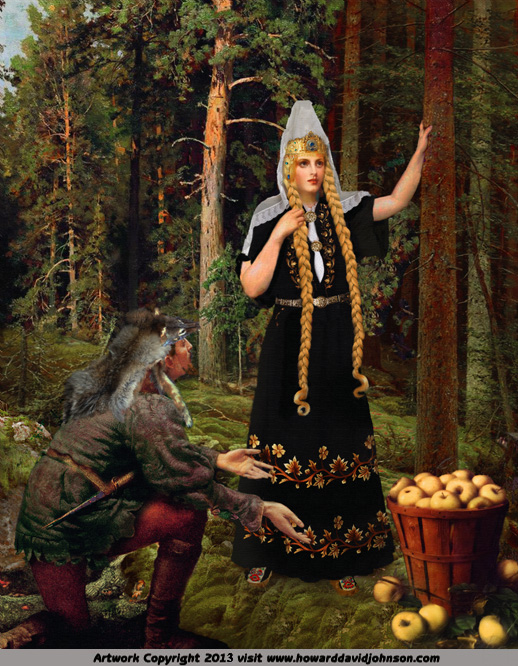
I know people might have been expecting Frigg, but  Idunn is the goddess of spring, renewal, and youth. She is the wife of Bragi – the poet of the gods. I place her prominently because, to the followers of Asatru, she has become the patron goddess in many ways of the renewal aspects of Asatru. She is the one who is the most instrumental in the rediscovery and renewal of the old ways and making them new again.

In mythology, she figures prominently as the keeper of the golden apples of youth.  When a god or goddess began to fade and begin to look old, they would come to her and take an apple and eat it.  Their youth would then be restored.  In the one-story where she figures prominently, she is the object of the giant’s desire, and she is captured by them thanks to Loki.  Loki then is charged with rescuing her and he does.  She is the wife of Bragi – the poet of the gods.

I like this version of not only renewal but the view of the gods.  Even their immortality has a requirement from the universe for it to exist. It is not simply just there but requires renewal and that is the job of Idunn to grow the apples of youth and provide them when needed.

Rebirth and renewal and pretty universal pagan concepts.  They appear in almost every mythology and are always considered in some ways vulnerable. That said, they are vulnerable not because they can be destroyed, but because they have requirements or locations which can be controlled by multiple people or things.

As spiritual concepts, renewal and rebirth are good ones. I know of no practitioner of paganism that at one point or another didn’t realize their need for a renewal of spirit or a rebirth moment from time to time. Stagnation and death are forces in this world and to avoid them requires renewal and rebirth.

To the Asatru movement, Idunn is a patron goddess who is thanked for her efforts in helping the Asatru being reborn and being given new life.  To many, she symbolizes the rebirth of Neo-Paganism.  In a sense, Asatru has been allowed to take a bite of the golden apples and be renewed after a long absence.

For me personally, the image and story remind me of several lessons:

1) I am engaged in a bit of a rebirth process for myself right now and as a 50-year-old man, it is a hard process.  But rebirth and renewal are absolutely necessary if life is to continue.  Change is a necessary part of life.

2) That what is precious should not only be honored but guarded.  I look at the Asatru Movement and think also that while renewing and growing, it needs some sort of way to preserve it.  The old ways were lost once before and perhaps finding a way to preserve this way of life against that possibility again is a good idea.

3) It also has to be concluded that in renewal, new things will be needed.  There is simply too much lost, so the gaps will have to be filled with new ideas and concepts. New ways of doing things coupled with what we know of the old. Rebirth and renewal have that aspect as well.

Hail Idunn!!!

Parting Thought:

Image may contain: one or more people, beard, text and closeup

I remain,

The Rabyd Skald – Wandering Soul, Bard, and Philosopher. The Grey Wayfarer.

Skaal!!!

“Odin – The All-Father” (Asatru Part 7) – The Pagan Pulpit

Happy Sol’s Day

Announcements:

We don’t pray here – we figure God, the gods, goddesses, or whatever powers that be either know already, don’t give a fuck, or are busy with more important matters than our petty stuff. We also kind of assume that they expect us to do stuff that we can do for ourselves and that we will do them ourselves and not be lazy. We also believe in being good friends, so we don’t presume on our friendship with the powers that be by asking them all the time for stuff while giving them nothing in return.

We also don’t take an offering here.  We figure the powers that be probably don’t need it.  Let’s be honest, offerings are not given to the divine powers, they are given to an organization to support it.  Just being honest. God, the gods or whatever never sees a dime, farthing or peso of that money; it all goes to the church, mosque or shrine.

Theme Song: Old High German: Wotan chant

This is actually a chant that is found on a site that teaches people about the German language and the translation is in the description. Wotan is another name for Odin.

Meditation:


Image may contain: text

To be truly spiritual and even a genuine person in general, one needs to recognize that each person’s question of who they are and what they should be doing is individual. The question is different for all of us and the riddle of life is answering the one we actually have, not the one everyone says we should have.

Text:

See the source image

If you want more details about Asatru, I can’t recommend this book enough.

Sermon: “Odin – The All-Father”

Odin, Wotan, etc. He is known all across the Scandinavian and Germanic world by many names. A couple things are clear in all the stories and myths.  1) Odin is the chief deity and 2) He is very unlike the other supreme deities like Zeus and Jupiter in that he does not lord it over people or rule by decree.  Rather, he takes on the problems himself and does what he needs to do to overcome them.  He leads by example more than orders.

It is only natural that Asatru would embrace him.  From a spiritual standpoint, his essence is summed up very well in the title ‘All-Father.”  To the followers of Asatru, Odin is the speaker of the Havamál a collection of his wise sayings.  He is the god most associated with words and language so it is no surprise that he has many names.

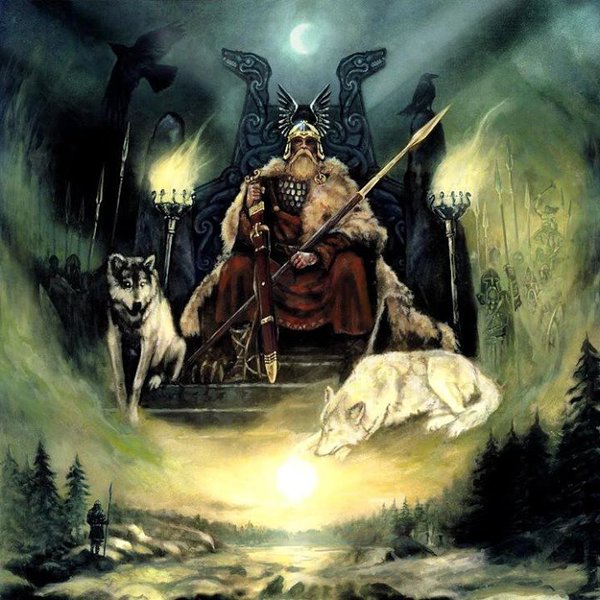
Paxton rightly points out there is a duality to Odin.  One the one hand there is power, anger, war, and aggression on the other side there the god of magic, wisdom and spiritual deepness.  On the one hand, you have the armored king on his throne with spear and crown.  On the other hand, he is also the grey cloaked, broad-brimmed hat-wearing wanderer.  There is an air of power and mystery to Odin as he is both warrior and mage.

His accomplishments in the mythology are large.  1) All-Father – creator of mankind. 2) He is king of the gods, but in practice, he seems to be more of a chairman of the board of gods.  Each god or goddess being fiercely independent. 3) He trades his eye for wisdom and foresight. 4) He acquires the Mead of Poetry from giants. 5) He hangs from the world tree upside down for nine days to discover the knowledge of the runes. Odin, in short, has a bad-ass list of accomplishments in Norse Mythology. He is also the god who never turns his back on humanity or being a part of wandering among them.

These days, according to Paxton. heathens invoke prayers to Odin still, even if they serve other gods more fervently, they still pay respect to the All-Father.  Most Odinsmen and Odinswomen are people who work with words.  Paxton advises against, however, asking him for victory.  He is, after all, a god that is even willing to sacrifice himself for the greater good.  He expects the same from his followers and would have no problem leading one into defeat if it meant forstalling Ragnarok.  He is a strong and powerful figure and is treated with respect by the followers of Asatru.

As I mentioned before, I don’t think one needs to actually believe in the Norse Gods as real to be a follower of Asatru.  What you do have to respect is how their stories pull you back to your ancestors’ view of the world and what they valued. When it comes to the ideas they valued most in a leader, Odin is the perfect representation. He is strong, listens to the counsel of others, is willing to take the lead and sacrifice himself to get what he needs to be successful.  When a battle comes, he leads from the front. He speaks little but acts boldly whether those actions are out in the open or clandestine. He has the long term in mind. The greater vision if you will.

You don’t have to do much more than come to my blog and see the title and the imagery I use for it, to know I place great value on what Odin represents. I would say my image of myself as a man has strong parallels with Odin.  I work to be strong but also wise. I like to read and write mostly because it allows me to hear the counsel of others. If there is some greater good to be achieved, I will sacrifice myself, although I am trying to do that only when absolutely necessary. When battle comes I like to be out front not only leading but fighting along the sides of those I lead.  I never forget where I come from. I prefer to remain quiet and let my actions speak for me. I tend to see the bigger picture and act accordingly.  Odin is if anything a good example of leadership values and characteristics I try to emulate in my own life.

That of course and the image of the grey pilgrim who wanders but is not lost is the whole essence of the blog – The Grey Wayfarer.

Parting Thought:

Image may contain: 1 person, meme and text

I would say some stories I have seen are written in both. Sometimes blood is used as the ink too.

I remain,

The Rabyd Skald – Wandering Soul, Bard, and Philosopher. The Grey Wayfarer.

Skaal!!!