“Heimdall – Guardian of Bifrost Bridge” (Asatru – Part 11) – The Pagan Pulpit

Happy Sol’s Day

Announcements:

We don’t pray here – we figure God, the gods, goddesses, or whatever powers that be either know already, don’t give a fuck, or are busy with more important matters than our petty stuff. We also kind of assume that they expect us to do stuff that we can do for ourselves and that we will do them ourselves and not be lazy. We also believe in being good friends, so we don’t presume on our friendship with the powers that be by asking them all the time for stuff while giving them nothing in return.

We also don’t take an offering here.  We figure the powers that be probably don’t need it.  Let’s be honest, offerings are not given to the divine powers, they are given to an organization to support it.  Just being honest. God, the gods or whatever never sees a dime, farthing or peso of that money; it all goes to the church, mosque or shrine.

Theme Song: ‘Heimdall” – Nordic Folk Music:

Meditation:

Image may contain: one or more people, people sitting and text

Never, ever stop learning.

Text:

See the source image

If you want more details about Asatru, I can’t recommend this book enough.

Sermon: 

I remember that my introduction to Norse mythology as a child actually started with Heimdall and actually the book above also when it starts looking at the Norse gods of Asatru also starts with Heimdall. Heimdall is the god that guards the way to Asgard – The Bifrost Bridge. The rainbow bridge that connects Asgard to Midgard.

Heimdall is the god of light, guardians, the coast as he is the product of Odin and the nine waves of the sea.  He lives in his fortress above the entrance to Asgard.  He has a sword and a horse.  Most notably he is the god which is considered the most benevolent to mankind as he is involved with them.

The image one might get of Heimdall is a man who sits and guards the bridge day after day but in fact, he seems to travel a bit and be very involved in mankind’s plights.  It is also believed by scholars that he was once more important that he seems to be today.  The Norse people held him in high regard as he was said to be the father of many human children so it was said he was an ancestor to many.  I remember when I watched Vikings the TV show it was this idea that was invoked when a man and woman were having a dispute about her child because it seemed the child was not the product of their marriage but the visist of a stranger. The ruling woman made the judgment the child was the child fo Heimdall and thus the family was blessed.

The followers of Asatru do have high regard for Heimdall despite the fact his role with the gods is slight.  Basically waiting to blow his horn to signal the attack of the giants during Ragnorak on Asgard and then to guard Bifrost with his life. This vigilance and connection with mankind in the rainbow, the coast and the ridges above the seas is however ever-present.  Something that is to be admired.

I am reminded that not all virtue is glamorous. There is nothing more boring and yet so necessary as guard duty.  Heimdall for his part takes on his task of guarding Asgard and the Bifrost bridge with a sense of fidelity and discipline that few can match. His story definitely also has the connection to humanity that is truly personal as he is the ancestor of many.  I find it interesting that the Norse people had no problem with the fact that he seems to have no wife yet fathers human children and they considered themselves blessed for it.  Despite what we do know there is still a lot of mystery to Heimdall which I find intriguing. Mostly his personality seems interesting but he so quiet he reveals little and his name’s meaning is unknown.  I connect with him however as his job as the guardian of Asgard connects to my first name Edward very well – ‘The guardian of prosperity’ seems to fit us both.

Parting Thought:

Image may contain: one or more people and text

I remain,

The Rabyd Skald – Wandering Soul, Bard, and Philosopher. The Grey Wayfarer.

Skaal!!!

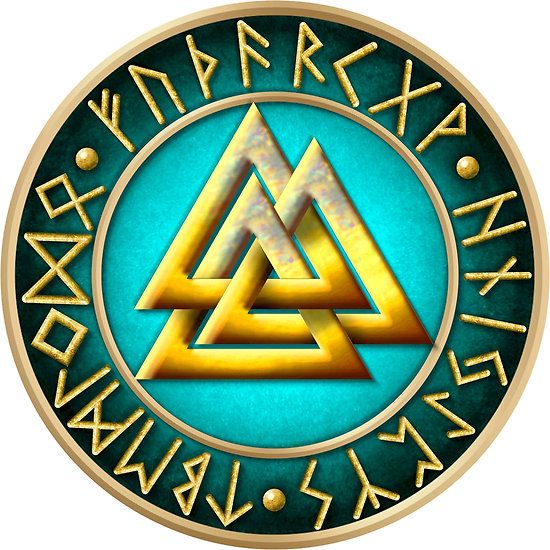
“My Spiritual Symbolism: Valknut with Rune Circle” – Odin’s Eye


Happy Woden’s (Odin’s) Day.    

Discussion:

My struggles with magic aside, I do believe in the power of symbols. Not magical power per se but more of a power to encapsulate thoughts, concepts, and ideas into a single pattern or image.  For me, these become very powerful focuses that keep me steady in my thoughts and philosophy.  They also remind me of what is spiritually important.

I adopted the valknut as my replacement for the cross right after leaving Christianity.  I had become fairly certain that at least the Nine Noble Virtues of Asatru were going to be my new moral code, so I looked for something to symbolize that and the symbol of the Valknut was almost always present in any website I was studying at the time and so made it my own.  The fact that it is connected with Odin and death rituals (burial) only solidified this.  The Grey Wayfarer (me) often wears a pendant of the valknut around his neck on a chain.  Mine also has a circle of runes around it like in the picture above.

Both the valknut and the runes are mysteries as to their full meaning.  Much has been lost thanks to the invasion of Christianity and the subsequent purge that followed them of all things pagan. The valknut and runes apparently were too pagan to find their way to being incorporated into Christian worship and so were actually expunged.  A few examples survive and so what we know is very little.  The valknut is associated with Odin and burial because we find them on gravestones.  Runes are everywhere but they don’t seem to be about language although some modern pagans have made it so.  From a scholar’s point of view, they are largely a mystery as well.

What this meant for me is that I was left to give this symbol and the runes around it their own meaning. So…

Time to Look Through the Eye:

“To see the truth, change one eye for another”

Faith:

I am a deistic humanistic pagan.  First and foremost I fall on the side that says while religions are bunk and made up for the most part, I don’t dismiss the idea of a supreme being, beings or force of the universe being a real possibility. However, I believe that the only real source of overcoming my own and other human problems is myself and other humans. I am pagan because my spirituality basically draws me back to the spiritual roots of my ancestors. It is far more about heritage than religion for me.  The valknut and runes are a good symbol of that as both call to my Germanic and (hopefully) Scandinavian roots.  It is at least the faith and spirituality of my own spirit regardless of biological genetics.

Meditation:

I suppose my meditation times that I have used the valknut and rune circle are the ones that have given both new meanings for me. Firstly the nine sides of the three triangles became representative of the Nine Noble Virtues.  Later, the nine formed the three triangles of the Higher Virtues of love, Justice, and Wisdom.  All of them are interlocked and the three triangles, if you look closely, cannot be separated fro meach other.  It thus forms a single spiritual path of following virtue, a single symbol – the valknut.  It also because of its connection to Odin serves as a reminder of the finality of life. Virtue is the only thing that gives that life value.

The rune circle around it is all 24 known runes. In many ways, it symbolizes the mysteries of the knowledge of the universe to me. By following the path of virtue, I begin to understand these mysteries better.

Theology:

One of those mysteries is the divine.  Part of that, to be honest, is to assess whether such divine entity or entities exist.  As a diest, I fall on the side of agnosticism that says we don’t know enough to dismiss the idea of the divine, so I believe more in its possibility than it is not possible.  I will give the atheists their due in saying they could very well be right, but at the same time, I don’t think I can myself close my mind, heart, and body off to the idea that a creator or creators exist. It seems too ‘dogmatic’ of ‘fundamentalist’ to me so to speak.

The issue then is to find meaning either way – for me, this is the following the path of virtue as a means to coming to better understandings of the world around me and perhaps finding the answers I seek.  I am a pilgrim searching for truth, wherever I find it.  I am the Grey Wayfarer

Spirituality:

I find spirituality in Virtue.  Virtue allows me to connect with myself, other people and the universe and all it contains. How can one not be connected when following after virtue? For me, this symbol reminds me that part of understanding the universe requires connections.  The path is what connects and virtue is the path.  In meditation, this symbol has proven to be the best focus when I am looking to understand this connectivity to everything else.

Conclusion:

As I meditate more on this, I am sure more things will come to mind.  I have plans to make my meditation time more ‘ritualized’ in that I may have other foci and even some candles and incense.  Regardless, the valknut and rune circle will always be central to it. The centerpiece if you will regardless of what becomes my first meditation altar.

I remain,

The Rabyd Skald – Wandering Soul, Bard, and Philosopher. The Grey Wayfarer.

Skaal!!!

“Minimalism and Time Management” – Of Wolves and Ravens – Minimalism

Happy Mani’s Day

Discussion

One of my overarching philosophies is the philosophy of minimalism.  That is the question that this adds is very simple – do I need this or does this bring me joy?  if the answer is ‘no’ then minimalism says that you get rid fo it.  Now, this does not just apply to things like furniture and clothes, but also relationships, health, fitness, and just about anything else that this question can be leveled at.

One of the key issues is what you are spending time on.  All things take up time and the minimalist question is whether or not the time should or should not be spent. is the time spent necessary and does it bring happiness?  If not, why are you spending them on this whatever it is?

Behind the statement “Feed the Wolves, but Listen to the Ravens First” is the wisdom and reason of ravens who are looking for things that better manage time and get rid fo time wasters. This is minimalism at its best.

To the Wolves and Ravens:

“Feed the Wolves, but Listen to the Ravens first.”

Needs (Geri):

The issue of need is always a sticky issue as what a person’s needs are can be far more than food or clothing, but also relationships and other things that allow a person to function.  There is a crossover between needs and wants but the question of do I need this to function as a human being is the starting point of being minimalist and how I spend my time.

As an example, my work wardrobe is the same and I actually have four copies of it.  Why? I spend zero time deciding what to wear for work. That time is better spent on other things like writing, and actual preparing for work.  I need to have clothes for work, but nothing says I need to have something different every single day so I save time by having it pretty much the same.  You could also accomplish this by having three to four preset outfits for work that you just rotate through.

Wants (Freki):

The second part of the question involves the wolf of want.  Does this bring me joy?  Does it make me happy?  I think this part is more about all the other things besides stuff.  Relationships, in particular, are here because some relationships are not only not needed, but they are negative and time wasters.  You might find more time if you just drop some of them and improve your attitude because you are not being drained.

For myself, my relationships are few right now but I would have to say very much necessary and they do provide some comfort and support so they do indeed provide from my happiness. My issue is new relationships as I am much more cautious about being sucked into a relationship that is going to take more than it gives. I spent a lot of time as a minister fostering relationships that were unnecessary, simply because it was expected and let me tell you I don’t want that anymore.  From a loyalty standpoint, family and friends are a different matter.  All other relationships, however, have to be carefully considered in the matter of how much time is required to maintain them.

Reason (Huginn):

I find reason is more helpful in assessing needs.  I can usually apply a pretty simple reasonable question; ‘have I used this in the last year because I needed to use it?’ and suddenly whether or not I do need it is pretty apparent.  I also can say this for relationships.  Work relationships are needed, so they stay on my lists but I am cautious about how much time I spend on each one.

Wisdom (Muninn):

The question of joy is a wisdom question because it doesn’t just involve a question of happiness but love, heart, and spirit.  There is more to joy than your own joy too.  ‘Does you having this thing give someone else joy?’ is a valid question.  I have a few things like that because other people gave them to me in trust that I would honor the spirit in which they were given.  Other things are just junk moving from one house to the next.

Long term thinking also hits this because I have a few other things that I know would give me joy if the context was right.  They may not be currently giving me joy but if things change I know (keyword ‘know’) they would.

Conclusion:

Minimalism plus time management is a healthy combo for the wolves and ravens. But minimalism properly practiced gives you more time to do other things and that is simply a fact.  It focuses my time on what is important and that is key to achieving my goals.

I remain,

The Rabyd Skald – Wandering Soul, Bard, and Philosopher. The Grey Wayfarer.

Skaal!!!

“A New Pattern?” – Odin’s Eye

Happy Thor’s Day.    

Discussion:

When I started this blog, I intended Odin’s Eye to be about my spiritual journey.  Probably more about my change in spiritual viewpoint or vision.  The pattern I established was pretty straightforward at the time although I established it a month or two after I started:

Deism, Bible Problems, Humanism, Christianity Problems, Paganism, Religion Problems, The Wayfarer’s Spiritual Side, My Theological Objections to Christianity Revisited.

I also established that on every pagan holiday, I would stop and comment that week on it.  That has been a fun journey in and of itself.  But it is also about to come full circle with the closing of the first year of this blog on September 30th.  Fall begins on September 22 and the pagan holiday is Mabon or for Vikings – Haustblót.  After that, the cycle starts again on October 1st.  I intend to continue to talk about pagan holidays but I want to get as truly Viking as I can the second time around.

Outside this though, I have had a pretty good debate running with myself about changing the pattern of the posts for Odin’s Eye.  Most notably do I want to go through the whole Chrisitntity issues again?  I am thinking of saving all that for a book or two, so what really is the purpose of Odin’s Eye? Well, it is about spirituality and my spiritual journey. At the same time, it is a place to pose spiritual questions to myself and perhaps you the gentle reader.  I guess the main thing is to stop talking about the spiritual past and embrace the spiritual present and look to the spiritual future.

My first step in revising the pattern was to eliminate the negative in a lot of ways and also to get rid post types that go over old ground.   This leaves:

Deism, Humanism, Paganism, The Wayfarer’s Spiritual Side

The more I thought about it though, the whole deism and humanism questions are pretty settled for me and boil down to two fundamental truths. 1) I hold the possibility of divine power or powers, and 2) I believe that to solve human problems, humans are going to have to do it themselves.  The powers might help or might not, better to be self-reliant first.  I am not sure I really need to discuss these anymore with myself.  I side very much with enlightenment thinking for my rational and more practical side. But eliminating these two posts leaves me with only two:

Paganism, The Wayfarer’s Spiritual Side

I don’t think that is sufficient enough of a rotation to keep me off my soapboxes.

It is really the whole Asatru and Pagan side I struggle with more. Getting a grip on the wisdom and intuition side of things that involve is the struggle now.  It is the nature of this struggle I would rather talk about now.

If I go the spirituality and paganism route the list of topics changes dramatically and gets quite long actually.  The thing is that some of my other post types handle a lot of this but what lies outside on the fringe where Odin’s Eye can help me come to a better understanding of these issues. I began to realize after while this topic is so big, and for me largely unexplored, there is really no way to establish a pattern.

So I am going to do something uncharacteristic for me.  Be open each week to any topic with only the boundary of it has to be something spiritual that is not necessarily covered by other things I do on the blog. I short these topics are going to come more from my times of meditations than a rational pattern that I simply follow.  I am opening myself up once a week to letting the topic be spiritual in nature and not chosen so much as it becomes an interest through meditation.

I am going to remove one filter for the Eye and replace it with another. Religion needs to go as it is negative in a sense, filtering out the religious aspects of things was a part of looking through the eye.  I no longer seek to do that, but discover the fuller spiritual truth of something.  I am going to replace religion with meditation.

Time to Look Through the Eye:

“To see the truth, change one eye for another”

Faith:

When I put any subject through the filter of faith, what I am asking at that point is what I believe about that subject?  The introduction tells people what I know about a particular subject, but faith is an exploration of what I believe about it. The idea is to set up where I am, then the other three filters follow which will possibly change that belief.

Meditation:

Meditation is the first filter.  It is calming my mind and opening up to what the powers, universe, whatever might inspire me to think about that topic.  Words, questions, thoughts, etc. that come from my times of meditation on the subject.  Then asking how these affect my beliefs about it.  It going to require me to keep my paper journal handy during every meditation session, but I think it will be worth it.

Theology:

Once I get to this question it is more about how this topic influences my understanding of the divine. Simple but a necessary question for me as someone who still practices theology. For me, the delving into the spiritual side of things is motivated in part by theology and understanding the divine.

Spirituality:

This is putting everything in a context filter.  How is my overall understanding of spirituality affected by this now?  Have my beliefs about this subject changed due ot putting it through my spiritual filters? What is my overall spiritual viewpoint now?  It is the bringing it altogether filter.

Conclusion:

I, of course, will have some concluding remarks about each subject and I might pose a few questions for you the gentle readers that might have a greater understanding of certain subjects I am struggling with. A good post wrapup will be what I am looking for here.

I am hoping these changes will be effective in helping all of us understand the spiritual side of life better.  Of Wolves and Ravens is about philosophy, but Odin’s Eye is about Spirituality and as such needs to have more spiritual methods of finding what to talk about.

I remain,

The Rabyd Skald – Wandering Soul, Bard, and Philosopher. The Grey Wayfarer.

Skaal!!!

“Stoics and Epicureans” – Of Wolves and Ravens – Western Philosophy

Happy Tyr’s Day

Discussion

In Hellenistic Western philosophy, there is also a form a dualism that is a creation of two schools of thought – Stoicism, and Epicureanism. Breaking them both down:

Stoicism:  Nature is rational; man cannot escape the forces of nature but can uniquely follow its laws; A life lived this way leads to virtue; Wisdom is the core of virtue from which spring the cardinal virtues; Passion is irrational and thus strong feelings should be avoided; pleasure is not good or evil and only acceptable if it does not interfere with one’s quest for rational virtue; Poverty, illness, and death are not evil; Duty is the motivation for pursuit of virtue.

Source: https://www.thoughtco.com/stoics-and-moral-philosophy-4068536

Epicureanism: This is a little more complicated.  One person, I read listed eight epicurean councils: 1) Don’t fear God.2) Don’t worry about death. 3) Don’t fear pain. 4) Live simply. 5) Pursue pleasure wisely. 6) Make friends and be a good friend. 7) Be honest in your business and private life. 8) Avoid fame and political ambition. He also listed ten values of which the first five deal with ourselves and the second five deal; with our relationships to others: Prudence, Self-management, Self-sufficiency, Serenity, Simplicity, Friendliness, Honesty, Generosity, Cheerfulness, Gentle-ness

Source: https://churchofepicurus.wordpress.com/basic-principles-for-the-modern-epicurean/

I suppose the main difference I see is the fact that Stoicism is pretty straightforward, but Epicureanism seems to be a little more freeform – ‘chaotic’ if you will. It would explain while on one site about Epicureanism there was a list of 40 tenents.  The difference between the two basically comes down to the goal of Stoicism being happy through overcoming and enduring hardship, wherein Epicureanism happiness is found in training one’s desires.  I can see one major difference in that Stoics accepted the fate of circumstances and tried to be wise by enduring it where Epicureanism seems more at odds with the idea of fate. Some things can be avoided if one trains one’s desires. Both sides had the basic same goal – wisdom.  To be a person content with themselves.

Source: https://academyofideas.com/2014/03/stoicism-vs-epicureanism/

To the Wolves and Ravens:

“Feed the Wolves, but Listen to the Ravens first.”

Needs (Geri):

The fact there is a debate in Western philosophy probably indicates the need for moral philosophy. How one conducts ones’ self toward self and others is has a great bearing on what we need.  Needs are real and both schools acknowledge this. One side, however, seeks to endure while the other side seeks to live in such a way that they are dealt with beforehand.

For myself, it seems that need is more of a looking at life and seeing what is needed for survival.  This breaks down into obvious needs and personal needs.  Food, water and shelter from the elements when needed. Stoics would endure a lack of these needs while Epicureans would seek to avoid the lack in the first place. Other needs are more specific to the individual.  I think what I find is that I mix this whole debate in a blender and come out with something that is a mix between the two when it comes to needs.

Wants (Freki):

Passion and desire resulting from it, Stoics would decry, I would say that without passion there is little motivation to pursue much of anything, including virtue. I balance things, which is more in line with Eastern Philosophy.  We are all self-motivated which stems both from rational need and passionate desire.

Reason (Huginn):

From a rational point of view, it is reasonable to look at any philosophy and eat the meat and spit out the bones.  I can see from the Stoics that virtue is a good thing and agree with that, I, however, reject the notion of fate as it leads to a lot of evil in my opinion.  I can see the Epicurean point of working to avoid evils like poverty and illness, but I can see the Stoic point of sometimes endurance is needed.

Wisdom (Muninn):

I see wisdom in both philosophies, but their means are different in achieving the state of self-contentment or being the sage as they would call it.  I see the best example of my own blending of the two is the fact that the Nine Noble Virtues seems to borrow from both but each virtue might be seen as a blending of both schools of thought.

Courage, Discipline, Perseverance, Indstriousnesss are more Stoic; Truth, Self-Reliance, Hospitality, and Fidelity more Epicurean.  Both in their own way strive for Honor. Some of my other underlying philosophies borrow from both.  Minimalism is Stoic, lIbertarianism more Epicurean but both have elements of both.

Conclusion:

I guess it all reflects that I am kind of eclectic when it comes to philosophy.  That said My philosophy of “Feeding the Wolves but Listening to the Ravens first” has remained constant now for almost a year and I find many philosophies simply get too focused on my way of thinkingto me on a small group of ideas. There is more to life than reason or getting what you want, but together, the many dualisms of my philosophy come together and form something very coherent to me at least.  I borrow from many viewpoints to get a fuller view of the world and how to live life.

I remain,

The Rabyd Skald – Wandering Soul, Bard, and Philosopher. The Grey Wayfarer.

Skaal!!!

“Objections to Christianity – Part 3 – The Cross and Empty Tomb – An Imaginary Solution to an Imaginary Problem”(Revised August 2019) – Odin’s Eye


Happy Thor’s Day

August 2019 Revision Notes:

It has been almost a year since I wrote these originally starting in November of 2018.  When I got to the rotation in Odin’s Eye the last time where I was going to deal with these objections again, I saw no need for revision but rather simply laid it out there that no one had responded to them to that date and moved on into the rest of the Rotation for Odin’s Eye. 

This time though I feel that I need to spend four weeks of Odin’s Eye doing some revisions that will either clarify my position, add some other thoughts or edit for other issues.  Such edits will be marked by italics.  When archived, they will appear under the original post on this Page: My Four Theological Objections to Christianity

 Mostly though this is a cut and paste with some revisions. As the series goes on there will be more revisions as I can see the need for things to change a bit in the other three objections. In part three, I felt the need to add a few paragraphs for hopefully a clearer explanation. 

Introduction:

I know I will probably get a reaction out of this one and I am not trying to be provocative.  I am simply trying to get people to see the logical problems of Salvation through Christ.  Once you dismiss sin as a made-up concept, you could say that it is really unnecessary to go after ‘God’s’ solution to the problem, but the whole of Christianity revolves around Christ’s work on the cross and the resurrection to save people from sin and from eternal damnation. You might say it is the core doctrine no matter what flavor of Christianity you live by so it deserves some attention.

For the sake of argument, let’s concede sin is real. Then does the solution the Bible presents God has for it make any sense? 

Faith:

Of course, the first thing that can be said is each flavor of Christianity stakes out is how said salvation is achieved with Christ.  The faith versus works controversy starts right away in the first century. James and Paul go at it right in the Bible.  Now I heard multiple explanations from both Protestants and Catholics of why James and Paul are not arguing about the same thing really but they practically quote each other with only one variation.  One says salvation in Christ cannot be of works so no one can boast, and the other one says that without works it is impossible to show faith. No matter how you logically try to get them to be ‘defending the same salvation only from different directions”; it is contradictory.  One is saying that works have nothing to do with salvation, and the other is saying it does.

So what this really shows is that even in the Bible and among early Christians, they had disputes and disagreements about how this works and thus it points to the Bible not being inspired by God, so much as it records those early debates among the faithful about how salvation worked.  That makes the Bible very human and also not the Word of God because if God had actually wanted to tell us how this works; because it seems it would be the most important thing for us to know, he would have made it plain, straightforward and quite frankly non-contradictory.

Religion:

Of course, every flavor of Christianity goes even further with specifics and added on things to the doctrine of salvation in Christ.  The Catholic Church plain out tells you that you can only be saved from death through them and no one else.  Many Protestant denominations will tell you the same.  My former denomination would tell people that they had the whole gospel, not just part of it.  Salvation is complicated by religion because religion seeks to use these ideas to keep people grateful and faithful for telling those people their version of ‘the truth’.

In the end, I would say that each variation of salvation through Christ is presented in a way that helps the group presenting it.  It is done to layout their other doctrinal tenants so their way of thinking about God is central to it all, and thus gives a theological force to everything they believe. Of course, this gives religion the guilt and punishment/reward options it needs to manipulate people. 

Theology:

Religion aside though, my objections are theological – what kind of God do we have, who claims to be merciful and loving, but demands for his followers to be forgiving without condition, but doesn’t do so himself?  It also brings up the question of the ability to forgive in that we are expected to forgive each other without condition because we can, even as sinners. Yet, a holy God can’t simply forgive without sacrificing his only begotten son in one of the cruelest ways ever devised by man.  He must have this sacrifice or he cannot forgive at all, and I must have faith in it and the resurrection or he will not forgive me specifically.  Worse yet if I don’t forgive others as a Christian, he won’t forgive me. He can choose to not forgive others and still be a holy God, but if I don’t forgive, I cannot be saved?  So I, as a ‘sinner’, have not only a greater expectation than my creator; but also I am more capable because I can do this forgiveness without conditions, but he cannot?

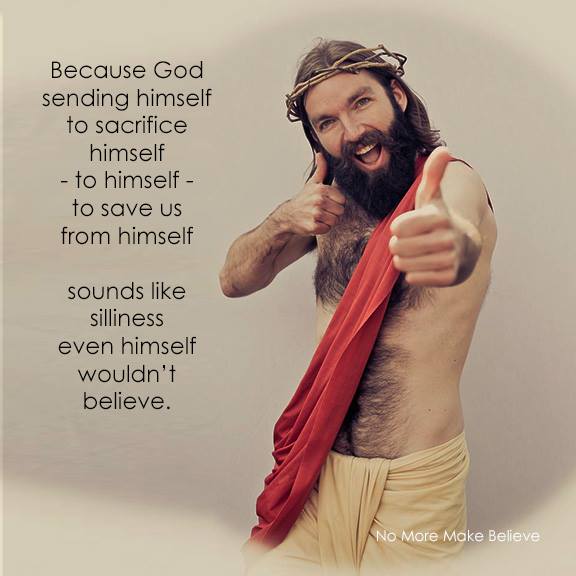
This bit of ‘logic’ pales in comparison to the fact that in order to forgive us he must sacrifice himself to himself, to appease himself to save us from himself. See the problem? Well Ed, what if then the whole doctrine of salvation as it currently stands is man-made and that isn’t the real doctrine of salvation God wanted? How then would we ever know the real one? It seems a little too confusing for something so important as eternal life.  My response that the current one is man-made? – exactly, and that is probably true from the start of Christianity to where it actually stands today.   It seems to me that this idea is just as man-made because a supreme being could have come up with the simple plan to just forgive people. As Jesus is praying in the garden “if it is possible, let this cup pass from me” we would see the opening up the heavens and God saying -“You know what, I have a better plan – let’s just forgive people like I expect them to forgive each other.” That would be just, logical and consistent.

There is also another theological side issue – How much of a sacrifice is it really for Jesus if he knows for certain (which he indicates three times in the gospels) that he will rise from the dead?  Honestly, if he knew that and most people who have faith believe he did and the text certainly seems to indicate he did, then it isn’t that big of a sacrifice? He knows he is not going to ultimately be dead in the end; so why not do it, as there is no ultimate risk to him?  In the end, Jesus is risking nothing himself as God, just going through the inconvenience of temporal suffering.  Why? To make a point? What point would that be, when there is nothing actually sacrificed in the end? He lives and knows he is going to live so why the anguish?

Spirituality:

I guess this leaves me with the question from a spiritual point of view as to what salvation is? Or does it?  I mean, if there is no such thing as sin, there is no need to be saved from it. Of course, then I could be left with the question of what the real divine reality might expect from me?  I guess the only thing then is to live a good life regardless of what that divine reality might be. Marcus Aurelius rightly observes, in my opinion, this in his famous quote on the good life.

See the source image

Of course, you are kind of left to things yourself as to define what virtues you will live by to attain that good life. In short, what is defined as a good life is left to you.

Conclusion:

The implications of losing the whole notion of sin and a need for salvation have been very liberating. There is no guilt or shame in my heart or mind at all these days.  I do try every day to be a better man than I was the day before. This, I have found is a far better way to live. 

Better yet, is discarding the notion of a loving God who also sends people he loves to hell.  Because the god of the Bible seems to have some major issues with justice, but that is the subject of the next post.  

I remain,

The Rabyd Skald – Wandering Soul, Bard, and Philosopher. The Grey Wayfarer.

Skaal!!!

“Freya’s Chambers: Introduction and Opening Thoughts” – Freya’s Chambers

Happy Mani’s Day

Disclaimer:  The topics covered in Freya’s Chambers include serious discussions of sex, sexuality and related issues.  If it isn’t your thing; you can move along, otherwise enjoy and feel free to discuss.

Opening Remarks: 

In today’s modern world, sexuality is a difficult topic, to say the least.  The issue of gender and identity ignites more heat than light and I am not sure that today I am going to help with that.  That’s not the point for me in this post anyway, but more to get a grasp on my own thoughts on the subject by introducing a running discussion. I also want to introduce to you a new topic area which, in keeping with the Norse theme of the blog, I have titled simply “Freya’s Chambers”. Freya is the Norse goddess of war, love, sex, and fertility. It will have its own page and will appear periodically whenever the yen strikes me to write on subjects relating to sexuality in pagan thought.

I need also to point out at the beginning that these are my thoughts on the subject and don’t necessarily represent all pagans, deists or humanists.  In fact, that is part of my motivation for writing on these topics is to sort pagan sexuality out a little because viewpoints on these topics are varied.  The main issue though is that for most pagans, sexuality and spirituality are linked because sexuality is a part of life and living and thus part of the universe that is sacred. Sexuality is as much a spiritual reality as a physical and cultural one. Sacred Sex is a part of the spiritual viewpoint of pagans.

I also have to note that my deism and humanism kick in here as well as the fact I don’t dismiss the findings of biology, psychology or science in general when it comes to talking about gender, sex or sexuality.  I try very much to realize that we do have some scientific findings on the subject that presents both facts and truth in these areas.  I also realize that there is much that is not understood, and this dwells in the realm of spirituality and theory and these also factor in for discussion.

One final note, I was very well known as a Chrisitan blogger who wrote extensively on what the Bible says about sex, nudity, sexuality, and gender.  I have to warn you that my departure from Christianity has changed a lot of my viewpoints.  I have no appeal to authority anymore when it regards these topics.  Mostly I rely on my reason and experience on the deist/humanist side and my intuition and wisdom for the pagan side.  Some might comment at this time that it looks like I am trying to archive male-female balance in my viewpoint.  I am not sure about that but one thing is for sure, that you will see a massive viewpoint shift in these topics compared to what I used to write as a Christian.

So what will be some of the topics in Freya’s Chambers?  Well, sex and sexuality are broad topics to be sure, but below is a shortlist and a little discussion of where I am currently on some topics as examples.  This is not an exhaustive list of course, but I think it will give you a good idea of what you might encounter when you see the suffix heading “Freya’s Chambers”.

Sexual Identity: 

See the source image

I am going to say that if I take science into account, this whole discussion of gender identity for me kind of crystalizes into a few indisputable facts: 1) If you have a penis you are male, 2) If you have a vagina you are a female and 3) males and females are different.  Even pagans have ingrained in there viewpoint the idea of feminine and masculine spiritual forces.  It is part of the mythologies, part of the spiritual viewpoint.

For me, it is also a question of acceptance of self.  You don’t find spiritual peace by trying to be something you are not. Part of achieving spiritual peace is embracing who are and part of that is accepting that you are a man or a woman. There are exceptions to this dichotomy, even genetics tells us that, but such exceptions are rare and not the statistical norm.  The vast majority of us are male or female and that is not just physical but also sociological and psychological

Note this is about identity for me, not orientation.  Personally whether or nor someone’s sexual orientation is a choice or ingrained in who they are is irrelevant to me.  It matters little to me as a deistic humanist pagan, and as a libertarian, who someone has sex with as long as it is mutually consensual. Their business, not mine. I trust that each person can make those choices for themselves, and I am not qualified in any way to judge them right or wrong in their choice.

Nudity and Nudism:

See the source image

Leaving Christianity has allowed me to basically discard the whole tightrope walk of trying to look at nudity and where you fall into sin. Sin is gone in my thinking, so nudity is now looked at as purely as rational and pagan issues.  Things are actually quite free and open now for me on this topic.  Most pagans don’t have a view of nudity as wrong, just sometimes culturally unacceptable by others and in certain contexts. The human body is a beautiful thing and the naked human form should not automatically be seen as sexualized.

Don’t get me wrong there is a sexual side to nudity. To say that seeing a naked human being does not arouse sexual attraction at times is simply to deny reality. But just because a man or woman is naked; it does not follow that they are asking for sex.  Some people learn to distinguish between sexual intent and nudity and some people don’t.  For me the two can be together, but not necessarily.  It really comes down to context. Just because a person is naked, it does not mean that I can look past respecting them as a human being.  I should see their humanity first, then other things and only if it is clear those other things are presented to me.

For me, being an at-home nudist, I have discovered freedom I accepting myself to be very powerful.  I have to also admit, that I sometimes feel far more comfortable in my skin than in clothes. There is also the dual call in my heart, my inner wolves of need and want howling if you will, to shed my clothes both outside and with others. If my self-discovery has grown this much simply at home, I wonder what else could be discovered in other contexts. It is something I wrestle with because of past religious indoctrination and current relationships.

Masculine-Feminine Balance:
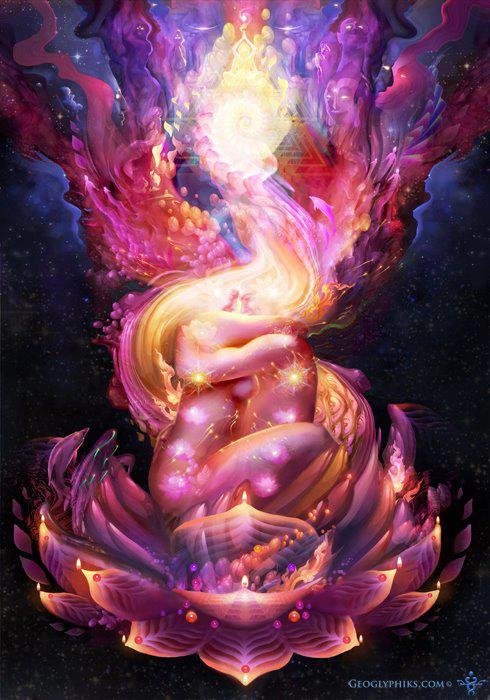
There is a reason I am not Wiccan and it was my perception very early on, even as a Christian, that Wiccans are imbalanced as far as gender. There is much emphasis on The Goddess and little else that is masculine.  Hell, their male practitioners argue whether they should be called witches or warlocks.  I just find Wicca to be very feminine and strongly so.  It is why Asatru is my choice because it is much more balanced.

Achieving balance for myself mostly involves making sure I embrace the strength of being a man within my self and the strength of the feminine around me. I get most of the later from the women in my life whose influence can not be understated.  I am very masculine with all that goes with it.  To have feminine perspectives in my life to balance that out is appreciated at all times.

Equality: 

See the source image

The whole ‘God the head of man, man the head of woman’ Christian viewpoint I have discarded like the patriarchal trash it is.  Talk about men writing a book to justify their male dominance over women, and you will not get a better example than the Bible.  I am egalitarian in my orientation and that means I will point out equality in both directions.  However, you also better be able to demonstrate the inequality is real with things like research.  That said, the genders have different strengths in and of themselves, but I don’t feel that one gender should have cultural, legal or social advantages over the other because of them.

For instance, on the one hand, women can rightly say that their roles in society are often forced on them.  There have definitely been some issues as far as to pay, opportunity and the like. On the flip side, the fact that men get longer sentences for the same crime and dower laws still exist requiring a man to take care of his ex after they split, but no such condition exists the other way, is also not equality.  In the United States where I live it has only been recently been challenged that men can be drafted for war but not women.

Going back to nudity above, I side with the ladies in saying if a man can take off his shirt and go bare-chested in certain public places, so should a woman.  On the flip side, the laws are less harsh when it comes to sexual misconduct when a woman exposes her genitals than a man in some states.  My point is that the whole social, cultural and legal world has these inequalities and I fight for their removal but it goes both ways.  It might be summed up in the simple example we need to move from saying: “it is not right to hit or rape a woman” to “it is not right to hit or rape another person”.

Gender Roles:

See the source image

Inequalities aside, genetics, science and such tell me that males and females not only are different right from birth, but they also tend to gravitate to different roles in society naturally. Some of these tests have been interesting as girls would dress up the trucks in dresses and boys would turn the dolls they were given to play with into action figures.  I don’t think we can escape the fact that in society women and men embrace certain roles naturally and some roles are just not possible by one gender or the other. We need to be equals as far as legal and societal rights; but in the end, some things just come naturally to one gender or the other.

I take on the feminists on this issue a lot where, for instance, they complain that there are not a lot of women CEOs.  I point out to them there doesn’t seem to be a lot of women coal miners or sewer workers either. It gets comically interesting when it is revealed that what a feminist considers equality doesn’t involve jobs that are dangerous or dirty most of the time. It is pretty clear that men gravitate toward the dangerous and dirty while women like secure and clean.  It is also clear that on dates, the man is still expected to pay for things, etc.  I think feminists reveal a lot of hypocrisy on this one and even women can see it, which is why many women refuse to identify themselves as feminists.

Sex:

See the source image

If you ask me the one thing that keeps me believing in the spiritual side of life above all others – it’s sex. Sorry, there is more to sex, at least to me, than just fucking.  Perhaps my perspective has been limited by the fact I have only made love physically to only one woman in my life, or perhaps it is why I feel that way.  One thing I do know that more is exchanged between us when we make love than bodily fluids.

I will talk about sex from time to time in a spiritual context. In this, you might also see the idea of sexual attraction as well. Under this topic, you might find other things like the effect technology has had on sex, etc.  I have had a few experiences of a sexual nature outside sexual intercourse with more than one woman along these lines, so there are notes that could be made.

Conclusion and Final Word: 

Throughout you will see me make note of changes from what I thought before as a Christian and now what I think that I am using more of a deistic humanist pagan mindset. I probably will never speak this broadly again and will take one topic at a time from now on. Mostly today I was pretty much shooting from the hip.  New posts in this topic suffix will probably be deeper in thought.  Mostly though there is a lot of changing things in my mindset that I am trying to crystallize and the best way for me to do that is to put them on digital paper.

Welcome to Freya’s Chambers.

I remain,

The Rabyd Skald – Wandering Soul, Bard, and Philosopher. The Grey Wayfarer.

Skaal!!!

“Objections to Christianity – Part 2 – Sin: An Imaginary Man-Made Problem” (Revised August 2019) – Odin’s Eye – Theological Objections to Christianity

Happy Thor’s Day

August 2019 Revision Notes:

It has been almost a year since I wrote these originally starting in November of 2018.  When I got to the rotation in Odin’s Eye the last time where I was going to deal with these objections again, I saw no need for revision but rather simply laid it out there that no one had responded to them to that date and moved on into the rest of the Rotation for Odin’s Eye. 

This time though I feel that I need to spend four weeks of Odin’s Eye doing some revisions that will either clarify my position, add some other thoughts or edit for other issues.  Such edits will be marked by italics.  When archived, they will appear under the original post on this Page: My Four Theological Objections to Christianity

 Mostly though this is a cut and paste with some revisions. As the series goes on there will be more revisions as I can see the need for things to change a bit in the other three objections. In part two, I felt the need to add a few paragraphs for hopefully a clearer explanation. 

Introduction:

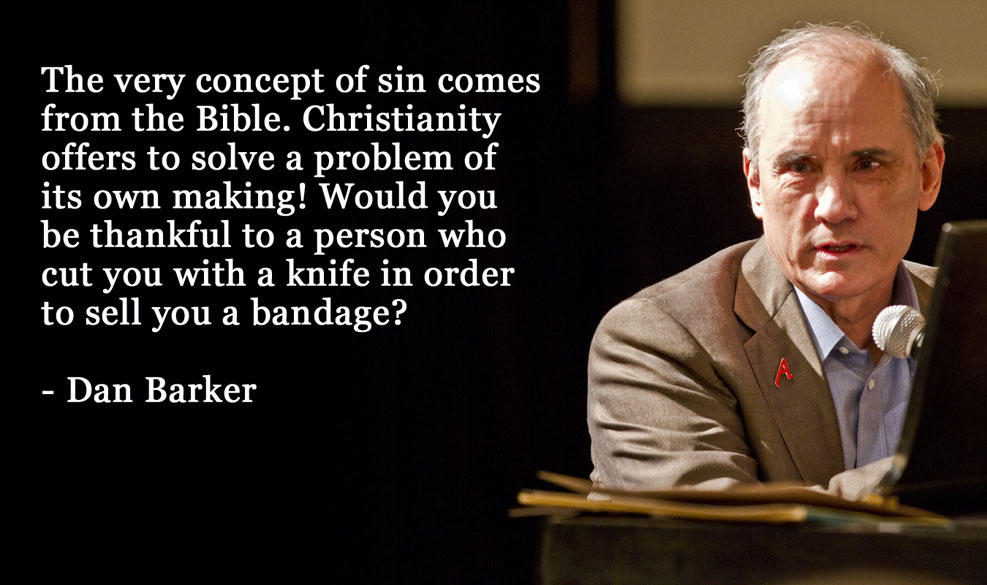
My loss of faith really started here.  I can actually go back to a message I was preaching on sin and salvation through Christ and the fact this quote from Dan Barker from Losing Faith in Faith ( a book I still want to read) was rolling around in my head.  I was trying to think of something that would make his assertion wrong.  I got up preached the message and sat down.  I can site this moment as the time my crisis of faith began. I realized he was right.

I realized there is no proof that sin rationally exists.  I only believed that because that was what I was told by a preacher and read it in the Bible.  Unless the Bible was truly inspired, then I had no natural or logical proof that there was this thing called sin, a sinful nature or my actions were righteous or sinful. God Himself had never come down and told me I was a sinner, that was men either in the form of preachers or the men who wrote the Bible.  Over time, I began to realize that sin has the same problem as the inspiration of the Bible – the Bible asserts it but never proves it.

Going back to my pulpit moment, I sat there thinking and my faith started to unravel.  I sat there thinking: “I make a living by telling people they are sinners so they will feel guilty, then they accept the ‘gospel’ and feel better.  Out of gratitude they throw money in the basket and pay me. WTF.”  It was a bad moment for me, and one that led to my eventual downfall over two years later.

Faith:

If you are a believer you take the existence of sin as purely a matter of faith.  Basically, if you believe that sin exists, you do it for the same reasons you believe the Bible is inspired.  You have faith it is true – you hope and believe it is true, but you do not have a proof or a rational argument to say it is true.  The Bible writers assume sin is real and a problem.  They never prove it, and the believer is left to take that sin exists as a reality and that God has solved it.  You believe all that without rational evidence.  It is purely a matter of faith.

Now I want to emphasize that this does not disprove sin’s existence, but it puts on the same plane as believing in a lot of things that we believe exist but have no proof of.  The issue then is should we order our lives on faith in the idea that man is sinful, or go based on our own observations of human nature and conclude that if anything we can have faith in the fact that all human beings are human. 

Religion:

I now think that sin is a man-made concept.  It probably originally. like so many things might have had a good intention.  To keep people from making bad decisions given the cultural context.  I mean sex without birth control and modern medicine can lead to deadly diseases and unwanted pregnancies. So you tell people not to have sex except with people they are committed to and get married to so the child will be legitimate. The practical side of this is the lessened risk of STDs and unwanted pregnancies. It is a wise course of action.

When just showing the wisdom of this to others doesn’t work, you throw in the wrath of God to bring about a more forceful form of persuasion – tell them it’s a sin against God and He will bring down his wrath on the one who sins.  This is where you make up the concept that sexual sin is an affront to God and he will send you to hell if you don’t repent of it and stop doing it.  It is ultimately a fear tactic that uses guilt to prevent certain behaviors.

The dark side of this gets worse though as people genuinely think they’re taking the side of God when the punish sinners.  The real problem with sin is that some people think they have risen above the concept of it.  They feel qualified to judge others using their religious beliefs. It gets worse because the said concept can be held by people in power who wish to impose their views on people to create a ‘righteous society’.  To force others to follow your moral code of some behaviors being sin and thus outlawed. The problem is the difficulty using reason to prove something is a sin.  It’s not self-evident.

Theology:

I don’t believe in sin as a theological concept anymore. I think in large part it is a bad one because all it does is produce guilt and then in a guilt-ridden state people can be manipulated.  I haven’t looked at this fully but I have a theory a large part of religious people have a poor self-concept and that is because they have a large amount of guilt associated with their ‘sins’.  This leads them to think they are bad or even evil people and the cycle of self-destruction begins.  You spend a lot of time putting on masks at that point to protect yourself from the social wrath of being a sinner while at the same time being wracked with guilt because you can’t seem to escape your sin. If it sounds like I have been there – yep.  I would say a lot of my initial causes of depression came from this struggle.  Yes, I am saying that religion, particularly the Christian notion of sin,  may have has a great deal of influence in causing my depressive issues.

My theology about mankind has certainly changed since I discarded man as a sinner.  I don’t think of myself as a sinner but simply a human being. I am not all-powerful, all-knowing or all-present; so I am going to make mistakes and there is really nothing I can do about it. I have needs that are normal.  Wants that are normal.  I have my reason and wisdom to guide me. I am not perfect and I make mistakes and have errors in judgment, but that doesn’t mean I am a sinner, just human. To me, life is no longer about overcoming sin and removing it from my life.  Rather, it is about discovering the virtue in me and causing it to grow. And there is a virtue in who I am as a human being if I look for it and develop it.  It’s about growing into the best human being I can be.

Note: Unlike the atheist, I have not discarded the idea of a spiritual side to mankind at all, but rather I am saying that sin is not something I believe is real about it.  Humanity is more complicated than he is all bad or all good. 

Spirituality:

This is why spiritually speaking I spend more time meditating on the Nine Noble Virtues as a way to learn where I need to grow. I am not trying to get rid of sin out of my life, praying that God is gracious, etc. I have come to see some things as normal and human, not sinful.  My goal now is to build character, not remove sin because I think sin is a made up imaginary concept.  I meditate on the good things, not the bad things.  I grow the good in me, rather than trying to deny my humanity by calling it sinful. I find it makes me much happier and far more at ease in this world.

One good example of this is my changing attitudes about sex and sexual desire. I feel sexual desire is normal in humanity and it is normal to feel a sexual desire toward a lot of different people.  Lust is made up to me unless you are using the term to describe passionate sexual desire which is neither good nor bad. What might be a factor in sexual desires is wisdom and reason saying that not all sexual interaction is beneficial. Some of it could be detrimental.  The real issue is that sex in and of itself is not sinful in any form. Enjoy, but be smart and wise. 

In my case, sexual fidelity is part of my marriage because that is the oath I swore as a Chrisitan that I still honor. If it wasn’t, having sex with another woman would not necessarily be a violation of fidelity as there is no sin to it, but one might challenge my wisdom.  Like it or not people get jealous and envious and that can lead to relationship issues. There are also cultural expectations to consider which do have an effect on how a person is perceived. This is not about sin anymore is the point, but rather what effects it might have on relationships and troth issues may or may not be affected depending on the specific nature of oaths of fidelity. 

Conclusion:

After concluding that the Bible is a human book with no proof of inspiration and the sin is a concept made up by the writers of the Bible.  There are only two things left on my four objections to Christianity.  The first is the other imaginary thing the Bible creates which is the solution to sin being Salvation in Christ and finally, the god of the Bible seems to have very suspect standards of justice.

The Rabyd Skald – Wandering Soul, Bard, and Philosopher. The Grey Wayfarer.

Skaal!!!

“Basic Pagan Principles: Recap” – The Pagan Pulpit

Happy Sun’s Day

Announcements:

We don’t pray here – we figure God, the gods, goddesses, or whatever powers that be either know already, don’t give a fuck, or are busy with more important matters than our petty stuff. We also kind of assume that they expect us to do stuff that we can do for ourselves and that we will do them ourselves and not be lazy. We also believe in being good friends, so we don’t presume on our friendship with the powers that be by asking them all the time for stuff while giving them nothing in return.

We also don’t take an offering here.  We figure the powers that be probably don’t need it.  Let’s be honest, offerings are not given to the divine powers, they are given to an organization to support it.  Just being honest. God, the gods or whatever never sees a dime, farthing or peso of that money; it all goes to the church, mosque or shrine.

Theme Song: ‘Völuspá’ – Einar (Live @ Castlefest Winter Edition)

Nice to hear the song written by an artist sung by that same artist.  Guy has a great voice.

Meditation:

No photo description available.


Text:

Source: http://exotic-pets.yoexpert.com/exotic-pets-general/what-are-some-of-the-basic-principles-of-paganism-2192.html

Sermon:

The above link will take you back to the original source for many of my thoughts on this series.

To recap the basic pagan principles:

  1. Responsibility of Belief – That the responsibility for what you believe about religion and spirituality lies with you and you alone.
  2. Full Personal Responsibility – That you and you alone are fully responsible for your actions and personal development.
  3. Everything is Sacred – That everything in life has a spiritual quality to it and sacredness to it.  You should respect that.
  4. Freedom of Choosing a Diety – That what diety you create and follow is your own choice.
  5. Scope of Consciousness – That consciousness is greater than the five senses, that there is a spiritual part of consciousness that exists.

When I say I have pagan tendencies to people this is what I mean.  As a deist, I am very much rational about the whole faith and religion question. Knowing that nearly all of what is termed religion is made up by human beings so pick what you want (Principles #1 and 4).  My humanist side though states that we alone are responsible as human beings (Principle # 2). My pagan side says that spirituality exists and therefore I need to respect the spiritual quality of all things (Principles #3 and #5).

I have personally enjoyed this series and meditating on its principles.  It has been enlightening, to say the least.  Next up will be me going through a book on Asatru I have been reading and digesting.

Parting Thought:


Image may contain: one or more people, text that says 'ç±³ Never push a loyal person to the point where they no longer give a damn Proud Odin's Sons'

I remain,

The Rabyd Skald – Wandering Soul, Bard, and Philosopher. The Grey Wayfarer.

Skaal!!!

“People as Sacred” – Odin’s Eye – Humanism

Happy Thor’s Day

Discussion:

A humanist is a person who sees human beings and the human race as the central thing to solving human problems.  A pagan is a person who finds spirituality in all things.  I want to talk about how these two intersect.  For me, people are both the solution to their problems and sacred as part of the universe.  I don’t look to political or religious forces to solve human problems.  Both of those things tap into tribalism hard and push us to fear and hate one another. If you looking for the evil that might exist, you don’t have to look too far into any political or religious organization and you will find some.

As a humanist, I don’t think political ideology solves problems. Speaking as a political scientist, I can tell you that politics is about putting groups of people against one another to gain power, not solve problems.  Unless you see solving the problem as subjecting other people to what you think is right and forcing them, politics and government is not the way to go.

As a pagan, and former Christian, I can see how religion is used much the same way as it influences culture to label things ‘sinful’.  Once again, this is then used to put groups of people against one another as ‘the righteous’ put themselves against ‘the sinners’. Using shame, shunning and general looking down noses at others because ‘they don’t have the truth of our faith’, you can see once again how this is used to control people through fear and manipulation. Sorry, religion tends to create more problems not solve them.

It seems if human beings want actual solutions to their problems, they might want to look at themselves and stop joining religious and political groups that are not about solving problems but rather are about control.  Time for an alternative way of looking at people that might actually solve their problems.  Time to start looking at people as sacred.

Time to Look Through the Eye:

Faith:

Having faith in human beings to solve their own problems is difficult at first.  Both the above forces fo government and religion do some pretty good PR to label some people as the problem and having the need for others to control them. I always marvel at political and religious leaders ability to label whole groups of people as the problem and not themselves of course.  They are the solution.

I can say that if you sit back and really think about it there are two things I can have faith in: 1) That things are getting better all the time for humanity, and 2) That a whole bunch of people are trying to convince you that things are getting worse for their own gain.  But if I look at it objectively and consider people being sacred. You can have faith in each individual human being to solve their own problems if they are given the freedom to do so. Letting people be themselves is the most sacred and loving thing you can do for someone else.

Religion:

Religion, in general, sees humans as problematic or having problems.  Paganism sees them as sacred. Not problems but wonderful parts of the universe. Religion involves chains and spirituality involves removing them.  The first step in seeing people as sacred is to stop thinking they need religion to help them overcome their problems.

Because each person is sacred, they hold within themselves the ability to solve their problems.  Religion always tries to get a person to look to the divine, or faith or something outside one’s self to solve the problems they have but in truth, each person’s decisions will either lead them into problems or out of them.  Religion makes a lot of false claims and promises they cannot prove, but one thing you can know for yourself is there is always a better path that you can take as a human being if you tap into it.

Theology:

What needs to change is our understanding regarding humanity.  As a Christian, I taught mankind is sinful and only god can get them out of the problems that cause. The problem is there is no evidence that sin even exists outside the say-so of the Chrisitan preachers. That theology certainly does not look at people as sacred, that is part of the goodness that is creation.

As a pagan humanist, my viewpoint of humanity is very much changed.  Each person is unique and the most sacred thing they all have is the ability to choose their own direction.  To choose their own path. It is this that must be guarded and protected as the previously mentioned forces of politics and religion will always try to take this away.  What makes a person sacred is their ability to sovereignly choose for themselves the path they want to walk.

Spirituality:

The spiritual side of all this is that to walk this path we have far more going for us in helping us to do do this.  That in addition to their being a rational and logical side to life, there is an emotional and passionate side.  There are also the factors of driving needs and wisdom gained through experience.  All these combine into a spiritual walk that allows us to use all we are as human beings to set and guide the choices we make.

Part of that is respecting that people are sacred and walking it as a spiritual path is to guard it for ourselves and respect it in others. To interfere in a person’s choice, even benevolently, is to look at them without this respect for the fact that they are sacred and what makes them sacred is their ability to choose for themselves what path they are walking.

Conclusion:

In the end s much as sometimes I can think people are stupid in their choices, I respect that their ability to choose is sacred to them.  It is what makes each individual unique to me and worthy of a measure of respect.  Now, this doesn’t mean all choices are good ones or even benevolent and some choices can be stopped if they violate this principle.  A choice to force, coerce or defraud someone is one that does not have this respect of another person’s sacredness. It should be stopped. But there are many choices that I would not make but they are not violating the principle of sacredness so I should not interfere.

It is amazing to me what peace of mind comes when you leave people to be sacred in their own lives. The freedom from the desire to control and manipulate is a wonderful one. It also brings about the simple truth about yourself – you are the product of your choices.  Those choices are sacred no matter if they were good or bad because as a human being you made them.  That is freedom with responsibility.

I remain,

The Rabyd Skald – Wandering Soul, Bard, and Philosopher. The Grey Wayfarer.

Skaal!!!