“The Virgin Birth of Jesus” – Odin’s Eye – Bible Problems

Happy Thor’s Day

Discussion:

What I am about to do here is give at sample or teaser of what I am doing for my non-fiction book.  What I am doing is taking my expertise gained from a biblical studies degree, a theological studies degree and twenty years experience of being a pastor and doing a class I did many times – Life of Christ.  I am however this time doing it from a skeptics point of view.  I am doing it as a non-believer and a critic of Christianity and The Bible.

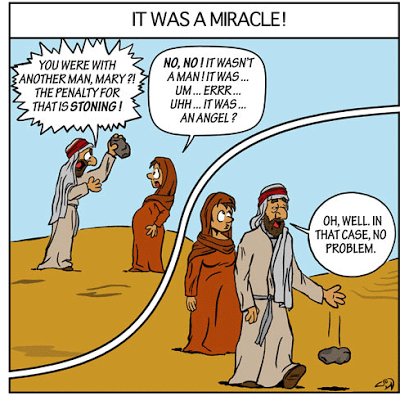
Today I am going to give a brief synopsis about why I think the virgin birth story is a tall tale concocted by many people who had personal and political reasons to do so.  The theory I am running with here is my own which is that there was a man named Jesus of Nazareth and that he did indeed have disciples.  That those disciples watched Jesus as he fought the religious establishment.  That establishment then did perhaps have him crucified by the Romans because they came to hate him and the threat he posed to their political and religious power.

This is where those disciples create mythology surrounding the man known as Jesus of Nazareth.  They knew the Messianic prophecies and began to retroactively go back to his life and spin things to fulfill them.  One of those things involved the fact that there was a prophecy where the Messiah had to be born of a virgin.

Therefore the Lord Himself will give you a sign: Behold, a virgin will be with child and bear a son, and she will call His name Immanuel. – Isaiah 7:14

One of the things that may have very well have been true about Jesus is that his origin may have had a little scandal attached to it.  That is there was a question as to who his father was or that it was clear he was conceived out of wedlock.  As a political scientist, I can see how scandal can be turned to opportunity if it is spun right.  So, no Jesus wasn’t the product of an illicit affair or the fact that Joseph and Mary had sex before the wedding day, let’s write it this way to turn him into the Messiah.

Now in the sixth month, the angel Gabriel was sent from God to a city in Galilee called Nazareth, to a virgin engaged to a man whose name was Joseph, of the descendants of David; and the virgin’s name was Mary. And coming in, he said to her, “Greetings, favored one! The Lord is with you.” But she was very perplexed at this statement and kept pondering what kind of salutation this was. The angel said to her, “Do not be afraid, Mary; for you have found favor with God. “And behold, you will conceive in your womb and bear a son, and you shall name Him Jesus. “He will be great and will be called the Son of the Most High; and the Lord God will give Him the throne of His father David; and He will reign over the house of Jacob forever, and His kingdom will have no end.” Mary said to the angel, “How can this be, since I am a virgin?” The angel answered and said to her, “The Holy Spirit will come upon you, and the power of the Most High will overshadow you; and for that reason the holy Child shall be called the Son of God. “And behold, even your relative Elizabeth has also conceived a son in her old age; and she who was called barren is now in her sixth month. “For nothing will be impossible with God.” And Mary said, “Behold, the bondslave of the Lord; may it be done to me according to your word.” And the angel departed from her.  Luke 1:26-38 – NASB

Suddenly the scandal becomes an opportunity to tell the story in a different way and Jesus fulfills the prophecy of being born of a virgin.  So what is the actual evidence?

Time to Look Through the Eye:

Faith:

In order to believe in the virgin birth, you have to believe that God can make a woman pregnant which is not a stretch if you accept an omnipotent god. That Joseph was not involved and that he suddenly became cool with the fact that another man has sex with his bride to be and knocked her up.  He has to buy the story himself.

Mostly though you have to believe that Mary herself is not lying about the angel.  Because the only witness of that event is Mary herself.  Understand that even if I take the account as true, the only witness even in the gospels of the event is Mary and the only gospel that records it is Luke.  Luke is probably the last synoptic gospel to write.  One could theorize that Luke is reacting then to the fact that Mark says nothing about a virgin birth and Matthew only deals with Joseph’s reaction and no one has addressed Isaiah’s prophecy to that point.  If you believe in the virgin birth, you simply taking the word of one witness – Mary.  A girl of fifteen who finds herself pregnant in a culture that stones women who commit adultery or at the best puts away women privately to live out their days in silence.  Which is more likely at this point – God impregnated her or that she came up with a story to cover her pregnancy out of fear of reprisal?  Or she made it up later to vindicate herself after the fact when people are starting to believe her son is the Messiah.

Religion:

Let’s understand something. the virgin birth in the Bible does not stand alone as the only one.  Religions around the world have tons of virgin birth stories and Mary was not unaware of them. This is something that is well known and well published. Just look it up for yourself.

The thing is though for Christianity a lot of theology regarding sin and the biblical god is wrapped up in this story being true; so of course, they defend it regardless of how common such a story is in mythology around the world and how little testimony there is to support the actual story.

But understand that even under the Bible’s own standard of establishing every fact the virgin birth story fails.  It only has one witness Mary herself and she certainly has plenty of cultural and personal motivation to make it up.  Luke is the only direct record of it but it is still her story alone, he just records it. This fails the two or three witnesses required even by Biblical Standards, particularly the Law of Moses.

Matthew records Joseph’s response but even his response might have had a personal motivation if he either loved Mary or he was the cause of her pregnancy.  How he reacted really has only one witness – Joseph himself.  He may have simply been a man who took responsibility for his actions and we are assuming he was even around for Matthew to interview as he might have been dead.  It is easy to see how Matthew who was writing with the goal of persuading Jews to become Christians might make up Joseph’s story based on stories of others. But that makes is second-hand hearsay, not reliable evidence.

Theology:

This story absolutely is essential for doctrines such as original sin and the incarnation of Christ.  For the early Christians, they needed a story that fulfilled some of the prophecies so going back a retroactively recounting things with their own spin on it became essential for the accusation that the Jewish leaders had killed the Messiah.

The motivation for this is that Jesus may very well have been a man who successfully created a movement of reform and the Jewish leaders, by killing him, had created a martyr.  It is not hard to see how the disciples, motivated by a desire for the resurrection to be true and to create Jesus as the Messiah, would stretch the truth and follow rumors and ‘urban legends’ of Jesus of Nazareth to do so. For later Christians, these become the basis for theology that allows Jesus to be the answer to the sin question and how Jesus was both God and Man.

Spirituality:

While a great many Christians, particularly women, draw a lot of spiritual strength from Mary’s Story, I look at it more as identification with a character caught in a bad situation that has a great story to get herself out of it and go from being a immoral unwed mother, to the mother of the Messiah.  I can see where a lot of women would love that idea and emotionally and spiritually resonate with it. Even those who might think it is not true fully understand given Mary’s Culture why she would do it. In the movie Saved! – the character Mary remarks in one scene how she could understand, being pregnant herself in the movie, why a girl would make up such a story.

Conclusion:

My thoughts are this, I think Jesus of Nazareth was a real person but I think after thirty years before the first writing on his life a lot of mythology and what we would term ‘urban legend’ became built around him that also got into the story.  One of the examples is the virgin birth story which appears late in the accounts like it was a reaction to criticism of Jewish leaders that the prophecy in Isaiah is not fulfilled by Jesus of Nazareth.  So Matthew records the story of Joseph with his reaction to her being pregnant and later on a little bit after that Luke does the same from Mary’s point of view.  Except this does not even meet the Bible’s own criteria of ‘two or three witnesses” as each account is only one person’s perspective and with no other witnesses.

What really happened?  Most likely Joseph and Mary had sex before they were married.  A common tale even back then.  Joseph may very well have simply decided to marry her because it was his child; which oddly enough the Law of Moses would have accepted provided he gives up is right to divorce her later. Joseph and Mary would have lived with a cultural stigma after that which would have cast her in particular as an immoral woman.

Fast forward some decades and their son actually becomes a great Rabbi and critic of the religious leadership.  He gets killed and becomes a martyr.  Mary finds herself with the opportunity presented by the new but fanatical Christians to vindicate herself and be the mother of the Messiah, to no longer be considered an immoral woman.

So that is what she did.  The story gets changed so that she is a virgin and both she and Joseph have visits by angels no one else sees and they decide to get married after all. She was a virgin until after Jesus was born and the prophecy fulfilled.  Of course, there are no witnesses to this other than Mary herself and so we must take her word for it. No physical exam, no other witnesses of the angels in question, nothing but her word.

I think the more simple explanation is she made it up to vindicate herself.  It is not something Christians want to hear but it seems to be very likely given her culture and her desire to clear her name would have been very strong.  It is just unfortunate how far people have taken this legend. I mean people actually pray to this woman now and she is probably nothing more than a woman who either told the story to save her ass or vindicate herself as an older woman who had lived with the stigma of being immoral all her life. She definitely improved her status in retrospect so the story worked.

So there it is a sample page from my non-fiction book although it will be much more extensive and much more complete and referenced. Hope you enjoyed it.

I remain,

The Rabyd Skald – Wandering Soul, Bard, and Philosopher. The Grey Wayfarer.

Skaal!!!
“Moving from Religious Slavery to Rational Freedom” – Odin’s Eye – Deism

Happy Thor’s Day

Discussion:

I remember as a pastor helping people through so-called tests of faith.  Now as a more deistic person in search of a rational divinity, I would say that it wasn’t so much a test of faith, but a person running into legitimate problems with their religion and their rational mind trying to get them to see that.  A lot of the times this doubt of ones religion is interpreted as doubt in one’s faith and that is only partially correct.  Regardless it is not a bad thing, but rather our own mind trying to help us see that we have bought into a pack of lies.

Religion doesn’t seem to have very many positive purposes.  It is used to control and manipulates through fear or by creating imaginary concepts that are passed off as read to change people’s thinking and thus their behavior. Occasionally a religion might talk about virtue or character that human beings should have or exercise and in that regard religion might do something positive.

For myself, this transition into being a deistic humanist with pagan tendencies is about firstly a search to see if a rational god can be found.  Secondly, I am trying to throw off the trappings of religion to embrace a more spiritual and practical philosophy of living my life. I work to be spiritually attuned to the world around me but rationally grounded.  Mostly though I seek to be free of religion’s negative effects and thus freer.

Time to Look Through the Eye:

Faith:

I have faith that there is something beyond ourselves.  We talk of romantic love for another person but there is no rational reason to believe it is anything more than hormones being exchanged.  Yet, there we are talking and very much believing we fall in love, that making love is more than just hedonistic pleasure for the purpose of procreation, etc. Concepts such as beauty and friendship fall into this category as well, there is more to human senses that the five senses and more to determine what is true and real other than the rational mind. I have faith that this is so still.

Religion:

I avoid religion as much as possible. I find people who are religious to be inherently self-righteous as much of religion centers on “we have found the truth about the divine”.  It is this belief that leads people to think they have arrived in some place that is superior to others whether they openly say so or not. They find themselves looking at others either as poor wretches who still need to find ‘the truth’ or ‘sinner in the hands of an angry god’.  There are inherent condescension and hubris to any religious belief.

Theology:

My theology as a deist pretty much does not have a divine entity or entities that intervene in human affairs. I won’t say that I don’t believe miracles are possible as even Einstien conceded in his probability based universe, all things are possible no matter how unlikely.  I have just seen too much as a Pentecostal believer to believe miracles are as common as they say.  I have seen a tremendous amount of con artist fraud and sleight of hand magician’s tricks to buy that it happens. I don’t fall into the deist problem of believing in the larger miracle of creation and not believing smaller things called miracles can’t happen, but I also have found that most miracles have a rational explanation and usually it is some form of deception followed by a large amount of confirmation bias.

Spirituality:

I would consider myself no longer religious but spiritual.  My rational mind is part of that spiritually.  I just think there is more to mankind that a computer lodged in the head of a biochemical body. If there is any spiritual practice that has changed for me is I don’t spend a lot of time praying, if at all.  I realized that people when they get a result they wanted often cite that as proof prayer works.  I challenge such people to rationally do an experiment for a bit.  Keep a record of everything you pray about and be absolutely honest about how all of the things on that list are ‘answered’ I know when I did this about 20% of the things I was praying for came about.  80% either didn’t happen at all or things went a completely different way from how I was praying.

No, I spend more time thinking and meditating on things to understand them these days rather than praying.  I find it leads to far more freedom of thought and a better way to navigate through life’s challenges.

Conclusion:

I became a diest because of ignorance.  I think the human race simply does not know enough to dismiss the possibility of the divine. What I also am fairly sure of is that most religions are irrational and are basically attempts to either fool people or control their thoughts and behaviors using appeal to divine authority to do so.  I search for a rational divine, not one which is defined by others through religion.  It has been a very liberating choice.

I remain,

The Rabyd Skald – Wandering Soul, Bard, and Philosopher. The Grey Wayfarer.

Skaal!!!

“Still Four Objections with No Answers” – Odin’s Eye – My Four Theological Objections to Christianity Revisited

Happy Thor’s Day

Discussion:

I am approaching the date now where I will have been out of the ministry and away from Christianity for a whole year.  I have literally not darkened the door of a church in that entire time. I can’t say I miss it. Mostly, it is the simple fact that it no longer makes any sense to me. It is my four objections that I formed that stand stronger than my faith ever was.  No one has come forward and no one has offered answers. To review my objections with links provided:

Odin’s Eye -Objections to Christianity – Part 1 – The Bible’s Inspiration by God

Odin’s Eye – Objections to Christianity – Part 2 – Sin: An Imaginary Man-Made Problem

Odin’s Eye – Objections to Christianity – Part 3 – The Cross and Empty Tomb – An Imaginary Solution to an Imaginary Problem.

Odin’s Eye – Objections to Christianity – Part 4 – The Justice of the Biblical God – An Unbalanced Scale

I still stand by them.  For the Eye today I am more looking at my feelings about my former faith than anything else.

Time to Look Through the Eye:

Faith:

The most nonsensical statement in Scripture is Hebrews 11:1 –  “Faith is the substance of things hoped for and the evidence of things not seen.”  Most Christians think this is deep and profound but what it really is saying is that the only evidence and proof of the things we ask you to believe in is your own choice to believe them.  There is no evidence to prove any of our assertions, so the Writer of Hebrews simply asks them to take their own choice to have faith as the substance and evidence that proves it.  How would this be any different than simply asking people to believe in Thor or Apollo in the same way?  Nothing really. Christian faith certainly isn’t special in that regard.

Religion:

I now look at Christianity even more skeptically than before as a religion.  I see how religion can be used to control people and Christianity is a great perpetrator of that.  Before as a Christian, I was like George Washington in that I may have been devout but I was skeptical of a lot of things.  Now I am just skeptical.  I am working on my first non-fiction book that might be considered anti-Christianity, but trust me I have a list I considered on various topics and it is quite possible that this could be a deep well of ideas that could lead to a writing career doing nothing more but being a skeptic. Christianity has a lot of problems particularly in the USA and it could be a gold mine for a writer with my knowledge of it and my current mindset about it.

Theology:

My four objections are theological and they are also hard to break.  I know I have tried to break them myself for years.  This transition from being a theologian who is an apologist for Christianity to one that is a skeptic of Christianity was personally very difficult. But I refuse to waste my time being an apologist for something I now consider to be as made up as other religions. Christianity is sophisticated makebelieve, but makebelieve nonetheless. It’s my knowledge of theology that tells me that.

Spirituality:

I love it when I tell people I am no longer religious but spiritual.  I think they think I am some warlock chanting some magical shit, but nothing could be further from the truth. Mostly I draw my spirituality from experiencing life and all that there is to it. I find myself listening in meditation now almost exclusively, I don’t pray at all. I think not whining to the universe or the Divine and taking personal responsibility for yourself is a good first step in being a mature spiritual adult.

Conclusion:

I think to myself sometimes about the things I have lost by leaving Christianity.  Friends, colleagues and a sense of community that were all left behind. However, I have gained an honesty that I find much more satisfying and more appealing to my actual self than ever. I still remain open to someone trying to give me some answers, but so far nothing.  In the meantime, I walk the road of life. My eye wide open.

I remain,

The Rabyd Skald – Wandering Soul, Bard, and Philosopher. The Grey Wayfarer.

Skaal!!!

“The Wolf Within” – Odin’s Eye – The Grey Wayfarer’s Spirituality

Happy Thor’s Day

Discussion:

Well, the time has come in the rotation of Odin’s Eye to deal very directly with my own personal spirituality.  There is no wrong or right way to practice spirituality as a pagan. One simply looks at life and the universe and seeks to both understand its spiritual nature and develop spiritual strength within through doing so.  There are common themes in the spiritual life of pagans to be sure, but the ways of practicing paganism are as individual as the people that do so.

So when a pagan talks spirituality, they use their own metaphors.  For me, the concepts of Wolves, Ravens and other Viking metaphorical language are my way of describing abstract concepts.  The wolf is symbolic of that part of me that is filled with passion whether that passion is based on need or want.  It contrasted with the idea fo the Raven which is the rational and wise part of me.  The two work together to pick and follow the best path for me.

‘The wolf within’ is the concept of that part of me which is wolf itself.  As a Christian is used to deny and try to subjugate to slavery this wolf.  Now I let him roam free. That wolf is the sum of all I want and need.  The hunger and fury of being a man in this world. If there is anything that I recognize now, it is my wolf within is not inherently sinful or evil and I let him live free and roam free. Funny thing is, he is not all bad. Like anything else in human nature, I have found him to be the motivating force of my life and the one that is truly strong when I need strength.

This is an important spiritual concept for me right now.  That if there is a wild and untamed side to me, that is a good thing.  It is just a question of how to best utilize it.

Time to Look Through the Eye:

Faith:

I have always felt that if there is something to have faith in, it is my own passions. Passion drives us, but it can be a double-edged sword. That said, I have found that my intuition is something more right than wrong.  That intuition didn’t come from my reason or wisdom; although they certainly chimed in, it came from the gut level uneasiness that the prowler of the wolf within creates. It is this sense of danger that comes from the wolf, not the clear seeing raven of reason. When it comes to the danger these days, particularly with regard to danger in relationships, I find the wolf is far more my friend and something I place my faith in to be both wary and watchful.

Religion:

Religion always has a moral code based on whatever the founder of the religion says is right or wrong. Sexual desire becomes lust. Industry becomes greed. There is no end to this and it is more often this notion that so-called ‘baser’ instincts are labeled as sinful or evil than other things. Fulfilling needs and wants becoming bad or evil. This notion of higher desires and lower ones is inherently religious. I don’t find any desire sinful anymore, just a question of whether is it is wise to engage it.  I can understand all virtues engage all desires at some point and thus engage them all in their proper time and place. In pursuing virtue rather than religion, I can find the profitable in any need or want, even the base power of rage or hunger.  I don’t have two natures to feed one and starve the other.  I have a single nature that at times resembles a wolf and at other times a raven and sometimes both at the same time.

Theology:

I view mankind theologically as what they are.  Every part of us has a purpose in that, and what others consider sinful, I see as human. That is not to say there is no morals or ethics, but I can draw as much spirituality from passionate sex as I can from reading a book on logic.  All things that a human being wants or needs can be the door to spiritual strength and enlightenment. All desires, needs, thoughts, and experiences are righteous to me.  Ethics and morals for me is something that involves it all, not simply what supposed revealed religions says those morals and ethics should be. All parts of what it means to be human have the potential to lead to spirituality. We are not divided in nature as human beings; it is all the same human nature and no part of it is inherently good or evil.

Spirituality:

So here is the central path for me right now.  Learning how each feeling, desire, need, thought and experience can lead me to greater growth of my spirituality. To do this doesn’t just mean I embrace the raven but also the wolf that is inside myself. To feel is just as spiritual as to think, and I have found this transition enlightening. I grow spiritually when I hold my grandson; when I lift weights; when I make love to my wife; when I hang with friends; when I work. When I am doing anything really there is a potential to see something with my spiritual eyes and grow and gain the strength of spirit I need for each day.  That includes when I let the wolf out to hunt and play.

Conclusion:

The image remains for me of myself as a Grey Pilgrim. Part of what it means for me to be grey is not to label any part of my nature as dark or light.  It is just at times I am a pilgrim that is following his wolf’s heart and not just his raven mind. There is no difference between the two of them when it comes to who will give me the greater potential for spiritual understanding and growth. The wolves and ravens don’t just walk with me, they are inside me and I embrace them. They are what help me find my path and passionately pursue it.

Continuing to Walk that Path,

The Rabyd Skald – Wandering Soul, Bard, and Philosopher. The Grey Wayfarer.

Skaal!!!
Odin’s Eye – Religion Problems: The Growing Unaffiliated ‘Religion’ in the USA

Happy Thor’s Day

Discussion:

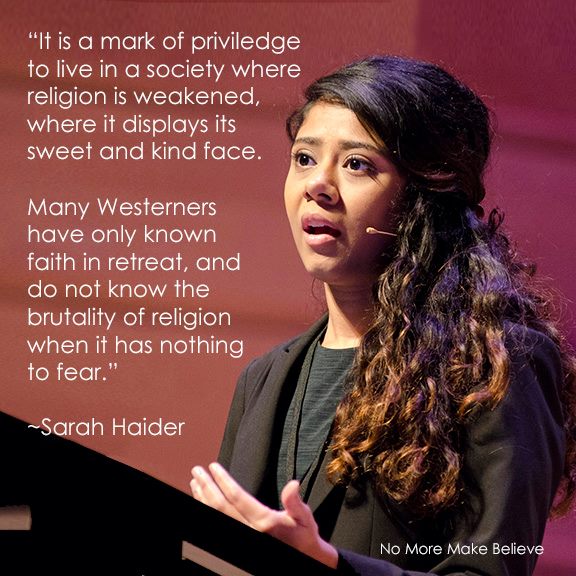
In the United States where I live, the number of religiously ‘unaffiliated’ is growing. What is shrinking is White Protestantism and Catholicism particularly with Generation X and the millennials.  Below is a good statistical graph of what is happening.

https://www.statista.com/statistics/245453/religious-affiliation-in-the-united-states-by-age/

In short, older people are clinging to what they know and were taught, but younger people saying ‘fuck that shit.” It also true that as people age death and what follows it becomes more of a thing to them.  But that does not account for the fact that a change is strongly evident. That Protestantism, particularly among whites but truly across the board, is shrinking in the United States and Catholicism as well.  What is happening?

There are a lot of things that one could say here, but for me, I understand one thing for certain – that information is far more available and then there is no way to prevent people from getting alternative opinions. If one has an internet connection, you can find alternatives opinions and arguments against any religion and faith with ease. The two generations that have enjoyed this state of affairs the most are the Millenials and Generation X.  Both of these groups have had the luxury of when any opinion is offered of being able to find a counter opinion in seconds and not just one counter opinion but many.

Of course, Christians fear what means. But in truth, this country was not founded as a Christian one but a secular one based on reason. It could be argued that we are simply returning to where we came from. I question whether this is a bad thing at all.  As we look through the eye today I can only tell my personal story of becoming one of the Unaffiliated. I don’t know if it is typical, but I think it might be the pattern for most.

Time to Look Through the Eye:

Faith:

In the case of Christianity, faith rests on the story of Jesus Christ being true. Not just parts of it but all of it.  Without this, faith is simply not possible.  Paul’s argument in the 1 Corinthians 15 is true in that regard that without the historical resurrection, Christianity is founded on nothing. The problem is that the gospels are problematic as I pointed out in this post: Odin’s Eye – Bible Problems: The Four Gospels. Because of this, the real Jesus of Nazareth is obscured by disciples who created what amounts to a tall tale with no historical verification. In many cases, stories are told alone without even the other gospels to back them up. Once the truth of this was apparent to me, I realized my faith in Christianity was based in large part on nothing but unverified stories that were no better or worse than the stories of any other mythology.

Religion:

My religion was no help here in preserving my faith.  Nor was my experience or education in Christianity a bolster to my sagging faith.  In fact, my traditions repeatedly informed me it was dangerous to ask such questions.  My response was: ‘if my religion cannot handle questions and the god they proclaim cannot stand the scrutiny of logic, then both are weak and not worth serving’. Religion as a general rule doesn’t like questions and would rather have people blindly follow than analyze the doctrines and theology.  My problem was I have always been a rebel in that regard; and when it comes to theology, I am a guy with a degree in theology and that journey actually drove me to realize that all ideas about the divine are strictly opinion based on man’s thoughts about god.

Theology:

As a theologian, I thought a lot about God.  Mostly the problem was how to get the god of the Protestant Bible to make sense. The best I could do was to abandon the idea that god controlled everything; because if he did, then he was an evil fuck.  No matter how you shake and dance, the god of scripture seems very human. Being jealous and acting in ways that would make tyrants look benevolent. He creates man knowing he is going to suffer and do evil things and then yet punishes them for the way he created them. The god of the bible promotes a certain morality, commands it even, and then breaks it himself.  Over time, this and my other Four Major Objections to Christianity formed out of my theological struggles and I simply could not reconcile them.  In the end, I found myself a pastor without any faith.

Spirituality:

The hard cold truth is that our spirituality is chosen.  It cannot be imposed and the reason I was a Christian all those years was not that Christianity as faith, religion or theology could prove itself true.  It was because it was how I chose to engage the spiritual reality that I perceived around me.  Once this truth dawned on me, I left Christianity to follow a more spiritual path without religion imposing on me the thoughts of others. I find a lot more peace about it these days.

Conclusion:

I don’t know how typical I am here but I do know one thing.  All of this journey was possible because my access to information and counter-arguments was right at my fingertips. Books, articles and web pages in abundance offered up alternatives to the arguments Christians used to defend themselves and their beliefs and in the end, they prevailed to the point I could not accept Christianity anymore. I think this is basically what is happening in American as a whole.  It just took longer for me to join the religion known as “Unaffiliated” than others.  It is a new path for me, but one I new cheerfully embrace.  I consider it an honor to be a part of a time where religion is in retreat and perhaps there is a new chance for Reason to reign instead. Or at the very least where people can be Unaffiliated and free from religion’s control.

Continuing to Walk the Path,

The Rabyd Skald – Wandering Soul, Bard, and Philosopher. The Grey Wayfarer.

Skaal!!!

Odin’s Eye – Paganism: Nudism and Sexuality

Happy Thor’s Day

Discussion:

In my Christian blogging day I made quite a name for myself among nudists, naturists, and people of like nature when it came to the subject of nudity and sex.  My view back then was nudity being sinful in and of itself was false.  I have a few online friends who are my friends precisely because of this view and they maintain a Christian nudist lifestyle.  My most famous work from that blog is probably The Bible and Nakedness which you can still view by clicking on the link above.

In addition, I had some controversial views on marriage and sexuality.  Most notably that the bible never condemns polygamy of either form.  That adultery and homosexuality are the same levels of ‘sin’. I proposed that line marriage as proposed by Robert Heinlein is still well within the realms of Christianity, etc.  Mostly I simply separated that which is cultural from that which was the bible and discovered that most of what Christians believe about nudity and sexuality was based more on culture than the Bible.

So what has changed now that I follow a more deistic, humanistic and paganistic path? Honestly, once you take out sin and the appeal to authority; and as I reflect back to the holiday discussion last week, I have the following observations:

  1. Nudity being wrong in some way is pure Grade A opinion and based on cultural mores, not rational thought.  In truth, there is no basis for morality laws regarding nudity or modesty as they are simply one ethical viewpoint imposing itself on everyone else.  There is simply no way to prove a man or woman walking down the street naked is harmful to anyone using reason.
  2. Sexuality has many biological factors and I don’t really support the notion of gender neutrality or fluidity because of genetic and biological reality. There are two genetic and biological genders and it is rare for anyone to be born with none or both.  Most of us are either female or male biologically and those differences are biologically and psychologically observable right from birth.  That’s science, not culture talking. The video below is well researched and linked and points out these are real differences, not culture.
  3. I would say the real problem is not gender identification but rather a lack of personal gender acceptance. It is part of accepting yourself to accept your biological gender. Sorry, most of us either have a penis or a vagina and we need to accept that part of us as part of who we are, not fight it.
  4. That said, I think a lot of role expectations are culturally based, and given my views of liberty, I think gender roles beyond what is biologically natural are often just societal and religious coercion.  How a woman wants to view her role in society is her own business and the same for a man. If a woman wants to be female and do what her culture traditionally thinks is the role of a man, she is perfectly free to do so and she should be allowed to do it.

Of course, the real question looking at it from a pagan point of view is how nudity and sexuality express themselves on the spiritual front.  This reflects more of my pagan opinion than my deism or humanism but they both chime in on this discussion.

Time to Look Through the Eye:

Faith:

I have faith that there is male and female and we can observe that both of these are real, different and beautiful in their naked expressions.  For me, the faith question here is that I think the human body has inspired my spirituality far more than made me feel guilty or ‘sinful’.  What made me feel sinful about the whole thing was the fact that people told me I should be and if I didn’t there was something wrong with me.  In cultures where nudity is common and prevalent, you never hear of this guilt about nakedness to being male or female. Faith tells me that being male, female or naked is nothing to be ashamed of at all. The real problem is not our maleness, femaleness or nakedness, it’s people who want to use those things to promote an agenda.

Religion:

In the area of defining gender roles and demonizing nudity, religion takes center stage.  The Abrahamic religions being the most notorious for the definition of traditional male and female roles according to an ethic that is thousands of years old based on a patriarchal, male superiority mindset. The question I have always wrestled with is why women put up with this but I think ultimately it is the appeal to authority and not wanting to displease ‘god’ that drives it, but then again I have watched as those roles get redefined all the time to reflect reality.  If the various scriptures that are the claims for God’s authority are discredited as simply concoctions of men, then women should be free to follow their own personal sovereignty.

Religion and nudity go way back and some religions are pagan enough in scope that they don’t have a problem with it. Those that do often use their holy books to justify it.  The one problem I developed was that on the one hand, I knew what the religious folks said about nudity being wrong, but my own biblical studies concluded the opposite.  When that happens you start to realize that most of the concerns about the human naked form are based on personal preference and culture, not honest biblical studies.  Religion simply seeks to control people by taking those personal preferences and forcing them on others.

Theology:

My theology these days is based in large part on what is the reality of the world that is.  I don’t engage in fanciful notions about the divine.  I believe in the divine more than I don’t because of notions like love and beauty being something more than biology and physics. That is based on observation from my point of view so take them for that.  When it comes to sexuality I find there is a great design in having two sexes and their need to cooperate as fellow human beings.  Treating each other as justly as possible while respecting differences starts in accepting ourselves as men and women and accepting our differences because of sex.  Glorying in those differences not condemning each other because of them.

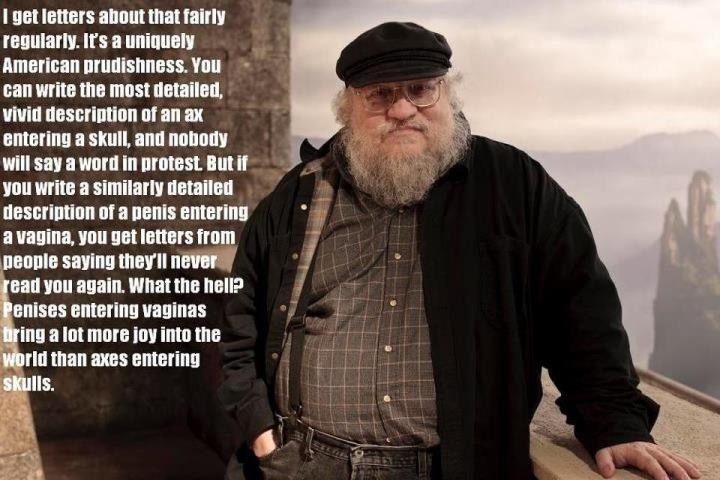
Because I don’t believe in sin anymore and dismiss it as a human made up concept, I simply do not see anything inherently wrong with the nude human form. I kind of laugh at our responses to this as we seem to have a greater amount of problems with sex and nudity than violence where people are actually raped and murdered. It’s a sad thing really that something as beautiful and wonderful as sex and the human body has been demonized so that both are considered evil and sinful based on opinions designed to control others. I don’t have that anymore and my attitude toward both is pretty much based on George R R Martin’s below. To me, sex and the beauty of nude human form have given me as much joy as a good painting, book or any other art form and it is a crying shame that most religion and theology rob us of that.

Spirituality:

I draw a lot of spirituality these days from this freedom.  I posted this picture on the pagan pulpit this last Sun’s Day:

Image may contain: 1 person, outdoor, text and nature

For me, it reflects a lot of my changed attitude toward these subjects.  I think the look on the man’s face says it all. The topless woman hasn’t caused him to be a lustful pervert, but she has brightened his day a little by being topless. She isn’t a slut for doing so either, Just a woman taking a walk who is comfortable in her skin. Males and females being themselves and doing what they do without coercing each other to do something they don’t want to do.  No sexual pressure, but there is a sexual expression that is being enjoyed by the man as he sees it and the woman as she does it.

Personally, I find that my liberation from ‘sin’ has been wonderful in both these areas.  I can appreciate good art and writings were the questions fo sexuality and nudity are seriously discussed and beautifully presented.  No appeal to authority jumps in to ruin it.  I now very freely accept that I am a man and I’m heterosexual and enjoy both of those parts of who I am.  So I enjoy the female form and there is nothing wrong with it. While there are certain biological factors in being a man, I don’t accept any societal roles about being a man that is forced on me.  I embrace those I wish to and nothing more.

I feel comfortable in my skin as much as in any clothes I wear. The questions of nudity for me are more about how to avoid being arrested for being freer than others accept, not calling down judgment on others for not sharing mine.  My paganism treats my nudity and that of others as a natural thing not abnormal. Naked is our natural form and represents who we are in truth.  Everything else is an add on.

I draw a lot of spiritual insight and strength from accepting these things and living in these freedoms.

Conclusion:

I doubt society will change with a wave of our hands.  Religion will continue to ruin and pervert sexuality through the forcing of gender roles.  It will continue to demonize the beautiful and seek to cover it over to hide it. Control is the objective of religion through defining roles and social mores.  All of it is bullshit, but it is bullshit we have to live with because of laws that threaten, coerce and engage in fraud to control others.

The best we pagans can do most of the time is to live our lifestyle expressing the truths of real sexuality and nudism when we can.  On the nudism side, some (like myself) find their answer in practicing nudism secretly, while others carve out places in the world to practice it freely without society’s prying eyes. In any case, being the man or woman you want to be is possible without secrecy in the western world at least.  Just be prepared for the backlash of not fitting in with your specific expression of your gender either male or female.

Continuing to Walk the Path,

The Rabyd Skald – Wandering Soul, Bard, and Philosopher. The Grey Wayfarer.

Skaal!!!
Odin’s Eye – Pagan Holidays – Easter, Walpurgis, and Beltane

Happy Thor’s Day

Discussion:

From a Viking point of view, May Eve or April 30 represents the final day that Odin hung upside down on the World Tree and gained the knowledge of the runes.  It is a festival time that commemorates his sacrifice for humanity.  If you think this is suspiciously familiar with the Christian holiday of Easter, you would be right.

All mythology has within it some story of a god who sacrifices for humanity, this is hardly a unique concept and a very popular one with humans in every myth it is employed.  The End of April is a special time of year for pagans of Northern European heritage known as Walpurgis with its celebration of April 30 Beltane and May Day with its maypole celebrations. First, though, we should look at Easter and the elements of paganism in it.

See the source image

Easter.  The very name is stolen from Eostre the fertility goddess.  The pagan holiday revolves around fertility with rabbits being fertility symbols for obvious reasons and the egg as well-being the symbol of the beginning of life. It is funny to watch Christians with candy rabbits in their homes and coloring eggs and spring-like Easter traditions.  Probably harmless, but it shows how much the traditions of paganism can survive and adapt. The whole end of April though is pretty much about fertility to pagans and the actions that bring it about – namely sex and lots of it.

See the source image

Walpurgis. This a time of year at the end of April that stretches from April 22 to April 30 representing the nine nights that Odin hung from the World Tree. It is the official end of the Wild Hunt on April 30th. Six months previously it had started and now it ends.  On May 1st – May Day – young couples dance around the maypole and oaths of marriage are taken which lasts one year and a day.  Walpurgis is a time of other oaths as well.

Beltane.  There are other traditions around this festival time.  Most notably Beltane which is the night of April 30th itself. The end of winter is official and Summer begins.  The most notable tradition is spending the night in the woods ‘a-maying’.  Basically having sex and you could pretty much have sex with whoever you wanted.  Even married couples could for that single evening lay their wedding bands aside and have sex with whoever they wished. You could also stay at home if you didn’t want to participate.

See the source image


May Day.  May First becomes the maypole festival portion where young couples, who probably had sex the night before, dance around and give their oaths of marriage. These oaths lasted a year and a day.  The idea here that is unspoken is that married couples might split at this point, or retake their vows that would last another year and a day.  Must have made every year an interesting thing for married couples joined this way.  No one and done but a renewing of vows each year.

Time to Look Through the Eye:

See the source image

Faith:

If there is one thing we can all have faith in it is humans like to fuck have sex. This time of year actually celebrates that rather than calling down condemnation. Spring is about the death of winter and the birth of summer.  Fertility has a large part to do with that and is also celebrated along with children.  The one thing I can draw some faith from is looking at nudity, sex, and sexuality as a positive spiritual expression rather than taboo.  It is a welcome change.

Religion:

It takes religion to destroy the joy of life. One of those joys is making love and religion always tries to set standards, but in truth, there is no rational reason to forgo sex other than not wanting an STD or a child. Outside this, religion is basically a way to control sexual behavior and in my mind, this is the great distinction between religion and paganism.  Paganism isn’t interested in controlling the sexuality of others.  Far more practical, free, and less cult-like.

See the source image

Theology:

As a deist, I no longer have the appeal to authority that once was so necessary to dictate terms to people’s sexual relationships.  I don’t want it and it is a waste of energy in my mind to be judgmental of people’s sexual habits or living arrangements. With this absent, a theology of sex and sexuality is not difficult; it is simply non-judgmental. If you look at the nature of the world of sexual guidance, you will see it all.  From faithful monogamy to harems to interchange of partners whenever the mood strikes – animals literally do it all.

In the end, I leave it to each person’s own moral sovereignty to determine their living arrangement and sexual partners.  Control of sexual expression is just no longer part of my theology. My issue is wisdom in such arrangements and whether or not people are going to try to steal from me to pay for the consequences and results of such unions.  My only other moral concern is that each person is engaged with their full free will consent.

Spirituality:

Personally, I have always found sex to be as spiritual as it is physical.  Oneness is the best way I can describe it.  The fact that it is also physically enjoyable is pretty cool too, but its the intimacy often after sex that I enjoy the most.  That moment where you are naked in each other’s arms having spent all to make love. That moment is the best part to me spiritually speaking.

See the source image

Conclusion:

I continue to find pagan holidays and customs to be more practical and more realistic than religious ones.  There are more freedoms here and as such less unnecessary guilt and no shame.  If a relationship goes forward, it does so by constant yearly assessment rather than one and done. Sex is and it is not evil or dirty. Rather it is a natural thing to make love and the only concerns are children (which in paganism are celebrated), STDs and consent. Our modern world has actually made the STD and Children questions a matter much more manageable. Rape, of course, is universally condemned or at least it should be.

I find this holiday the most liberating from my past.  Even though I will be at home with my wife on Beltane because of my vows are ’til death do us part’, I find the notion of releasing religious judgment makes things less stressful and opens the door to a lot more friendships. Enjoy Beltane with your lover. Peace.

Continuing to Walk the Path,

The Rabyd Skald – Wandering Soul, Bard, and Philosopher. The Grey Wayfarer.

Skaal!!!

Odin’s Eye – Christianity Problems – The Resurrection and Eyewitness Reliability

Happy Thor’s Day

Discussion:

I suppose a disclaimer is in order.  I am writing this post as test pilot of the kind of things I could probably put in a book as an ex-believer, former pastor, bible scholar and theologian.  The kind of things that would cause many Christians to say: “That’s sad, I will pray for you.”  Spare me, I have a better plan for you. Read this post and tell me where I am wrong.  The point is I could write a book (and may do so) about the problems with the life of Jesus Nazareth, this would only represent what would probably be one section of a chapter. There is definitely many more things I could say.

Nobody likes death or the idea of ceasing to exist. Nobody.  In large part I think this is why every major religion has an afterlife story. In Christianity an eschatology of where people go after they die. We want to believe that we go on and so we create religions to say when, how and why we would go on. None of this has any real verification as no one has really come back from the dead to tell us the reality of what is after death. Well, unless you can prove Jesus of Nazareth actually did so.

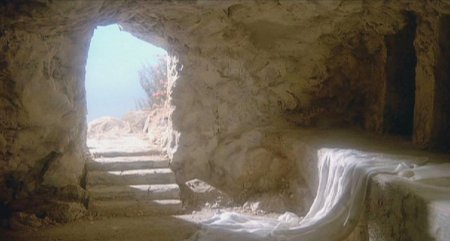
For four decades I believed he had.  It is this central belief on which all of Christianity lives or dies.  Even the Bible understands this as in 1 Corinthians 15 it is very boldly stated that if Jesus did not rise from the dead, then the Christian faith is vain. Everything in Christianity hinges on the resurrection being true.

For years I was therefore a faithful apologist of the resurrection.  I understood the stakes. Without this event, my faith was nonsense.  Today; when it comes down to it, I have more doubts now than belief. For a long time I hinged my faith that the eyewitnesses were telling the truth. They may well have thought they were telling the truth, but were they actually reliable witnesses or subject to the same problems that plague all eyewitness accounts?

Here is the problem – everything that we know about the resurrection is based on eyewitness testimony, and it has been proven that eyewitness testimony is unreliable at best. Then you have the fact that such testimony was not solicited for being permanently written down for many years after the fact. Even by conservative christian scholarship there is a gap of twenty years between the events and the first gospel. That’s a long time for the eyewitnesses to get their story straight and they still don’t pull it off.

Eyewitness testimony has the following problems: https://www.simplypsychology.org/eyewitness-testimony.html

  1. Stress / Anxiety – Stress level can have a negative impact on memory.  Depending on the nature of the stress.  While people can remember aspects of events involving weapons very well, they forget others more readily if experiencing personal stress because their personal stress level is very highly distracting to their focus.
  2. Reconstructive Memory.  In memory recall we DO NOT remember things like a video tape.  In reality there is a lot of interpretive action in memory and we remember the gist of the event to the value judgment we placed on it more than the events. We store the information in the way that makes most sense to us. Because this is very cultural and societal it can be full of prejudice and bias. This is reflected in the fact that as people change their values, the memories change in how they are recalled. We reconstruct memories in a way that reflects our belief in the nature of the world.
  3. Weapon Focus – The funny thing about having a weapon pointed at you is that you remember the weapon and nothing else around it.  You might ask how this applies, well when you get focused on one thing you are seeing the other things tend to get blurry.  So the question comes – was the sight of an open tomb an object focus?
  4. Leading Questions – this is normally an issue with legal matters in testimony, but in the case of the gospels the claim is made that the writers of the gospels were interviewing eyewitnesses – did they during such interviews ask leading questions?

So, the question then becomes how accurate is any account, even four of them, when all those accounts are based entirely of eyewitness testimony many years after the fact?  There is a high probability that a large amount of the second problem entered into the accounts as the disciples interpreted the events according to their values and beliefs in the world.  The believed in miracles and they wanted Jesus to be alive.

I could argue that the whole thing might be made up.  But let’s for the sake of this argument say that on resurrection morning the disciples did indeed see something and the interpreted that as Jesus of Nazareth risen from the dead. Let’s assume that their gospels are the eyewitness testimony they claim to be and see what problems could be there.  Let’s assume thy are not being deliberately deceptive, but perhaps misjudged what they saw.

  1. Stress /Anxiety – the disciples would have been under a great deal of stress that would have affected their memory. They were mourning and were by their own accounts in fear of the religious leaders. In the case of the women who first went to the tomb grieving and distraught.  When they arrive at the tomb, it is empty, the guards are gone and there is no body.  Interpretation, because they wanted it to be true – so badly to be true – Jesus rose from the dead.
  2. Reconstructive Memory – this is the big problem. The gospels themselves when it comes to the resurrection accounts are varied and quite frankly at times contradictory.  I am not saying there was a conspiracy to defraud but an atmosphere of want the story to be true to the point that accounts of seeing Jesus alive were probably everywhere. The gospels themselves provide evidence for reconstructive memory.  Mark stops after saying the resurrection took place, the longer version being a clear addition.  No events are actually recorded so you are left with the oral stories floating around.  Matthew and Luke record the events but they don’t agree on some details.  Like who saw Jesus first as far as who was in the group of women. Both of them record Peter being the first to reach the tomb with no second witness.  John says ‘no the way it happened was I was there and I outran Peter to the tomb.’  This lack of continuity in the accounts is a direct refection of not only that memories of the resurrection are being reconstructed, but the stories are told differently to reflect each gospels writer’s own interpretations of those memories; whether their own or the testimony of others.  Worse yet, if we follow even conservative scholarship on the dates of the gospels – we get a gap of time of at least two to three decades where interpretation of bias have influenced those memories over time.  Cementing the values with the memories and altering those memories.
  3. Weapon/Object Focus: If the disciples find the tomb empty, that tomb would become the object focus of the discussion. They would focus on it and try to explain it.  They many to choose from, but their founder Jesus of Nazareth told them he was going to rise from the dead.  They wanted that to be true very badly so the empty tomb becomes – Jesus rose from the dead like he said.  Later when the accounts are being written, ‘angels’ make that statement, and memories reconstructed with additions and changes.
  4. Leading Questions: The problem here is that when the gospel writers are doing their research; they being believers talking to believers would have the high possibility of doing two things.  1) Asking questions that basically assume the story is true looking for confirmation, not honest inquiry and 2) asking softball questions that are leading to get the story they want.  No author of the gospels is a skeptic but rather they assume the story is true and there is no other account but theirs anywhere.

Time to Look Through the Eye:

Faith:

Was this eyewitness thing  the death nail to my faith.  No, but it has raised more doubt than faith that Jesus of Nazareth rose from the dead,  Why?  Because it is highly feasible that with the high expectations or need for comfort, that people made the story up because of wanting something to have faith in. My best example of this is Mary Magdalene seeing Christ after the other ladies leave. She is very distraught (Stress), she is focused on the empty tomb (object focus) and she sees what she perceives is the gardener and then ‘discovers’ it is Jesus (reconstructive memory?). When you add the problem of that no one but Mary experienced this with no other witnesses, it is highly like people who see aliens when they are alone.  With no collaboration, you really have to dismiss the story.  I have more doubts than faith anymore because most stories of seeing the resurrected Christ have these problems.

Religion:

In the end it was my religion and profession that kept me at it, but the doubts kept getting bigger.  This issue of eyewitness testimony actually came up in my Easter sermons because I was wrestling with it.  The more I wrestled with it and looked at the gospel accounts, the more I realize these problems were very possible and that either many of the stories either had no collaboration, no outside collaboration or the witnesses were not named and thus could not be followed up on.

Theology:

If there is any part of the theology I wrestle with it is life after death and its relationship to giving life meaning. Paul’s argument in 1 Corinthians 15 is that the only meaning to life would be ‘eat and drink for tomorrow we die.  But I would argue that philosophers have taken on that point and have done so somewhat successfully.  Don’t get me wrong, their answers aren’t perfect, but they are there to be considered.

Spirituality:

I think most of us deists still cling a little to the possibility of life after death. The possibility that the universe has a grand purpose created by a designer.  That said we are very interested in spirituality that reflects reality.  We want something deeper that is real not the result of flaws in human reasoning and observation.  For me this basically means I place more emphasis on enjoying and living a good life now, because life after death is a true unknown and not something I want to focus my spiritual life on, especially if it turns out that it doesn’t exist.

Conclusion:

Well, I hope you enjoyed this little test pilot of what kinds of things I could write if I was so inclined.  The real issue I wrestle with is truth, how much more important is truth to the value I place on fidelity and respect of others.  I have to think on it more, Because the Life of Christ would be a great topic for me given my education and experience, the problem would be most of my family and friends might disown me or at the very least find it awkward to invite me to family gatherings at Christmas and Easter.  I will have to meditate on it more.

Continuing to Walk the Path,

The Rabyd Skald – Wandering Soul, Bard and Philosopher. The Grey Wayfarer.

Skaal!!!

Odin’s Eye – Humanism – Morality and Religion

Happy Thor’s Day

Discussion:

Humanists as a general rule, dismiss the need for religion to be moral. Humanists for the most part simply see that anyone can act ethically and morality if they simply tap into their humanity. That is act on their better nature as human beings. I concur with this.

There is some thoughts that to be a humanist you have to be atheist, but I reject that as well. I think in large part those we call founding fathers were also humanists of a deist variety and I am as well.  I don’t dismiss the idea of creator or creators, I just don’t think that, whomever they may be, has any vested interest in policing our morals.  That’s up to us to define as the creators, if they exist, have left questions of morality and ethics to us.

Time to Look Through the Eye:

Faith:

Faith never cured me of being a dick. Not once did my faith in Christ lead to a better morality.  That choice was always my own. I would say also that I have seen the concept of ‘faith’ used for great evil as old ladies send parts of their social security checks to preachers on television who promise prosperity through giving.  All the while the prosperity comes to them at the old ladies’ expense. Greed justified through ‘faith’ is an old story, and one of the great proofs that religion is no guarantee of morality. Far from it.  You can also add people wracked with guilt because they were sick and that was because they didn’t have enough ‘faith’.

Religion:

I have watched in my own ministry as religion has been used to justify unethical and immoral things:

  1. Because of the Christian notion of submission of wives to husbands, I saw sexual, physical, emotional and mental abuse perpetrated by men toward their wives.
  2. Because of the notion of ‘seed faith’ I saw greed justified as people would plant their seed but the preacher would harvest.
  3. I saw harsh religious judgment as people would literally throw off good friends and even family members simply because they did not believe as they did or left the faith. This one I have recently personally experienced.  I used to have 370 or so Facebook friends.  I cut myself off from a mere 80 or so but now I have 205.  That’s 85 people who simply dropped me after I announced I wasn’t a Christian anymore.  Nice.
  4. I have watched people who, believing the end of the world was coming, ran up their credit cards and quit good jobs to be come reclusive only to find themselves in serious trouble afterwards.  This is the best example I can come up with of stupid behavior caused by religion, but I could list so many I might have the content for a book in and of itself.

That’s just my experience, historically speaking Christianity has the one problem every religion has, a creation of an ‘us’ verses ‘them’ mentality that leads to taking actions against them to justify exaltation of us.  It gets worse when you consider some theologies.

Theology:

Historically speaking Christianity has not had a good moral track record.

  1. The Catholics killed, raped, tortured, etc. people who left the faith.  They branded anyone different who did not hold their faith and punished them accordingly.  The repressed any genuine scientific and philosophical pursuit if it contradicted the teachings of the church.  The Spanish Inquisition wasn’t an anomaly, it was normal operating procedure for the Catholic church.
  2. The Protestant Church was no better.  I would say that the Western expansion into Native American territory and the genocide of indigenous population in the United States was largely due to the Calvinist religious belief held highly at the time of manifest destiny encouraged by the notion of Predestination.  You don’t have to treat people as equals or human, if you view them as predestined for hell.
  3. Regardless of stripe, the moral codes of Christianity are probably responsible for more emotional, mental and other forms of abuse.  Shame and guilt due to imaginary problems that force human beings to act against their nature lead to depression and low self-esteem which preachers exploit.  In some cases, people have committed suicide rather than face the fact they can’t live up to the code placed upon them.
  4. Cultist behavior is present in Christianity and all religions.  I love it when Christians try to differentiate themselves from what they perceive to be cults.  Mostly they will say they don’t try to control people’s sexuality or money.  So what then of this sins of sexuality list and the doctrine of tithing?  Religions all have cult behavior. All of them.

Spirituality:

For me I think I live by two notions: 1) I don’t need religion to be spiritual and 2) I don’t need religion to be moral. Spirituality and ethics are found in ourselves, in our humanity. Religions tap into that, but they twist it to their own purpose. They find ways to interpret the rules to slide through a side door into greed, lust and all the other seven deadly ‘sins’.  It’s a game of moral “I am better than you.” – not spirituality.

Conclusion:

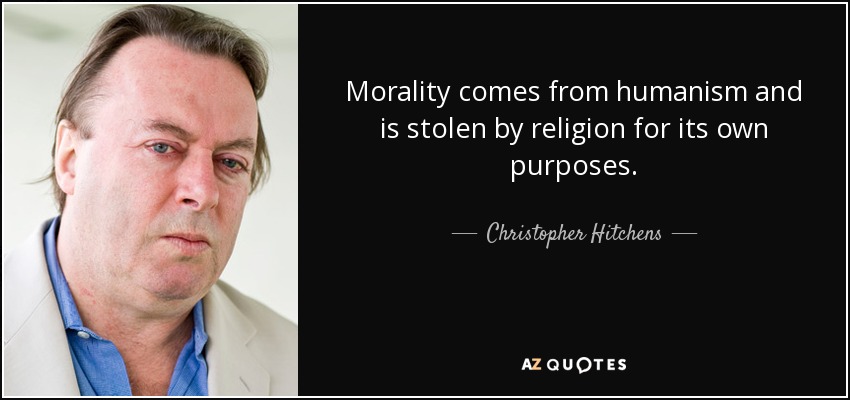
“Do no harm” and “Treat others as you would want to be treated” in some form appear in every religion.  The problem is I can say both of these and not be religious.  It is the strongest indicator that Christopher Hitchens was right, that morality comes from simply being human, but religions steal that notion and then add their own so that certain groups of people gain and others lose. There is nothing moral about that and to pretend there is, well, that is just indoctrination talking.  Sorry, spent too much time as a religious person to not know that is true.

Continuing to Walk the Path,

The Rabyd Skald – Wandering Soul, Bard and Philosopher. The Grey Wayfarer.

Skaal!!!

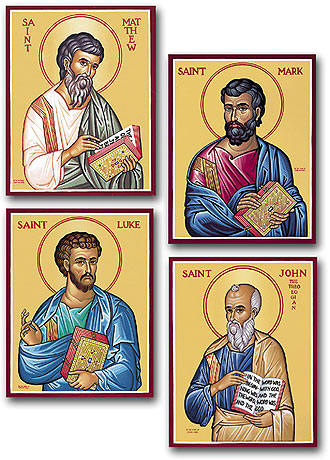
Odin’s Eye – Bible Problems: The Four Gospels

Happy Thor’s Day

Discussion:

Another one of those posts where what I taught in the past about the Bible is going to have some of the problems I will now reveil. Problems I discovered that are a little overwhelming to maintaining faith. I am actually going to take on one of the more solid parts of the Bible – where we actually have four witnesses of events which would seem to fulfill the Bibles’s own standard of ‘two or three” plus one. However as we will see, this doesn’t’ a) solve other problems and b) some of the events witnessed still only have one witness.

The gospels actually illustrate some Bible problems so well that they provide an excellent test case for critics. I mean if you can have four witnesses, and still present something that makes you scratch your head, then anything less than that obviously is worse.

  1. The gospels are contradictory – This is particularly true when it comes to the resurrection accounts.  Some gospels really have no account at all.  Mark doesn’t have anything other than a statement that Jesus rose from the dead.  The longer ending is probably an addition from someone regurgitating a story and not someone who was an eyewitness. Even when there is a claim to being eyewitnesses they can’t seem to get their story straight. Despite the claim to the contrary, this does not validate the story, it is what in court would be contradictory testimony.  It would be thrown out, but gospel apologists continue to make the leap (this not being able to get their story straight) means the gospels are actually more authentic. No, quite the opposite in fact. It means there was a lot of confusion ‘resurrection’ morning and in moments of confusion any story can be both fabricated and  propagated.
  2. The gospels also suffer from confirmation bias. Every writer of each gospel clearly wants the story to be true, and thus does not offer critical analysis of many events that are presented in the Life of Christ. In my opinion, this is the main atmosphere on ‘resurrection’ morning.  A desire that Jesus of Nazareth was alive so strong that it created and atmosphere of mass psychological collusion. Before you think that couldn’t be possible, I remind people of Jim Jones and Jones Town and Heaven’s Gate, events that show that human beings can desire something so badly they will not look critically at what they are being told,  Based on these false beleifs they will in fact kill themselves and be martyred for it; if they believe it strongly enough regardless of whether it is true or a lie.
  3. Timeline issues – yeah, I am stuck on the resurrection again because it was one of the problems I faced regularly in teaching the event. The accounts vary in their timeline and even events are presented differently to the point that they contradict each other in order of events. Who saw Jesus before someone else is a regular problem.  Throughout the gospels some things appear in different order.  Not a deal breaker but one of those ‘ keeping a straight story’ issues.
  4. Historically speaking if you are looking for other biographies or historical accounts of Jesus of Nazareth, you will disappointed.  The only accounts we have are from his disciples and they biased. There is no objective historical account of his life,  There are mentions in other sources like Philo and Josephus but all they really prove is that Christianity is indeed something that stretches back to the first century, but Jesus himself and his life is untouched by these sources. .
  5. The two or three witness problem still persists despite their being four accounts.  Why? 1) The Gospel of John stands alone in many accounts. It offers up events that don’t have any collaboration at all. Even from the other gospels. John literally stands alone in his accounts of things at times and thus does not met the Bible’s own standard of ‘two or three witnesses’ for those events. 2) The other gospels clearly either copied each other or a common account.  I have no problem with this historically speak except sometimes the word choice is verbatim which means they didn’t do much more digging than to copy without further investigation.  There many theories to this, but in the end what you have is the possibility that instead of three accounts from three different witnesses, what you get is one account of these events, which are not collaborated, and simply copied by others.  When they do differ, Matthew, Mark and Luke have the same problem as John.  They often stand alone with many stories.  One gospel writer will present one story, but the other two leave it out. This happens a lot and in the end you get very few stories that all four gospel writers actually touch.  The only miracle they touch is the Feeding of the Five Thousand and it looks like John is trying to correct the account of the other three.  The rest mostly deal with Jesus’ time in Jerusalem before he was crucified. That he had triumphal entry, he held a last supper where he said he would be betrayed, etc. But all goes south at the resurrection where things get completely contradictory or confusing.

Time to Look Through the Eye:

Faith:

As a student of the Bible, what faith I have left in the Bible is an interesting thing and the gospels in particular.  I taught Life of Christ at least ten times in my ministry.  I think you can reasonably say that Jesus of Nazareth was probably a real person and that he indeed was a Jewish Rabbi, and probably a controversial one to the point he was hated by the other rabbis, religious teachers and groups.  The gospels are a reflection of that but are written by his followers. So how do you continue to follow the teachings of  a rabbi the others have decried as a heretic?  You present Jesus of Nazareth as the Messiah and add a whole lot of legend to the real man, so that it makes the people who killed him look like complete assholes.  The gospels may very well be a reflection of reactionary activity. Like Paul Bunyan or John Henry who may have been real people but their legend got big to the point of being ridiculous; Jesus of Nazareth suddenly becomes much more than he really was to justify Christianity’s existence and growth. I have faith that human beings may want to believe something so badly, they will lie to themselves and create stories to make their experiences change in their mind to verify the new presented ‘truth’.

Religion:

Christianity itself developed a problem of having so many accounts of Jesus life that were so contradictory, they convened a council of the church to sort it out.  This has led to the question: the criteria used may simply been one way of one group trying to politically eliminate another. The criteria were created by men for men’s purposes.  The gospels chosen in the end may simply been the least contradictory, but still not perfect by any stretch of the imagination.  Religion then has a vested interest in defending its ‘holy’ book so they cannot be questioned and ‘BAM!’ – two thousand years later, they still stand despite all the problems.  Not because they are the truth or history, but they have become religious tradition further defended by doctrine and dogma.

Theology:

I suppose I have no Messianic Theology anymore.  I was asked once recently if I had renounced Christ.  I shrugged, is there anything to renounce? I mean I don’t see the need for humanity to have a messiah figure.  In fact I would say looking for one or needing one is a cop-out trying to look for someone else to come along like a white knight and save you from all your problems. My Christology these days might simply be non-existent. Not renounced, just faded out of existence as no longer needed. Jesus was either a great teacher that people either added to his story to the point it is just as unlikely as other tall tales, or he was a lunatic who people believed so strongly they made stuff up to reinforce their belief in a lunatic.  Was he the Messiah? – My answer: do we need one?  Was He Lord? Once again do I need one?

Spirituality:

I like some of the teachings of Jesus.  I find them spiritually uplifting as I consider them. That said, I would also say I can treat them with the same attitude I treat the teachings of Buddha, Confucius and other great and deep thinkers.  Containers for truth, but not THE truth.  Just human beings that said some wise words and I find spirituality in a lot of people’s words beyond the standard religious figures.  It is the one way we live on I suppose – the wisdom that can be found in words we wrote or spoke.

Events are a different matter. I don’t find spirituality in events I didn’t personally experience anymore.  I can find inspiration in tales of courage, honor and other stories where virtues are center, but my spirituality is my own experiences in life, my own study and my own vision for myself..

Conclusion:

I would say my path has taken a very honest turn.  You can’t create a special group of ideas or books and then say you will not criticize them and then claim to be objective.  The gospels are ancient writings, that when we subject them to the same scrutiny as many other writings of antiquity, fall short in many areas. This is simply true.  They are religious tradition protected by religious dogma that once ripped away, you find a much more difficult truth. They are perhaps a mixture of true stories about Jesus of Nazareth mixed with tall tales.  They are very possibly fabricated stories with an agenda that has nothing to do with the real man Jesus of Nazareth.

Continuing to Walk the Path,

The Rabyd Skald – Wandering Soul, Bard and Philosopher. The Grey Wayfarer.

Skaal!!!