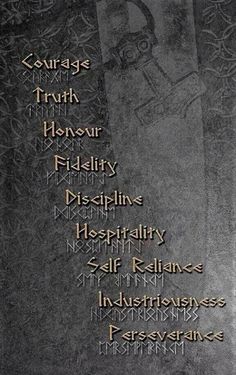
A Skald’s Life – Foundational Virtues – The Path of Virtue

Happy Moon’s Day. 

Journal Entry:

If someone were to ask me right now what I miss the most, I would say it is walking. Winter sucks to walk in without the proper gear.  I miss the iron of the weights at the gym too, but I miss the simple act of taking an hour our of the day to take a walk. As soon as the snow is gone and the temperature up to a point where I can put on a jacket and take a walk, I will be out there.

Walking for me is very honest metaphor.  I am the Grey Wayfarer and a Wayfarer is one who travels on foot.  I enjoy this simple action more than most people know because living is walking with the occasional stops for enjoying the view or life in general.

My path is in life though is virtue. Finding the right path has not always been easy. I have walked a lot of them.  Christianity was a major one.  Right Now, I would say the Nine Noble Virtues (NNV) are a better one.  Why? Because Virtue transcends religion, politics and philosophy, and it is something I have come to discover as I have walked the path.  You can be an honorable person regardless of whether you area Christian or not, whether you are conservative or liberal, or whether or not you believe in eastern or western philosophy.  Virtue is simply working to strengthen that which is best in us as human beings, and that path is something I can gladly walk.

Honor:

Honor is the feeling of inner value and worth from which one knows that one is noble of being, and the desire to show respect for this quality when it is found in the world”

Principle – Be positive about my future

I have a sense of honor.  I have really come to understand that this comes from within and not what other people think of me.  That is very important to understand. People do not dictate my sense of personal honor; I develop it within myself.  It makes honor both stronger and in a sense more vulnerable.

Courage:

“Courage is the bravery to do what is right always.”

Principle – Act with Courage at the right time.

No problems here,  I would say my recent travelling through The Grey Storm may have built this a little stronger.  I just need to really use this to put myself out there even more for a job search.

Truth:

“Truth is the willingness to be honest and to say what one knows to be true and right. It is often better to not say anything at all if one cannot be honest.”

Principle – Pursue knowledge, wisdom and truth at all times.

I don’t find this as difficult anymore.  I find myself stay silent a lot but it seems other people have more problems when I speak the truth than I do.  I have discovered that it is so true that people would rather have comforting lies than the truth, that it makes me chuckle at times.  That said, I follow truth because it gives me an advantage.

Higher Virtue: Love:

Love of life. This last couple weeks have really challenged that. I guess I can say I owe a few people who I love some credit at times for helping me find my way back to love of life. My wife, children and grand kids all have contributed.  It makes this path easier to walk at times.

Morning Routine:

  1. Review Nine Noble Virtues (NNV) and Principles
  2. Review Goals and Bucket List
  3. Meditation
  4. Full Body Stretch
  5. Shower and Personal Hygiene
  6. Get Dressed for the Day

Really working on a full week this week with this complete every single day. I have come close several times, but this week I want the morning Routine to be flawless.

Bucket List:

  1. Go Back to Budapest, Hungary for a vacation.
  2. Get My Tattoos.
  3. Actually Get Drunk.
  4. Smoke a Joint.
  5. Hike the Northern Lakeshore Trail along the Pictured Rocks National Lakeshore in the Upper Peninsula of Michigan.
  6. Write My Novel.
  7. Learn Latin.
  8. Learn Hungarian.
  9. Weightlifting – Bench 225 lbs, Squat 315 lbs, and Deadlift 405 lbs.

I am going to work on two things,  1) Finding the way to get the money for my first tattoo and 2) writing my novel.  I have until the end of June to get one or the other of these done.

Weightlifting:

I think the best plan right now is to get some dumbbells and come up with routines with those i can do at home.  It might be a high rep, three set thing for some exercises but I need to do something to make sure my muscles stay toned at least.  Once I get a better paying job, gym membership and other things get back on the table.

The Rabyd Skald – Wandering Soul, Bard and Philosopher. The Grey Wayfarer.

Skaal!!!

The Book of Rabyd 1:2 – “Everyone Has the Right to Life”

Happy Sun’s Day

Text: 

“Everyone has the Right to Life” – The Book of Rabyd 1:2

Thoughts and Exposition:

I am going to state it plainly that verses 2 through 4 are a rip off from Thomas Jefferson and the Declaration of Independence. But the right to life is still a very hot button topic in this world today and I am not going to skirt around it, but before I begin I would remind people who there are three of these major rights and not one is more important than the other. They have to be kept in balance because they are all ‘inalienable’, so not one of them can be more important than the other. The right to life is simply the first one.

At this point I want to point out that I am making an assumption here in the source of rights. There are actually many schools of thought about where rights come from; or if we even have them at all, but the assumption made by most of the founding fathers was that rights were natural, given by the creator. We will run with that for the purposes of the Book of Rabyd.

The main issue is that everyone has the right to live and that no one has the right to take another life.  There are of course all kinds of issues here from capital punishment to abortion, but we need to remember that this right has value.  That value needs to be considered when looking at those issues.  If a person murders someone, then they have denied another’s right to live, and I would say also forfeited their own.  Our right to live is conditional on the one factor that we respect everyone else’s right to live.   Once we fail to do that, we forfeit that right.

The other issue is the very simple.  When does life begin and when does it end?  It is this issue along with the other issues of the other two inalienable rights that need to be considered when considering issues such as capital punishment or abortion. The main issue for me has always been to respect the lives of others and that they respect mine.  Given that, I expect people to let me live that life as I wish to live in liberty and I will do the same for them.  But that is a discussion reserved for the next verse.

The Rabyd Skald – Wandering Soul, Bard and Philosopher. The Grey Wayfarer.

Skaal!!!
The Book of Rabyd 1:1 -“If There is a Divine Center to the Universe, It is NOT You.”

Happy Sun’s Day

Text: 

“If There is a Divine Center to the Universe, It is NOT You.” – The Book of Rabyd 1:1

Thoughts and Exposition:

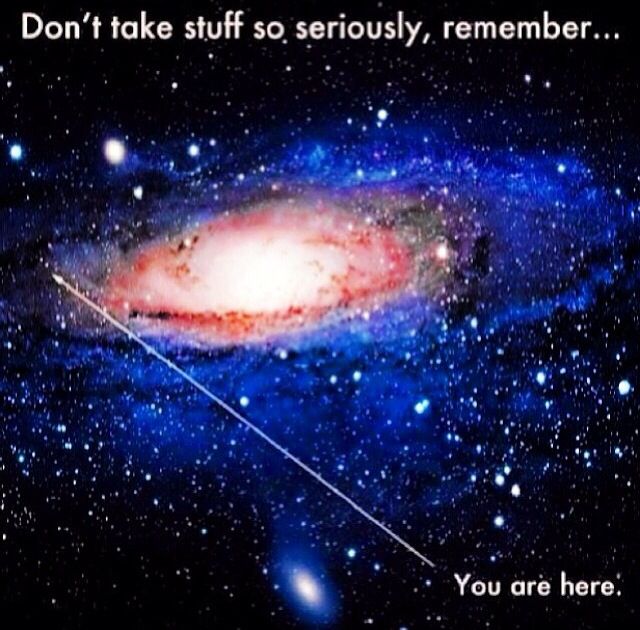
I of course ran into my first problem with The Book of Rabyd rewrite right out the gate with verses one and two of the old version: Rabyd 1:1 – ‘There is a God’ and Rabyd 1:2 – ‘You are Not God’.  The first verse I would consider a little dogmatic now. The second really is a result of understanding one simple truth; that you are not the center of the universe.  After much debate with myself I came up with: “If There is a Divine Center to the Universe, It is NOT You.”to replace them both.

The first part of verse one is a propositional phrase.  The idea is possibility without being sure of it to the point of arrogance. I think there are two dangers I am confronting with this phrase. 1) That given the vastness of the universe it is highly likely that any notion of the divine that any religion creates; if the divine exists, is probably wrong in some way and 2) To dismiss the notion of the divine altogether is also equally arrogant given the vastness of the universe and how little we know about it.

The second phrase is one of humility.  The real kind, not the fake kind of humility that religion produces, which I find to be attention seeking. “Look how humble I am and how much faith I have.”  Or the kind that life knocking you down achieves, which is actually a low sense of personal honor.  No, real humility is the basis for all the virtues of life. Humility leads to love, justice and wisdom because one can acknowledge that you are but one being in a vast universe. But also there are other beings trying to do the best they can in this same universe with you.  Real humility leads to respect of self and others which is the foundation of all the rest.

All the virtues, no matter what you name them, should flow from this humble understanding of self and respect for both yourself and others. For me the Nine Noble Virtues are my way of expression of this, but each person could choose their own. It is where; despite the fact that I am not the center of the universe, I will act with my better and stronger self.

This change of course leads to questions about what legacy I want to pass on here. One simple one really – You don’t have to be the center of the universe to have a great life and great relationships.  Just genuine humility about yourself and respect for others.  This should lead to a Honor, Liberty and Solid Relationships.  Real humility has those results.

Given the vastness of our universe and our humility as we stand before it, we really have one choice before us – to make our own way as best we can and respect that others are doing the same.

The Rabyd Skald – Wandering Soul, Bard and Philosopher. The Grey Wayfarer.

Skaal!!!

The Book of Rabyd – Introduction

Happy Sun’s Day

This is the beginning of a revision of a project I called The Book Of Rabyd.  Over the coming months you will see each verse of The Book of Rabyd first be preached about in the Pagan Pulpit and then slimmed down and revised again here in The Book of Rabyd posts.

In life I have heard a lot of things.  I have also pondered, thought, felt and experienced life.  I have loved so deeply that it has led me to mountain tops and the lowest valleys of emotion.  I have tried to act in justice to the point where I have fought tyranny in my own life and in the lives of others. I have above all tried to live a wise life full of balance between love and justice with varying degrees of success and failure.

Along the way I collected in my head a list of Life Principles, Points of Wisdom and a few Family Sayings.  The Book of Rabyd is my attempt to categorize these and place them into an organized form for future generations to read.  The original version appears here: The Book of Rabyd (All Things Rabyd)

It was written in this form from February 2015 to July 2015.  It needs revising. Mostly my faith and religion of the time need to be removed and everything needs to take on a more inclusive form.  Because of this there is going to be some of the parts of The Book of Rabyd that will be deleted. Others will experience wholesale revision and others will be left alone and continue to stand.

The Book is divided into three sections: Life Principles, Points of Wisdom and Family Sayings.

Life Principles are things that are the core to what I believe is effective life philosophy.  I have found them to be true the vast majority of the time and form the highest level of the hierarchy of The Book of Rabyd.  They are the core and everything flows from them.

Points of Wisdom are wise sayings that I have collected over the years that resonate with me.  Like all wise sayings they have their limits and require wisdom in understanding them and applying them to life. They have been found by me to be rather helpful in navigating life and I felt they should be passed along.

Family Sayings are simply that.  Things various family members have said that resonate with truth and are worth passing on to the next generation.  Some of them are from family members that are dead; so there is a preservation of memory attached to this as well.  This was actually the unfinished part of the original The Book of Rabyd that was still in progress.

In truth, the entire book is not a closed canon.  It always subject to review, mediation and debate. Over the coming months I plan on preaching it one verse at a time.  There will be a second post (This One: titled simply – The Book of Rabyd) on Sun’s Day in the afternoon that will be The Book of Rabyd in its pure, non-Pagan Pulpit form.  In the end my hope is to have a more compete version in a few months.

I hope you enjoy it.

The Rabyd Skald – Wandering Soul, Bard and Philosopher. The Grey Wayfarer.

Skaal!!!

The Pagan Pulpit – The Book of Rabyd – Part 1 – Introduction

Happy Sun’s Day

Announcements:

I am announcing that starting today I will be preaching a series with an overall theme.  I get more into this theme in the actual sermon section below but I wanted to announce that this series will go on for quite a while.  The Book of Rabyd is a Legacy Project of mine.  Something I want to pass on to the family after I am gone. It is a basically a list of Life Principles, Points of Wisdom and Family Sayings that were passed on to me or I discovered and I seek to pass on to the future generations of those of the Raby lineage. I simply seek a unique way to do it and The Pagan Pulpit fits.  I will probably make a separate post of it to stand alone, but I want to use the framework of the pulpit to get the inspiration going.  Hope you enjoy it.

To the rest of the announcements:

We don’t pray here – we figure God, the gods and goddesses, or whatever powers that be either know already, don’t give a fuck, or are busy with more important matters than our petty stuff. We also kind of assume that they expect us to do stuff that we can do for ourselves, and that we will do them ourselves and not be lazy. We also believe in being good friends, so we don’t presume on our friendship with the powers that be by asking them all the time for stuff while giving them nothing in return.

We also don’t take an offering here.  We figure the powers that be probably don’t need it.  Let’s be honest, offerings are not giving to the divine powers, they are given to an organization to support it.  Just being honest. God, the gods or whatever never see a dime, farthing or peso of that money; it all goes to the church, mosque or shrine.

Opening Song: Master of Puppets (S & M) – Metallica:

Figured I start the service with something epic.  Probably a candidate for one of the top five best metal songs of all time.  Combine it with the San Francisco Symphony Orchestra and great crowd participation and you get one epic piece and moment in time.

Poem: “Untitled (Never Be Sorry?)” by Caroline Carter

Image may contain: text that says 'Never be sorry for growing and leaving that dead place behind. If their perspective of you remains stuck there, in that toxic place, don't try to pull them out; you're likely to be pulled back in. Grow. Be you. The new version they can't accept exists whether they see you or not. Cauoline Caiter'

This poem is something that pulls me right now. If that makes any sense?  I simply view my past as a Christian as a toxic place and I have moved on.  It is hard for others to accept, but their acceptance of my choices cannot influence me one way or another.

Meditation:

Image may contain: text

Song of Preparation: “Amen” – Halestorm:

I always marvel at people when they use the term “Amen:” in church.  Most of them don’t even know what it means.  Basically, when you say ‘Amen’ your testifying that you believe that what you just heard is true. With this song for me – “Amen”

Text: 

Introducing – The Book of Rabyd

Sermon:

In life I have heard a lot of things.  I have also pondered, thought, felt and experienced life.  I have loved so deeply that it has led me to mountain tops and the lowest valleys of emotion.  I have tried to act in justice to the point where I have fought tyranny in my own life and in the lives of others. I have above all tried to live a wise life full of balance between love and justice with varying degrees of success.

Along the way I collected in my head a list of Life Principles, Points of Wisdom and a Few Family Sayings.  The Book of Rabyd is my attempt to categorize these and place them into an organized form for future generations to read.  The original version appears here: The Book of Rabyd (All Things Rabyd)

It was written in this form from February 2015 to July 2015.  It needs revising. Mostly my faith and religion of the time need to be removed and everything take on a more inclusive form.  Because of this there is going to be some of the part of The Book of Rabyd that will be deleted. others will experience wholesale revision and others will be left alone and continue to stand.

The Book is divided into three sections: Life Principles, Points of Wisdom and Family Sayings.

Life Principles are things that are the core to what I believe is effective life philosophy.  I have found them to be true the vast majority of the time and form the highest level of the hierarchy of The Book of Rabyd.  They are the core and everything flows from them.

Points of Wisdom are wise sayings that I have collected over the years that resonate with me.  Like all wise sayings they have their limits and require wisdom in understanding them and application to life. They have been found by me to be rather helpful in navigating life.

Family Sayings are simply that.  Things various family members have said resonate with truth and are worth passing on to the next generation.  Some of them are from family members that are dead so there is a preservation of memory attached to this as well.  This was actually the unfinished part of the Book of Rabyd that was still in progress.

In truth the entire book is not a closed canon.  It always subject to review and debate. Over the coming months I plan on preaching it one verse at a time.  There will be a second post on Sun’s Day in the afternoon that will be The Book of Rabyd in its pure, non-Pagan pulpit form.  But I want to preach it first.  I think through that I will gain some addition insight.

I hope you enjoy it.

Closing Song: “Here’s to Us” – Halestorm:

One final “Skaal!!!” before we part.  Here’s to us.

Parting Thought:

Image may contain: 1 person


So true.  I ithnk most of people’s personal problems stem from two factors:

1) Not accepting who they are and trying to be somebody that they are not

2) Not accepting the mystery of life and that life itself is mysterious – and that is a good thing.

I remain,

The Rabyd Skald – Wandering Soul, Bard and Philosopher. The Grey Wayfarer.

Skaal!!!

Of Wolves and Ravens – Courage: Becoming the Bear

Happy Tyr’s Day:

Discussion:

My first run though in Of Wolves and Ravens with the schedule I will probably focus on the Nine Noble Virtues, the second time I will focus on the flip side. In the case of courage, the other side is Western Philosophy.  Last week it was pretty easy to mesh the ideas of Honor and Eastern Philosophy. This week was becoming a challenge until I realized that part of Western philosophy is the Viking Philosophy of Courage. Much of this is related to their understanding of bears.

The vikings revered bears on a very spiritual level.  The admired them to be sure for their raw power and courage, but it was the fact that one could encounter a bear in the wild and that bear would not act in fear in the presence of man.  I am fairly certain while bears might note man’s presence, they give him little regard as far as being a threat. It was this philosophy indeed that led some to become Berserkers. Men who would work themselves up into a fearless frenzy invoking the spirit of the bear.

Courage as a Virtue for me has been a challenge.  In large part I think my Christianity is to blame. Modern Western Christianity both lessens the potential of women by keeping them in a subservient role to men and emasculates men by forcing men to deny their more basic masculine instincts.  Both of these issues cause both men and women to act with less courage than they should.

For myself I have had to reevaluate what it means to be a man and part of that has involved facing the fact that as a Christian, I was not as courageous as I should have been. If there is a spiritual reason for my rejection of Christianity outside my four theological objections, it is this attempted emasculation of men by Christianity as it stands today. For me this embracing courage and facing life more as a man of courage is central now to my philosophy.

To the Wolves and Ravens:

Needs (Geri):

See the source image

This quote from the Havamal shows the need for courage on a deeply spiritual level.  The times one should have acted in courage but didn’t will haunt you and leave you without peace of mind. Regret is the final outcome of cowardice and it makes a man less of a man and a woman less of a woman. Mankind needs courage.

Wants (Freki):

I want courage as well as it allows me to achieve more than I could without it.  Taking action is the way to greater things and that requires courage.  I have come to realize that procrastination may very well be at times an act of cowardice, because I don’t want to take a risk on certain things. Other times it might be I am still thinking on it to long or I lack industriousness that I need as well, but there are a few acts of procrastination that should and would not happen if I simply had the courage to act.

Reason (Huginn):

Being reasonable about courage is hard.  But you cannot deny as a rational person that courage is something that is at times rational, because without it many things that are beneficial cannot be achieved.  There is of course a difference between being courageous and being foolhardy. The difference is found in whether the act has a rational outcome believe it or not.  Does the act of courage lead to self-exaltation and to no positive outcome, or does it lead to the protection of all that one holds sacred and achievement of goals that are beneficial.

See the source image

Wisdom (Muninn):

Wisdom is hard with this one other than to say that courage is not always found in the big actions that we often say are acts of courage but in the small actions of living life and going forward each day.  The Viking philosophy of how one dies is important, but I can only face my actual death once.  I face life every single day and there are multiple acts of courage and confidence I need to do so.  Courage is far more regularly needed in living life than the one-act of death I will face.

Conclusion:

I would say the Viking philosophy of courage is true.  It is needed, wanted and it is both rational and wise to be a courageous person. The Spirit of the Bear needs to be invoked regularly. Something I need to embrace far more for my own benefit and the benefit of those I love and that which I hold dear. The journey of the Grey Wayfarer is hopefully going to be a long one and will require many more acts of courage to be a good one. May I take each action with courage.

I remain,

The Rabyd Skald – Wandering Soul, Bard and Philosopher. The Grey Wayfarer.

Skaal!!!

The Pagan Pulpit – Feeding Wolves and Listening to Ravens

Happy Sun’s Day.  

Announcements:

We don’t pray here – we figure God, the gods and goddesses, or whatever powers that be either know already, don’t give a fuck, or are busy with more important matters than our petty stuff. We also kind of assume that they expect us to do stuff that we can do for ourselves, and that we will do them ourselves and not be lazy. We also believe in being good friends, so we don’t presume on our friendship with the powers that be by asking them all the time for stuff while giving them nothing in return.

We also don’t take an offering here.  We figure the powers that be probably don’t need it.  Let’s be honest, offerings are not giving to the divine powers, they are given to an organization to support it.  Just being honest. God, the gods or whatever never see a dime, farthing or peso of that money; it all goes to the church, mosque or shrine.

Opening Song: “In The Year of the Wolf” – Motorhead

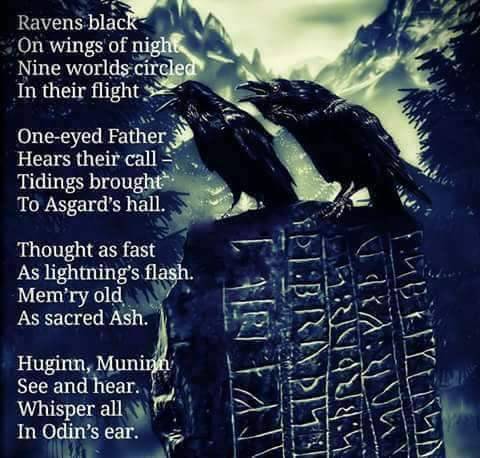
Poem: “My White Raven” by Just Patty

See the source image

As I was doing some poetry searches for the pulpit this week I found this poem.  It is a pretty tribute using the wolf and raven analogy and I must say it made me tear up a little.

Meditation:

See the source image

Song of Preparation: Raven Wing – Iced Earth:

Text:

“It’s OK to Feed the Wolves, but Listen to the Ravens First” – Ed Raby, Sr.

Sermon:

I suppose it was inevitable that I would include a quote form myself eventually in the Pagan pulpit. This one came to me sometime this last summer but it really didn’t become the mainstay of my philosophy until after the first week of August or so.  A reflection of lessons learned and a change of heart at that point in my life.  I have a poem I am working on that reflects some things that happened at that time.  Mostly though I came up with this line at that time that pretty much sums up a major tenet of my philosophy these days.  The core of it is this notion of Wolves – Needs and Wants  and Ravens – Reason and Wisdom.  This of course has been the core of the whole Of Wolves and Ravens series on philosophy, but I haven’t written directly on this expression in a bit and it bears repeating.

“It’s OK to feed the Wolves…”

It is OK to fulfill your needs and wants.  It’s OK.  I know religion and other forces want to act as some sort of control mechanism of defining good and evil, but in truth I am not sure such a distinction truly exists.  There are simply some ways of feeding the wolves that are not reasonable; nor are they wise.  As I pointed out last week, I don’t sit there waiting for someone else to make the moral decisions of my life for me. I make them myself, as it is truly only my responsibility to make them.  That said, I don’t think what I need and want is necessarily evil or bad in and of itself.  It is often how those needs and wants are met; what decisions are made in how to meet them, that either makes them beneficial or a detriment.

“…but Listen to the Ravens First.”

That’s where engaging our Reason and Wisdom before we just run off and start pursuing the fulfilling of our needs and wants.  To think about how thy should be pursued and for what reason is key.  Reason and Wisdom need to guide our pursuit.

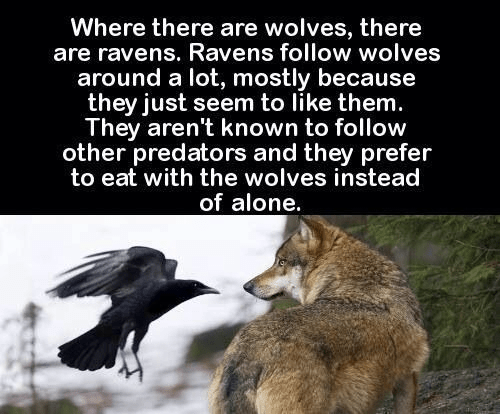
It is probably and interesting thing in nature that Wolves and Ravens enjoy each other’s company in the wild.  They seem actually to look out for one another.  Wolves benefit from the advantage of having eyes in the sky and that caw from the ravens when something is nearby and the Ravens benefit from both company and the protection of the pack when they eat.

There is a lesson in all that for making sure that Needs, Wants, Reason and Wisdom work in harmony. The Ravens don’t Decry the Wolves and the Wolves don’t ignore the Ravens.  The respect each other and work together.  These forces in our lives should be made to do the same,

I don’t know if this saying; which as far as I can tell is my own creation, might of helped you today.  I just know when things get tough I bring it to my mind and ask what needs or wants do I need to fulfill and what the most reasonable and wise course of action might be to fulfilling them.  I feed my inner wolves, but I listen to the my inner ravens first.

Closing Song: Unwell – Matchbox Twenty

I found myself revisiting this song this week.  I guess when I fight depression it becomes a song of hope for me.  It’s doesn’t fit the Wolves and Ravens theme, but it makes sense for my week. This has been on of those ‘loss of interest’ depression battle weeks, but I think I am coming out on the other side of it now and mostly it is because of this song.

Parting Thought:

See the source image

I remain,

The Rabyd Skald – Wandering Soul, Bard and Philosopher. The Grey Wayfarer.

Skaal!!!

Odin’s Eye – My Deism


Happy Thor’s Day

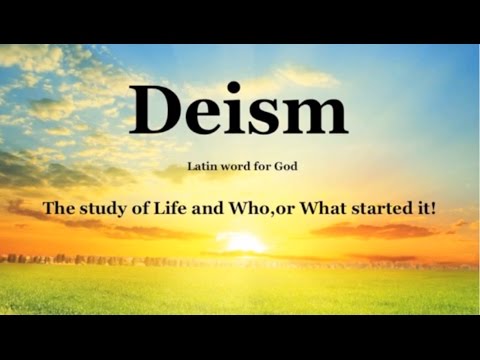
I suppose my belief system is a little complicated. However, at its root or its central tenet is being a deist. However my deism, is not of the same flavor as most people would think of it; nor is it classical deism. Some of the things classical deism upholds, I have modified a little.

  1. Deism would maintain at single creator based on reason.  I would say based on reason, you can’t dismiss the idea of a group of powerful beings being the creators following a common plan or that the universe itself is the creator. I hold out a lot of possibilities here as far as what the guiding force behind our origin might be, if any.
  2. I do maintain with the deists that there is an order and complexity to the universe that imply a creator or creators of some kind.
  3. I agree that there is a limit to human knowledge and understanding that makes it hard; if not impossible, to understand the full nature of the divine.
  4. What ever divine power or powers exist have given man his faculties to both create and uphold his own ethical and moral principles.
  5. Human beings should indeed be free to find, know and worship these divine force or forces in their own way. All views of the divine are to be respected as long as they don’t violate the rights of others.
  6. All human beings are equal creations of this divine power. As such they are accorded rights based on that natural equality.  I do have some things I debate about rights at this point though. More on that at some other time.

Faith:

As far as faith in the divine goes, I have faith that something exists at the present.  I have an active faith in the existence of something divine. I must state for the record, that I can no longer dismiss the notion that the atheist might be right but at the same time I simply do not think humanity has achieved a level of knowledge that can say – “There is No God” with 100% confidence. I believe there is something out there that we cannot comprehend and that no religion can truly explain.

Religion:

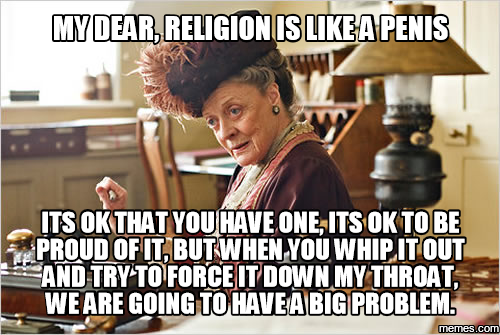
I maintain that people have their right to any religion they like including the right to not have one at all.  I draw the line however with any religion whose followers want to impose their views, ethics and moral code on others.   If you use your religion to justify harming others or force them to take certain actions because of it; I would say that is wrong as well. Religion is very much like a penis, as one actress in a movie remarked, and should have the same societal limitations.

See the source imageTheology:

As a long time theologian ( yes, I have degrees in Biblical Studies and Theology), I used to rely on special revelation; namely the Holy Bible of Protestant Christianity, for my foundation for my work in theology.  Having come to recognize fully that the Bible is a fully human book and that the divine has little to do with, I have to look at how to understand the divine differently.

There is no such thing as special revelation in the sense any so-called holy book is a direct revelation of God. You might find the divine revealed in the human thoughts that are presented in such books; as the authors discuss and tell you what they think about the divine, but those thoughts are human not divine.  To do theology as a deist, I am left with my own reason as I observe the world around me.  I am left with my human facilities alone as I observe and think about the divine.  Part of that is perhaps looking at religions to find certain foundational beliefs common to all that can be helpful in this process, but no one stands the divine better than another.  They all may have some truth, but none of them have THE TRUTH.

Spirituality: 

Deism allows me to engage one other thing and that is to explore the possibility that there is more to humanity than the biochemistry we are left with, if we remove the divine from the equation.   That there is a possibility that man is more than body, mind and emotions but has a spiritual side and an immortal soul. I probably engage this with my more pagan side of my belief system, but it is deism that opens the door to it.

Conclusion: 

I have fully embraced the notion of pursuing the real divine that actually exists without special revelation.  Natural revelation makes things far more interesting and to be honest, more difficult.  But there is a greater honesty to deism as compared to religious pursuits of the divine that I used to embrace.  Only time will tell where this will lead me.

I remain,

The Rabyd Skald – Wandering Soul, Bard and Philosopher. The Grey Wayfarer.

Skaal!!!
Of Wolves and Ravens – Honor: The Most Difficult Virtue

Happy Tyr’s Day 

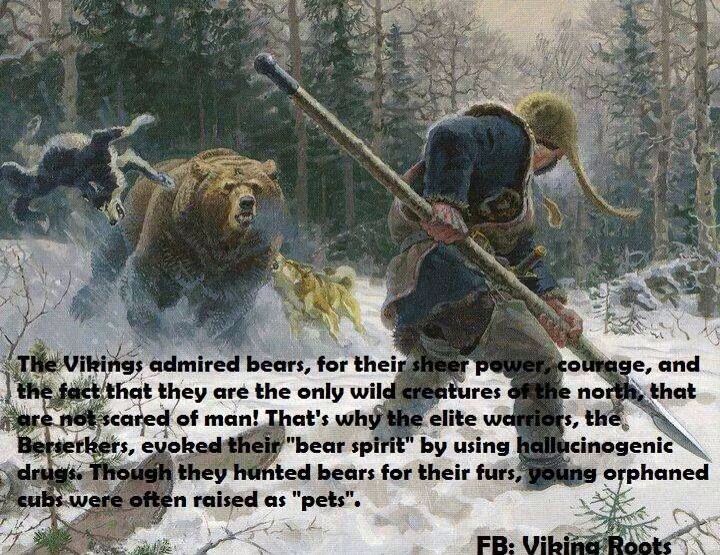
When considering the lineup for Of Wolves and Ravens a couple of weeks ago, it was no accident that I coupled Honor with Easter Philosophy.  The Code of Bushido is a warrior code like the Nine Noble Virtues of Asatru (NNV) and there are many similarities.  The Samurai had seven or eight (depending on who you read) noble virtues where the vikings had nine but most of them overlap. There great similarities between the two codes.  I could have chosen it for my own personal code, but I chose a warrior code more fitting to my interests and heritage.  I do have a great respect for the Code of Bushido. It is the notion of honor in both codes that however is my interest today, so a consideration of both codes’ definition of honor might be enlightening.

Nine Noble Virtues Definition of Honor:

Honor is the feeling of inner value and worth from which one knows that one is noble of being, and the desire to show respect for this quality when it is found in the world

Code of Bushido Definition of Honor:  

A vivid consciousness of personal dignity and worth

I think the two are very similar.  Both involve that feeling or sense (vivid consciousness)  of personal dignity and value one has for yourself. If there is any addition, it is the NNV adds the notion of acknowledging said honor when it is perceived in others. Showing respect for those that you can see have their own sense of honor is part of the NNV.  The Code of Bushido has Respect as a separate virtue, so it splits the idea in the NNV notion of Honor into two separate virtues honor and respect.

The point I am making here is that despite the two codes being separated in their origin by a considerable geographical distance, there is a similar human quality of honor that is recognized in both. Inner value and dignity are human traits that both codes encourage and admire.

To the Wolves and Ravens:

Needs (Geri):

Do we need honor?  I think that the notion of personal dignity says yes we do.  A person who has a sense of dignity certainly is far more useful to themselves and to others. Without this sense of dignity, I think we see people fade into nothing both personally and from a societal standpoint both spiritually and emotionally.  I watch people who I can tell have no sense of personal dignity.  They give no thought to how they are presenting themselves to others, because they really don’t value themselves and it shows. There is a certain kind of pride that is needed to be a decent human being, and it is the spiritual need for honor.

Wants (Freki):

We also want honor in our lives.  It is the foundation for being respected.  If one does not respect themselves; no one else will.  Honor is a very individual quality that should be greatly desired.  I can’t stress this enough given that last year, I did some very dishonorable things.  The biggest loss I felt was this sense of honor.  Without it, I became very vulnerable.  I want honor to combat this vulnerability.  Other people’s’ opinions of you matter far less when you have a sense of honor. It is good to desire it and obtain it.

Reason (Huginn):

The problem of course in how to get it.  Well, you don’t get it from others.  Reason tells me that if I rely on others for my sense of honor, I will become their slave. If I want to be free, the only one that can develop a sense of honor in my life is me.  I must choose to be my own master and develop my own sense of dignity and value.  You will never find dignity and value in pleasing others.  Slavery is all you will get from that, and no slave has any sense of self value or dignity. If ‘a slave’ did have those qualities, then they are not truly slaves no matter what their social status is.

Wisdom (Muninn):

Wisdom also warns me that the only one who can destroy my sense of honor is also myself. This is what make honor the most difficult virtue. It is hard to gain but even harder to maintain.  As needed a virtue as it is, no matter how much we want it and how much it benefits us; we can destroy it with our own actions. This is a lesson I learned this last summer (2018) and one I plan on making sure is burned deep into my soul from now until my death.

Conclusion:

Honor will probably be something I wrestle with for the rest of my life.  I take the lessons from the Code of Bushido and use them to improve my understanding of the code of follow in the NNV. In this I know need and want honor.  It is a spiritual need that strengthens me when fulfilled.  I also know that I alone can build it and I alone can destroy it in myself.  Lessons learned that need to be applied from now until the end for me.

The Rabyd Skald – Wandering Soul, Bard and Philosopher. The Grey Wayfarer.

Skaal!!!

Of Wolves and Ravens – Pursuing Virtue

Happy Tyr’s Day.  Hope you had a great Yuletide. First post of the year 2019.

I remember the day I walked out of my church for the last time.  I was on my way to deliver my resignation but I had stopped at the church to make sure I had everything from there.  I picked up a few things and then stood in the pulpit behind the lectern one more time. It was one of those moments I probably will never forget.  Just me behind on a pulpit I had mounted countless times to talk about sin and salvation.  I guess you could say that the moment I walked away from that pulpit was the moment I walked away from Christianity. It was symbolic for me at least of a change in philosophy and belief.

My main thought as I locked the door behind me for the last time was “So, what are you going to live for now?” The question indicates a desire for purpose; that is for life mission.  I had been interested in viking myth, history and culture for a long time and ran accidentally into the Nine Noble Virtues of Asatru (NNV).  As I read more about it, I realized the set of virtues was just what I needed for foundational framework for a new philosophy for living.

More recently I discovered three other virtues as I went through the nights of Yuletide: Love. Justice and Wisdom. The odd thing is that I had seen these in passing but I never really saw them dwelt on until the 12 nights of Yuletide as I read about that.  Of course I can see the value of these virtues and at the same time I can see that they are pretty universal and perhaps ‘higher’.  The question of purpose then seems to be more clear.

I have divided the nine noble virtues into three groups classified as foundational, business and self. But I can also see that the virtues could be divided as love, justice and wisdom.  Love being the foundation virtue.  Justice being the nature of how we are trying conduct the business dealings of our life. Wisdom reflects the desire to handle Self so we growing in understanding and personal strength. I want to think on these three some more and incorporate them in my weekly thoughts.  Probably the weekly recap as they would give my final thoughts on the week some needed direction.

Basically I am seeing these three virtues as the skeleton on which the other nine are the muscles that make them work, if that analogy makes sense.  But on to the Wolves and Ravens concerning virtue.

Needs (Geri): 

Why do I need to pursue virtue?  It is best interest of each person to improve themselves. We need to do this because those who do not stagnate and eventually die.  We also in my opinion need a foundational philosophy that is the basis for all our decisions, so there is consistency.  One of the things I have to say now is that Christianity never gave that to me. I will talk more about why in a moment.

Mostly though Need, the wolf Geri, is about necessity and part of the necessity of being a human being is to have a life’s purpose or mission. Without it, how do you differentiate yourself from being an animal?  For me this has been a struggle of need.  As I switch off Christian philosophy which is inconsistent, how do I switch on something that is less hypocritical?

Part of our need I think is to develop this foundation philosophy ourselves.  However, most of us instead of taking the time and putting in the effort to do so, turn to religion to do it for us and then wonder why we struggle. The reason we struggle is because the ‘one size fits all’ that most religions give to others, does not work for everyone. It is this working on our own philosophy for ourselves I think now that meets this foundational need. Running to religion is us just avoiding this need and justifying ethical and moral laziness.

Wants (Freki):

What I want is a philosophy that causes me to pursue something better for myself and those I love. One that motivates me to make a better life for myself. That harnesses the wolf of want (Freki) and uses it to make me act.  The problem with Christians philosophy is it focuses too much on this made up concept of sin.  You are constantly struggling between feeling guilty and trying to achieve virtue.  This is why it naturally leads to hypocrisy.  You are trying to achieve virtue in Christianity, but the doctrine of sin always allows an escape out. “Be patient, God isn’t finished with me yet” or “I can’t help it I sin every day” or “I am just bound to my sin, I can’t escape it.” and other expressions dot the Christian phraseology as excuses for failure to be consistent.  I don’t want that dichotomy anymore because I think by its very nature it leads to the justified hypocrisy you see in Christianity.

What I ultimately want is a philosophy that focuses on positive progress and gives an honest assessment of human desire, not as righteous or sinful, but whether such desires are normal, beneficial or detrimental and how such desires can be rationally and wisely handled. Pursuing virtue does just that,  I can mark progress but can also accept who I am as a human being without looking at my human nature as sinful or evil.

Reason (Huginn):

Basically when I engage reason, the raven Huginn, on this topic of virtue, my favorite Marcus Aurelius quote comes out.

See the source image

The main thing is the last line:  You will be gone but will have lived a  noble life that will live on in the memories of your loved ones. I would also say it allows you to be live the best life for yourself while alive. It brings the most benefit to you and that is important.

These days when I am doing something and someone says I shouldn’t, I ask them for a rational reason why what I am doing is not virtuous?  If they can’t answer then they need to back off or come up with a reason.  I don’t want to hear about your god or holy book.  I want to hear how what I am doing is not beneficial to myself or it is somehow genuinely harmful to others. If they can’t do that: then perhaps that person might simple realize they are using some made up moral code to justify being judgmental of others without working on improving themselves. There is nothing virtuous about holding others to a standard that is neither rational or you don’t keep yourself.

Wisdom (Muninn):

Wisdom says that I need to continue to pursue virtue then.  I get what I need and want for myself and those I love without harming others in the process.  I also then am rationally pursing self-improvement with being judgmental of others as virtue says I work on me first and help others, not judge them.  I accept where I am but also seek to improve myself to be better.  I don’t spend a lot of time wallowing in self-pity or guilt because neither of those things help me improve. I eliminate excuses for not being better instead of justifying them with excuses, like I am a sinner and cant help myself.  These reasons along with many more are why I pursue virtue alone and thus embrace the wisdom of them. Both the NNV and the Higher Virtues provide the basic framework for that pursuit.

Conclusion:

As the weeks of this new year continue, I will through this platform called Of Wolves and Ravens be looking at more individual virtues and various aspects of philosophy.  The aim is the same which is ethical and moral improvement for myself. If on this journey you walk with me a little ways and discover something that helps you as well, then bonus for both of us.

Until next time,

The Rabyd Skald – Wandering Soul, Bard and Philosopher. The Grey Wayfarer.

Skaal!!!