Odin’s Eye – Christianity Problems – The Resurrection and Eyewitness Reliability

Happy Thor’s Day

Discussion:

I suppose a disclaimer is in order.  I am writing this post as test pilot of the kind of things I could probably put in a book as an ex-believer, former pastor, bible scholar and theologian.  The kind of things that would cause many Christians to say: “That’s sad, I will pray for you.”  Spare me, I have a better plan for you. Read this post and tell me where I am wrong.  The point is I could write a book (and may do so) about the problems with the life of Jesus Nazareth, this would only represent what would probably be one section of a chapter. There is definitely many more things I could say.

Nobody likes death or the idea of ceasing to exist. Nobody.  In large part I think this is why every major religion has an afterlife story. In Christianity an eschatology of where people go after they die. We want to believe that we go on and so we create religions to say when, how and why we would go on. None of this has any real verification as no one has really come back from the dead to tell us the reality of what is after death. Well, unless you can prove Jesus of Nazareth actually did so.

For four decades I believed he had.  It is this central belief on which all of Christianity lives or dies.  Even the Bible understands this as in 1 Corinthians 15 it is very boldly stated that if Jesus did not rise from the dead, then the Christian faith is vain. Everything in Christianity hinges on the resurrection being true.

For years I was therefore a faithful apologist of the resurrection.  I understood the stakes. Without this event, my faith was nonsense.  Today; when it comes down to it, I have more doubts now than belief. For a long time I hinged my faith that the eyewitnesses were telling the truth. They may well have thought they were telling the truth, but were they actually reliable witnesses or subject to the same problems that plague all eyewitness accounts?

Here is the problem – everything that we know about the resurrection is based on eyewitness testimony, and it has been proven that eyewitness testimony is unreliable at best. Then you have the fact that such testimony was not solicited for being permanently written down for many years after the fact. Even by conservative christian scholarship there is a gap of twenty years between the events and the first gospel. That’s a long time for the eyewitnesses to get their story straight and they still don’t pull it off.

Eyewitness testimony has the following problems: https://www.simplypsychology.org/eyewitness-testimony.html

  1. Stress / Anxiety – Stress level can have a negative impact on memory.  Depending on the nature of the stress.  While people can remember aspects of events involving weapons very well, they forget others more readily if experiencing personal stress because their personal stress level is very highly distracting to their focus.
  2. Reconstructive Memory.  In memory recall we DO NOT remember things like a video tape.  In reality there is a lot of interpretive action in memory and we remember the gist of the event to the value judgment we placed on it more than the events. We store the information in the way that makes most sense to us. Because this is very cultural and societal it can be full of prejudice and bias. This is reflected in the fact that as people change their values, the memories change in how they are recalled. We reconstruct memories in a way that reflects our belief in the nature of the world.
  3. Weapon Focus – The funny thing about having a weapon pointed at you is that you remember the weapon and nothing else around it.  You might ask how this applies, well when you get focused on one thing you are seeing the other things tend to get blurry.  So the question comes – was the sight of an open tomb an object focus?
  4. Leading Questions – this is normally an issue with legal matters in testimony, but in the case of the gospels the claim is made that the writers of the gospels were interviewing eyewitnesses – did they during such interviews ask leading questions?

So, the question then becomes how accurate is any account, even four of them, when all those accounts are based entirely of eyewitness testimony many years after the fact?  There is a high probability that a large amount of the second problem entered into the accounts as the disciples interpreted the events according to their values and beliefs in the world.  The believed in miracles and they wanted Jesus to be alive.

I could argue that the whole thing might be made up.  But let’s for the sake of this argument say that on resurrection morning the disciples did indeed see something and the interpreted that as Jesus of Nazareth risen from the dead. Let’s assume that their gospels are the eyewitness testimony they claim to be and see what problems could be there.  Let’s assume thy are not being deliberately deceptive, but perhaps misjudged what they saw.

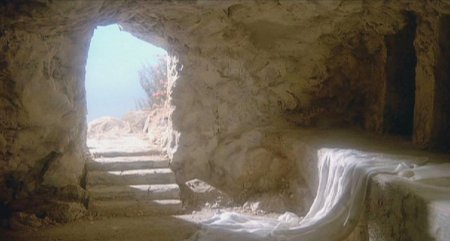
  1. Stress /Anxiety – the disciples would have been under a great deal of stress that would have affected their memory. They were mourning and were by their own accounts in fear of the religious leaders. In the case of the women who first went to the tomb grieving and distraught.  When they arrive at the tomb, it is empty, the guards are gone and there is no body.  Interpretation, because they wanted it to be true – so badly to be true – Jesus rose from the dead.
  2. Reconstructive Memory – this is the big problem. The gospels themselves when it comes to the resurrection accounts are varied and quite frankly at times contradictory.  I am not saying there was a conspiracy to defraud but an atmosphere of want the story to be true to the point that accounts of seeing Jesus alive were probably everywhere. The gospels themselves provide evidence for reconstructive memory.  Mark stops after saying the resurrection took place, the longer version being a clear addition.  No events are actually recorded so you are left with the oral stories floating around.  Matthew and Luke record the events but they don’t agree on some details.  Like who saw Jesus first as far as who was in the group of women. Both of them record Peter being the first to reach the tomb with no second witness.  John says ‘no the way it happened was I was there and I outran Peter to the tomb.’  This lack of continuity in the accounts is a direct refection of not only that memories of the resurrection are being reconstructed, but the stories are told differently to reflect each gospels writer’s own interpretations of those memories; whether their own or the testimony of others.  Worse yet, if we follow even conservative scholarship on the dates of the gospels – we get a gap of time of at least two to three decades where interpretation of bias have influenced those memories over time.  Cementing the values with the memories and altering those memories.
  3. Weapon/Object Focus: If the disciples find the tomb empty, that tomb would become the object focus of the discussion. They would focus on it and try to explain it.  They many to choose from, but their founder Jesus of Nazareth told them he was going to rise from the dead.  They wanted that to be true very badly so the empty tomb becomes – Jesus rose from the dead like he said.  Later when the accounts are being written, ‘angels’ make that statement, and memories reconstructed with additions and changes.
  4. Leading Questions: The problem here is that when the gospel writers are doing their research; they being believers talking to believers would have the high possibility of doing two things.  1) Asking questions that basically assume the story is true looking for confirmation, not honest inquiry and 2) asking softball questions that are leading to get the story they want.  No author of the gospels is a skeptic but rather they assume the story is true and there is no other account but theirs anywhere.

Time to Look Through the Eye:

Faith:

Was this eyewitness thing  the death nail to my faith.  No, but it has raised more doubt than faith that Jesus of Nazareth rose from the dead,  Why?  Because it is highly feasible that with the high expectations or need for comfort, that people made the story up because of wanting something to have faith in. My best example of this is Mary Magdalene seeing Christ after the other ladies leave. She is very distraught (Stress), she is focused on the empty tomb (object focus) and she sees what she perceives is the gardener and then ‘discovers’ it is Jesus (reconstructive memory?). When you add the problem of that no one but Mary experienced this with no other witnesses, it is highly like people who see aliens when they are alone.  With no collaboration, you really have to dismiss the story.  I have more doubts than faith anymore because most stories of seeing the resurrected Christ have these problems.

Religion:

In the end it was my religion and profession that kept me at it, but the doubts kept getting bigger.  This issue of eyewitness testimony actually came up in my Easter sermons because I was wrestling with it.  The more I wrestled with it and looked at the gospel accounts, the more I realize these problems were very possible and that either many of the stories either had no collaboration, no outside collaboration or the witnesses were not named and thus could not be followed up on.

Theology:

If there is any part of the theology I wrestle with it is life after death and its relationship to giving life meaning. Paul’s argument in 1 Corinthians 15 is that the only meaning to life would be ‘eat and drink for tomorrow we die.  But I would argue that philosophers have taken on that point and have done so somewhat successfully.  Don’t get me wrong, their answers aren’t perfect, but they are there to be considered.

Spirituality:

I think most of us deists still cling a little to the possibility of life after death. The possibility that the universe has a grand purpose created by a designer.  That said we are very interested in spirituality that reflects reality.  We want something deeper that is real not the result of flaws in human reasoning and observation.  For me this basically means I place more emphasis on enjoying and living a good life now, because life after death is a true unknown and not something I want to focus my spiritual life on, especially if it turns out that it doesn’t exist.

Conclusion:

Well, I hope you enjoyed this little test pilot of what kinds of things I could write if I was so inclined.  The real issue I wrestle with is truth, how much more important is truth to the value I place on fidelity and respect of others.  I have to think on it more, Because the Life of Christ would be a great topic for me given my education and experience, the problem would be most of my family and friends might disown me or at the very least find it awkward to invite me to family gatherings at Christmas and Easter.  I will have to meditate on it more.

Continuing to Walk the Path,

The Rabyd Skald – Wandering Soul, Bard and Philosopher. The Grey Wayfarer.

Skaal!!!
Odin’s Eye – Humanism – Morality and Religion

Happy Thor’s Day

Discussion:

Humanists as a general rule, dismiss the need for religion to be moral. Humanists for the most part simply see that anyone can act ethically and morality if they simply tap into their humanity. That is act on their better nature as human beings. I concur with this.

There is some thoughts that to be a humanist you have to be atheist, but I reject that as well. I think in large part those we call founding fathers were also humanists of a deist variety and I am as well.  I don’t dismiss the idea of creator or creators, I just don’t think that, whomever they may be, has any vested interest in policing our morals.  That’s up to us to define as the creators, if they exist, have left questions of morality and ethics to us.

Time to Look Through the Eye:

Faith:

Faith never cured me of being a dick. Not once did my faith in Christ lead to a better morality.  That choice was always my own. I would say also that I have seen the concept of ‘faith’ used for great evil as old ladies send parts of their social security checks to preachers on television who promise prosperity through giving.  All the while the prosperity comes to them at the old ladies’ expense. Greed justified through ‘faith’ is an old story, and one of the great proofs that religion is no guarantee of morality. Far from it.  You can also add people wracked with guilt because they were sick and that was because they didn’t have enough ‘faith’.

Religion:

I have watched in my own ministry as religion has been used to justify unethical and immoral things:

  1. Because of the Christian notion of submission of wives to husbands, I saw sexual, physical, emotional and mental abuse perpetrated by men toward their wives.
  2. Because of the notion of ‘seed faith’ I saw greed justified as people would plant their seed but the preacher would harvest.
  3. I saw harsh religious judgment as people would literally throw off good friends and even family members simply because they did not believe as they did or left the faith. This one I have recently personally experienced.  I used to have 370 or so Facebook friends.  I cut myself off from a mere 80 or so but now I have 205.  That’s 85 people who simply dropped me after I announced I wasn’t a Christian anymore.  Nice.
  4. I have watched people who, believing the end of the world was coming, ran up their credit cards and quit good jobs to be come reclusive only to find themselves in serious trouble afterwards.  This is the best example I can come up with of stupid behavior caused by religion, but I could list so many I might have the content for a book in and of itself.

That’s just my experience, historically speaking Christianity has the one problem every religion has, a creation of an ‘us’ verses ‘them’ mentality that leads to taking actions against them to justify exaltation of us.  It gets worse when you consider some theologies.

Theology:

Historically speaking Christianity has not had a good moral track record.

  1. The Catholics killed, raped, tortured, etc. people who left the faith.  They branded anyone different who did not hold their faith and punished them accordingly.  The repressed any genuine scientific and philosophical pursuit if it contradicted the teachings of the church.  The Spanish Inquisition wasn’t an anomaly, it was normal operating procedure for the Catholic church.
  2. The Protestant Church was no better.  I would say that the Western expansion into Native American territory and the genocide of indigenous population in the United States was largely due to the Calvinist religious belief held highly at the time of manifest destiny encouraged by the notion of Predestination.  You don’t have to treat people as equals or human, if you view them as predestined for hell.
  3. Regardless of stripe, the moral codes of Christianity are probably responsible for more emotional, mental and other forms of abuse.  Shame and guilt due to imaginary problems that force human beings to act against their nature lead to depression and low self-esteem which preachers exploit.  In some cases, people have committed suicide rather than face the fact they can’t live up to the code placed upon them.
  4. Cultist behavior is present in Christianity and all religions.  I love it when Christians try to differentiate themselves from what they perceive to be cults.  Mostly they will say they don’t try to control people’s sexuality or money.  So what then of this sins of sexuality list and the doctrine of tithing?  Religions all have cult behavior. All of them.

Spirituality:

For me I think I live by two notions: 1) I don’t need religion to be spiritual and 2) I don’t need religion to be moral. Spirituality and ethics are found in ourselves, in our humanity. Religions tap into that, but they twist it to their own purpose. They find ways to interpret the rules to slide through a side door into greed, lust and all the other seven deadly ‘sins’.  It’s a game of moral “I am better than you.” – not spirituality.

Conclusion:

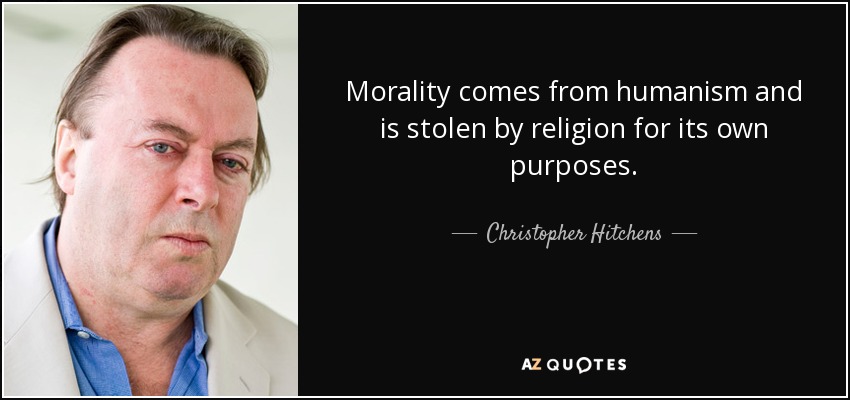
“Do no harm” and “Treat others as you would want to be treated” in some form appear in every religion.  The problem is I can say both of these and not be religious.  It is the strongest indicator that Christopher Hitchens was right, that morality comes from simply being human, but religions steal that notion and then add their own so that certain groups of people gain and others lose. There is nothing moral about that and to pretend there is, well, that is just indoctrination talking.  Sorry, spent too much time as a religious person to not know that is true.

Continuing to Walk the Path,

The Rabyd Skald – Wandering Soul, Bard and Philosopher. The Grey Wayfarer.

Skaal!!!

The Rabyd Skald – The Grey and The Wayfarer – Part 9 – Avoiding vs. Facing (Plus Some Writing Notes)

Happy Wooden’s (Odin) Day

I haven’t given a family warning for a while, but the rest of this post probably has one.  I am simply going to be very real for a bit with my feeling about what was going on last year and how it affects me now. If you want to know simply what my writing plans are then you can scroll down to that and start reading there. I will give it a headline.

I wouldn’t give you a nickel for how I felt this past weekend..  I knew memories of last year at this same time were going to be rough, but this is downright painful at times.  Like pins under your fingernails painful.  Then to protect myself from said pain, I go Grey. That feeling of nothing being preferable to the pain and sadness. I hate when people say – “Get over it” or “Move on”.  I think to myself when I hear this: “Yes, this is where I want to be.  To have a choice between sorrow and nothing,  Yeah, this is fun.”  People who say such things, don’t have a fucking clue, and they should probably just learn some shit about depression and then shut up and be thankful you don’t fight this particular battle.

I am conflicted at times as to what strategy to employ as far as dealing with memories. There are simply times; I note, there is no way not to be triggered. So avoiding the memory is not an option.  But then how to confront and face them then?  The real problem of course is not all my memories are bad ones.  There was some good things taking place through a certain relationship last year, it is just the relationship that was doing some of those good things was ‘toxic’ or ‘wrong’.  I don’t know how else to express it, but there were some good things happening for me but other people might say it wasn’t good how it was happening.

I wasn’t moping around in April of 2018, I was actually feeling quite confident and good.  My female friend at the time was helping me deal with things that were a bummer and I was loving her for it. She was keeping the Grey at bay for me or maybe my love for her was, I don’t know. I still miss that friendship, and it hurts that it is gone.  Probably always will.

Unfortunately, we both took things too far.  We let our friendship grow into something else. Something far more intimate emotionally than was probably safe for both of us.  But I think given the state of my marriage at the time; I probably didn’t care as much then as I would now.  Our counselor said my affair was actually pretty typical. Marriage sucked, you didn’t feel loved, you hurt.  Someone else expresses love for you in some way and you are drawn to them like a moth to flame. Nothing special, happens all the time.  Sounds common and base; something I dislike, but there it is.

This weekend was rough because I was; as I often do, sifting through my Facebook memories and there was her name.  Something I had tagged her in.  Fuck it but if it didn’t trigger an immediate emotional response.  A mix of sadness, loss, grief and who knows what else. It is the kind of emotions you get when something good has turned bad or died. The whole thing hurt again and I wanted to crawl up inside and die.  But I didn’t, I kept going. I have to.  It’s all I know. I turned on the Grey and went forward choosing to feel nothing and not all that. Weird thing this time I couldn’t keep it on all the time.  I kept alternating between nothing and sadness. It sucked. I actually cried once.

Despite this, I have concluded avoid things is not an option.  I will not do that.  Let Facebook and other memories come. I need to learn to deal with this.  Let it make me stronger. Let it make me handle The Grey better. I just know this is really the small shower before the storm that will be later this spring and then this summer. It is the warm up and if I can’t learn how to handle this now, the time between now and the end of August is going to seriously suck. Well, it’s going to suck regardless, but I need to learn how to face it so I keep going and that it sucks less.  That’s all for now.

Time to talk about writing.

Writing Notes:

I have a struggle with the non-Fiction book that I am trying to resolve.  Here is the thing, I could be one helluva critic of Religion in general and The Bible and Christianity in particular.  I could write books that would seriously challenge both and possibly make a shit ton of money doing it. It would make all the past learning and experiences as a minister not feel like such a waste of time, if I could use them to build a new future with writing books.  The flip side is I still have a lot of friends who are religious and Christians, including my wife. This would seriously put some shit out there between us.  At the same time I feel what they believe is a fraud and their lives would be better without it.  Shit.

My novel is a little easier. But at the same time genre is important. I have written every fiction genre at one time or another.  Even ones I didn’t really care for and by writing them I found out that I didn’t really care for them.  My best bet would probably be to create a fantasy setting and go with that.  The reason is you can do anything with that.  But my passion is modern fantasy.  What to choose?  I also should note I won’t be writing this novel for a children’s or young adult audience – definitely adult stuff.  So yep – adult situations, sex, and violence.

As far as the blog goes, I am going to try to get out two installments of Rogue Wizard.  One for Thursday and one for Friday.  It’s time for them.  The timeline shift is going to cause the character based on me to have a major life change so that nothing in his life will relate to what is going on in my real life. The purpose of this is to change the nature of the story into something that is pure fiction.  Or mostly pure as the kind of decisions my alter ego would make will still be based on what I would really do in that situation.

Walking The Grey,

The Rabyd Skald – Wandering Soul, Bard and Philosopher. The Grey Wayfarer.

Skaal!!!

The Book of Rabyd 2:2 – “I am Free Because I Know that I Am Morally Responsible for Everything I Do.”

Happy Sun’s Day

Text:

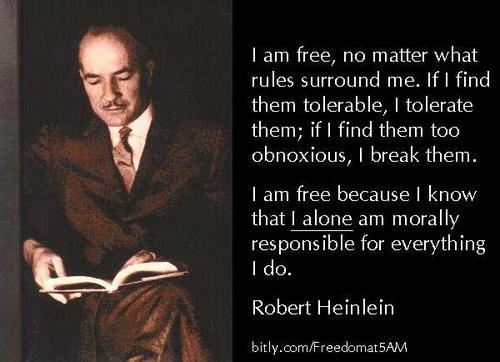
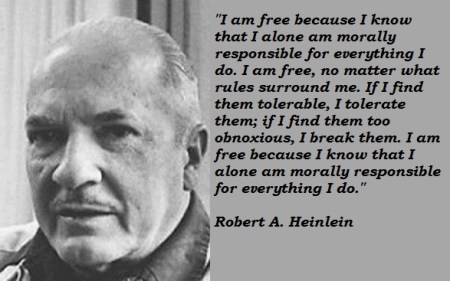
“I am free because I know that I alone am morally responsible for what I do. I am free no matter what rules surround me. If I find them tolerable, I tolerate them; if I find them too obnoxious, I break them. I am free because I know that I alone am morally responsible for what I do.” – The Book Of Rabyd 2:2

Thoughts and Exposition:

I am diverging from the original Book of Rabyd at this point. Much of the old one was the same author and while I respect that author, there are many other true points of wisdom quotes that deserve a place at the table. I could quote Robert Heinlein all day too and he may get one or two but there other author’s whose wisdom I find top-notch and so they will also be included.

There are all sorts of schools of thought about why people do what they do.  About ethics and morality in general.  The most common I have heard is that we do things out of respect or fear. God, the law or basically some authority in general.  I would now maintain is not a very high sense of ethics or morality that you have if you only do things out of some outward focus, or because some outward force compels you to be ethical or moral. It basically is an admission that you are not very ethical or moral and you need someone or something to make you so.

This quote cuts through that bullshit, and drives home the point that the only real thing that is responsible for our choices is us.  We alone bear the moral responsibility for our actions.  Not our fear of the divine (whom ever they may be), respect or fear of the law, or just plain fear.  At the end of the day, it is each one of us that is morally responsible for our actions. We alone bear the responsibility for our choices.

Part of this quote is more truth than choice. We tolerate the rules we find tolerable and we break the rules we find obnoxious.  I saw this all the time in Christianity. I would laugh inside when people would decry people with tattoos because of an old testament passage about it, knowing full well that same passage had rules like no blended fabrics and other such rules. If those same people were forced to engage all the rules that would have  made them upset.  No matter how much a person claims to live fully their code, they make exceptions.  Then most of them lie that they don’t. Neither Heinlein or myself will do that any more. Rules either are tolerable to my freedom of choice or they are obnoxious to the point of being worthy of being broken.  I simply state and live that reality while others will deny it.

I think people play this game of fear and respect because it allows them to look down on someone morally and be in their ivory tower.  To think of themselves as better because they ‘follow’ some moral code and others don’t or do it imperfectly.  The problem with such codes, is when you get right down to it people follow the parts they like or make them feel morally superior, and ignore the parts they don’t and try to hide it so their moral judgment doesn’t come back on their own head.Quite frankly I am sick of this fear/respect dichotomy. In my mind it just leads to more ‘evil’.

Heinlein and the Book of Rabyd offer you an alternative.  Better is to live like this – I am free because I am completely responsible for my own actions. No one else, nothing else compels me to be ethical or moral – only myself. I live free and take full responsibility. Period.  Stop.  Nothing else.

The Rabyd Skald – Wandering Soul, Bard and Philosopher. The Grey Wayfarer.

Skaal!!!

The Pagan Pulpit – The Book of Rabyd 2:2 – “I am Free Because I Know that I Am Morally Responsible for Everything I Do.”

Happy Sun’s Day

Announcements: 

We don’t pray here – we figure God, the gods and goddesses, or whatever powers that be either know already, don’t give a fuck, or are busy with more important matters than our petty stuff. We also kind of assume that they expect us to do stuff that we can do for ourselves, and that we will do them ourselves and not be lazy. We also believe in being good friends, so we don’t presume on our friendship with the powers that be by asking them all the time for stuff while giving them nothing in return.

We also don’t take an offering here.  We figure the powers that be probably don’t need it.  Let’s be honest, offerings are not giving to the divine powers, they are given to an organization to support it.  Just being honest. God, the gods or whatever never see a dime, farthing or peso of that money; it all goes to the church, mosque or shrine.

Opening Song: “Heaven Knows” – Pretty Reckless

I don’t know if it is the theme of this song that fits the pagan pulpit so well or the simple line – “Don’t do a goddamn thing they say!”  Maybe both.

Poem: “If You Could Only Feel” – The Ruined Man

Image may contain: text

Meditation:

Image may contain: 1 person, text

Song of Preparation:  “Bark at the Moon” – Ozzy Osbourne

I include Ozzy to introduce this weeks sermon for a lot of reasons. Robert Heinlein was probably one of the great fiction writers responsible for inspiring people to believe we could go to the moon.  We went from barking at the moon to actually landing on it surface as human race and a lot of it was due to Heinlein.

Text:

“I am free because I know that I alone am morally responsible for what I do. I am free no matter what rules surround me. If I find them tolerable, I tolerate them; if I find them too obnoxious, I break them. I am free because I know that I alone am morally responsible for what I do.” – The Book Of Rabyd 2:2

Sermon:

I am doing a major rewrite of Part 2 of the Book of Rabyd.  I suppose it was only a matter of time before Robert Heinlein got into the Book of Rabyd and this is one of my favorite quotes by him.

There are all sorts of schools of thought about why people do what they do.  About ethics and morality in general.  The most common I have heard is that we do things out of respect or fear. God, the law or basically some authority in general.  I would now maintain is not a very high sense of ethics or morality that you have if you only do things out of some outward focus or because some outward force compels you to be ethical or moral. It basically is an admission that you are not very ethical or moral and you need someone or something to make you so.

This quote cuts through that bullshit, and drives home the point that the only real thing that is responsible for our choices is us.  We alone bear the moral responsibility for our actions.  Not our fear of the divine (whom ever they may be), respect or fear of the law, or just plain fear.  At the end of the day, it is each one of us that is morally responsible for our actions. We alone bear the responsibility for our choices.

Part of this quote is more truth than choice. We tolerate the rules we find tolerable and we break the rules we find obnoxious.  I saw this all the time in Christianity. I would laugh inside when people would decry people with tattoos because of an old testament passage about it, knowing full well that same passage had rules like no blended fabrics and other such rules.  If those same people were forced to engage those would have become very upset.  No matter how much a person claims to live fully their code, they make exceptions.  Then most of them lie that they don’t. Neither Heinlein or myself will do that any more. Rules either are tolerable to my freedom of choice or they are obnoxious to the point of being worthy of being broken. I simply state and live that reality while others will deny it.

I think people play this game of fear and respect because it allows them to look down on someone morally and be in their ivory tower.  To think of themselves as better because they ‘follow’ some moral code and others don’t or do it imperfectly.  The problem with such codes, is when you get right down to it people follow the parts they like or make them feel morally superior, and ignore the parts they don’t and try to hide it so their moral judgment doesn’t come back on their own head.Quite frankly I am sick of this fear/respect dichotomy. In my mind it just leads to more ‘evil’.

Heinlein and the Book of Rabyd offer you an alternative.  Better is to live like this – I am free because I am completely responsible for my own actions. No one else, nothing else compels me to be ethical or moral – only myself. I live free and take full responsibility. Period.  Stop.  Nothing else.

Closing Song: “Inside the Fire” – Disturbed

This closing song has a very serious message. Live your life.  Be free and live. Death comes for us quickly enough.

Parting Thought:

See the source image

Little celebration of getting back into lifting weights this week.  One of my favorite quotes about lifting and why personally I find it an oasis in the middle of all the shit of my life at times.

I remain,

The Rabyd Skald – Wandering Soul, Bard and Philosopher. The Grey Wayfarer.

Skaal!!!

Odin’s Eye – Bible Problems: The Four Gospels

Happy Thor’s Day

Discussion:

Another one of those posts where what I taught in the past about the Bible is going to have some of the problems I will now reveil. Problems I discovered that are a little overwhelming to maintaining faith. I am actually going to take on one of the more solid parts of the Bible – where we actually have four witnesses of events which would seem to fulfill the Bibles’s own standard of ‘two or three” plus one. However as we will see, this doesn’t’ a) solve other problems and b) some of the events witnessed still only have one witness.

The gospels actually illustrate some Bible problems so well that they provide an excellent test case for critics. I mean if you can have four witnesses, and still present something that makes you scratch your head, then anything less than that obviously is worse.

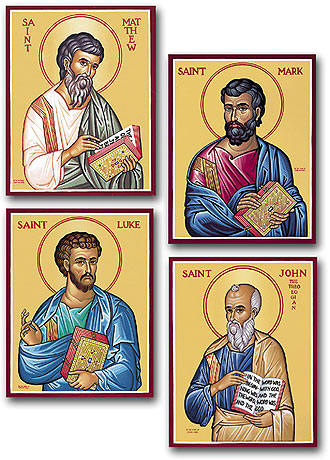
  1. The gospels are contradictory – This is particularly true when it comes to the resurrection accounts.  Some gospels really have no account at all.  Mark doesn’t have anything other than a statement that Jesus rose from the dead.  The longer ending is probably an addition from someone regurgitating a story and not someone who was an eyewitness. Even when there is a claim to being eyewitnesses they can’t seem to get their story straight. Despite the claim to the contrary, this does not validate the story, it is what in court would be contradictory testimony.  It would be thrown out, but gospel apologists continue to make the leap (this not being able to get their story straight) means the gospels are actually more authentic. No, quite the opposite in fact. It means there was a lot of confusion ‘resurrection’ morning and in moments of confusion any story can be both fabricated and  propagated.
  2. The gospels also suffer from confirmation bias. Every writer of each gospel clearly wants the story to be true, and thus does not offer critical analysis of many events that are presented in the Life of Christ. In my opinion, this is the main atmosphere on ‘resurrection’ morning.  A desire that Jesus of Nazareth was alive so strong that it created and atmosphere of mass psychological collusion. Before you think that couldn’t be possible, I remind people of Jim Jones and Jones Town and Heaven’s Gate, events that show that human beings can desire something so badly they will not look critically at what they are being told,  Based on these false beleifs they will in fact kill themselves and be martyred for it; if they believe it strongly enough regardless of whether it is true or a lie.
  3. Timeline issues – yeah, I am stuck on the resurrection again because it was one of the problems I faced regularly in teaching the event. The accounts vary in their timeline and even events are presented differently to the point that they contradict each other in order of events. Who saw Jesus before someone else is a regular problem.  Throughout the gospels some things appear in different order.  Not a deal breaker but one of those ‘ keeping a straight story’ issues.
  4. Historically speaking if you are looking for other biographies or historical accounts of Jesus of Nazareth, you will disappointed.  The only accounts we have are from his disciples and they biased. There is no objective historical account of his life,  There are mentions in other sources like Philo and Josephus but all they really prove is that Christianity is indeed something that stretches back to the first century, but Jesus himself and his life is untouched by these sources. .
  5. The two or three witness problem still persists despite their being four accounts.  Why? 1) The Gospel of John stands alone in many accounts. It offers up events that don’t have any collaboration at all. Even from the other gospels. John literally stands alone in his accounts of things at times and thus does not met the Bible’s own standard of ‘two or three witnesses’ for those events. 2) The other gospels clearly either copied each other or a common account.  I have no problem with this historically speak except sometimes the word choice is verbatim which means they didn’t do much more digging than to copy without further investigation.  There many theories to this, but in the end what you have is the possibility that instead of three accounts from three different witnesses, what you get is one account of these events, which are not collaborated, and simply copied by others.  When they do differ, Matthew, Mark and Luke have the same problem as John.  They often stand alone with many stories.  One gospel writer will present one story, but the other two leave it out. This happens a lot and in the end you get very few stories that all four gospel writers actually touch.  The only miracle they touch is the Feeding of the Five Thousand and it looks like John is trying to correct the account of the other three.  The rest mostly deal with Jesus’ time in Jerusalem before he was crucified. That he had triumphal entry, he held a last supper where he said he would be betrayed, etc. But all goes south at the resurrection where things get completely contradictory or confusing.

Time to Look Through the Eye:

Faith:

As a student of the Bible, what faith I have left in the Bible is an interesting thing and the gospels in particular.  I taught Life of Christ at least ten times in my ministry.  I think you can reasonably say that Jesus of Nazareth was probably a real person and that he indeed was a Jewish Rabbi, and probably a controversial one to the point he was hated by the other rabbis, religious teachers and groups.  The gospels are a reflection of that but are written by his followers. So how do you continue to follow the teachings of  a rabbi the others have decried as a heretic?  You present Jesus of Nazareth as the Messiah and add a whole lot of legend to the real man, so that it makes the people who killed him look like complete assholes.  The gospels may very well be a reflection of reactionary activity. Like Paul Bunyan or John Henry who may have been real people but their legend got big to the point of being ridiculous; Jesus of Nazareth suddenly becomes much more than he really was to justify Christianity’s existence and growth. I have faith that human beings may want to believe something so badly, they will lie to themselves and create stories to make their experiences change in their mind to verify the new presented ‘truth’.

Religion:

Christianity itself developed a problem of having so many accounts of Jesus life that were so contradictory, they convened a council of the church to sort it out.  This has led to the question: the criteria used may simply been one way of one group trying to politically eliminate another. The criteria were created by men for men’s purposes.  The gospels chosen in the end may simply been the least contradictory, but still not perfect by any stretch of the imagination.  Religion then has a vested interest in defending its ‘holy’ book so they cannot be questioned and ‘BAM!’ – two thousand years later, they still stand despite all the problems.  Not because they are the truth or history, but they have become religious tradition further defended by doctrine and dogma.

Theology:

I suppose I have no Messianic Theology anymore.  I was asked once recently if I had renounced Christ.  I shrugged, is there anything to renounce? I mean I don’t see the need for humanity to have a messiah figure.  In fact I would say looking for one or needing one is a cop-out trying to look for someone else to come along like a white knight and save you from all your problems. My Christology these days might simply be non-existent. Not renounced, just faded out of existence as no longer needed. Jesus was either a great teacher that people either added to his story to the point it is just as unlikely as other tall tales, or he was a lunatic who people believed so strongly they made stuff up to reinforce their belief in a lunatic.  Was he the Messiah? – My answer: do we need one?  Was He Lord? Once again do I need one?

Spirituality:

I like some of the teachings of Jesus.  I find them spiritually uplifting as I consider them. That said, I would also say I can treat them with the same attitude I treat the teachings of Buddha, Confucius and other great and deep thinkers.  Containers for truth, but not THE truth.  Just human beings that said some wise words and I find spirituality in a lot of people’s words beyond the standard religious figures.  It is the one way we live on I suppose – the wisdom that can be found in words we wrote or spoke.

Events are a different matter. I don’t find spirituality in events I didn’t personally experience anymore.  I can find inspiration in tales of courage, honor and other stories where virtues are center, but my spirituality is my own experiences in life, my own study and my own vision for myself..

Conclusion:

I would say my path has taken a very honest turn.  You can’t create a special group of ideas or books and then say you will not criticize them and then claim to be objective.  The gospels are ancient writings, that when we subject them to the same scrutiny as many other writings of antiquity, fall short in many areas. This is simply true.  They are religious tradition protected by religious dogma that once ripped away, you find a much more difficult truth. They are perhaps a mixture of true stories about Jesus of Nazareth mixed with tall tales.  They are very possibly fabricated stories with an agenda that has nothing to do with the real man Jesus of Nazareth.

Continuing to Walk the Path,

The Rabyd Skald – Wandering Soul, Bard and Philosopher. The Grey Wayfarer.

Skaal!!!
Odin’s Eye – Pagan Holidays – Ostara (March 20-21) and St. Patrick’s Day

Happy Thor’s Day

Discussion:

March 20-21st is the Festival of Ostara, the Spring goddess.  She is Germanic but not much else is known about her. In Viking Culture Spring is also associated with Freya and Thor, both divine beings of fertility, and that is exactly what most of this festival is about. It is about renewal, fertility and rejoicing about the end of winter and the beginning of the Summer half of the year.

If the name Ostara seems slightly familiar, it is because its other spelling is Eostre, which after the Christians get a hold of it becomes – Easter. Even some of the Easter traditions are based on the pagan ones.  Most notably egg coloring and hiding and then letting children go seek them.  Flowers, rabbits an other spring symbols are here as well.  The rabbit is used because it is the animal that is often most associated with spring as it is often the first animal you see, and for its fertility. Hibernating animals also get a look as well, as they come out of their sleep.

The festival has a lot of traditions involving children during the day and adults at night.  The various sources I read seem to skirt around the night time rituals of the adults, which kind of indicates fertility rites are probably present. That’s sex and a lot of it . Not surprising, as at this time in a lot of pagan mythologies, the sun or storm god has sex with an earth or nature goddess and she conceives to give birth at the end of harvest. Love making takes place a lot during this festival.

See the source image

I mention St’ Patrick’s day because there is also a lot of pagan elements in it.  In fact I would say historically this is when the Christian powers that be figured out that by adopting pagans symbols and traditions they could get more conversions.  Or they could justify wiping out the pagan elements, they wanted out and keeping stuff that supported their viewpoint.  The Celtic Cross is very much a part of this combining sun worship with the cross.

Irish Pagans view of this varies, Some mourn the day because it marks the persecution of Irish pagans where they were driven out, killed or went underground.  Others see it as a time to say ‘I will celebrate the day pagan style’.  The big thing is the mythology that St. Patrick drove out all the snakes from Ireland.  It is kind of like the tall tale that Paul Bunyan logged off North and South Dakota and that why there are no trees. There were no snakes in Ireland in the first place and there were no trees in ND and SD either.  The only holidays in my opinion that is more ironically a combination of pagan and Christian ideas is probably Easter and Christmas.

Time to Look Through the Eye:

Faith:

I have faith that nature will do her thing.  I mean do I look at the Spring as a goddess – no.  I believe in science, so there are natural forces at work.  That said, I don’t think a holiday celebrating the end of winter and the beginning of summer is a bad one.  It has a positive mental aspect to it.  I suffer from mild depression that turns pretty dark at times in the winter, Spring begins to overcome that. I start my walks and getting outside again and that is something that builds my heart and mind, as well as my body.

Religion:

This time of year also marks the contention between Christianity and Paganism in Europe which spread to the United States. Like it or not this contention has led to a lot of heartache, persecution and war. I would also say the problems have largely come from Christians, Paganism has no ‘correct’ way of being a pagan.  No, dogma or religious order to force on others. For that you need to turn to the Abrahamic religions.  They are the ones with missionaries and zealots who have to ‘convert’ people to their faith by any means necessary.  St. Patrick’s Day is probably a sore spot for Irish people for this reason.

Theology:

A theology of renewal and fertility is something that as a Deist and Pagan, I can look at with a smile.  In Christianity, sex is given a feeling of being dirty or a necessary evil.  Not so in pagan ‘theology’.  Sex is something good, loving and a necessary good for the purpose of enjoyment and fertility. It is a stark contrast. I would say when you see a religion or theology trying to control or direct your thoughts about sex or your money, you have cult behavior.  Yes, I would say Christianity is loaded with this cult behavior, as well as almost every religion I know. Paganism seek to control neither, and so what many Christians consider ‘cultish’ is actually the furthest from it.

Spirituality:

I must say that I gain a lot of spirituality from some of the concepts behind the idea of renewal.  I can’t wait to get out walking again this spring.  There is a renewal of my spirit that comes with it. I would also say that sexuality and sex itself has a spiritual good side that I resonate with the pagans far more than the Christians.  Making love to my wife from my side of things is one of the most spiritually good and wonderful things I know.   I don’t look at it as dirty or sinful at all.  Now even more so, it is an expression of pure joy and love to me.  Ostara is something that reminds me of that as well.

Conclusion:

I like to be reminded of things that are important. Spring is important for not only its time of planting seeds and cleaning, but for its spiritual side of renewal of the soul and life.  It is important to remind ourselves of the joys of sex and sexuality and their results -children. There is something here that reminds one of taking a good cleansing breath, feeling your mind and heart open up and feeling right with the world.  Of taking your lover’s hand and walking to a place of lovemaking and spending time not only having sex, but also renewing your relationship and starting anew with new dreams for the year ahead. I like it, it feels good.

Continuing to Walk the Path,

The Rabyd Skald – Wandering Soul, Bard and Philosopher. The Grey Wayfarer.

Skaal!!!
The Rabyd Skald – The Grey and the Wayfarer – Part 7 – Writing and Walking Through It

Happy Saturn’s Day

I know people are probably expecting a Crossing Bifrost post today but I have a couple pressing matters that I need to attend to and I am currently reading some books on Norse mythology that I want to get a little further in before I write my next post on it.

I also have been fighting The Grey pretty much all week. Part of the reason I am throwing myself into realigning my virtues with my goals and principles is that it really helps with this. I feel there is a key or keys in this process to dealing with The Grey; to a point where I can not only function with it, but actually feel some things without shutting down.

I have been asking a lot of motivation questions because what The Grey threatens and destroys the most often is my motivation.  The odd thing is that my motivation to write is the one that is often the least affected. The trigger this week is the time of year and it will be so until probably the end of summer.  Last year at this time, my ministry as a pastor and my marriage were both unraveling and there are a lot of painful memories associated with that right now.  I can confidently assert that the old notion of time healing all wounds is bullshit.  It can scar them over, but they still remain under the surface.

Writing has always helped with these times in that it gets me through them.  It is often the process of taking the next step in writing the blog article or project that is me taking the next step.  I write for me and I write to overcome my depression.

If a friend were to ask me what issues rise to the top, i would first say that it is not easy to talk about but then I would offer the following four things.

  1. I still deal with my change of faith. Or rather the discarding of Christianity and ministry for good. It is more than just a career change, it is a lifestyle and life course change, and it has been quite challenging emotionally and mentally.
  2. I deal with betrayal and loss.  Both of specific friendships and of the fact there is a group of people I lead as a shepherd for almost ten years than I still don’t feel comfortable in dealing with. Based on the letter I was sent, I feel judged and discarded still.
  3. I deal with memories of loving someone who I don’t know if they loved me at all in return.  It’s debatable if they were as they said “Just acting’, or if that statement was made to make the breakup easier for me and them.  Epic fail on the last one, it hurt like nothing I have felt in a long time.  I have a poem I am working on about this I think I NEED to write; but it is painful to write, so I don’t want to write it at the same time. I mean they seem to have moved on like nothing happened.  The memories for me are making that quite difficult, despite my best efforts to not think about all this by contrast.
  4. Then of course this whole thing brings up emotions regarding my treatment of my wife during this time which I now feel very guilty and ashamed about.

It’s why back in August of last year I wrote something that basically said I wished someone would rip my heart out and kill it.  These feelings are intense and difficult and I wish they would go away.  It makes my depression kick in as a defense mechanism so I don’t feel things. Feeling nothing being more preferred than these emotional memories.

I also deal with the fact that on March 18th I will be 50 years old. Half a century and I am fairly certain its these birthdays with zeros in the second digit that seem to challenge me the most. Another decade down, how many do I have left?  Where am I going now? What am I going to do? Who am I? How do I get where I want to be? When are these memories going to fade to the point where I don’t have to deal with them as much?

I wish I had more answers, but writing seems to help me keep going.  I write for me and I write to overcome.

Walking the Grey,

The Rabyd Skald – Wandering Soul, Bard and Philosopher. The Grey Wayfarer.

Skaal!!!

Odin’s Eye – Deism: The Search for The Rational God

Happy Thor’s Day

Discussion:

I still very much embrace Deism as the most rational way to approach the subject of the divine.  I think the notion that there is no god is just as irrational as the theist or religion who thinks he/she has god locked down.  The great challenge for me as a deist is to deal with the subject of the divine using only reason and natural revelation as a guide. Heavy emphasis on the reason part because natural revelation is still subject to human interpretation.

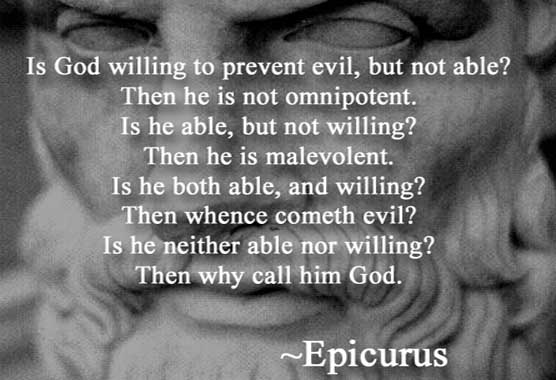
Epicurus’ argument against God is pretty well-known and I still have some of the same problems with it as I had as a Christian.  In fact much of my arguments against it have not changed because even back then the defense against philosophy is not theology, it is more philosophy.   Most notably Epicurus assumes his definition of all-powerful, etc. are locked down and cannot be challenged. He seeks basically to win the argument about god through definition which is an argument from authority based on the authority of the definition.  What his argument does do is present the rational contentions about the divine that need to be addressed very concisely and in a logically sound manner.

This is actually one time where the Eye lines up pretty good with each part of Epicurus’ argument. So….

Time to Look Through the Eye:

Faith:

If he is able but not willing?  He is malevolent

I find it interesting that Epicurus engages in faith at this point. He has faith that there is such a thing as malevolence or beneficence and assumes that god must be one or the other.  Such definition really lose their meaning if you dismiss notions of good and evil and realize there might be a rational reason why a supreme being might create and then move on.  As George Carlin points out – God may simply not give a shit.  He may be a creator, but it does not imply that he is malevolent simply because he refuses to do something about ‘evil’.  He may simply also look at humanity and say – “you did this shit to yourselves and you have the capability to get yourself out, take responsibility for the ‘evil’ and suffering you have caused and fix it yourselves.”

I actually think this is the strongest argument for polytheism. That the reason we see so many problems in the world, is it was created by a committee.  Just saying.

My faith is that if there is a god or gods or whatever, that they are creators but not necessarily cosmic babysitters. Like good parents he/she or they want us to grow up and tackle our own problems and we can’t learn how to do that effectively without struggle.

Religion:

If God is neither able or willing, then why call him God?

Actually because the definition of ‘god’ is much broader than “Omni” classifications.  We also use the term ‘god’ to describe beings of great power and use a small ‘g’.  It is religion that paint god as all-powerful in the sense that he can do anything, but there may be laws to the universe that prevent the divine from acting and they may as pointed out above, not give a shit. It doesn’t stop them from being more powerful than anything else and thus deserving the title of ‘god’.

Theology:

If God is wiling to prevent, but not able.  Then he is not omnipotent.

I like to point out at this point that Epicurus does not eliminate god with this statement as some atheists claim.  It just shows that perhaps human conception of the ideas of omnipotent, omniscient, etc. might not be properly defined. So such a god could exist with all the power that actually exists, knowing everything in the way it is knowable and be present in all places that actually exist.  Yes, these ideas create a powerful being worthy of being called god, but there are limits here. Such limits make the normal understanding of omnipotence in need of adjustment, but it doesn’t make such a god not possible or lacking in existence. All this statement really does is point out that our definitions might be in need of change.

Spirituality:

If he is both able and willing? Where does evil come from?

Moral evil is easy to justify if you use freewill as a defense and a god who does not interfere because he wants humanity as a whole to learn and grow. It may not be logically possible to have freewill without suffering. Natural evil is a little harder to justify.  Other than if god is still bound to the laws of the universe, then the laws of physics make natural ‘evil’ simple existent and God may very much be a powerful being who fights these forces but cannot do everything.  Rationally, the god that actually exists might have limits – both because the laws of the universe place those limits or those limits might be self-imposed because it is not always wise to interfere.

Conclusion:

I am not saying Epicurus is wrong.  He may very well be right and God is a figment of human imagination.  I respect the atheist position but I find it personally a little extreme because of human ignorance of the universe. His argument actually forms a lot of rational response for deism as it must address these issues to have a rational reason for belief in the divine’s existence. His argument guides the search for the rational god because the questions are valid.  That said, I do, as a theologian, see the irony of accepting certain theological definitions in order to make your argument against the existence of god, when those definitions themselves can be challenged.

For me the search for the rational God is part of the journey that I walk. But as a pagan, it is not my only criteria.

Continuing to Walk the Path,

The Rabyd Skald – Wandering Soul, Bard and Philosopher. The Grey Wayfarer.

Skaal!!!

Of Wolves and Ravens – Virtue: Moving Higher

Happy Tyr’s Day

Discussion:

Having finished the Nine Noble Virtues it is time to flip the subjects for Of Wolves and Ravens to the flip side.  So for the next nine weeks the subjects will be more Side B

  1. Eastern Philosophy
  2. Western Philosophy
  3. Love
  4. Minimalism
  5. Economics
  6. Justice
  7. Political Science
  8. Libertarianism
  9. Wisdom

These are either the Higher Virtues or other philosophical elements that guide my thinking. Subjects where my philosophy is more real and concretely applied to the real world of my life.

Today, however, we return to the general subject of virtue. Mostly the rationale behind pursuing virtue as opposed to Religion as a way of moving higher.  I suppose it comes back to the Marcus Aurelius quote I keep using.

See the source image

My main issue these days is to live a good life and so following good virtues is the path to that.  The Nine Noble Virtues (NNV) of Asatru are good ones to follow and no matter what your religion or faith, I don’t think you could fault them.  Virtue is a Human trait and if anything is responsible for the good in the world it is when people take their human capacity and guide it by good virtues.

To the Wolves and Ravens:

Needs (Geri):

At this point things will get a little more personal.  After departing from my Christian faith, I knew I would need something to guide my life philosophy. I think that is one of the problems of struggling with faith.  You hold your principles from that faith, but the basis for doing so is missing. I needed to figure out what that basis was and how I could hold a system of philosophy to guide myself and my character without having faith in a religion.  Virtue is an old discussion in philosophy and one that has always had a lot of merit to me. So I found that the need for a system of virtue was very much justified.

Wants (Freki):

I also wanted virtue.  One of the things that you get accused of when you leave the faith is somehow you are now lesser of a person.  It is never said but it is there.  Your ‘lost’, ‘going to follow your sinful nature now’, you are not as ‘good’ in the eyes of the people of the faith you left. Part of my embracing virtue is I want to show how bankrupt a notion it is to believe you need to follow a certain religion or faith to be a good person.  That you can be a better person morally without faith or religion is a hard concept for people to accept for some reason.  I want to prove that it can be done.

Reason (Huginn):

The rational reason for following virtue for me is that it upholds my thoughts that a person can actually use religion for evil while calling themselves good.  After all they are just following their authority of their holy book or holy man.  Even if that action causes harm to others, in religion it is still justified because you were doing what your authority told you.

I can’t do that following my philosophy of virtue.  Virtue demands that an action must also cause no harm to others whenever possible.  It recognizes that appeal to authority is not a rational act but a logical fallacy.  Therefore to just follow authority blindly is not virtuous, rather quite the opposite.

Wisdom (Muninn):

I feel that no matter what the twists and turns of my life are now, that the NNV allows me to navigate each fork and crossroad with wisdom.  I am not letting some blind guide pull me along.  Rather my eyes are open and I makes sure each life decision is guided by principle and virtue.  I do take into account what is best for me, but I also no longer think that shows a lack of wisdom but rather it demonstrates wisdom.

Conclusion:

On May 28th, 2018 I was no longer a pastor or a Christian officially. I even have a letter from my former church that fired me retroactively to May 27th to prove it. I keep that letter because there is a line in it that motivates me. From time to time I pull it out and read it:

“This decision was based on the fact that you no longer have the character, ability or right to be the shepherd of any flock”

Well, I plan on making them eat those judgmental and arrogant words and I plan on doing it by living a better life than I ever had as a Christian.  I plan on doing that by following virtue.  By so doing, I will move higher than I ever have before. I don’t see my leaving the flawed hypocritical virtues of Christianity to follow the NNV as a step downward, but rather a step upward. Time the pierce the sky and live a good life.

I remain,

The Rabyd Skald – Wandering Soul, Bard and Philosopher. The Grey Wayfarer.

Skaal!!!