The Book of Rabyd 2:2 – “I am Free Because I Know that I Am Morally Responsible for Everything I Do.”

Happy Sun’s Day

Text:

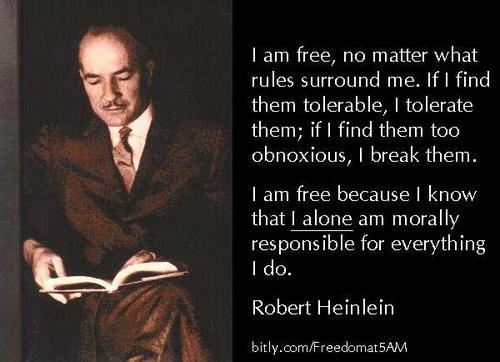
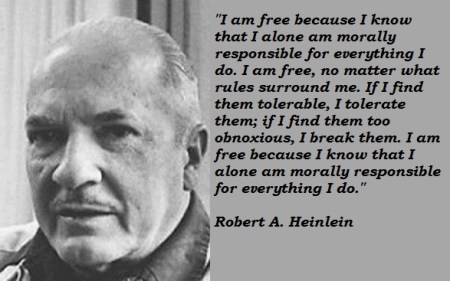
“I am free because I know that I alone am morally responsible for what I do. I am free no matter what rules surround me. If I find them tolerable, I tolerate them; if I find them too obnoxious, I break them. I am free because I know that I alone am morally responsible for what I do.” – The Book Of Rabyd 2:2

Thoughts and Exposition:

I am diverging from the original Book of Rabyd at this point. Much of the old one was the same author and while I respect that author, there are many other true points of wisdom quotes that deserve a place at the table. I could quote Robert Heinlein all day too and he may get one or two but there other author’s whose wisdom I find top-notch and so they will also be included.

There are all sorts of schools of thought about why people do what they do.  About ethics and morality in general.  The most common I have heard is that we do things out of respect or fear. God, the law or basically some authority in general.  I would now maintain is not a very high sense of ethics or morality that you have if you only do things out of some outward focus, or because some outward force compels you to be ethical or moral. It basically is an admission that you are not very ethical or moral and you need someone or something to make you so.

This quote cuts through that bullshit, and drives home the point that the only real thing that is responsible for our choices is us.  We alone bear the moral responsibility for our actions.  Not our fear of the divine (whom ever they may be), respect or fear of the law, or just plain fear.  At the end of the day, it is each one of us that is morally responsible for our actions. We alone bear the responsibility for our choices.

Part of this quote is more truth than choice. We tolerate the rules we find tolerable and we break the rules we find obnoxious.  I saw this all the time in Christianity. I would laugh inside when people would decry people with tattoos because of an old testament passage about it, knowing full well that same passage had rules like no blended fabrics and other such rules. If those same people were forced to engage all the rules that would have  made them upset.  No matter how much a person claims to live fully their code, they make exceptions.  Then most of them lie that they don’t. Neither Heinlein or myself will do that any more. Rules either are tolerable to my freedom of choice or they are obnoxious to the point of being worthy of being broken.  I simply state and live that reality while others will deny it.

I think people play this game of fear and respect because it allows them to look down on someone morally and be in their ivory tower.  To think of themselves as better because they ‘follow’ some moral code and others don’t or do it imperfectly.  The problem with such codes, is when you get right down to it people follow the parts they like or make them feel morally superior, and ignore the parts they don’t and try to hide it so their moral judgment doesn’t come back on their own head.Quite frankly I am sick of this fear/respect dichotomy. In my mind it just leads to more ‘evil’.

Heinlein and the Book of Rabyd offer you an alternative.  Better is to live like this – I am free because I am completely responsible for my own actions. No one else, nothing else compels me to be ethical or moral – only myself. I live free and take full responsibility. Period.  Stop.  Nothing else.

The Rabyd Skald – Wandering Soul, Bard and Philosopher. The Grey Wayfarer.

Skaal!!!

The Pagan Pulpit – The Book of Rabyd 2:2 – “I am Free Because I Know that I Am Morally Responsible for Everything I Do.”

Happy Sun’s Day

Announcements: 

We don’t pray here – we figure God, the gods and goddesses, or whatever powers that be either know already, don’t give a fuck, or are busy with more important matters than our petty stuff. We also kind of assume that they expect us to do stuff that we can do for ourselves, and that we will do them ourselves and not be lazy. We also believe in being good friends, so we don’t presume on our friendship with the powers that be by asking them all the time for stuff while giving them nothing in return.

We also don’t take an offering here.  We figure the powers that be probably don’t need it.  Let’s be honest, offerings are not giving to the divine powers, they are given to an organization to support it.  Just being honest. God, the gods or whatever never see a dime, farthing or peso of that money; it all goes to the church, mosque or shrine.

Opening Song: “Heaven Knows” – Pretty Reckless

I don’t know if it is the theme of this song that fits the pagan pulpit so well or the simple line – “Don’t do a goddamn thing they say!”  Maybe both.

Poem: “If You Could Only Feel” – The Ruined Man

Image may contain: text

Meditation:

Image may contain: 1 person, text

Song of Preparation:  “Bark at the Moon” – Ozzy Osbourne

I include Ozzy to introduce this weeks sermon for a lot of reasons. Robert Heinlein was probably one of the great fiction writers responsible for inspiring people to believe we could go to the moon.  We went from barking at the moon to actually landing on it surface as human race and a lot of it was due to Heinlein.

Text:

“I am free because I know that I alone am morally responsible for what I do. I am free no matter what rules surround me. If I find them tolerable, I tolerate them; if I find them too obnoxious, I break them. I am free because I know that I alone am morally responsible for what I do.” – The Book Of Rabyd 2:2

Sermon:

I am doing a major rewrite of Part 2 of the Book of Rabyd.  I suppose it was only a matter of time before Robert Heinlein got into the Book of Rabyd and this is one of my favorite quotes by him.

There are all sorts of schools of thought about why people do what they do.  About ethics and morality in general.  The most common I have heard is that we do things out of respect or fear. God, the law or basically some authority in general.  I would now maintain is not a very high sense of ethics or morality that you have if you only do things out of some outward focus or because some outward force compels you to be ethical or moral. It basically is an admission that you are not very ethical or moral and you need someone or something to make you so.

This quote cuts through that bullshit, and drives home the point that the only real thing that is responsible for our choices is us.  We alone bear the moral responsibility for our actions.  Not our fear of the divine (whom ever they may be), respect or fear of the law, or just plain fear.  At the end of the day, it is each one of us that is morally responsible for our actions. We alone bear the responsibility for our choices.

Part of this quote is more truth than choice. We tolerate the rules we find tolerable and we break the rules we find obnoxious.  I saw this all the time in Christianity. I would laugh inside when people would decry people with tattoos because of an old testament passage about it, knowing full well that same passage had rules like no blended fabrics and other such rules.  If those same people were forced to engage those would have become very upset.  No matter how much a person claims to live fully their code, they make exceptions.  Then most of them lie that they don’t. Neither Heinlein or myself will do that any more. Rules either are tolerable to my freedom of choice or they are obnoxious to the point of being worthy of being broken. I simply state and live that reality while others will deny it.

I think people play this game of fear and respect because it allows them to look down on someone morally and be in their ivory tower.  To think of themselves as better because they ‘follow’ some moral code and others don’t or do it imperfectly.  The problem with such codes, is when you get right down to it people follow the parts they like or make them feel morally superior, and ignore the parts they don’t and try to hide it so their moral judgment doesn’t come back on their own head.Quite frankly I am sick of this fear/respect dichotomy. In my mind it just leads to more ‘evil’.

Heinlein and the Book of Rabyd offer you an alternative.  Better is to live like this – I am free because I am completely responsible for my own actions. No one else, nothing else compels me to be ethical or moral – only myself. I live free and take full responsibility. Period.  Stop.  Nothing else.

Closing Song: “Inside the Fire” – Disturbed

This closing song has a very serious message. Live your life.  Be free and live. Death comes for us quickly enough.

Parting Thought:

See the source image

Little celebration of getting back into lifting weights this week.  One of my favorite quotes about lifting and why personally I find it an oasis in the middle of all the shit of my life at times.

I remain,

The Rabyd Skald – Wandering Soul, Bard and Philosopher. The Grey Wayfarer.

Skaal!!!

Odin’s Eye – Bible Problems: The Four Gospels

Happy Thor’s Day

Discussion:

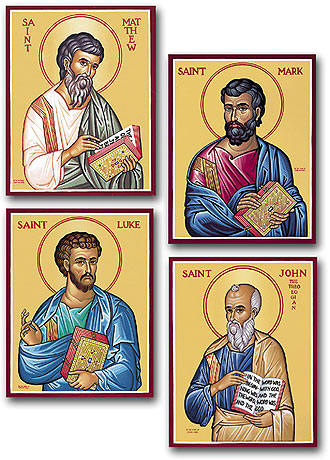
Another one of those posts where what I taught in the past about the Bible is going to have some of the problems I will now reveil. Problems I discovered that are a little overwhelming to maintaining faith. I am actually going to take on one of the more solid parts of the Bible – where we actually have four witnesses of events which would seem to fulfill the Bibles’s own standard of ‘two or three” plus one. However as we will see, this doesn’t’ a) solve other problems and b) some of the events witnessed still only have one witness.

The gospels actually illustrate some Bible problems so well that they provide an excellent test case for critics. I mean if you can have four witnesses, and still present something that makes you scratch your head, then anything less than that obviously is worse.

  1. The gospels are contradictory – This is particularly true when it comes to the resurrection accounts.  Some gospels really have no account at all.  Mark doesn’t have anything other than a statement that Jesus rose from the dead.  The longer ending is probably an addition from someone regurgitating a story and not someone who was an eyewitness. Even when there is a claim to being eyewitnesses they can’t seem to get their story straight. Despite the claim to the contrary, this does not validate the story, it is what in court would be contradictory testimony.  It would be thrown out, but gospel apologists continue to make the leap (this not being able to get their story straight) means the gospels are actually more authentic. No, quite the opposite in fact. It means there was a lot of confusion ‘resurrection’ morning and in moments of confusion any story can be both fabricated and  propagated.
  2. The gospels also suffer from confirmation bias. Every writer of each gospel clearly wants the story to be true, and thus does not offer critical analysis of many events that are presented in the Life of Christ. In my opinion, this is the main atmosphere on ‘resurrection’ morning.  A desire that Jesus of Nazareth was alive so strong that it created and atmosphere of mass psychological collusion. Before you think that couldn’t be possible, I remind people of Jim Jones and Jones Town and Heaven’s Gate, events that show that human beings can desire something so badly they will not look critically at what they are being told,  Based on these false beleifs they will in fact kill themselves and be martyred for it; if they believe it strongly enough regardless of whether it is true or a lie.
  3. Timeline issues – yeah, I am stuck on the resurrection again because it was one of the problems I faced regularly in teaching the event. The accounts vary in their timeline and even events are presented differently to the point that they contradict each other in order of events. Who saw Jesus before someone else is a regular problem.  Throughout the gospels some things appear in different order.  Not a deal breaker but one of those ‘ keeping a straight story’ issues.
  4. Historically speaking if you are looking for other biographies or historical accounts of Jesus of Nazareth, you will disappointed.  The only accounts we have are from his disciples and they biased. There is no objective historical account of his life,  There are mentions in other sources like Philo and Josephus but all they really prove is that Christianity is indeed something that stretches back to the first century, but Jesus himself and his life is untouched by these sources. .
  5. The two or three witness problem still persists despite their being four accounts.  Why? 1) The Gospel of John stands alone in many accounts. It offers up events that don’t have any collaboration at all. Even from the other gospels. John literally stands alone in his accounts of things at times and thus does not met the Bible’s own standard of ‘two or three witnesses’ for those events. 2) The other gospels clearly either copied each other or a common account.  I have no problem with this historically speak except sometimes the word choice is verbatim which means they didn’t do much more digging than to copy without further investigation.  There many theories to this, but in the end what you have is the possibility that instead of three accounts from three different witnesses, what you get is one account of these events, which are not collaborated, and simply copied by others.  When they do differ, Matthew, Mark and Luke have the same problem as John.  They often stand alone with many stories.  One gospel writer will present one story, but the other two leave it out. This happens a lot and in the end you get very few stories that all four gospel writers actually touch.  The only miracle they touch is the Feeding of the Five Thousand and it looks like John is trying to correct the account of the other three.  The rest mostly deal with Jesus’ time in Jerusalem before he was crucified. That he had triumphal entry, he held a last supper where he said he would be betrayed, etc. But all goes south at the resurrection where things get completely contradictory or confusing.

Time to Look Through the Eye:

Faith:

As a student of the Bible, what faith I have left in the Bible is an interesting thing and the gospels in particular.  I taught Life of Christ at least ten times in my ministry.  I think you can reasonably say that Jesus of Nazareth was probably a real person and that he indeed was a Jewish Rabbi, and probably a controversial one to the point he was hated by the other rabbis, religious teachers and groups.  The gospels are a reflection of that but are written by his followers. So how do you continue to follow the teachings of  a rabbi the others have decried as a heretic?  You present Jesus of Nazareth as the Messiah and add a whole lot of legend to the real man, so that it makes the people who killed him look like complete assholes.  The gospels may very well be a reflection of reactionary activity. Like Paul Bunyan or John Henry who may have been real people but their legend got big to the point of being ridiculous; Jesus of Nazareth suddenly becomes much more than he really was to justify Christianity’s existence and growth. I have faith that human beings may want to believe something so badly, they will lie to themselves and create stories to make their experiences change in their mind to verify the new presented ‘truth’.

Religion:

Christianity itself developed a problem of having so many accounts of Jesus life that were so contradictory, they convened a council of the church to sort it out.  This has led to the question: the criteria used may simply been one way of one group trying to politically eliminate another. The criteria were created by men for men’s purposes.  The gospels chosen in the end may simply been the least contradictory, but still not perfect by any stretch of the imagination.  Religion then has a vested interest in defending its ‘holy’ book so they cannot be questioned and ‘BAM!’ – two thousand years later, they still stand despite all the problems.  Not because they are the truth or history, but they have become religious tradition further defended by doctrine and dogma.

Theology:

I suppose I have no Messianic Theology anymore.  I was asked once recently if I had renounced Christ.  I shrugged, is there anything to renounce? I mean I don’t see the need for humanity to have a messiah figure.  In fact I would say looking for one or needing one is a cop-out trying to look for someone else to come along like a white knight and save you from all your problems. My Christology these days might simply be non-existent. Not renounced, just faded out of existence as no longer needed. Jesus was either a great teacher that people either added to his story to the point it is just as unlikely as other tall tales, or he was a lunatic who people believed so strongly they made stuff up to reinforce their belief in a lunatic.  Was he the Messiah? – My answer: do we need one?  Was He Lord? Once again do I need one?

Spirituality:

I like some of the teachings of Jesus.  I find them spiritually uplifting as I consider them. That said, I would also say I can treat them with the same attitude I treat the teachings of Buddha, Confucius and other great and deep thinkers.  Containers for truth, but not THE truth.  Just human beings that said some wise words and I find spirituality in a lot of people’s words beyond the standard religious figures.  It is the one way we live on I suppose – the wisdom that can be found in words we wrote or spoke.

Events are a different matter. I don’t find spirituality in events I didn’t personally experience anymore.  I can find inspiration in tales of courage, honor and other stories where virtues are center, but my spirituality is my own experiences in life, my own study and my own vision for myself..

Conclusion:

I would say my path has taken a very honest turn.  You can’t create a special group of ideas or books and then say you will not criticize them and then claim to be objective.  The gospels are ancient writings, that when we subject them to the same scrutiny as many other writings of antiquity, fall short in many areas. This is simply true.  They are religious tradition protected by religious dogma that once ripped away, you find a much more difficult truth. They are perhaps a mixture of true stories about Jesus of Nazareth mixed with tall tales.  They are very possibly fabricated stories with an agenda that has nothing to do with the real man Jesus of Nazareth.

Continuing to Walk the Path,

The Rabyd Skald – Wandering Soul, Bard and Philosopher. The Grey Wayfarer.

Skaal!!!

Odin’s Eye – Return to My Theological Objections to Christianity – No Takers

Happy Thor’s Day

Discussion:

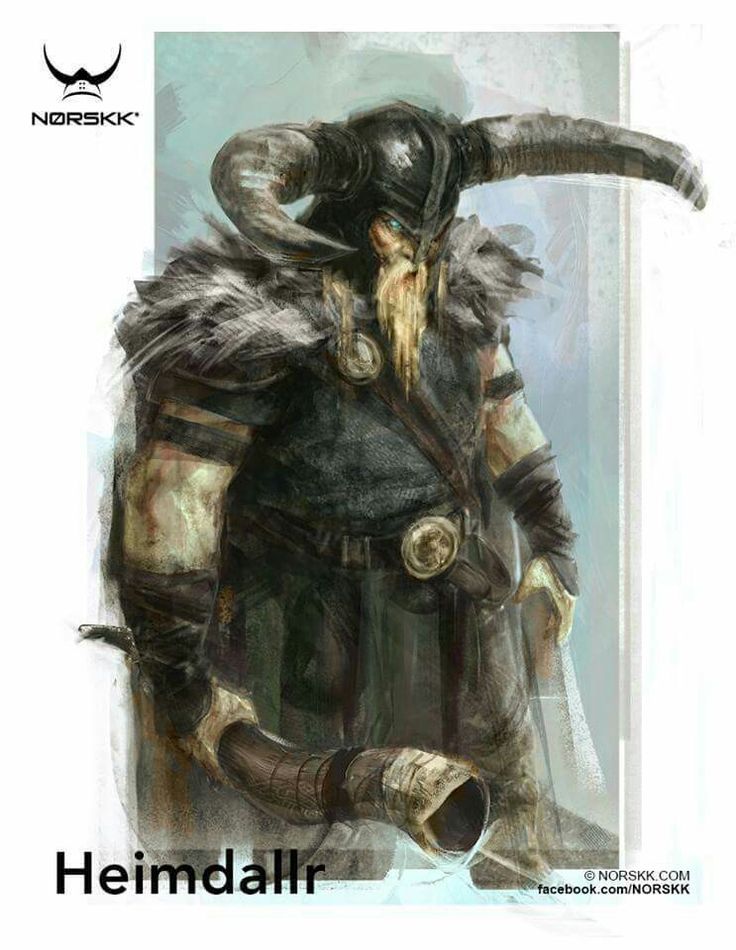
I don’t know, when it comes to my four theological objections to Christianity, I feel like the god Heimdall guarding the Bifrost Bridge.  Most of the time I seem to be just standing there waiting for something to happen and nothing does. I am not really looking for a fight but I think I have laid it out there what I feel are the four major problems with the Christian theology are and why they basically make it so the whole thing is just another man-made attempt to understand god that is flawed and failed. The result has been crickets.

Simple Restatement of my Four Theological Objections to Christianity:

  1. The Bible’s Inspiration by God – it is not proven, nor can it ever be.  It seems highly unlikely that the Bible is the product of a supreme being but rather the product of men. It’s divine inspiration is asserted but never proven.
  2. Sin is an Imaginary Man-Made Problem –   Like the Bible being inspired, Mankind being sinners and certain behaviors being sinful is asserted but never proven.
  3. The Cross and the Empty Tomb – an imaginary solution to an imaginary problem.  I would also say that such a solution with its suffering and death seems sadistic and unloving.  Not the product of a supreme being.
  4. The Justice of the Biblical God is Very Suspect – The scale of justice for the god of the Bible is very unbalanced when you rationally consider some of his actions in the Bible and the doctrines concerning hell and final punishment.

When I first laid these out last summer I did get some feed back, but it was clearly half-hearted and I answered the questions and objections they had to the point apparently that they had no response. This lack of response is not surprising, when I was a Christian I would read Christian apologists looking for answers to these very questions and they really had nothing.  The problem with the apologist is no matter how they try, they assume that the Bible is inspired, sin is real, redemption is real and god is just.  They don’t really see the need to address these issues because most of them are not really listening to those that object to Christianity.  They listen only to pick the battles they can easily win when they see objections to their faith, they tend to ignore the ones that are more difficult.

Time to Look Through the Eye:

Faith:

I refuse to return to having faith in Christianity, if those that practice it cannot provide sufficient evidence that the Bible is inspired, that sin is objectively real and that the solution the god of the Bible has for it is both rational and just. As much as I know Norse mythology is mythology, I actually find it easier now to believe that its’ view of the universe and the gods and goddesses solution to life and living is more in line with reality than Christianity until that happens. I have faith in myself, my family and the creator’s design.  Anything beyond that requires proof.

Religion:

It speaks to Christianity’s failure as a religion when it sees someone walk away from the faith and it comes up with doctrines and apologetics that basically shrug its shoulders and say ‘that is just the way it is’.  Calvinism is notorious for this fatalistic bullshit, but the fact that other branches of the Christian faith have this – ‘well, there is nothing I can do.” on the face of something that should have a response.  Well, then you have just shown to me that perhaps your religion, that you say should lead you to compassion for the lost, is also complete bullshit.

Theology:

Theologically speaking the subjects of special revelation, salvation, god’s nature and final punishment seem to be central to the Christian faith. If no good answer can come when it is proven these are inconsistent and quite frankly paint a picture of a god as 1) a sadistic torturer of his own son when He could have simply forgiven us, and 2) an unjust god who takes our whole lives and destroys them, torturing us forever,  simply because he is like a political snowflake who gets offended because we did something he doesn’t like. Perhaps he should develop some emotional maturity and realize he created man and he knew what he was capable of, so why get upset about it? Maybe should forgive them the same way you expect them to forgive each other – without condition. Or perhaps we should just conclude that the god of the bible is flawed and inconsistent because he is the product of the flawed and inconsistent thoughts and feelings of the men who wrote the Bible.

Spirituality:

The real kicker for me right now, is that I fell more alive spiritually speaking than I ever did when I was a Christian.  This break away has freed me from the shackles of religion and guilt and I don’t think I can recommend something more highly if you want joy and peace.  No more of the constant “You are not good enough.” No more of the psychological abuse of telling people they are garbage and God hates them until they turn to him. No more of using religion to manipulate the behavior of people, excluding myself from certain people, and justify interfering in people’s lives.  Shit, I feel like I actually have found spiritually what I was looking for all along.  The Freedom that comes from being liberated from religious shackles and nonsense.

Conclusion:

My problems these days are far more practical.  Spiritually, I am free.  Believe that or not.  My issues of struggle are family, relationships, career, life and enjoying the world.  The constant struggle of wrestling with this imaginary thing called sin, which was nothing more than me being taught to loathe and hate parts of myself, is gone.  I don’t struggle trying to destroy part of myself anymore.  I embrace it and seek to use that part of myself to make me stronger. My needs and wants are not sinful, they just are.  They are part of who I am and I accept that. I embrace them not as enemies but as allies.

In the meantime, my objections remain. And I wait.

Continuing to Walk the Path,

The Rabyd Skald – Wandering Soul, Bard and Philosopher. The Grey Wayfarer.

Skaal!!!

Odin’s Eye – The Wayfarer’s Spiritual Side – Adaptation and Balance

Happy Thor’s Day

Discussion:

The Wayfarer’s Spiritual Side.  This post and those titled like it to follow in the future are largely just me looking through the Eye, so to speak at my own spirituality. To gaze into my own spiritual journey and come up with some observations I hope will be helpful to me as I continue to walk my life.

I would say that the two great struggles I have had since leaving my religion and my ministry have firstly been to adapt to the change and secondly try to find some way to achieve balance spiritually speaking.

I suppose part of the problem is defining my spirituality:

  1. I want my spirituality to be my own journey of discovery. That is why religion and I have a problem.  That is, I see all of them as being someone else’s journey of discovery that other people follow.
  2. I want my spirituality to embrace all that I am in balance.  Reason, Emotion, Relationships, Health (Both mental and physical) and that aspect we call Spirit must all be involved equally. Most of my spirituality is about achieving balance between all these things.

Back to the two struggles, adaptation is a struggle because I am very conscious of the fact that I was engaged in a lot of spiritual activities as a Christian that I would consider irrational now.

  1. I went to church, but I now understand what that was.  It was the reinforcement of belief by repetition, not necessarily by coming to understanding the truth, but group think and emotional experience are powerful ways to teach you how to deny what is true.
  2. I prayed, but I have realized that I was probably talking to myself most of the time.  Even if there is a god, the way I was conceiving him as I prayed him took on the aspects of my earthly father.  it was my concept of god I was praying to, not necessarily the divine power that actually exists.
  3. I worshiped, but that conception of god was my own creation, so I was worshiping my own ability to conceive god. I don’t do a lot of this anymore.  I honestly can’t say I miss it much.
  4. I studied the Bible.  But this was about repeating something over and over again and when you do that you are just training your mind to think a certain way. Doesn’t mean that way is true or right.

In my adaptation, I don’t want spiritual practices that don’t also leave me open to see possibilities I may not have considered or get me to be dogmatically telling others what “The Truth” is at the expense of their own freedom to figure it out themselves.  it leaves very little other than practicing meditation on the virtues I want evident in my life and living life with a spiritual eye.

The other struggle is balance. Keeping one thing from dominating so much that the others are neglected.

Time to Look Through the Eye:

Faith:

I have faith in myself. Like it or not it is all I really have. People say that might be a poor thing to have faith in and they may be right.  However, my self is all I really know I must have faith in, because it is the best thing I have to place my faith in that I know is real. Other things I will list that I have faith in I know based on my experience and reason that this is so, but I still must say I have a little less faith in these things than myself for obvious reasons. My wife, my small circle of friends, humanity all are worthy of various measures of my faith because they are real and proven through their actions.  That said at the end of the day the only one who can keep my spiritual life in balance is me.  The only one I can ultimately trust is me.

Religion:

I really try to avoid being religious, the problem is religion is very prevalent in spirituality, and eliminating it can be quite a challenge. The issue religion brings to the table is how much of other people’s spiritual experiences can be used to help my own and which ones are just controlling or fear mongering.  I find that if a spiritual notion leads me to being afraid or is trying to ‘force’ me to certain activities then it is a religious element to be rejected.  I just have time for notions that basically without proof try to tell me what ‘the truth’ is.  I think there may be many truths, but one single monolithic truth?  No.  I don’t think the universe is that small. If there is any force that can take me off my notion of balance it is religion.

Theology:

The most elementary shift in my thinking theologically speaking it is realizing that sin is a made up concept.  The writers of the Bible or any other holy book that talk about sin, just straight up called what behaviors they didn’t like ‘sin’.  Therefore, they took it upon themselves to speak for the divine as to what offends the divine. They offer no direct proof for this.  They claim it, but never prove it

Theologically speaking then, is humanity then inherently evil because they have picked up a sinful nature then?  No.  I have not proof one way or the other about that either. It is just asserted.  So when it comes to my spirituality it is not so much avoiding or overcoming sin anymore. My spirituality has shifted more to the notion of making myself better by strengthening what is positive or turning something negative into a positive. I don’t believe that part of my humanity needs to be destroyed or redeemed anymore.  I just think all elements of my humanity (needs, wants, reasoning, wisdom, etc.) need to be focused and work together to help me grow with balance.

Spirituality:

All of life then becomes just as much spiritual as it is anything else.  From taking a shower, to going to work, to making love to even me sitting right now and writing on this blog. All of it has the potential to strengthen me spiritually.  I simply have to find the element of each activity that helps me become a better person.  What is it that leads to long life, prosperity and balance.

Conclusion:

The issue I find is still the issue of balance and adapting to being an X=Christian.  Sometimes I find myself thinking about an issue and asking “Is that the former Christian talking or is it the real me?” It is the current state of my Spirituality as I walk the path of life. It is a question that comes up often.

Continuing to Walk the Path,

The Rabyd Skald – Wandering Soul, Bard and Philosopher. The Grey Wayfarer.

Skaal!!!

Of Wolves and Ravens – Hospitality: Home Presence

Happy Tyr’s Day

Discussion:

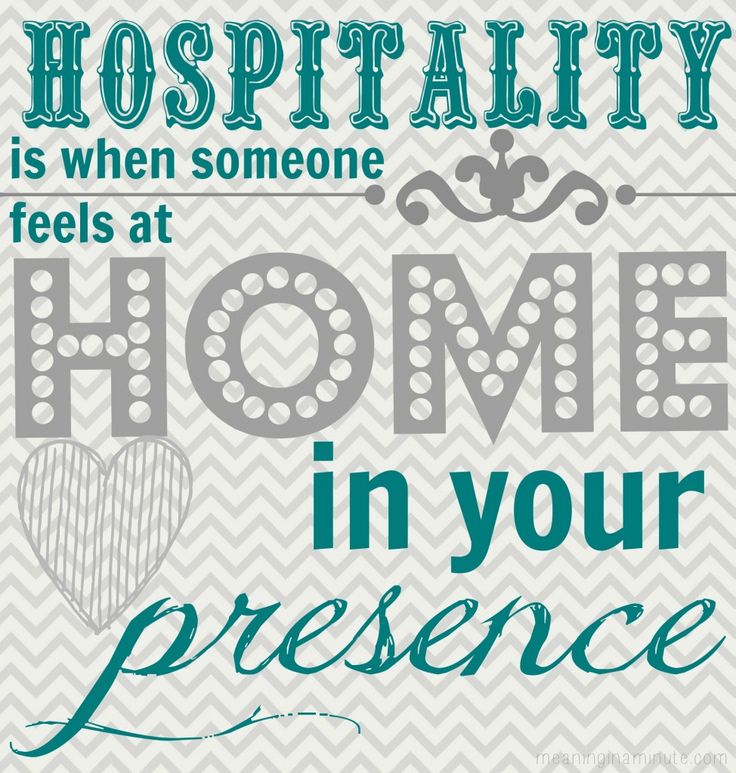
As a virtue hospitality is something I have a grasp on intellectually.  It’s pretty simple to be ready to be helpful in any way possible and opening up your home to strangers in need is something you can provide is not hard to understand. It is one basic way of expressing it, but expression of hospitality is a little deeper than that. I like the quote about better where people feel at home in your presence. Because it is the kind of hospitality that can always be expressed.  You can always be hospitable by choice to anyone who simply needs to be in the presence of someone who makes them feel comfortable in a bad situation. At the very least learning not to be a dick is probably a positive thing to do.

In Christianity I spent a lot of time pondering the notion of – ‘love you neighbor as yourself’.  Jesus is pretty clear on the fact that even one’s supposed enemies or even people we find disgusting are one’s neighbors.  I get it; but more pragmatically, hospitality is simply being human to another human.  To see them not as objects but as they are – as people.

To the Wolves and Ravens:

Needs (Geri):

Hospitality has a certain level of need on both sides. 1) People are going to face things beyond their control and sometimes those things are devastating to life.  People need help sometimes and to reach out a hand and help them in those times can fill a great need.  2) You need to be hospitable for yourself.  I mean if your going to prove that your decent human being and treat others as humans.  Your human side needs this, so you don’t start feeling you have gone completely over to the dark side.

Wants (Freki):

We want hospitality and to be hospitable. Those moments are something we cherish when we led a hand or someone lends a hand to us. Less positive is when someone kicks us when we are down or takes advantage of our distress or bad decisions. We also want hospitality on both side for ourselves and others.

Reason (Huginn):

Rationally, hospitality is the heart of humanism.  It is about the notion that the solution to human problems is humanity.  We show great humanity in hospitality.  It is also actually acting rather than some other activity where we put on airs that we are helping but it reality we are doing nothing.  Prayer comes to mind. I know other people think prayer is doing something, but I used to see it as a most convenient excuse to not actually help someone and instead ‘pray for them’ for which they should thank you. Even though you didn’t do anything to actually help their situation.  The irony was there are many verses of The Bible that caution against this; but we would run to the ones on prayer to say we were still doing something.

Wisdom (Muninn):

Wisdom says that hospitality is what make the world a better place.  Not government, not laws, not better ideas.  Simply being a free human, freely helping our fellow humans. So that people feel at home when we are around knowing that the benefits and comforts of home are there with us; regardless of how far they are away from their actual home.

Conclusion:

For myself the biggest switch has been to dump the whole “I will pray for you” excuse and try to find something I can actually do.  It is hard to say to people: “Sorry, I can’t help you”, but it is more honest. When I can help, I act to do so.  When I can find someone who can help when I can’t is also a possibility. The one thing I never want to do anymore is create some activity that I claim is helping, but isn’t really doing anything. If I am going to justly toward others; with justice, part of that is making sure I am actually acting on the problem, not just ignoring it.

I remain,

The Rabyd Skald – Wandering Soul, Bard and Philosopher. The Grey Wayfarer.

Skaal!!!

Odin’s Eye – Bible Problems: General Issues and Introduction

Happy Thor’s Day

Discussion:

Odin’s Eye is about a lot of things but every eight weeks or so one thing it will be about is taking on the Bible.  I fairly sure that my Alma Maters of Trinity Bible College and Asbury Theological Seminary will not be proud of me during these posts, because I will be using knowledge I gained from earning my degrees with them and then turning it against them, but I know I am not alone in this department with either.

The amount of people who go to school to become ministers or Bible scholars and then turn their back on the faith is legion.  In fact, one of the atheist contentions is that the Bible itself is one of the best breeding grounds for atheism or at least non-belief in Christianity is probably true.  When you read the Bible objectively through the eyes of reason; you have to conclude ultimately it is a work of human beings and whether or not the divine has anything to do with its existence is pretty much a matter of opinion and blind faith.

See the source image

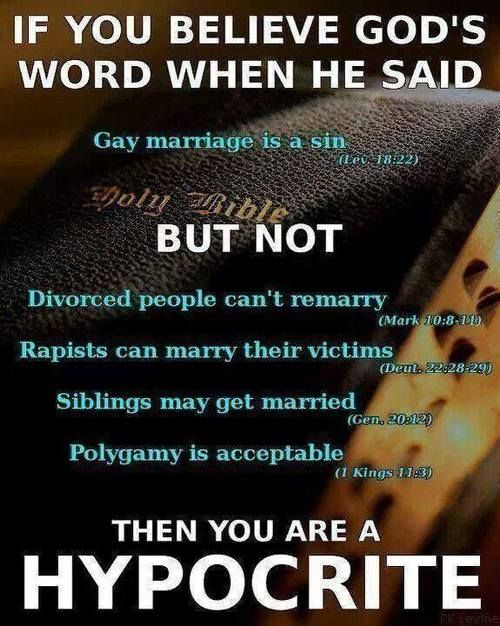
I am not an atheist, but I get the contention and it is valid.  In general, the Bible has some very basic problems that in my opinion point not to a divine authorship but a human one where human beings are giving their opinions about how god operates, giving an account where the author believes he (there are no female authors of the Bible) or someone else encountered God or wrote with the intention of ordering society using God as the authority to hush opposition to their plan. The nature of these problems are as follows:

  1. Contradictions – I spent the majority of my time as a Christian scholar and minister trying to explain contradictions in the Bible.  To be fair sometimes a contradiction is not always present where one is said to exist, but there were many that I simply had no answer for.  The bible does on occasion say two things about the same thing  and there is a direct contradiction. Many Christians point to the idea of people taking these things out of context, but I would say I have taken context into consideration several times and still find a contradiction.
  2. Confirmation Bias –  The Writers of Scripture want the God they are describing to exists.  They want to the resurrection to be true, etc. So they never really address questions that a skeptic would ask. Questions that would help their case if they answered them, but because they are not asked or answered, it just shows bias.
  3. Timeline issues – Like it or not some things don’t mess with each other from a timeline perspective. When I was teaching life of Christ, the one area that gave me the most timeline fits was the resurrection itself. The accounts of who and where Christ appears and in what order vary widely.
  4. Historical – despite my Bible college apologetics professor’s assertion that the Bible is grounded in history; much of that is either unproven or there is a historical record, archaeology, etc. that contradicts the Bible.
  5. The Bible doesn’t live up to its own standard of confirmation of fact – the ‘two or three witnesses’ standard does not always hold up with the Bible itself for establishing every fact. Most events in the Bible are stand alone with no other account of them existing in the Bible itself or in the world for that matter.
  6. God contradicts himself or it seems that God cold have done things in a far more simpler way – the moral questions of the Bible’s god are at times overwhelming. This includes everything from the treatment of women to God plain out not following his own standards for ethics and justice.

I could go on and on, but whenever you see and Odin’s Eye with the Subtitle – Bible Problems; know this is where I am going to take the Bible and be very critical of it.  I am not doing this to offend, but to point out how very questionable it is for the Bible to be a special revelation of God, but more a collection of men’s opinions and accounts of the almighty that should raise an eyebrow, not inspire devotion.

Faith:

People ask me then where my faith is when it comes to the Bible.  It’s not the Word of God to me. It might contain some observations that might help me understand the divine as a deist, but it certainly is no longer the divine special revelation I once thought it was. I think the notion of ‘special revelation’ is man-made so people can say something is of God when really it is just a man-made idea.

Religion:

If the bible is not special revelation, then the basis for most of the Abrahamic Religions is non-existent.  In these religions what we see most is them using ‘holy’ scripture to justify their existence and their use of force and religious ‘ethics’ to control the behavior of others.  Sorry there i\s a great deal of truth to the idea all religions are cults and engage in cultish behavior to control and just because it has it has a billion followers doesn’t make this less true.  Once you find yourself in the authoritative position to disperse the ‘proper’ interpretation of the bible, that gives you an incredible position of power over those who blindly believe. Religion thus cannot be trusted because it is very much about power and control most of the time.  It is why I have sworn them all off.

Theology:

Theologically speaking the so-called ‘special revelations’ might have some good theological observations at times, but I can get no confirmation as a deist that they are true and never will.  The real challenge to me in theology now is that I know I will die ignorant of the truth of the divine, but I am OK with that. Ignorance simply is, the question is what to do about it. Sometimes the thing to do; the only thing you can do based on the nature of the questions, is accept being ignorant.

Spirituality:

I would say over the years the Bible has been a tool of spiritual enlightenment.  But so have my weightlifting sessions, my hikes in the woods and my reading of other books.  I can’t say anymore that The Bible is my authority of faith and practice, nor would I say that I consider it a superior form of knowledge over all others.  It is one voice of many and sometimes I think what it says contains the truth and other times I think what it says is bullshit.  But that is true of pretty much everything I read so…

Conclusion:

My Bible; that I preached from not so long ago, sits on my shelf. I don’t think I have opened since that last Sunday.  It sits currently between The Armchair Economist and The Picture of Dorian Grey.  I suppose the irony of that, and the fact my last sermon was on adultery while I was engaged in an affair, will sit with me forever. I also have no intention of allowing it to be master over me anymore.  Where I walk, I take steps on my own and quite frankly I think my life is better for it. The Bible for me now is a collection of works that sometimes inspires wisdom and other times makes my eyebrow raise. But mostly it is just another book to me now as journey onward.

Continuing to Walk the Path,

The Rabyd Skald – Wandering Soul, Bard and Philosopher. The Grey Wayfarer.

Skaal!!!

Odin’s Eye – My Deism


Happy Thor’s Day

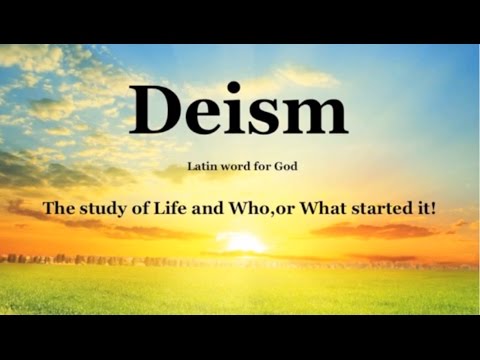
I suppose my belief system is a little complicated. However, at its root or its central tenet is being a deist. However my deism, is not of the same flavor as most people would think of it; nor is it classical deism. Some of the things classical deism upholds, I have modified a little.

  1. Deism would maintain at single creator based on reason.  I would say based on reason, you can’t dismiss the idea of a group of powerful beings being the creators following a common plan or that the universe itself is the creator. I hold out a lot of possibilities here as far as what the guiding force behind our origin might be, if any.
  2. I do maintain with the deists that there is an order and complexity to the universe that imply a creator or creators of some kind.
  3. I agree that there is a limit to human knowledge and understanding that makes it hard; if not impossible, to understand the full nature of the divine.
  4. What ever divine power or powers exist have given man his faculties to both create and uphold his own ethical and moral principles.
  5. Human beings should indeed be free to find, know and worship these divine force or forces in their own way. All views of the divine are to be respected as long as they don’t violate the rights of others.
  6. All human beings are equal creations of this divine power. As such they are accorded rights based on that natural equality.  I do have some things I debate about rights at this point though. More on that at some other time.

Faith:

As far as faith in the divine goes, I have faith that something exists at the present.  I have an active faith in the existence of something divine. I must state for the record, that I can no longer dismiss the notion that the atheist might be right but at the same time I simply do not think humanity has achieved a level of knowledge that can say – “There is No God” with 100% confidence. I believe there is something out there that we cannot comprehend and that no religion can truly explain.

Religion:

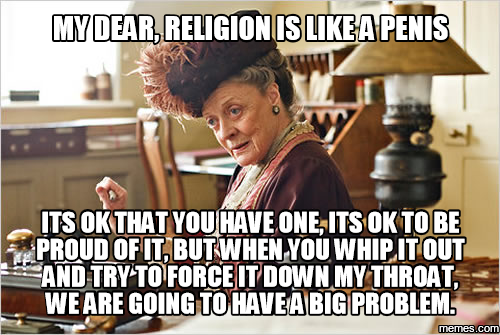
I maintain that people have their right to any religion they like including the right to not have one at all.  I draw the line however with any religion whose followers want to impose their views, ethics and moral code on others.   If you use your religion to justify harming others or force them to take certain actions because of it; I would say that is wrong as well. Religion is very much like a penis, as one actress in a movie remarked, and should have the same societal limitations.

See the source imageTheology:

As a long time theologian ( yes, I have degrees in Biblical Studies and Theology), I used to rely on special revelation; namely the Holy Bible of Protestant Christianity, for my foundation for my work in theology.  Having come to recognize fully that the Bible is a fully human book and that the divine has little to do with, I have to look at how to understand the divine differently.

There is no such thing as special revelation in the sense any so-called holy book is a direct revelation of God. You might find the divine revealed in the human thoughts that are presented in such books; as the authors discuss and tell you what they think about the divine, but those thoughts are human not divine.  To do theology as a deist, I am left with my own reason as I observe the world around me.  I am left with my human facilities alone as I observe and think about the divine.  Part of that is perhaps looking at religions to find certain foundational beliefs common to all that can be helpful in this process, but no one stands the divine better than another.  They all may have some truth, but none of them have THE TRUTH.

Spirituality: 

Deism allows me to engage one other thing and that is to explore the possibility that there is more to humanity than the biochemistry we are left with, if we remove the divine from the equation.   That there is a possibility that man is more than body, mind and emotions but has a spiritual side and an immortal soul. I probably engage this with my more pagan side of my belief system, but it is deism that opens the door to it.

Conclusion: 

I have fully embraced the notion of pursuing the real divine that actually exists without special revelation.  Natural revelation makes things far more interesting and to be honest, more difficult.  But there is a greater honesty to deism as compared to religious pursuits of the divine that I used to embrace.  Only time will tell where this will lead me.

I remain,

The Rabyd Skald – Wandering Soul, Bard and Philosopher. The Grey Wayfarer.

Skaal!!!

Odin’s Eye – Establishing a Pattern

Happy Thor’s Day

I have a similar problem to the one I had in Of Wolves and Ravens in that I need to establish a pattern of posts for Odin’s Eye as well.  I have addressed my four main theological objections to Christianity and probably very soon they will have their own page so people can interact with them in a much more focused manner.  I walk along waiting for people to offer answers to my honest objections and this platform will be for that too as beyond my main four I have many other objections toward Christianity and the Bible being the ‘Word of God’.  Seems like a good discussion topic list for Odin’s Eye.

I will continue to discuss things regarding where I am spiritually. I will continue to discuss Deism, Humanism and Paganism here on Odin’s Eye. I also want to offer up a continuing critique of Christianity, the Bible and other religions.  Plus a general criticism of religion in general can be expected.  Part of my reason for this is to help refine what I am trying to discover, by eliminating what I think is false. So perhaps, the following pattern is good for starters:

Week 1 – Deism

Week 2 – Bible Problems

Week 3 – Humanism

Week 4 – Christianity Problems

Week 5 – Paganism

Week 6 – Religion Problems

Week 7 – The Wayfarer’s Spiritual Side

Week 8 – My Theological Objections to Christianity revisited.

It should be noted as well that for pagan holidays on the calendar I will interrupt this series and write about them.  I am going at pagan holidays from the Norse Viking point of view. The next one is on February 2nd and is called Disting.

What I want to make abundantly clear is this.  Like when I was a Christina theologian, I will always respect a counter argument.  I am not trying to be offensive in my criticism, merely asking a lot of honest questions that need answers, and if you think you have one as a reader, don’t hesitate to give them.  My interest here is not to bash people but to give reason to faith if it can be found.  If not that element of faith is just that – blind trust with no evidence.

I also will remind people at this point that I have degrees in Biblical and Theological Studies.  I don’t mind questions about whether I have considered something, but I do object to assumptions of ignorance.  I guess the problem a lot of Christian and former Christian friends have or might have is this simple point, that I am not just a normal Christian who left his faith.  I used to be a pastor and preacher. I am still knowledgeable about the bible and theology that Christianity employs.

I also have no tolerance for name calling, so if you want to get banned that’s a good way to do it. I work hard to not do it myself, so I expect the same courtesy in return.

I am on an honest search for spiritual truth if it can be found. If you can make me consider something that might lead me to that, I will welcome you with open arms. That would include returning to Christianity, if it could be proven past my theological objections.  My purpose is not to tear down, but to refine and discover. If you enjoy the walk with me as a reader and learn something? Bonus.

I remain,

The Rabyd Skald – Wandering Soul, Bard and Philosopher. The Grey Wayfarer.

Skaal!!!

Odin’s Eye – Objections to Christianity – Part 4 – The Justice of the Biblical God – An Unbalanced Scale

Happy Thor’s Day.  This is the 8th Night of Yuletide. this night is sacred to Skadi and Ullr – The goddess Skadi is a giantess associated with skiing, bow hunting, winter, and the mountains.  Ullr is the god of snowshoes, hunting, the bow, and the shield. The idea behind this night is hunting and being outdoors. It is also a day to remember those who provide our meals and sustenance. The Virtue remembered tonight is Truth. 

Introduction:

I am wrapping up my four main theological objections to Christianity with the simple but profound fact that the god of the Bible is very suspect in as far as whether or not he is just and acts with justice. I would go so far to say that the god of the Bible does not follow his own clearly stated guidelines for justice – 1) “Eye for eye, tooth for tooth” and 2) Restitution Included. Namely that the punishment should fit the crime and that restitution when merited should be offered.  This is the standard of justice found in the Torah or Law of Moses. Jesus of Nazareth takes this on in the Sermon on the Mount in Matthew 5-7 pointing out that the principles of justice were still valid and in fact because things should be done for the love of god, they were even more challenging.  God expects Christians to still be just and follow his principles of justice. The issue is: does the god of the Bible follow his own rules.  I would say not.

Faith:

From a standpoint of my own faith, the biblical god’s justice, and in particular the doctrine of Hell, has always been a problem.  My standard answer throughout my days as a pastor to others that asked was that the justice of god was a mystery.  That someday, we would know it all and see that this god was just to send people to hell.  Even if they were people who we loved and who this god claimed to love. But it was more than that as some of the stories of god executing justice were a little lacking in justice.  Job’s trial is a good example where God allows the Devil to kill all of Job’s children and servants save a few and does it simply to test Job to see if he will remain faithful.  The Biblical god’s answer of – “I am god, that’s why.” is a little lacking in reasoning for a supreme being for one and the whole situation is lacking in compassion not just for Job but for all the people slain for another.  They all lived and died simply to satisfy a bet between the Devil and the almighty is a little much to reconcile with the idea of God is love.  Stuff like this definitely tests your faith and it should.

Religion:

The thing is most religious responses to the justice of God dilemma either cite ‘mystery’ (read – I don’t have a  good answer, so I am going to punt) or our ignorance.  Simply put they both attempt to give a god a different standard of justice than we follow.  How convenient, but also telling that we cannot even use the standard of justice of ‘eye for eye’ with the biblical god. The very standard that this god gives, he does not follow.

The fact that I used to come up with this double standard for god myself bothered me for years when I realized that is what I was doing.  A standard of justice is only viable if it is evenly applied to all.  It should be logical and consistent enough that it CAN be applied to all without exception. We have learned not to tolerate double standards between those that lead and those that follow so why here?  Why does this god of the Bible get a free pass for being hypocritical?

Religion does its damnedest to keep us from seeing this, and it does it by trying to make God so high his different standard of justice is justified.  It sounds like a ruling religious class seeking to justify why they can impose rules on others that they don’t have to follow themselves.  After all, they are ‘men of god’ and so as Cardinal Richelieu points out in the Three Musketeers movie in 1993 – “The Cardinal is not subject to the laws of men”.  Easy to justify if you create a different standard of justice for your god and you then say you are subject to that standard, not the standard of men.

Theology:

But the Biblical God fails theologically and it comes out best in the doctrine of Hell and final judgment.  Everything we will do is in a short temporal time of existence but everything about the final judgment of the god of the Bible is eternal.  In short, this god is going to punish us in an eternal and permanent way for our behavior in temporal and non-permanent existence.  This includes annihilation and eternal punishment views.  The only thing that might save Christianity here as far as theology is actually the idea of purgatory where the punishment is redemptive and non-permanent.  But even here there is a postulate that punishment can last centuries compared to the shortness of life.

So being burned like the rich man is said to be burned is somehow eye for eye and tooth for tooth?  In that story, the rich man is burned not because he defied god but because he had a good life and Lazarus was rewarded because he had suffered in life.  Go look at the story (Luke 16) yourself, this is the rationale that is given.  So because a guy had it good he is punished with burning fire?  How is this eye for eye? Justice would have been to have the two trade places for a second life, not that he is burned for a long period of time.

There is little justice in this story, just a god who on the one hand in the Old Testament tells people who prosperity is a sign of God’s blessing and then turning around and saying though that if you do become prosperous, the biblical god is going to burn you as punishment for it.  In a full analysis of the biblical account not only are there many accounts where god’s justice is a little suspect but where he violates the very rules he sets forward because he gets jealous or angry. Like the other mythologies, the biblical god is very human and reflects probably more of the attitude of the author of that particular passage than the almighty that actually might exist.

Spirituality:

See the source image

For me personally, I come back to the quote I have used before.  If the god or gods are just then they will judge us based on the virtues we lived by.  If they are not just, then they do not deserve to be served.  If there are no gods then, we should live in such a way as to be fondly remembered. I worry less about an afterlife; because regardless, it is this life I must live either way.  I choose to live based on virtue because, in the end, it is all I really have.  My own personal responsibility for the life I live is mine alone. Cue Robert Heinlein.

See the source image

Conclusion:

I will revisit these objections in the future with other thoughts.  Odin’s Eye will continue to be a discussion point on faith, religion, spirituality, and theology. I will continue to use it to find a path to knowledge and wisdom. What you may see in the future is me actually deal with more specific Biblical passages and why they are problematic.  There will also be the continued discussions of deism, humanism, and paganism.  I probably will have a more detailed plan next Odin’s Eye.

I remain,

The Rabyd Skald – Wandering Soul, Bard, and Philosopher. The Grey Wayfarer.

Skaal!!!