“Freya – If You Can’t Lay ‘Em, Slay ‘Em” (Asatru – Part 14) – The Pagan Pulpit

Happy Sol’s Day

Announcements:

We don’t pray here – we figure God, the gods, goddesses, or whatever powers that be either know already, don’t give a fuck, or are busy with more important matters than our petty stuff. We also kind of assume that they expect us to do stuff that we can do for ourselves and that we will do them ourselves and not be lazy. We also believe in being good friends, so we don’t presume on our friendship with the powers that be by asking them all the time for stuff while giving them nothing in return.

We also don’t take an offering here.  We figure the powers that be probably don’t need it.  Let’s be honest, offerings are not given to the divine powers, they are given to an organization to support it.  Just being honest. God, the gods or whatever never sees a dime, farthing or peso of that money; it all goes to the church, mosque or shrine.

Theme Song: “Freya Song” – Sascha Ravendark

Meditation:
Image may contain: meme and text


Text:

See the source image

If you want more details about Asatru, I can’t recommend this book enough.

Sermon: 

Now there is a historical debate as far as the development of Norse religion regarding Frigg and Freya being the same goddess that at some point split in two with one aspect of this goddess being Odin’s wife (Frigg) and the other becoming the hostage of the Vanir along with her brother Freyr being the other, but even if they were once the same they become very different in the mythological stories later.

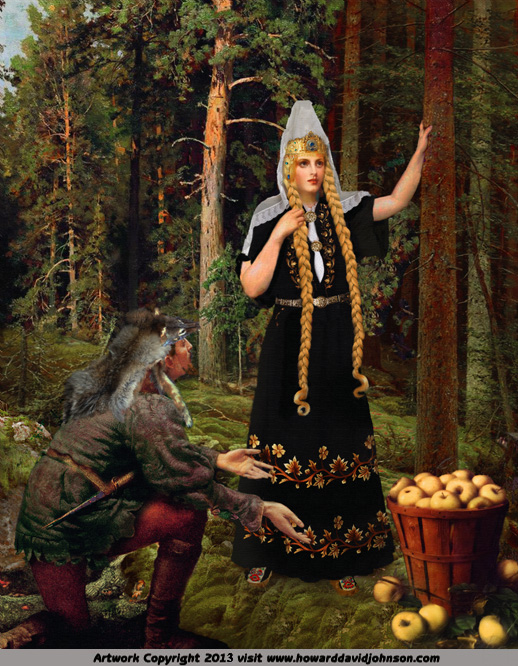
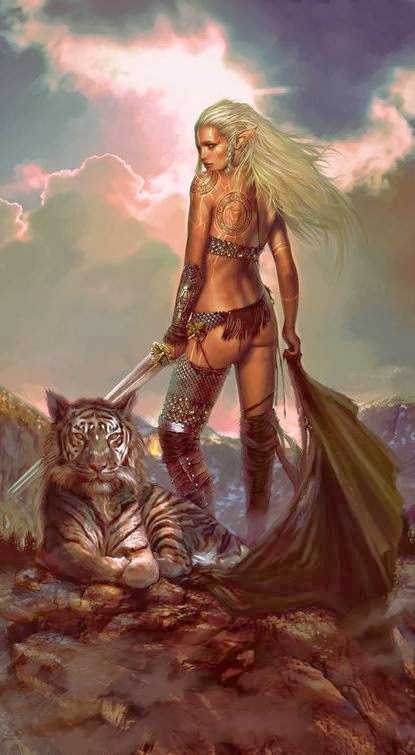
Freya and Frigg have many of the same spheres: Love, Fertility and prophetic magic. But they diverge as Frigg seems more of a homebody of hearth and home.  Frigg seems to be the aspect of the woman and man would want to settle down with as a wife.  Freya, on the other hand, is the girl you want to party with, fight alongside, and fuck.  Or rather given her far more aggressive nature – let her fuck you. She is very independent and self-reliant much like the cats who are her symbol.

Freya is actually associated with the spheres of beauty, sex and war, things Frigg is far less associated with.  She is a far more aggressive female than Frigg and far more passionate and warlike being also a goddess associated with death.  It is, after all, the goddess who gets to take half the slain in battle to her hall. Captian of the Valkyrie, she is one of the choosers of the slain giving half to Odin for Valhalla and keeping the other half for herself.  I don’t remember where I read this, but one commenter said she really had the motto of = “if you can’t lay ’em, slay ’em”.  She was either going to fuck you or fight you and kill you.

For the followers of Asatru, she represents fertility much like her brother Freyr and is involved in all things productive. But she is also invoked in matters of the heart whether love or conflict. It is said that her worshipers have evidence of their existence long before any others except Odin and her worship was the last to die out when the Christians came. A large testimony to her veneration. She would make a very good goddess for any shieldmaiden.

For me, this splitting of feminine nature seems very necessary.  Frigg being the quiet passionate strength behind the throne of Odin.  But Freya, well she is the openly passionate side of women.  That raw animalistic love and anger that they can be quite famous for. I love both sides and it leads me to believe that this split (if a split actually occurred) might very well simply be a reflection of this understanding.  That man at some point in his life needs a Freya to inspire him with passionate side of women and then needs a Frigg to give him strength as a father and husband. Perhaps it is reflective that no woman can be both of those, or such a woman is incredibly rare even among the goddesses.

Parting Thought:

Image may contain: text

I remain,

The Rabyd Skald – Wandering Soul, Bard, and Philosopher. The Grey Wayfarer.

Skaal!!!
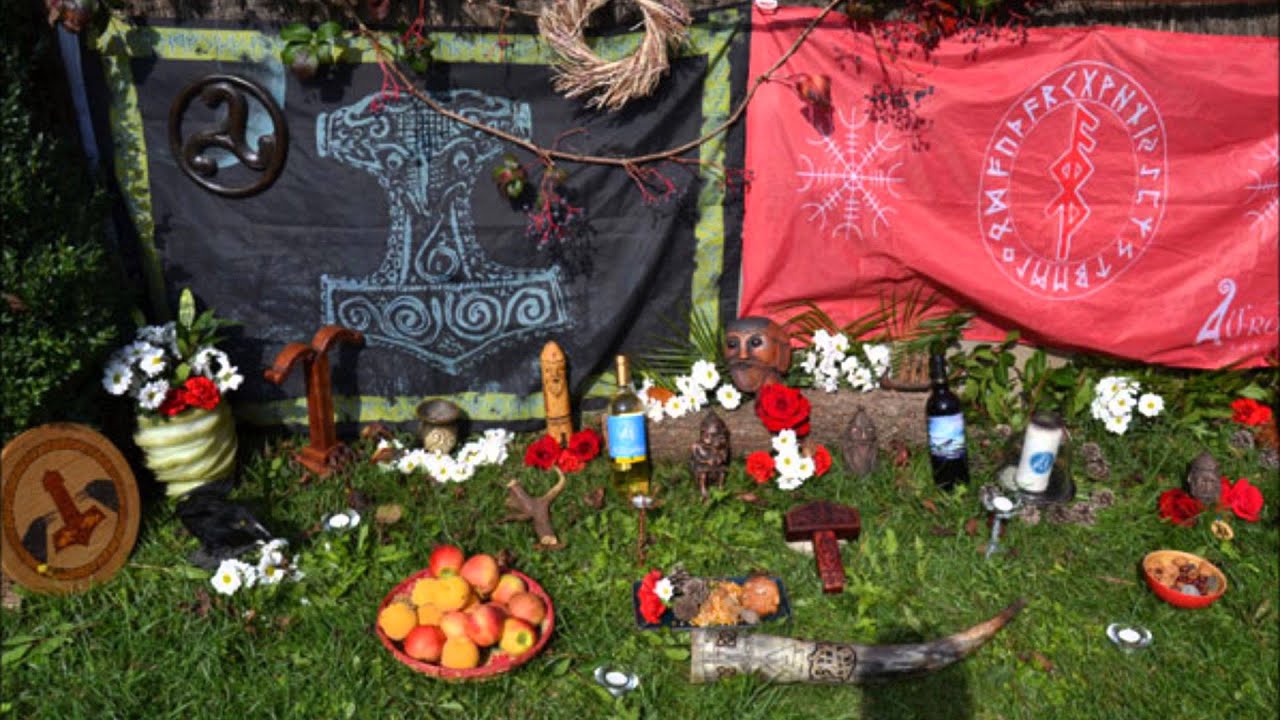
“Meditation Altar” – Odin’s Eye

Happy Woden’s (Odin’s) Day.    

Discussion:

Over the last couple of weeks, my mind has drifted in meditation and part of the issue is of course foci.  I don’t have many and there is also something to having a ritual in meditation that helps you down-center and then clears your head in order to open it up to thoughts and feelings that are more focused.

I was reading another blog a little while ago and this is why my head has been thinking of a meditation altar of sorts with a few rituals to focus and calm down. Then I can concentrate on virtues and any other thoughts about the coming day.  If you want to read the source document for my thoughts: ” Welcome to My Altars” – Myst Nokomis.

Of course, this leads to another discussion as meditation seems to indicate that I might be believing in something beyond and I have to reiterate that meditating does not necessarily indicate that one has spiritual beliefs. A book I would recommend for those who believe that meditation can be something outside the spiritual is How Words Can Change Your Brain by Newburg and Waldman.  These two guys are neuroscientists who study brain patterns and basically developed a meditative technique based purely on meditation on positive virtues.  It works in that it allows a human brain to very much focus on those virtues and it takes as little as three to five minutes.

Time to Look Through the Eye:

“To see the truth, change one eye for another”

Faith:

Meditation for me then is not necessarily about faith.  I follow Asatru for two basic reasons.  Firstly, I am a practitioner of the Nine Noble Virtues and try to apply them to my life.  Secondly, I am trying to recover my lost pagan heritage in terms of culture and religion.  My meditation is more about the virtues and my studies of mythology and religion of the Vikings are pretty much about the second.

Meditation:

Meditation is about me awakening my mind and emotions.  It about concentrating on the things that matter to me and how to engage the world around me. I turn inward in order to deal with the outward better when I come out of meditation.  My desire for a ritual and an altar of sorts is about consistency.  Religion has tapped into one thing if I take Newburg and Waldman’s book seriously, and that it understands the importance of routine and repetition.  That’s the point for me.

Theology:

For all practical purposes, I have no active belief in any god, goddess or force. It makes me academically an agnostic epistemologically and an atheist in the reality of my belief. If I have belief in anything then it is in humanity itself of which much of mythology is nothing more than personification of human forces of various kinds and the forces of nature that human beings relate to regularly.  Humanity is my ‘diety’ if you will and I express that understanding through Asatru and relate best to Norse mythology. It’s not that I don’t hold myself open to other views.  It is just I am still seeking and looking for the rational divine if it exists.

Spirituality:

Spirituality is about virtue, relationships, mind, emotion, body, and connections.  As such my one spiritual practice is meditation.  I don’t pray anymore.  I don’t fast or any of that stuff.  I simply seek to get my mind and heart right at the start of every day and then live my life. In truth, this is probably the essence of all spiritual life.

Conclusion:

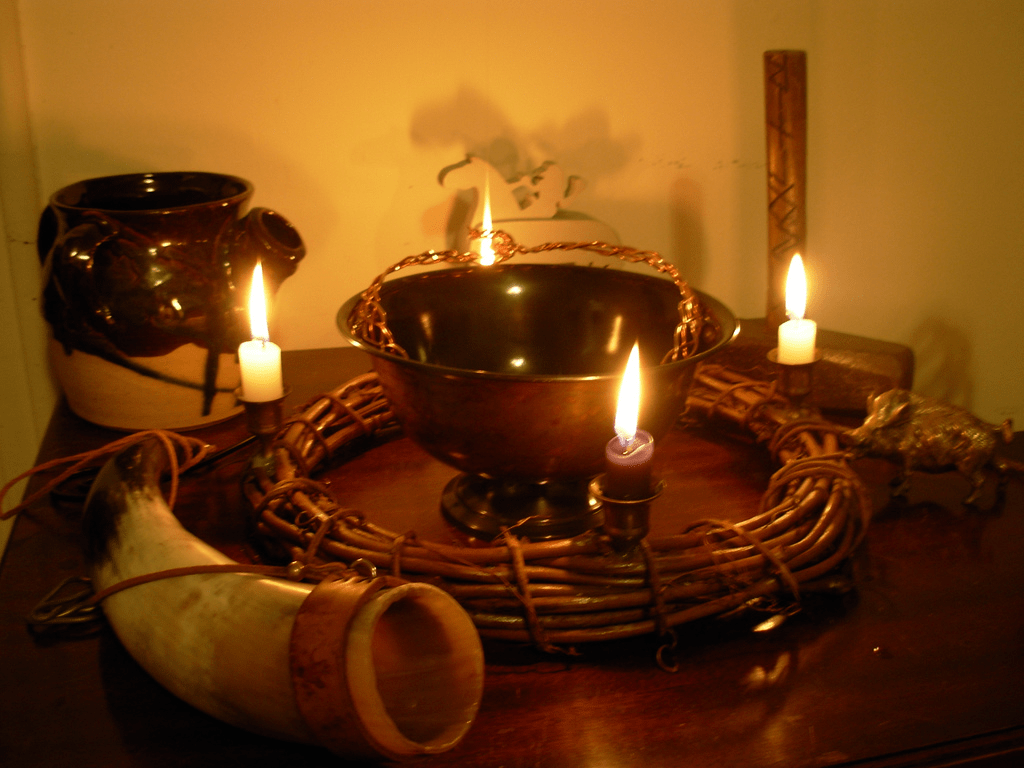
On a practical side, I am going to make a meditation altar that involves as many of the senses as possible. Sight, smell, touch, sound, etc. I think the more I connect my meditational thoughts to as many senses as possible the more they will be both remembered and have a positive effect on my life.  That, I suppose, is another thing that religion does tap into that is very human.

I need something that can move and be put away, probably has symbols, candles, and incense. For sound probably I will have to use my phone and earphones.  I guess what would constitute a taste fitting for meditation might be a question I have but I will think about it.   The main objective being to have tihs in place before the month is out.

I remain,

The Rabyd Skald – Wandering Soul, Bard, and Philosopher. The Grey Wayfarer.

Skaal!!!
“Frigg: Mother of Foresight”(Asatru – Part 12) – The Pagan Pulpit

Happy Sol’s Day

Announcements:

We don’t pray here – we figure God, the gods, goddesses, or whatever powers that be either know already, don’t give a fuck, or are busy with more important matters than our petty stuff. We also kind of assume that they expect us to do stuff that we can do for ourselves and that we will do them ourselves and not be lazy. We also believe in being good friends, so we don’t presume on our friendship with the powers that be by asking them all the time for stuff while giving them nothing in return.

We also don’t take an offering here.  We figure the powers that be probably don’t need it.  Let’s be honest, offerings are not given to the divine powers, they are given to an organization to support it.  Just being honest. God, the gods or whatever never sees a dime, farthing or peso of that money; it all goes to the church, mosque or shrine.

Theme Song: “Prayer of Frigg” – Tjamtjala

Meditation:

Image may contain: 1 person, standing and text

Text:

See the source image

If you want more details about Asatru, I can’t recommend this book enough.

Sermon: 

Finally, we hit Frigg.  Goddess of Love, Marriage, Fertility, Prosperity, Family, Civilization, Weavers, and Prophecy.  Wife to Odin and mother of Baldur.  Her appearances in the mythology are interesting in that she is an active player many times but her personality is never really developed leaving her with an air of mystery almost as mysterious as her husband. Frigg, however, is a powerful queen who acts when needed. Her loyalty and concern for her children – particularly Baldur is never questioned.

Of course, her lament for Baldur is more tragic because she foresaw his death but couldn’t stop it and then when the whole world wept for Baldur save, one so he remains in Helheim, becomes even sadder.  Her ability to see the fates of each person does not help her and the tragedy of losing a child. It must have been a story to remind mere human mothers that even Frigg despite all her powers, lost a son and grieved for him.

To the followers of Asatru, Frigg is queen as much as Odin is king. She is venerated for many reasons but if one wants to understand Odin better one needs to understand Frigg and Frigg seems to be Odin’s center.  His point zero, zero, zero if you will.,  It all starts and ends with her to him.  They actually seem to love each other deeply although sexual fidelity is not required it seems, as both of them were known to have sex with others.

One of the cool things is that one ritual is mentioned, whether it is new or old I found it interesting. Of placing a large single candle central and then twelve candles in a circle around it.  This is done to reflect Frigg’s twelve handmaidens or in some cases, as believed – her twelve different aspects. Either way, it demonstrates the complexity of a very mysterious and powerful goddess.

I find Frigg to be a puzzle that it is fun defining the edges of.  I have used her in a story and made her a kind-hearted but powerful mother/wife figure. I find this female representation both appealing and powerful.  The Nordic pantheon has a father figure in Odin that travels far and wide to protect what he cares for and a mother figure who protects hearth and home while he is away. They are never questioned when they sit together in their home. Definitely both strong feminine and masculine as a couple. She also has a strong story that emphasizes parental love.

Parting Thought:

No photo description available.

I remain,

The Rabyd Skald – Wandering Soul, Bard, and Philosopher. The Grey Wayfarer.

Skaal!!!

“Haustblot – A Fall Festival (September 22nd-23rd)” – Odin’s Eye – Holidays

Happy Woden’s (Odin’s) Day.    

Discussion:

This holiday actually was celebrated a few days ago.  Haustblot or Fallfest is associated with the end of the harvest season.  Perhaps it would be better to say it celebrates the beginnings of the end of the harvest season which will continue right up to Winternights.  This is a minor blot or festival and so it is not given a lot of fanfare per se.  But it does mark the beginning fo the fall season.

A lot of gods and goddesses are honored at this point and reflected on.  Anyone of them that is associated with the harvest or fertility is on the list. Being the beginning of fall in the northern hemisphere it is celebrated as we are starting the journey to Winternights and ultimately Yuletide.

If there is any hold out to how this holiday is celebrated it is the idea of a bonfire usually made from the lighting of the hearth in each home and then each family bringing a torch from that to light the common fire for the community. Pretty rich in symbolism.

Time to Look Through the Eye:

“To see the truth, change one eye for another”

Faith:

I think that faith that nature will continue to provide is a key element of this beginning harvest festival. Of being thankful for the powers that be or nature for providing what is needed ot sustain life through the winter. Those in four-season climates understand the importance of the harvest more powerfully than most as it means the difference between life and death.  Whether this is faith or simply a trust in the cycle of life is a good question.

Meditation:

I think a lot of this festival begins a time when the virtue of industriousness is on the one hand needed to bring in the harvest and the other hand celebrated because the rewards of this harvest are coming in. The fruit of one’s labor leading to the continued survival of yourself and your family and community is celebrated. Important things indeed.

Theology:

I suppose there is a lot of spiritual things connected with the harvest that our world of modern science has explained and allowed us to do even more and be even more fruitful. The spiritual side of this seems to be important to remember as well. To be grateful to those that do grow and harvest for the rest of us is something to be considered.  There is a connection between everyone at some point and it is often not noted because we never see one another. But in then I can eat because someone else took the time to grow and harvest the food I pay for is central.  Human connection is a theological concept.

Spirituality:

I am continually humbled by the world I live in. Life is both strong and fragile. I am reminded not only of life but death.  Things harvested are in the end dead but the give life to others as they are consumed. There is s simple truth to this that is embraced.

Conclusion:

While not a great blot or festival – Haustblot is a good moment to pause and reflect. it a good moment to take a deep breath as fall begins and then get about the business of doing what needs to be done to prepare for winter.

This completes the first time I have gone through the cycle of pagan holidays. focusing on the Vikings as much as possible.  I am going to continue doing this as each year I feel my opinions of these things will of course change. It has been very interesting this first time though and I plan on getting deeper into things each time I go through it.

I remain,

The Rabyd Skald – Wandering Soul, Bard, and Philosopher. The Grey Wayfarer.

Skaal!!!

“Heimdall – Guardian of Bifrost Bridge” (Asatru – Part 11) – The Pagan Pulpit

Happy Sol’s Day

Announcements:

We don’t pray here – we figure God, the gods, goddesses, or whatever powers that be either know already, don’t give a fuck, or are busy with more important matters than our petty stuff. We also kind of assume that they expect us to do stuff that we can do for ourselves and that we will do them ourselves and not be lazy. We also believe in being good friends, so we don’t presume on our friendship with the powers that be by asking them all the time for stuff while giving them nothing in return.

We also don’t take an offering here.  We figure the powers that be probably don’t need it.  Let’s be honest, offerings are not given to the divine powers, they are given to an organization to support it.  Just being honest. God, the gods or whatever never sees a dime, farthing or peso of that money; it all goes to the church, mosque or shrine.

Theme Song: ‘Heimdall” – Nordic Folk Music:

Meditation:

Image may contain: one or more people, people sitting and text

Never, ever stop learning.

Text:

See the source image

If you want more details about Asatru, I can’t recommend this book enough.

Sermon: 

I remember that my introduction to Norse mythology as a child actually started with Heimdall and actually the book above also when it starts looking at the Norse gods of Asatru also starts with Heimdall. Heimdall is the god that guards the way to Asgard – The Bifrost Bridge. The rainbow bridge that connects Asgard to Midgard.

Heimdall is the god of light, guardians, the coast as he is the product of Odin and the nine waves of the sea.  He lives in his fortress above the entrance to Asgard.  He has a sword and a horse.  Most notably he is the god which is considered the most benevolent to mankind as he is involved with them.

The image one might get of Heimdall is a man who sits and guards the bridge day after day but in fact, he seems to travel a bit and be very involved in mankind’s plights.  It is also believed by scholars that he was once more important that he seems to be today.  The Norse people held him in high regard as he was said to be the father of many human children so it was said he was an ancestor to many.  I remember when I watched Vikings the TV show it was this idea that was invoked when a man and woman were having a dispute about her child because it seemed the child was not the product of their marriage but the visist of a stranger. The ruling woman made the judgment the child was the child fo Heimdall and thus the family was blessed.

The followers of Asatru do have high regard for Heimdall despite the fact his role with the gods is slight.  Basically waiting to blow his horn to signal the attack of the giants during Ragnorak on Asgard and then to guard Bifrost with his life. This vigilance and connection with mankind in the rainbow, the coast and the ridges above the seas is however ever-present.  Something that is to be admired.

I am reminded that not all virtue is glamorous. There is nothing more boring and yet so necessary as guard duty.  Heimdall for his part takes on his task of guarding Asgard and the Bifrost bridge with a sense of fidelity and discipline that few can match. His story definitely also has the connection to humanity that is truly personal as he is the ancestor of many.  I find it interesting that the Norse people had no problem with the fact that he seems to have no wife yet fathers human children and they considered themselves blessed for it.  Despite what we do know there is still a lot of mystery to Heimdall which I find intriguing. Mostly his personality seems interesting but he so quiet he reveals little and his name’s meaning is unknown.  I connect with him however as his job as the guardian of Asgard connects to my first name Edward very well – ‘The guardian of prosperity’ seems to fit us both.

Parting Thought:

Image may contain: one or more people and text

I remain,

The Rabyd Skald – Wandering Soul, Bard, and Philosopher. The Grey Wayfarer.

Skaal!!!

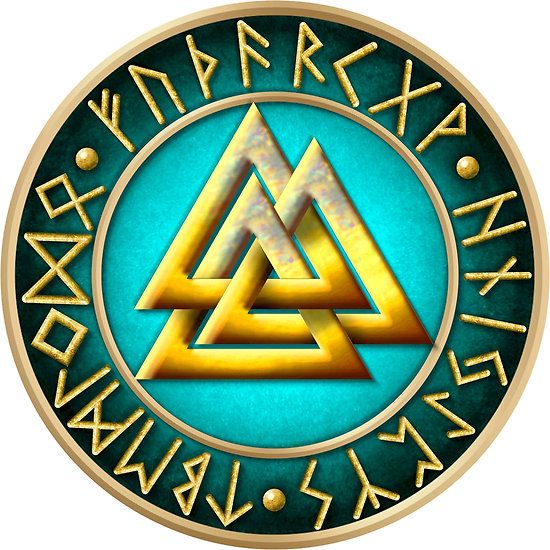
“My Spiritual Symbolism: Valknut with Rune Circle” – Odin’s Eye


Happy Woden’s (Odin’s) Day.    

Discussion:

My struggles with magic aside, I do believe in the power of symbols. Not magical power per se but more of a power to encapsulate thoughts, concepts, and ideas into a single pattern or image.  For me, these become very powerful focuses that keep me steady in my thoughts and philosophy.  They also remind me of what is spiritually important.

I adopted the valknut as my replacement for the cross right after leaving Christianity.  I had become fairly certain that at least the Nine Noble Virtues of Asatru were going to be my new moral code, so I looked for something to symbolize that and the symbol of the Valknut was almost always present in any website I was studying at the time and so made it my own.  The fact that it is connected with Odin and death rituals (burial) only solidified this.  The Grey Wayfarer (me) often wears a pendant of the valknut around his neck on a chain.  Mine also has a circle of runes around it like in the picture above.

Both the valknut and the runes are mysteries as to their full meaning.  Much has been lost thanks to the invasion of Christianity and the subsequent purge that followed them of all things pagan. The valknut and runes apparently were too pagan to find their way to being incorporated into Christian worship and so were actually expunged.  A few examples survive and so what we know is very little.  The valknut is associated with Odin and burial because we find them on gravestones.  Runes are everywhere but they don’t seem to be about language although some modern pagans have made it so.  From a scholar’s point of view, they are largely a mystery as well.

What this meant for me is that I was left to give this symbol and the runes around it their own meaning. So…

Time to Look Through the Eye:

“To see the truth, change one eye for another”

Faith:

I am a deistic humanistic pagan.  First and foremost I fall on the side that says while religions are bunk and made up for the most part, I don’t dismiss the idea of a supreme being, beings or force of the universe being a real possibility. However, I believe that the only real source of overcoming my own and other human problems is myself and other humans. I am pagan because my spirituality basically draws me back to the spiritual roots of my ancestors. It is far more about heritage than religion for me.  The valknut and runes are a good symbol of that as both call to my Germanic and (hopefully) Scandinavian roots.  It is at least the faith and spirituality of my own spirit regardless of biological genetics.

Meditation:

I suppose my meditation times that I have used the valknut and rune circle are the ones that have given both new meanings for me. Firstly the nine sides of the three triangles became representative of the Nine Noble Virtues.  Later, the nine formed the three triangles of the Higher Virtues of love, Justice, and Wisdom.  All of them are interlocked and the three triangles, if you look closely, cannot be separated fro meach other.  It thus forms a single spiritual path of following virtue, a single symbol – the valknut.  It also because of its connection to Odin serves as a reminder of the finality of life. Virtue is the only thing that gives that life value.

The rune circle around it is all 24 known runes. In many ways, it symbolizes the mysteries of the knowledge of the universe to me. By following the path of virtue, I begin to understand these mysteries better.

Theology:

One of those mysteries is the divine.  Part of that, to be honest, is to assess whether such divine entity or entities exist.  As a diest, I fall on the side of agnosticism that says we don’t know enough to dismiss the idea of the divine, so I believe more in its possibility than it is not possible.  I will give the atheists their due in saying they could very well be right, but at the same time, I don’t think I can myself close my mind, heart, and body off to the idea that a creator or creators exist. It seems too ‘dogmatic’ of ‘fundamentalist’ to me so to speak.

The issue then is to find meaning either way – for me, this is the following the path of virtue as a means to coming to better understandings of the world around me and perhaps finding the answers I seek.  I am a pilgrim searching for truth, wherever I find it.  I am the Grey Wayfarer

Spirituality:

I find spirituality in Virtue.  Virtue allows me to connect with myself, other people and the universe and all it contains. How can one not be connected when following after virtue? For me, this symbol reminds me that part of understanding the universe requires connections.  The path is what connects and virtue is the path.  In meditation, this symbol has proven to be the best focus when I am looking to understand this connectivity to everything else.

Conclusion:

As I meditate more on this, I am sure more things will come to mind.  I have plans to make my meditation time more ‘ritualized’ in that I may have other foci and even some candles and incense.  Regardless, the valknut and rune circle will always be central to it. The centerpiece if you will regardless of what becomes my first meditation altar.

I remain,

The Rabyd Skald – Wandering Soul, Bard, and Philosopher. The Grey Wayfarer.

Skaal!!!
“Magic – A Skeptical Pagan’s Perspective” – Odin’s Eye

Happy Woden’s (Odin’s) Day.    

Discussion:

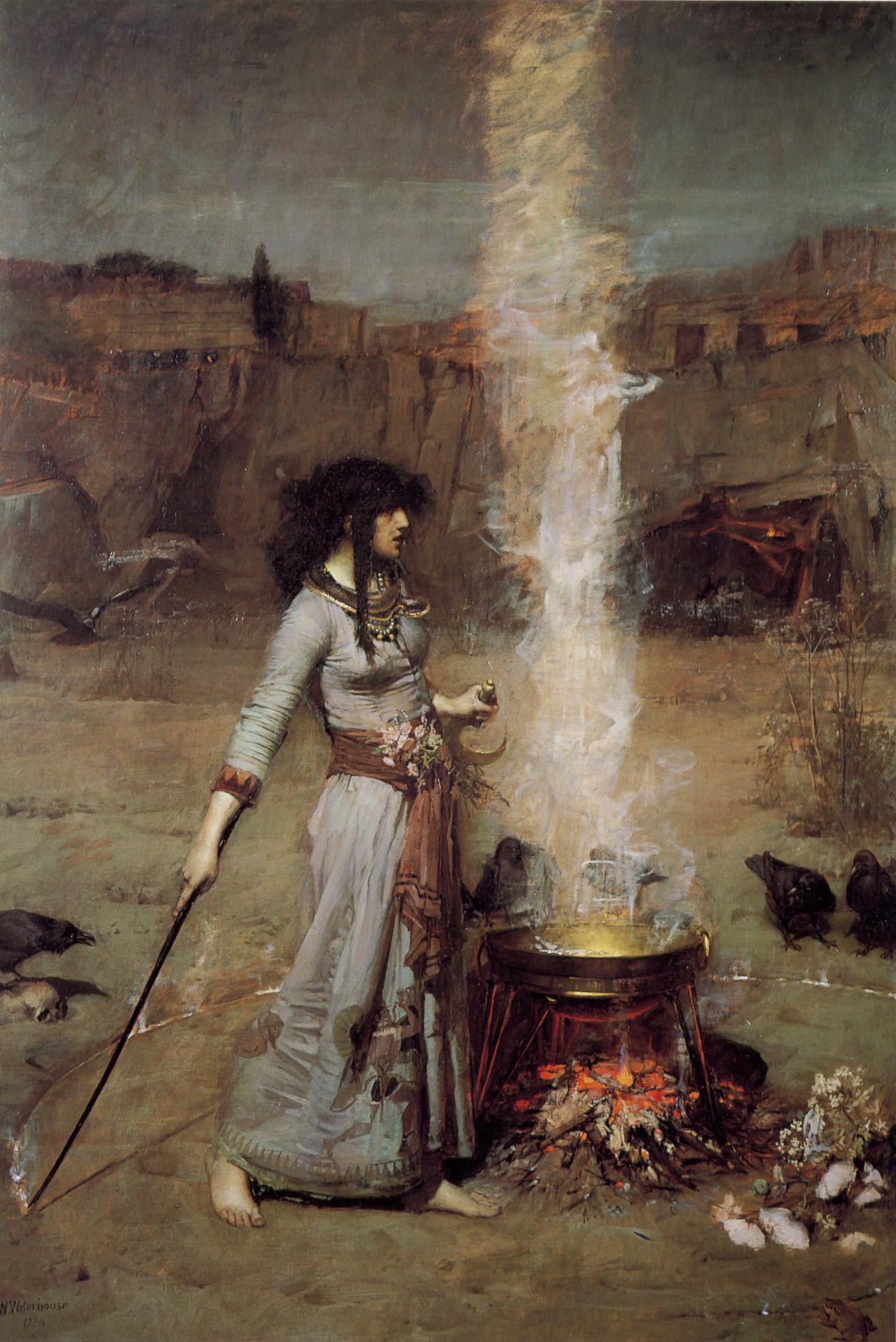
In the Pagan world, magic takes a lot of different forms.  In my pagan world of the Asatru, with its Viking heritage, there is a belief in magic.  It is full of shamanism as well as the simple idea of using consciousness to affect the world through the will of the practitioner.  Because in Norse mythology everything has a spirit, then the issue was influencing the will of those spirits to line up with the will of mage.  Most notably the magic of the Vikings seems to have focused on the idea of knowing and fate.  For one to decern the fate of a person and thus decided the best course of action was the goal of Viking magic.  This particular form of magic was called seidr.  The Vikings had other forms but this seems to have been their magical passion if you will.

I freely confess, pagan that I am, I am skeptical of magic.  It stems from seeing the value in science, but as some of the writings on magic point out, the end goals and means of science and magic are very different.  I can get that, so I am not closed off to the possibility of magic.  My problem is my own personal history as a Pentecostal Christian has soured me to the whole idea as what many times was considered ‘miracles’ was either very explainable as mass manipulation and psychology or straight up huckster fraud.  The idea of the divine powers reaching into the lives of people I can accept, I just think that the people who claim to do this need to be scrutinized with a very skeptical eye.

So what about magic in the real world?

Time to Look Through the Eye:

“To see the truth, change one eye for another”

Faith:

I can believe that the powers that might be would interact with the rest fo us humans. The question I have is whether this is necessary all the time. If in some ways this might be presumptuous on our part to even ask for it.  I start the Pagan Pulpit out with the following paragraph:

We don’t pray here – we figure God, the gods, goddesses, or whatever powers that be either know already, don’t give a fuck, or are busy with more important matters than our petty stuff. We also kind of assume that they expect us to do stuff that we can do for ourselves and that we will do them ourselves and not be lazy. We also believe in being good friends, so we don’t presume on our friendship with the powers that be by asking them all the time for stuff while giving them nothing in return.

I want to tell you I sincerely mean this. I am not going to presume on any friendship and that includes the divine powers. Faith that they exist – yes.  Presuming that they want to help me – no.

Meditation:

As I have meditated on this question of magic. my biggest personal struggle is that of prayer.  Mostly, as I look at Chrisitan prayer, I see it is talking to one’s self and interestingly enough part fo the self that we actually define as God.  You will find that Christians in general view this ‘God’ very differently.  Everyone has their own very unique perspective on who this person is and interestingly enough shaped in each persons own image of what they want.

Prayer to me seems presumptuous in and of itself.  But self-talk I see the need for as we all do it and those that pay attention to it often are more well adjusted. The real question I suppose is theological.

Theology:

Theologically speaking, the question comes back for me as to whether the powers are benevolent, malevolent or indifferent to the whole question of good and evil. Why would they help us if we ask? Can they be trusted?

Even in the mythologies, I know those are good questions.  Odin, for instance, has a higher purpose in mind and so will not hesitate to sacrifice you his devotee to that cause.   Loki certainly can’t be trusted.  Better not to pray at all and thus leave the whole magic of life to living as virtuous as possible for your own sake. Virtue has its own form of magic as do stories.

Spirituality:

My spiritual side longs for what magic could do, but my skeptical side says better to leave it alone. To practice the more subtle magic of living life as a follower of the Nine Noble Virtues and to tell tales as a Skald.  Bring the more common magic of virtue and story to people.  To not presume on the powers that be, but rather be self-reliant and work hard to attain that I wish.  Magic seems like a dangerous short cut.

Conclusion:

I guess I can leave my fellow pagans with some questions.  Is magic something you practice and why do you do it? Is my skepticism a good thing or a bad one?

For now, I will follow virtue and tell stories of life and the universe. It seems to be a safe path. I still don’t see a good reason to take the short cut of magic.

I remain,

The Rabyd Skald – Wandering Soul, Bard, and Philosopher. The Grey Wayfarer.

Skaal!!!

“Meditations – Side Identities” – The Rabyd Skald

Happy Frigg and Freya’s Day

A side identity is what a person is known for in certain particular contexts.  They are things that identify who you are but they are not the primary thing you are known for or the secondary one.  To me, they make up a part of who you are but do not encompass who you are.  My side identities are important parts of who I am but they are only who I am part of the time. Some of them are however known and are what is known about me.

Along with this are some that I want to have as side identities but I am still working on them. Things that will help with living my life better as a human being and supplement the primary and secondary things I am.

Weightlifter:

I think I have this side identity already.  I lift at the gym a lot and I have received compliments both at work and at the gym about how much I lift and how I look the part.  For me, this is in part about health and of course, a lot of nutritional elements go along with this.   I am a Paleo nutrition follower but that is the part of weightlifting and the healthy living that goes along with it.

Hiker:

I do want to do more hiking and more walking.  This is something I want to be a long term activity, but you know you have arrived at an identity people have of you when they start asking you advice about it.  I get that with weightlifting, but not hiking, Yet. I have a lot to learn and a lot to do here before this is a true side identity.

Reader/Scholar:

I guess in part I have some expertise that people like to ask about here.  I have read a lot and still read some.  My decision to be a writer primarily comes with an understanding that a required side identity is being a reader. I don’t probably read as much as I should and that needs to change.  That said, I have read enough that friends come to me and ask about stuff I know.

Pagan:

While I am a pagan in the sense I follow their virtues, I doubt very much people consider me a pagan yet.  I want to embrace this a little more fully as part of my cultural identity and an embracing of my cultural heritage. I suppose there is also an element of telling my former Christian identity to kiss my ass. But mostly it is about getting in touch with my past to give me spiritual strength.

There are a couple of others I am considering.  My daughter and I had a recent conversation about coffee. She wants to learn latte art, but my interest is the coffee itself.  I have never been one to drink the stuff but Paleo allows for coffee. It would be nice to find some form of coffee that my palate would actually like and doesn’t have any sugar in it.  It would be an interesting challenge to be a ‘coffee enthusiast’ because I have never really enjoyed a coffee before, but I am still meditating on it. I can see an image of me the reader sitting in my reading chair with a cup of good joe by my side so it is possible.

I am figuring some others will crop up as interests that complement other things. Almost all things are subject to the time you are inspired to give them and willing to sacrifice.

I remain,

The Rabyd Skald – Wandering Soul, Bard, and Philosopher. The Grey Wayfarer.

Skaal!!!

“Idunn – The Renewer” (Asatru – Part 8) – The Pagan Pulpit

Happy Sol’s Day

Announcements:

We don’t pray here – we figure God, the gods, goddesses, or whatever powers that be either know already, don’t give a fuck, or are busy with more important matters than our petty stuff. We also kind of assume that they expect us to do stuff that we can do for ourselves and that we will do them ourselves and not be lazy. We also believe in being good friends, so we don’t presume on our friendship with the powers that be by asking them all the time for stuff while giving them nothing in return.

We also don’t take an offering here.  We figure the powers that be probably don’t need it.  Let’s be honest, offerings are not given to the divine powers, they are given to an organization to support it.  Just being honest. God, the gods or whatever never sees a dime, farthing or peso of that money; it all goes to the church, mosque or shrine.

Theme Song: “Idunn” – Trobar de Morte

Meditation:

Image may contain: text

You either understand or you don’t.

Text:

See the source image

If you want more details about Asatru, I can’t recommend this book enough.

Sermon: “Idunn – The Renewer”

I know people might have been expecting Frigg, but  Idunn is the goddess of spring, renewal, and youth. She is the wife of Bragi – the poet of the gods. I place her prominently because, to the followers of Asatru, she has become the patron goddess in many ways of the renewal aspects of Asatru. She is the one who is the most instrumental in the rediscovery and renewal of the old ways and making them new again.

In mythology, she figures prominently as the keeper of the golden apples of youth.  When a god or goddess began to fade and begin to look old, they would come to her and take an apple and eat it.  Their youth would then be restored.  In the one-story where she figures prominently, she is the object of the giant’s desire, and she is captured by them thanks to Loki.  Loki then is charged with rescuing her and he does.  She is the wife of Bragi – the poet of the gods.

I like this version of not only renewal but the view of the gods.  Even their immortality has a requirement from the universe for it to exist. It is not simply just there but requires renewal and that is the job of Idunn to grow the apples of youth and provide them when needed.

Rebirth and renewal and pretty universal pagan concepts.  They appear in almost every mythology and are always considered in some ways vulnerable. That said, they are vulnerable not because they can be destroyed, but because they have requirements or locations which can be controlled by multiple people or things.

As spiritual concepts, renewal and rebirth are good ones. I know of no practitioner of paganism that at one point or another didn’t realize their need for a renewal of spirit or a rebirth moment from time to time. Stagnation and death are forces in this world and to avoid them requires renewal and rebirth.

To the Asatru movement, Idunn is a patron goddess who is thanked for her efforts in helping the Asatru being reborn and being given new life.  To many, she symbolizes the rebirth of Neo-Paganism.  In a sense, Asatru has been allowed to take a bite of the golden apples and be renewed after a long absence.

For me personally, the image and story remind me of several lessons:

1) I am engaged in a bit of a rebirth process for myself right now and as a 50-year-old man, it is a hard process.  But rebirth and renewal are absolutely necessary if life is to continue.  Change is a necessary part of life.

2) That what is precious should not only be honored but guarded.  I look at the Asatru Movement and think also that while renewing and growing, it needs some sort of way to preserve it.  The old ways were lost once before and perhaps finding a way to preserve this way of life against that possibility again is a good idea.

3) It also has to be concluded that in renewal, new things will be needed.  There is simply too much lost, so the gaps will have to be filled with new ideas and concepts. New ways of doing things coupled with what we know of the old. Rebirth and renewal have that aspect as well.

Hail Idunn!!!

Parting Thought:

Image may contain: one or more people, beard, text and closeup

I remain,

The Rabyd Skald – Wandering Soul, Bard, and Philosopher. The Grey Wayfarer.

Skaal!!!

“Odin – The All-Father” (Asatru Part 7) – The Pagan Pulpit

Happy Sol’s Day

Announcements:

We don’t pray here – we figure God, the gods, goddesses, or whatever powers that be either know already, don’t give a fuck, or are busy with more important matters than our petty stuff. We also kind of assume that they expect us to do stuff that we can do for ourselves and that we will do them ourselves and not be lazy. We also believe in being good friends, so we don’t presume on our friendship with the powers that be by asking them all the time for stuff while giving them nothing in return.

We also don’t take an offering here.  We figure the powers that be probably don’t need it.  Let’s be honest, offerings are not given to the divine powers, they are given to an organization to support it.  Just being honest. God, the gods or whatever never sees a dime, farthing or peso of that money; it all goes to the church, mosque or shrine.

Theme Song: Old High German: Wotan chant

This is actually a chant that is found on a site that teaches people about the German language and the translation is in the description. Wotan is another name for Odin.

Meditation:


Image may contain: text

To be truly spiritual and even a genuine person in general, one needs to recognize that each person’s question of who they are and what they should be doing is individual. The question is different for all of us and the riddle of life is answering the one we actually have, not the one everyone says we should have.

Text:

See the source image

If you want more details about Asatru, I can’t recommend this book enough.

Sermon: “Odin – The All-Father”

Odin, Wotan, etc. He is known all across the Scandinavian and Germanic world by many names. A couple things are clear in all the stories and myths.  1) Odin is the chief deity and 2) He is very unlike the other supreme deities like Zeus and Jupiter in that he does not lord it over people or rule by decree.  Rather, he takes on the problems himself and does what he needs to do to overcome them.  He leads by example more than orders.

It is only natural that Asatru would embrace him.  From a spiritual standpoint, his essence is summed up very well in the title ‘All-Father.”  To the followers of Asatru, Odin is the speaker of the Havamál a collection of his wise sayings.  He is the god most associated with words and language so it is no surprise that he has many names.

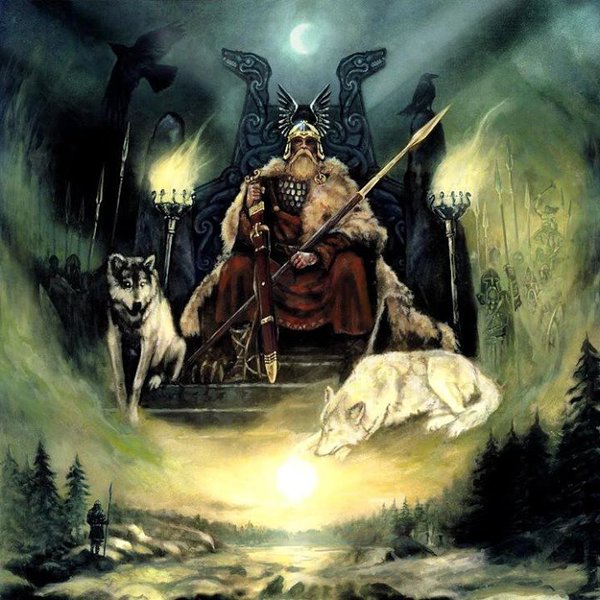
Paxton rightly points out there is a duality to Odin.  One the one hand there is power, anger, war, and aggression on the other side there the god of magic, wisdom and spiritual deepness.  On the one hand, you have the armored king on his throne with spear and crown.  On the other hand, he is also the grey cloaked, broad-brimmed hat-wearing wanderer.  There is an air of power and mystery to Odin as he is both warrior and mage.

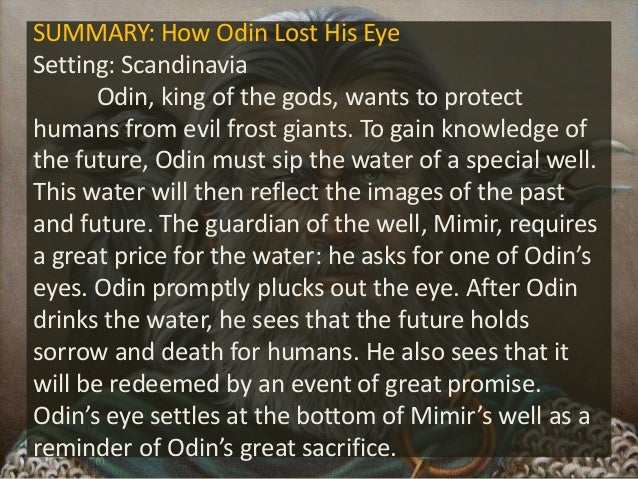
His accomplishments in the mythology are large.  1) All-Father – creator of mankind. 2) He is king of the gods, but in practice, he seems to be more of a chairman of the board of gods.  Each god or goddess being fiercely independent. 3) He trades his eye for wisdom and foresight. 4) He acquires the Mead of Poetry from giants. 5) He hangs from the world tree upside down for nine days to discover the knowledge of the runes. Odin, in short, has a bad-ass list of accomplishments in Norse Mythology. He is also the god who never turns his back on humanity or being a part of wandering among them.

These days, according to Paxton. heathens invoke prayers to Odin still, even if they serve other gods more fervently, they still pay respect to the All-Father.  Most Odinsmen and Odinswomen are people who work with words.  Paxton advises against, however, asking him for victory.  He is, after all, a god that is even willing to sacrifice himself for the greater good.  He expects the same from his followers and would have no problem leading one into defeat if it meant forstalling Ragnarok.  He is a strong and powerful figure and is treated with respect by the followers of Asatru.

As I mentioned before, I don’t think one needs to actually believe in the Norse Gods as real to be a follower of Asatru.  What you do have to respect is how their stories pull you back to your ancestors’ view of the world and what they valued. When it comes to the ideas they valued most in a leader, Odin is the perfect representation. He is strong, listens to the counsel of others, is willing to take the lead and sacrifice himself to get what he needs to be successful.  When a battle comes, he leads from the front. He speaks little but acts boldly whether those actions are out in the open or clandestine. He has the long term in mind. The greater vision if you will.

You don’t have to do much more than come to my blog and see the title and the imagery I use for it, to know I place great value on what Odin represents. I would say my image of myself as a man has strong parallels with Odin.  I work to be strong but also wise. I like to read and write mostly because it allows me to hear the counsel of others. If there is some greater good to be achieved, I will sacrifice myself, although I am trying to do that only when absolutely necessary. When battle comes I like to be out front not only leading but fighting along the sides of those I lead.  I never forget where I come from. I prefer to remain quiet and let my actions speak for me. I tend to see the bigger picture and act accordingly.  Odin is if anything a good example of leadership values and characteristics I try to emulate in my own life.

That of course and the image of the grey pilgrim who wanders but is not lost is the whole essence of the blog – The Grey Wayfarer.

Parting Thought:

Image may contain: 1 person, meme and text

I would say some stories I have seen are written in both. Sometimes blood is used as the ink too.

I remain,

The Rabyd Skald – Wandering Soul, Bard, and Philosopher. The Grey Wayfarer.

Skaal!!!