Odin’s Eye – Bible Problems: The Four Gospels

Happy Thor’s Day

Discussion:

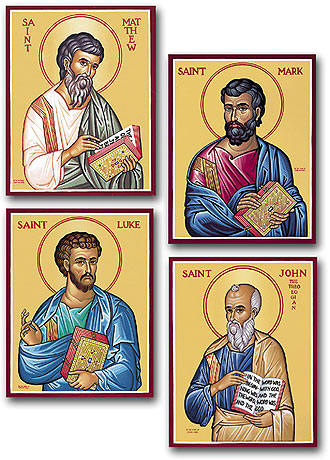
Another one of those posts where what I taught in the past about the Bible is going to have some of the problems I will now reveil. Problems I discovered that are a little overwhelming to maintaining faith. I am actually going to take on one of the more solid parts of the Bible – where we actually have four witnesses of events which would seem to fulfill the Bibles’s own standard of ‘two or three” plus one. However as we will see, this doesn’t’ a) solve other problems and b) some of the events witnessed still only have one witness.

The gospels actually illustrate some Bible problems so well that they provide an excellent test case for critics. I mean if you can have four witnesses, and still present something that makes you scratch your head, then anything less than that obviously is worse.

  1. The gospels are contradictory – This is particularly true when it comes to the resurrection accounts.  Some gospels really have no account at all.  Mark doesn’t have anything other than a statement that Jesus rose from the dead.  The longer ending is probably an addition from someone regurgitating a story and not someone who was an eyewitness. Even when there is a claim to being eyewitnesses they can’t seem to get their story straight. Despite the claim to the contrary, this does not validate the story, it is what in court would be contradictory testimony.  It would be thrown out, but gospel apologists continue to make the leap (this not being able to get their story straight) means the gospels are actually more authentic. No, quite the opposite in fact. It means there was a lot of confusion ‘resurrection’ morning and in moments of confusion any story can be both fabricated and  propagated.
  2. The gospels also suffer from confirmation bias. Every writer of each gospel clearly wants the story to be true, and thus does not offer critical analysis of many events that are presented in the Life of Christ. In my opinion, this is the main atmosphere on ‘resurrection’ morning.  A desire that Jesus of Nazareth was alive so strong that it created and atmosphere of mass psychological collusion. Before you think that couldn’t be possible, I remind people of Jim Jones and Jones Town and Heaven’s Gate, events that show that human beings can desire something so badly they will not look critically at what they are being told,  Based on these false beleifs they will in fact kill themselves and be martyred for it; if they believe it strongly enough regardless of whether it is true or a lie.
  3. Timeline issues – yeah, I am stuck on the resurrection again because it was one of the problems I faced regularly in teaching the event. The accounts vary in their timeline and even events are presented differently to the point that they contradict each other in order of events. Who saw Jesus before someone else is a regular problem.  Throughout the gospels some things appear in different order.  Not a deal breaker but one of those ‘ keeping a straight story’ issues.
  4. Historically speaking if you are looking for other biographies or historical accounts of Jesus of Nazareth, you will disappointed.  The only accounts we have are from his disciples and they biased. There is no objective historical account of his life,  There are mentions in other sources like Philo and Josephus but all they really prove is that Christianity is indeed something that stretches back to the first century, but Jesus himself and his life is untouched by these sources. .
  5. The two or three witness problem still persists despite their being four accounts.  Why? 1) The Gospel of John stands alone in many accounts. It offers up events that don’t have any collaboration at all. Even from the other gospels. John literally stands alone in his accounts of things at times and thus does not met the Bible’s own standard of ‘two or three witnesses’ for those events. 2) The other gospels clearly either copied each other or a common account.  I have no problem with this historically speak except sometimes the word choice is verbatim which means they didn’t do much more digging than to copy without further investigation.  There many theories to this, but in the end what you have is the possibility that instead of three accounts from three different witnesses, what you get is one account of these events, which are not collaborated, and simply copied by others.  When they do differ, Matthew, Mark and Luke have the same problem as John.  They often stand alone with many stories.  One gospel writer will present one story, but the other two leave it out. This happens a lot and in the end you get very few stories that all four gospel writers actually touch.  The only miracle they touch is the Feeding of the Five Thousand and it looks like John is trying to correct the account of the other three.  The rest mostly deal with Jesus’ time in Jerusalem before he was crucified. That he had triumphal entry, he held a last supper where he said he would be betrayed, etc. But all goes south at the resurrection where things get completely contradictory or confusing.

Time to Look Through the Eye:

Faith:

As a student of the Bible, what faith I have left in the Bible is an interesting thing and the gospels in particular.  I taught Life of Christ at least ten times in my ministry.  I think you can reasonably say that Jesus of Nazareth was probably a real person and that he indeed was a Jewish Rabbi, and probably a controversial one to the point he was hated by the other rabbis, religious teachers and groups.  The gospels are a reflection of that but are written by his followers. So how do you continue to follow the teachings of  a rabbi the others have decried as a heretic?  You present Jesus of Nazareth as the Messiah and add a whole lot of legend to the real man, so that it makes the people who killed him look like complete assholes.  The gospels may very well be a reflection of reactionary activity. Like Paul Bunyan or John Henry who may have been real people but their legend got big to the point of being ridiculous; Jesus of Nazareth suddenly becomes much more than he really was to justify Christianity’s existence and growth. I have faith that human beings may want to believe something so badly, they will lie to themselves and create stories to make their experiences change in their mind to verify the new presented ‘truth’.

Religion:

Christianity itself developed a problem of having so many accounts of Jesus life that were so contradictory, they convened a council of the church to sort it out.  This has led to the question: the criteria used may simply been one way of one group trying to politically eliminate another. The criteria were created by men for men’s purposes.  The gospels chosen in the end may simply been the least contradictory, but still not perfect by any stretch of the imagination.  Religion then has a vested interest in defending its ‘holy’ book so they cannot be questioned and ‘BAM!’ – two thousand years later, they still stand despite all the problems.  Not because they are the truth or history, but they have become religious tradition further defended by doctrine and dogma.

Theology:

I suppose I have no Messianic Theology anymore.  I was asked once recently if I had renounced Christ.  I shrugged, is there anything to renounce? I mean I don’t see the need for humanity to have a messiah figure.  In fact I would say looking for one or needing one is a cop-out trying to look for someone else to come along like a white knight and save you from all your problems. My Christology these days might simply be non-existent. Not renounced, just faded out of existence as no longer needed. Jesus was either a great teacher that people either added to his story to the point it is just as unlikely as other tall tales, or he was a lunatic who people believed so strongly they made stuff up to reinforce their belief in a lunatic.  Was he the Messiah? – My answer: do we need one?  Was He Lord? Once again do I need one?

Spirituality:

I like some of the teachings of Jesus.  I find them spiritually uplifting as I consider them. That said, I would also say I can treat them with the same attitude I treat the teachings of Buddha, Confucius and other great and deep thinkers.  Containers for truth, but not THE truth.  Just human beings that said some wise words and I find spirituality in a lot of people’s words beyond the standard religious figures.  It is the one way we live on I suppose – the wisdom that can be found in words we wrote or spoke.

Events are a different matter. I don’t find spirituality in events I didn’t personally experience anymore.  I can find inspiration in tales of courage, honor and other stories where virtues are center, but my spirituality is my own experiences in life, my own study and my own vision for myself..

Conclusion:

I would say my path has taken a very honest turn.  You can’t create a special group of ideas or books and then say you will not criticize them and then claim to be objective.  The gospels are ancient writings, that when we subject them to the same scrutiny as many other writings of antiquity, fall short in many areas. This is simply true.  They are religious tradition protected by religious dogma that once ripped away, you find a much more difficult truth. They are perhaps a mixture of true stories about Jesus of Nazareth mixed with tall tales.  They are very possibly fabricated stories with an agenda that has nothing to do with the real man Jesus of Nazareth.

Continuing to Walk the Path,

The Rabyd Skald – Wandering Soul, Bard and Philosopher. The Grey Wayfarer.

Skaal!!!

Odin’s Eye – Pagan Holidays – Ostara (March 20-21) and St. Patrick’s Day

Happy Thor’s Day

Discussion:

March 20-21st is the Festival of Ostara, the Spring goddess.  She is Germanic but not much else is known about her. In Viking Culture Spring is also associated with Freya and Thor, both divine beings of fertility, and that is exactly what most of this festival is about. It is about renewal, fertility and rejoicing about the end of winter and the beginning of the Summer half of the year.

If the name Ostara seems slightly familiar, it is because its other spelling is Eostre, which after the Christians get a hold of it becomes – Easter. Even some of the Easter traditions are based on the pagan ones.  Most notably egg coloring and hiding and then letting children go seek them.  Flowers, rabbits an other spring symbols are here as well.  The rabbit is used because it is the animal that is often most associated with spring as it is often the first animal you see, and for its fertility. Hibernating animals also get a look as well, as they come out of their sleep.

The festival has a lot of traditions involving children during the day and adults at night.  The various sources I read seem to skirt around the night time rituals of the adults, which kind of indicates fertility rites are probably present. That’s sex and a lot of it . Not surprising, as at this time in a lot of pagan mythologies, the sun or storm god has sex with an earth or nature goddess and she conceives to give birth at the end of harvest. Love making takes place a lot during this festival.

See the source image

I mention St’ Patrick’s day because there is also a lot of pagan elements in it.  In fact I would say historically this is when the Christian powers that be figured out that by adopting pagans symbols and traditions they could get more conversions.  Or they could justify wiping out the pagan elements, they wanted out and keeping stuff that supported their viewpoint.  The Celtic Cross is very much a part of this combining sun worship with the cross.

Irish Pagans view of this varies, Some mourn the day because it marks the persecution of Irish pagans where they were driven out, killed or went underground.  Others see it as a time to say ‘I will celebrate the day pagan style’.  The big thing is the mythology that St. Patrick drove out all the snakes from Ireland.  It is kind of like the tall tale that Paul Bunyan logged off North and South Dakota and that why there are no trees. There were no snakes in Ireland in the first place and there were no trees in ND and SD either.  The only holidays in my opinion that is more ironically a combination of pagan and Christian ideas is probably Easter and Christmas.

Time to Look Through the Eye:

Faith:

I have faith that nature will do her thing.  I mean do I look at the Spring as a goddess – no.  I believe in science, so there are natural forces at work.  That said, I don’t think a holiday celebrating the end of winter and the beginning of summer is a bad one.  It has a positive mental aspect to it.  I suffer from mild depression that turns pretty dark at times in the winter, Spring begins to overcome that. I start my walks and getting outside again and that is something that builds my heart and mind, as well as my body.

Religion:

This time of year also marks the contention between Christianity and Paganism in Europe which spread to the United States. Like it or not this contention has led to a lot of heartache, persecution and war. I would also say the problems have largely come from Christians, Paganism has no ‘correct’ way of being a pagan.  No, dogma or religious order to force on others. For that you need to turn to the Abrahamic religions.  They are the ones with missionaries and zealots who have to ‘convert’ people to their faith by any means necessary.  St. Patrick’s Day is probably a sore spot for Irish people for this reason.

Theology:

A theology of renewal and fertility is something that as a Deist and Pagan, I can look at with a smile.  In Christianity, sex is given a feeling of being dirty or a necessary evil.  Not so in pagan ‘theology’.  Sex is something good, loving and a necessary good for the purpose of enjoyment and fertility. It is a stark contrast. I would say when you see a religion or theology trying to control or direct your thoughts about sex or your money, you have cult behavior.  Yes, I would say Christianity is loaded with this cult behavior, as well as almost every religion I know. Paganism seek to control neither, and so what many Christians consider ‘cultish’ is actually the furthest from it.

Spirituality:

I must say that I gain a lot of spirituality from some of the concepts behind the idea of renewal.  I can’t wait to get out walking again this spring.  There is a renewal of my spirit that comes with it. I would also say that sexuality and sex itself has a spiritual good side that I resonate with the pagans far more than the Christians.  Making love to my wife from my side of things is one of the most spiritually good and wonderful things I know.   I don’t look at it as dirty or sinful at all.  Now even more so, it is an expression of pure joy and love to me.  Ostara is something that reminds me of that as well.

Conclusion:

I like to be reminded of things that are important. Spring is important for not only its time of planting seeds and cleaning, but for its spiritual side of renewal of the soul and life.  It is important to remind ourselves of the joys of sex and sexuality and their results -children. There is something here that reminds one of taking a good cleansing breath, feeling your mind and heart open up and feeling right with the world.  Of taking your lover’s hand and walking to a place of lovemaking and spending time not only having sex, but also renewing your relationship and starting anew with new dreams for the year ahead. I like it, it feels good.

Continuing to Walk the Path,

The Rabyd Skald – Wandering Soul, Bard and Philosopher. The Grey Wayfarer.

Skaal!!!

The Rabyd Skald – The Grey and the Wayfarer – Part 7 – Writing and Walking Through It

Happy Saturn’s Day

I know people are probably expecting a Crossing Bifrost post today but I have a couple pressing matters that I need to attend to and I am currently reading some books on Norse mythology that I want to get a little further in before I write my next post on it.

I also have been fighting The Grey pretty much all week. Part of the reason I am throwing myself into realigning my virtues with my goals and principles is that it really helps with this. I feel there is a key or keys in this process to dealing with The Grey; to a point where I can not only function with it, but actually feel some things without shutting down.

I have been asking a lot of motivation questions because what The Grey threatens and destroys the most often is my motivation.  The odd thing is that my motivation to write is the one that is often the least affected. The trigger this week is the time of year and it will be so until probably the end of summer.  Last year at this time, my ministry as a pastor and my marriage were both unraveling and there are a lot of painful memories associated with that right now.  I can confidently assert that the old notion of time healing all wounds is bullshit.  It can scar them over, but they still remain under the surface.

Writing has always helped with these times in that it gets me through them.  It is often the process of taking the next step in writing the blog article or project that is me taking the next step.  I write for me and I write to overcome my depression.

If a friend were to ask me what issues rise to the top, i would first say that it is not easy to talk about but then I would offer the following four things.

  1. I still deal with my change of faith. Or rather the discarding of Christianity and ministry for good. It is more than just a career change, it is a lifestyle and life course change, and it has been quite challenging emotionally and mentally.
  2. I deal with betrayal and loss.  Both of specific friendships and of the fact there is a group of people I lead as a shepherd for almost ten years than I still don’t feel comfortable in dealing with. Based on the letter I was sent, I feel judged and discarded still.
  3. I deal with memories of loving someone who I don’t know if they loved me at all in return.  It’s debatable if they were as they said “Just acting’, or if that statement was made to make the breakup easier for me and them.  Epic fail on the last one, it hurt like nothing I have felt in a long time.  I have a poem I am working on about this I think I NEED to write; but it is painful to write, so I don’t want to write it at the same time. I mean they seem to have moved on like nothing happened.  The memories for me are making that quite difficult, despite my best efforts to not think about all this by contrast.
  4. Then of course this whole thing brings up emotions regarding my treatment of my wife during this time which I now feel very guilty and ashamed about.

It’s why back in August of last year I wrote something that basically said I wished someone would rip my heart out and kill it.  These feelings are intense and difficult and I wish they would go away.  It makes my depression kick in as a defense mechanism so I don’t feel things. Feeling nothing being more preferred than these emotional memories.

I also deal with the fact that on March 18th I will be 50 years old. Half a century and I am fairly certain its these birthdays with zeros in the second digit that seem to challenge me the most. Another decade down, how many do I have left?  Where am I going now? What am I going to do? Who am I? How do I get where I want to be? When are these memories going to fade to the point where I don’t have to deal with them as much?

I wish I had more answers, but writing seems to help me keep going.  I write for me and I write to overcome.

Walking the Grey,

The Rabyd Skald – Wandering Soul, Bard and Philosopher. The Grey Wayfarer.

Skaal!!!

Odin’s Eye – Deism: The Search for The Rational God

Happy Thor’s Day

Discussion:

I still very much embrace Deism as the most rational way to approach the subject of the divine.  I think the notion that there is no god is just as irrational as the theist or religion who thinks he/she has god locked down.  The great challenge for me as a deist is to deal with the subject of the divine using only reason and natural revelation as a guide. Heavy emphasis on the reason part because natural revelation is still subject to human interpretation.

Epicurus’ argument against God is pretty well-known and I still have some of the same problems with it as I had as a Christian.  In fact much of my arguments against it have not changed because even back then the defense against philosophy is not theology, it is more philosophy.   Most notably Epicurus assumes his definition of all-powerful, etc. are locked down and cannot be challenged. He seeks basically to win the argument about god through definition which is an argument from authority based on the authority of the definition.  What his argument does do is present the rational contentions about the divine that need to be addressed very concisely and in a logically sound manner.

This is actually one time where the Eye lines up pretty good with each part of Epicurus’ argument. So….

Time to Look Through the Eye:

Faith:

If he is able but not willing?  He is malevolent

I find it interesting that Epicurus engages in faith at this point. He has faith that there is such a thing as malevolence or beneficence and assumes that god must be one or the other.  Such definition really lose their meaning if you dismiss notions of good and evil and realize there might be a rational reason why a supreme being might create and then move on.  As George Carlin points out – God may simply not give a shit.  He may be a creator, but it does not imply that he is malevolent simply because he refuses to do something about ‘evil’.  He may simply also look at humanity and say – “you did this shit to yourselves and you have the capability to get yourself out, take responsibility for the ‘evil’ and suffering you have caused and fix it yourselves.”

I actually think this is the strongest argument for polytheism. That the reason we see so many problems in the world, is it was created by a committee.  Just saying.

My faith is that if there is a god or gods or whatever, that they are creators but not necessarily cosmic babysitters. Like good parents he/she or they want us to grow up and tackle our own problems and we can’t learn how to do that effectively without struggle.

Religion:

If God is neither able or willing, then why call him God?

Actually because the definition of ‘god’ is much broader than “Omni” classifications.  We also use the term ‘god’ to describe beings of great power and use a small ‘g’.  It is religion that paint god as all-powerful in the sense that he can do anything, but there may be laws to the universe that prevent the divine from acting and they may as pointed out above, not give a shit. It doesn’t stop them from being more powerful than anything else and thus deserving the title of ‘god’.

Theology:

If God is wiling to prevent, but not able.  Then he is not omnipotent.

I like to point out at this point that Epicurus does not eliminate god with this statement as some atheists claim.  It just shows that perhaps human conception of the ideas of omnipotent, omniscient, etc. might not be properly defined. So such a god could exist with all the power that actually exists, knowing everything in the way it is knowable and be present in all places that actually exist.  Yes, these ideas create a powerful being worthy of being called god, but there are limits here. Such limits make the normal understanding of omnipotence in need of adjustment, but it doesn’t make such a god not possible or lacking in existence. All this statement really does is point out that our definitions might be in need of change.

Spirituality:

If he is both able and willing? Where does evil come from?

Moral evil is easy to justify if you use freewill as a defense and a god who does not interfere because he wants humanity as a whole to learn and grow. It may not be logically possible to have freewill without suffering. Natural evil is a little harder to justify.  Other than if god is still bound to the laws of the universe, then the laws of physics make natural ‘evil’ simple existent and God may very much be a powerful being who fights these forces but cannot do everything.  Rationally, the god that actually exists might have limits – both because the laws of the universe place those limits or those limits might be self-imposed because it is not always wise to interfere.

Conclusion:

I am not saying Epicurus is wrong.  He may very well be right and God is a figment of human imagination.  I respect the atheist position but I find it personally a little extreme because of human ignorance of the universe. His argument actually forms a lot of rational response for deism as it must address these issues to have a rational reason for belief in the divine’s existence. His argument guides the search for the rational god because the questions are valid.  That said, I do, as a theologian, see the irony of accepting certain theological definitions in order to make your argument against the existence of god, when those definitions themselves can be challenged.

For me the search for the rational God is part of the journey that I walk. But as a pagan, it is not my only criteria.

Continuing to Walk the Path,

The Rabyd Skald – Wandering Soul, Bard and Philosopher. The Grey Wayfarer.

Skaal!!!
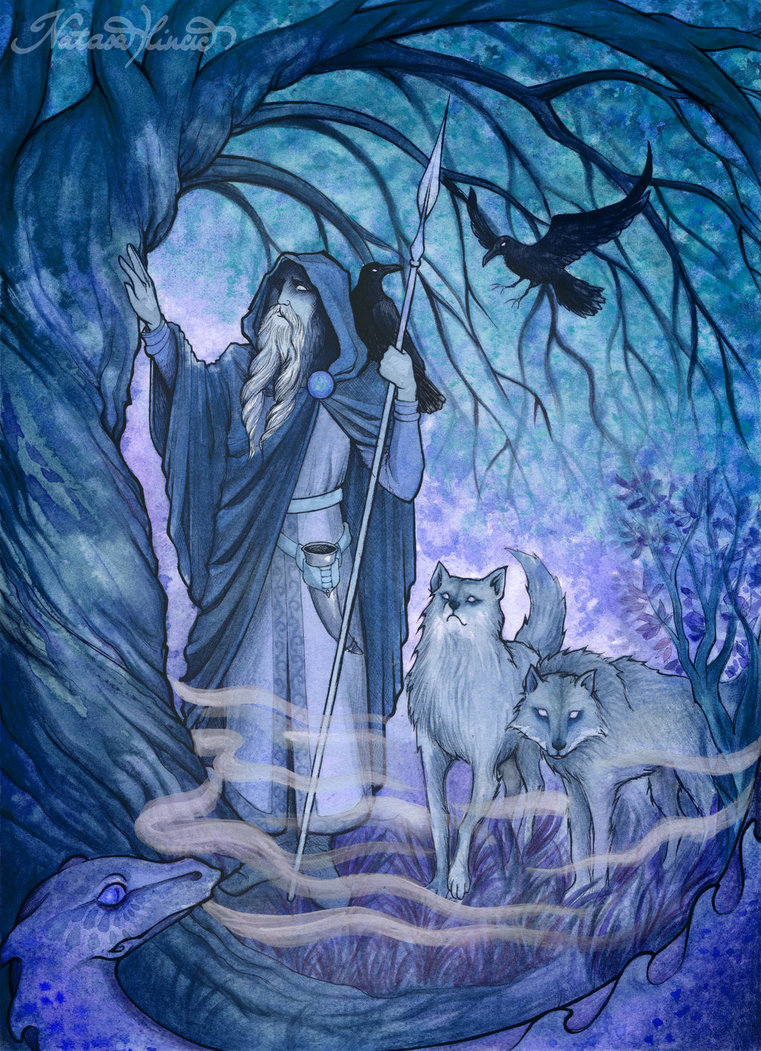
Of Wolves and Ravens – Virtue: Moving Higher

Happy Tyr’s Day

Discussion:

Having finished the Nine Noble Virtues it is time to flip the subjects for Of Wolves and Ravens to the flip side.  So for the next nine weeks the subjects will be more Side B

  1. Eastern Philosophy
  2. Western Philosophy
  3. Love
  4. Minimalism
  5. Economics
  6. Justice
  7. Political Science
  8. Libertarianism
  9. Wisdom

These are either the Higher Virtues or other philosophical elements that guide my thinking. Subjects where my philosophy is more real and concretely applied to the real world of my life.

Today, however, we return to the general subject of virtue. Mostly the rationale behind pursuing virtue as opposed to Religion as a way of moving higher.  I suppose it comes back to the Marcus Aurelius quote I keep using.

See the source image

My main issue these days is to live a good life and so following good virtues is the path to that.  The Nine Noble Virtues (NNV) of Asatru are good ones to follow and no matter what your religion or faith, I don’t think you could fault them.  Virtue is a Human trait and if anything is responsible for the good in the world it is when people take their human capacity and guide it by good virtues.

To the Wolves and Ravens:

Needs (Geri):

At this point things will get a little more personal.  After departing from my Christian faith, I knew I would need something to guide my life philosophy. I think that is one of the problems of struggling with faith.  You hold your principles from that faith, but the basis for doing so is missing. I needed to figure out what that basis was and how I could hold a system of philosophy to guide myself and my character without having faith in a religion.  Virtue is an old discussion in philosophy and one that has always had a lot of merit to me. So I found that the need for a system of virtue was very much justified.

Wants (Freki):

I also wanted virtue.  One of the things that you get accused of when you leave the faith is somehow you are now lesser of a person.  It is never said but it is there.  Your ‘lost’, ‘going to follow your sinful nature now’, you are not as ‘good’ in the eyes of the people of the faith you left. Part of my embracing virtue is I want to show how bankrupt a notion it is to believe you need to follow a certain religion or faith to be a good person.  That you can be a better person morally without faith or religion is a hard concept for people to accept for some reason.  I want to prove that it can be done.

Reason (Huginn):

The rational reason for following virtue for me is that it upholds my thoughts that a person can actually use religion for evil while calling themselves good.  After all they are just following their authority of their holy book or holy man.  Even if that action causes harm to others, in religion it is still justified because you were doing what your authority told you.

I can’t do that following my philosophy of virtue.  Virtue demands that an action must also cause no harm to others whenever possible.  It recognizes that appeal to authority is not a rational act but a logical fallacy.  Therefore to just follow authority blindly is not virtuous, rather quite the opposite.

Wisdom (Muninn):

I feel that no matter what the twists and turns of my life are now, that the NNV allows me to navigate each fork and crossroad with wisdom.  I am not letting some blind guide pull me along.  Rather my eyes are open and I makes sure each life decision is guided by principle and virtue.  I do take into account what is best for me, but I also no longer think that shows a lack of wisdom but rather it demonstrates wisdom.

Conclusion:

On May 28th, 2018 I was no longer a pastor or a Christian officially. I even have a letter from my former church that fired me retroactively to May 27th to prove it. I keep that letter because there is a line in it that motivates me. From time to time I pull it out and read it:

“This decision was based on the fact that you no longer have the character, ability or right to be the shepherd of any flock”

Well, I plan on making them eat those judgmental and arrogant words and I plan on doing it by living a better life than I ever had as a Christian.  I plan on doing that by following virtue.  By so doing, I will move higher than I ever have before. I don’t see my leaving the flawed hypocritical virtues of Christianity to follow the NNV as a step downward, but rather a step upward. Time the pierce the sky and live a good life.

I remain,

The Rabyd Skald – Wandering Soul, Bard and Philosopher. The Grey Wayfarer.

Skaal!!!

The Book of Rabyd 1:5 – ‘Everyone Has the Right to Property’

Happy Sun’s Day

Text:

“Everyone Has the Right to Property” – The Book of Rabyd 1:5

Thoughts and Exposition:

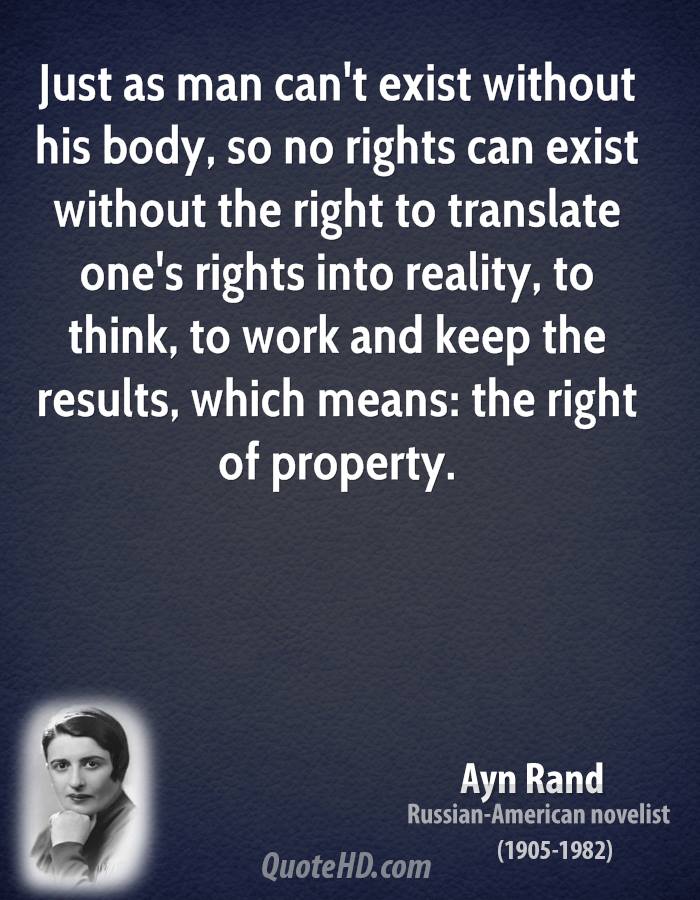
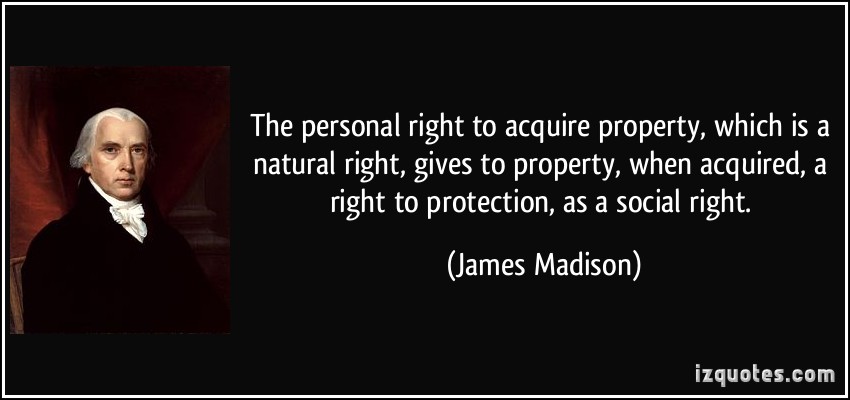
This is a new verse for the Book of Rabyd.  Most people don’t realize that the original Declaration of Independence had originally ‘life. liberty and property’.  Later editing changed it to the pursuit of happiness.  But the idea of the inherent right to property to anyone who owns it is something that has not always been recognized in history.  That changed with the Founding fathers as the notion of people having a right to translate their right to pursue their happiness.  As Ayn Rand wisely pointed out this means the right to property.

I would argue that this right is what defends the others as well.  Your Life. liberty and Pursuit of Happiness are yours and now one should be allowed to take them away from you.  This means you also have the right to defend what is yours.  But ownership of property being a right extends to all things that are yours.  The most important of which is ownership of self.  Self-ownership means to take responsibility for yourself and your own destiny instead of leaving in the hands of others.  You need to exercise your right to own private property to do this.

I often wonder if those who try to attack this right realize that what they are doing allows people to basically take away all the others. If my life is not mine, if my liberty is only granted and can be taken away, if my pursuit of happiness requires that someone else give it to me, then they are not rights but privileges.  The right to property is what brings in this concept of ownership of not only my stuff but my rights.

To think otherwise is to have the mentality of the thief and the societal leach. I make no apologies for saying this.  I people have the notion that other people don’t have a right to property, then they are perfectly OK with the notion that such property can be taken away. They also have no problem when people have their property taken from hem through taxation so they can be supported.  In short they envision people can think and work but the results in part belong to them even though they have done nothing to earn them. This justifies their stealing it or letting others do it for them.

See the source image

So we turn again to abortion.  The seeming conflict is that the woman has her right to liberty and pursuit what will make her happy.  The notion being that the fetus is her body and she owns it so she can dispose of it as she sees fit. The opposite side of the coin is that the child has he right to live and pursuit its happiness by living. The real issue is it possible for one person to really own another and I would say that there is some inherent ownership of ones’ self in such a right to property.

For me the question of abortion has long been a sticky one.  As a Christian I had pretty clear guidelines, but it was still troubling at times.  Mostly because reality is that natural abortion happens all the time and with far more frequency than people think.  Most are never known to even exist.

Post-Christian, the issues now falls to whether the fetus is a person.  If not, the nit has no right to ownership of self and all the other rights that go with that.  If yes, then he/she does and they have those rights. I am not sure I can answer the question definitively at this point but I still maintain that liberty and life are important in equal measure.  I hope the choice is life, because I consider abortion a waste of human potential, if nothing else.

The real question for me is should the state be allowed to interfere?  Once again we are still left to determining when a person becomes a person and the answer seems clear. Given all our rights and the notion of self-ownership, if the fetus can be proven to be a person then the answer is yes, but if not we still find ourselves in a controversy.  It seems with all the advances in science, we should be able to determine this. Then the right to property with its concept of self-ownership kicks in.  This still doesn’t give us a clear answer but we have two more principles left so we shall see.

The Rabyd Skald – Wandering Soul, Bard and Philosopher. The Grey Wayfarer.

Skaal!!!

The Pagan Pulpit – The Book of Rabyd 1:5 -“Everyone Has the Right to Property”

Happy Sun’s Day:

Announcements: 

We don’t pray here – we figure God, the gods and goddesses, or whatever powers that be either know already, don’t give a fuck, or are busy with more important matters than our petty stuff. We also kind of assume that they expect us to do stuff that we can do for ourselves, and that we will do them ourselves and not be lazy. We also believe in being good friends, so we don’t presume on our friendship with the powers that be by asking them all the time for stuff while giving them nothing in return.

We also don’t take an offering here.  We figure the powers that be probably don’t need it.  Let’s be honest, offerings are not giving to the divine powers, they are given to an organization to support it.  Just being honest. God, the gods or whatever never see a dime, farthing or peso of that money; it all goes to the church, mosque or shrine.

Opening Song: “Mr. Roboto” – Styx

I was joking this week with my daughter about using this song as a song about my grandson Otto.  All I would have to do is change the words a little to make this song about him.  That said, this actually is a pretty cool song made for a rock opera that dealt with dystopian future where rock and roll as well as other forms of free expression are outlawed.  Styx always was very good and their vocalist has a ton of range in this one.

Poem: “The Storm” by Edward W. Raby, Sr.:

Image result for odin wanderer storm

Wind, grey skies and pouring rain.

The Storm rages in my soul.

Fed by my inner pain.

Will I ever be whole?

Lightning flashes

Thunder rolls

I tighten my grip on the staff of my reality

Knowing only the treading of my feet

Boots grinding through grey mud

Soaked in sorrow, but my heart closed

Numb to the cold of The Grey

I struggle onward, not daring to feel

Lest my tears join the flood

And drown me in the rising tide.

I walk with the hope of seeing sunlight

I walk with the hope of feeling love

But right now, I feel nothing

So I will survive.

Soon, the wolf within will rise

The ravens will caw again

when the light breaks through.

Then I will laugh,

Once again I have become the storm

And I have become stronger

Note: This is still in rough draft form, but it is good enough I think to at least post it.  It needs refining but I like how it captures my struggles with depression at times. I will probably present this poem in it own post when it is more refined.

Meditation:

Image may contain: 1 person, text that says 'WHEN THINKING ABOUT LIFE, REMEMBER: NO AMOUNT OF GUILT CAN SOLVE THE PAST, AND NO AMOUNT OF ANXIETY CAN CHANGE THE FUTURE THEMINDUNLEASHED UNLEASHED'

Song of Preparation: “It’s My Life” – Bon Jovi

Text: 

Everyone has the Right to Property – The Book of Rabyd 1:5

Sermon:

This is a new verse for the Book of Rabyd.  Most people don’t realize that the original Declaration of Independence had originally ‘life. liberty and property’.  Later editing changed it to the pursuit of happiness.  But the idea of the inherent right to property to anyone who owns it is something that has not always been recognized in history.  That changed with the Founding fathers as the notion of people having a right to translate their right to pursue their happiness.  As Ayn Rand wisely pointed out this means the right to property.

I would argue that this right is what defends the others as well.  Your Life. liberty and Pursuit of Happiness are yours and now one should be allowed to take them away from you.  This means you also have the right to defend what is yours.  But ownership of property being a right extends to all things that are yours.  The most important of which is ownership of self.  Self-ownership means to take responsibility for yourself and your own destiny instead of leaving in the hands of others.  You need to exercise your right to own private property to do this.

I often wonder if those who try to attack this right realize that what they are doing allows people to basically take away all the others. If my life is not mine, if my liberty is only granted and can be taken away, if my pursuit of happiness requires that someone else give it to me, then they are not rights but privileges.  The right to property is what brings in this concept of ownership of not only my stuff but my rights.

To think otherwise is to have the mentality of the thief and the societal leach. I make no apologies for saying this.  I people have the notion that other people don’t have a right to property, then they are perfectly OK with the notion that such property can be taken away. They also have no problem when people have their property taken from hem through taxation so they can be supported.  In short they envision people can think and work but the results in part belong to them even though they have done nothing to earn them. This justifies their stealing it or letting others do it for them.

See the source image

So we turn again to abortion.  The seeming conflict is that the woman has her right to liberty and pursuit what will make her happy.  The notion being that the fetus is her body and she owns it so she can dispose of it as she sees fit. The opposite side of the coin is that the child has he right to live and pursuit its happiness by living. The real issue is it possible for one person to really own another and I would say that there is some inherent ownership of ones’ self in such a right to property.

For me the question of abortion has long been a sticky one.  As a Christian I had pretty clear guidelines, but it was still troubling at times.  Mostly because reality is that natural abortion happens all the time and with far more frequency than people think.  Most are never known to even exist.

Post-Christian, the issues now falls to whether the fetus is a person.  If not, the nit has no right to ownership of self and all the other rights that go with that.  If yes, then he/she does and they have those rights. I am not sure I can answer the question definitively at this point but I still maintain that liberty and life are important in equal measure.  I hope the choice is life, because I consider abortion a waste of human potential, if nothing else.

The real question for me is should the state be allowed to interfere?  Once again we are still left to determining when a person becomes a person and the answer seems clear. Given all our rights and the notion of self-ownership, if the fetus can be proven to be a person then the answer is yes, but if not we still find ourselves in a controversy.  It seems with all the advances in science, we should be able to determine this. Then the right to property with its concept of self-ownership kicks in.  This still doesn’t give us a clear answer but we have two more principles left so we shall see.

Closing Song: Amen – Halestorm:

Parting Thought:

Image may contain: text that says 'THE ONLY PEOPLE WHO GET UPSET ABOUT YOU SETTING BOUNDARIES ARE THE ONES WHO WERE BENEFITING FROM YOU HAVING NONE. POBYMAC#SPEAKLFE'

I remain,

The Rabyd Skald – Wandering Soul, Bard and Philosopher. The Grey Wayfarer.

Skaal!!!

Odin’s Eye – Return to My Theological Objections to Christianity – No Takers

Happy Thor’s Day

Discussion:

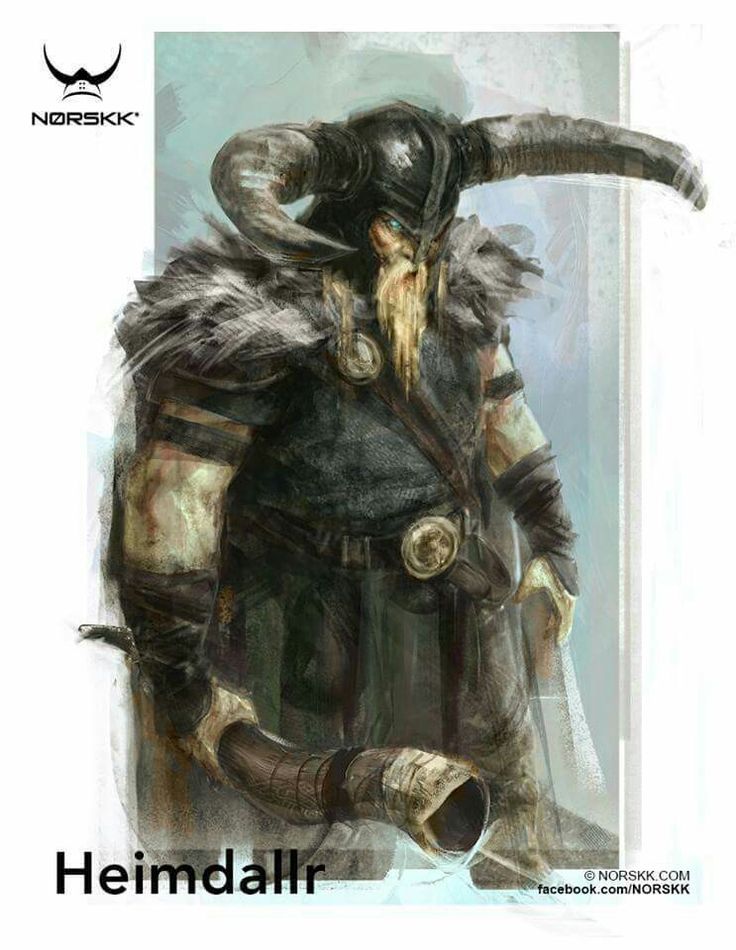
I don’t know, when it comes to my four theological objections to Christianity, I feel like the god Heimdall guarding the Bifrost Bridge.  Most of the time I seem to be just standing there waiting for something to happen and nothing does. I am not really looking for a fight but I think I have laid it out there what I feel are the four major problems with the Christian theology are and why they basically make it so the whole thing is just another man-made attempt to understand god that is flawed and failed. The result has been crickets.

Simple Restatement of my Four Theological Objections to Christianity:

  1. The Bible’s Inspiration by God – it is not proven, nor can it ever be.  It seems highly unlikely that the Bible is the product of a supreme being but rather the product of men. It’s divine inspiration is asserted but never proven.
  2. Sin is an Imaginary Man-Made Problem –   Like the Bible being inspired, Mankind being sinners and certain behaviors being sinful is asserted but never proven.
  3. The Cross and the Empty Tomb – an imaginary solution to an imaginary problem.  I would also say that such a solution with its suffering and death seems sadistic and unloving.  Not the product of a supreme being.
  4. The Justice of the Biblical God is Very Suspect – The scale of justice for the god of the Bible is very unbalanced when you rationally consider some of his actions in the Bible and the doctrines concerning hell and final punishment.

When I first laid these out last summer I did get some feed back, but it was clearly half-hearted and I answered the questions and objections they had to the point apparently that they had no response. This lack of response is not surprising, when I was a Christian I would read Christian apologists looking for answers to these very questions and they really had nothing.  The problem with the apologist is no matter how they try, they assume that the Bible is inspired, sin is real, redemption is real and god is just.  They don’t really see the need to address these issues because most of them are not really listening to those that object to Christianity.  They listen only to pick the battles they can easily win when they see objections to their faith, they tend to ignore the ones that are more difficult.

Time to Look Through the Eye:

Faith:

I refuse to return to having faith in Christianity, if those that practice it cannot provide sufficient evidence that the Bible is inspired, that sin is objectively real and that the solution the god of the Bible has for it is both rational and just. As much as I know Norse mythology is mythology, I actually find it easier now to believe that its’ view of the universe and the gods and goddesses solution to life and living is more in line with reality than Christianity until that happens. I have faith in myself, my family and the creator’s design.  Anything beyond that requires proof.

Religion:

It speaks to Christianity’s failure as a religion when it sees someone walk away from the faith and it comes up with doctrines and apologetics that basically shrug its shoulders and say ‘that is just the way it is’.  Calvinism is notorious for this fatalistic bullshit, but the fact that other branches of the Christian faith have this – ‘well, there is nothing I can do.” on the face of something that should have a response.  Well, then you have just shown to me that perhaps your religion, that you say should lead you to compassion for the lost, is also complete bullshit.

Theology:

Theologically speaking the subjects of special revelation, salvation, god’s nature and final punishment seem to be central to the Christian faith. If no good answer can come when it is proven these are inconsistent and quite frankly paint a picture of a god as 1) a sadistic torturer of his own son when He could have simply forgiven us, and 2) an unjust god who takes our whole lives and destroys them, torturing us forever,  simply because he is like a political snowflake who gets offended because we did something he doesn’t like. Perhaps he should develop some emotional maturity and realize he created man and he knew what he was capable of, so why get upset about it? Maybe should forgive them the same way you expect them to forgive each other – without condition. Or perhaps we should just conclude that the god of the bible is flawed and inconsistent because he is the product of the flawed and inconsistent thoughts and feelings of the men who wrote the Bible.

Spirituality:

The real kicker for me right now, is that I fell more alive spiritually speaking than I ever did when I was a Christian.  This break away has freed me from the shackles of religion and guilt and I don’t think I can recommend something more highly if you want joy and peace.  No more of the constant “You are not good enough.” No more of the psychological abuse of telling people they are garbage and God hates them until they turn to him. No more of using religion to manipulate the behavior of people, excluding myself from certain people, and justify interfering in people’s lives.  Shit, I feel like I actually have found spiritually what I was looking for all along.  The Freedom that comes from being liberated from religious shackles and nonsense.

Conclusion:

My problems these days are far more practical.  Spiritually, I am free.  Believe that or not.  My issues of struggle are family, relationships, career, life and enjoying the world.  The constant struggle of wrestling with this imaginary thing called sin, which was nothing more than me being taught to loathe and hate parts of myself, is gone.  I don’t struggle trying to destroy part of myself anymore.  I embrace it and seek to use that part of myself to make me stronger. My needs and wants are not sinful, they just are.  They are part of who I am and I accept that. I embrace them not as enemies but as allies.

In the meantime, my objections remain. And I wait.

Continuing to Walk the Path,

The Rabyd Skald – Wandering Soul, Bard and Philosopher. The Grey Wayfarer.

Skaal!!!
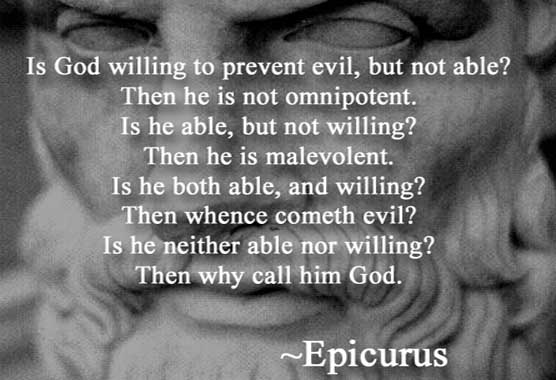
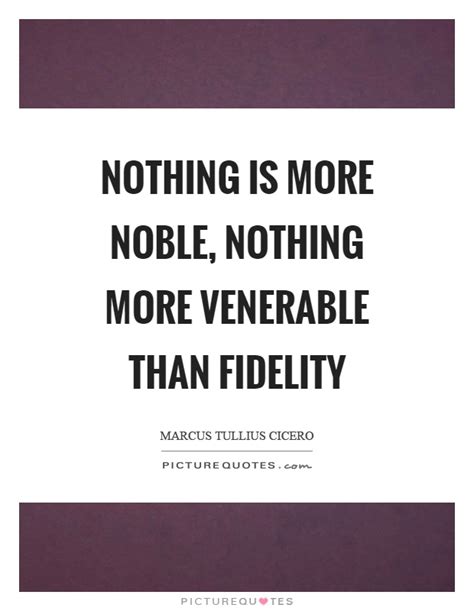
Of Wolves and Ravens – Fidelity – Noble Vulnerability

Happy Tyr’s Day

Discussion:

I always approach the subject of fidelity with a little trepidation. One the one hand, I have not been the most loyal of husbands in the very recent past.  Having an affair kind of undercuts your credibility when it comes to lecturing anyone on the subject of fidelity.  On the flip side, while I don’t recommend doing it this way, the lessons about fidelity I have learned from others and myself during that time were quite profound. So no lecture from me.  I don’t have the moral authority here to tell you how to be loyal and show fidelity, but I do have a testimony here of some of the things I observed and learned that might help someone.  That is if you are willing to listen before the shit hits the fan for you.

Before I begin though I want to share something my wife sent me on Sunday.  When I saw this I told her thank you and that I loved her.  What she couldn’t see, because it was sent via Messenger was the tears rolling down my face. I have no idea how she loves me so much.  I just do not get it.  She is the best example of fidelity I know.

I suppose that is the first observation I can make.  That just because you are in the midst of being disloyal to someone, it doesn’t mean that they will automatically switch to being disloyal to you.  That is the high road if you ask me.  It is a rare person who can maintain fidelity to you while you are walking away from them.  When you discover this, it can be a soul wrenching moment. I don’t recommend testing people’s loyalty to you this way, but it is very revealing who really loves you and continues to love you even when you are not being the most loyal person yourself.

I also can share the tale of two friends.  I had two friends I would have considered very close at the time. Now, I want people to understand that as disloyal as I was to my wife at the time, I had this thing about loyalty to my friends and family that was still very strong. It was my marriage that was a problem to me at the time as well as my faith, but I would have marched through hell for my friends and family.

Not all the other relationships were problematic to me. I was actually depending on them to kind of get me through the crisis I was having at the time.  One friend proved that his lifelong fidelity was true. He stuck by me, confronted me and loved me no matter what.  He even kept a few secrets, although I knew he wanted to say something.  I will give the man this, loyalty, that is fidelity runs through his veins like blood.  He still remains my truest friend and for that I will be forever grateful.

The other who was a friend for almost a decade. He, on the other hand, deliberately set me up to look like I was trying to hide the affair to my congregation, and then came out and told the story himself to pass himself off as the ‘noble hero’.  You find out who your real friends are in crisis moments and I never saw that one coming.  I trusted him and that ended that day. I discovered very quickly that this person’s definition of friendship includes in his loyalty clause – “only if you agree with me and are useful to me.”  He threw our relationship away as easily as tossing a piece of paper into the trash.

This was because I had become a liability to him and I was no longer useful to him. He not only abandoned me, but he had to kick me when I was down in his self-righteous sanctimonious arrogance.  I will never trust him again.  Even my wife, who had the greatest reason to do so, didn’t try to destroy me when I was walking away and hurting.  This man did. He has nothing but my contempt now and anyone who trusts his friendship or loyalty is a fool.

My tale of two friends demonstrates fidelity in one and its lack in the other. In the end the first friend helped me see the light and the other just has contributed to my darkness.  When you see a friend struggling, even with their own loyalty to someone, you don’t demonstrate fidelity and help them by being a disloyal prick yourself.

I suppose I have to say one other thing.  Fidelity isn’t as black and white as people like to make it out to be.  Sometimes you don’t know who to be loyal to at all.  Sometimes you have to be loyal to a couple of people who are having problems with each other.  There is a world of mines in this minefield you have to tiptoe around. Relationships can be toxic or one-sided. That is because I have also learned that fidelity is the strongest thing in the world when it is right.  It is also the most fragile and explosive thing when it goes wrong.  Handle with care.

To the Wolves and Ravens:

Needs (Geri):

I have come to understand how much I need loyalty in my life. Not just people to be loyal to me but how being loyal makes me a better person.  Oddly enough, I have been loyal to some of the people, even the above unfaithful friend, since all this happened. There is a professionalism to the ministry I maintain out of loyalty and respect for helping others and for people’s privacy.  So I have a lot of confidences that were entrusted to me, that I still keep.  I know a lot of things that could be damaging to others, but I keep them to myself out of fidelity.  I refuse to be the same person my other friend was, that just because these relationships may have philosophical differences with me, or no longer have any use, I will not be a disloyal prick and reveal those secrets to damage people.

Wants (Freki):

If I want anything right now, it is to strengthen my own loyalty to those who have proven loyal to me. I don’t know any other way to demonstrate my appreciation and respect for these people than to do this.  I want a small group of friends that fidelity is strong both ways.  I think I have a few. But I need a few more.  I also want to get over the fear of making new friends, as new relationships cause me a little of the ‘who can a trust’ syndrome based on past experience. I want to get over that while remembering not everyone who says they are your friend is one, they only prove that with actions not words.

Reason (Huginn):

When I think about this rationally, Loyalty is difficult to intellectualize.  It is much more something soul felt than rationalized. At the same time, I can see rationally that without it I won’t go forward.  I just wont.

Wisdom (Muninn):

If experience teaches wisdom, then this last year is has a taught me the wisdom of fidelity. I can’t even put to words all the things I have learned.  I guess I can say this mostly though.  If you’re having a problem in your relationship with your significant other, the place you need to talk about it is with the other person. I also understand there are problems of pain and depression that keep you from doing this at times, so you have my empathy if you can’t.  I get it.  But if you can find a way, do it.  It is far better to mend the fence than have to build a new one. Fidelity demands that.

Conclusion:

I know I have little in the way of strength here at times.  I am gaining new understandings of this virtue known as fidelity all the time.  I really don’t see it as my weakest area and even last year going though my marriage issues, I still maintained fidelity with friends, family and others despite the fact it was strained in a couple of areas. One of those areas was my marriage and it is very much on the mend.  The other was my faith and like my friend who betrayed me, I think I will say that this separation in relationship will be permanent. The real struggle now is to keep searching and walking to find the truth when it comes to faith and spirituality.  But that is what this while blog is about.

I remain,

The Rabyd Skald – Wandering Soul, Bard and Philosopher. The Grey Wayfarer.

Skaal!!!
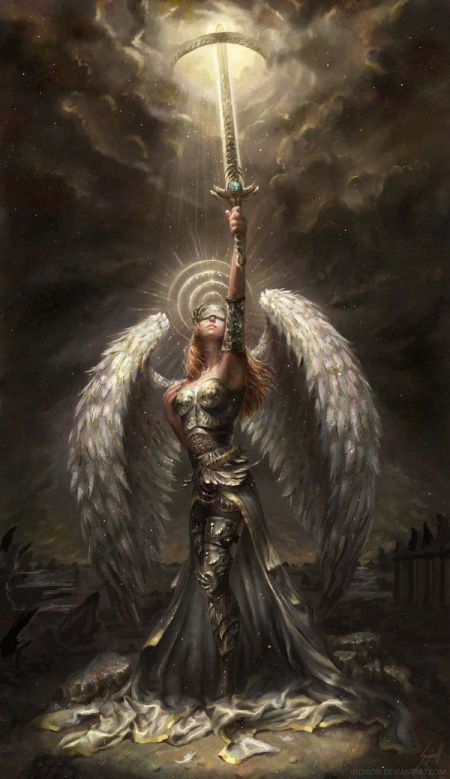
Crossing Bifrost – Races and Creatures – Giants

Happy Saturn’s Day

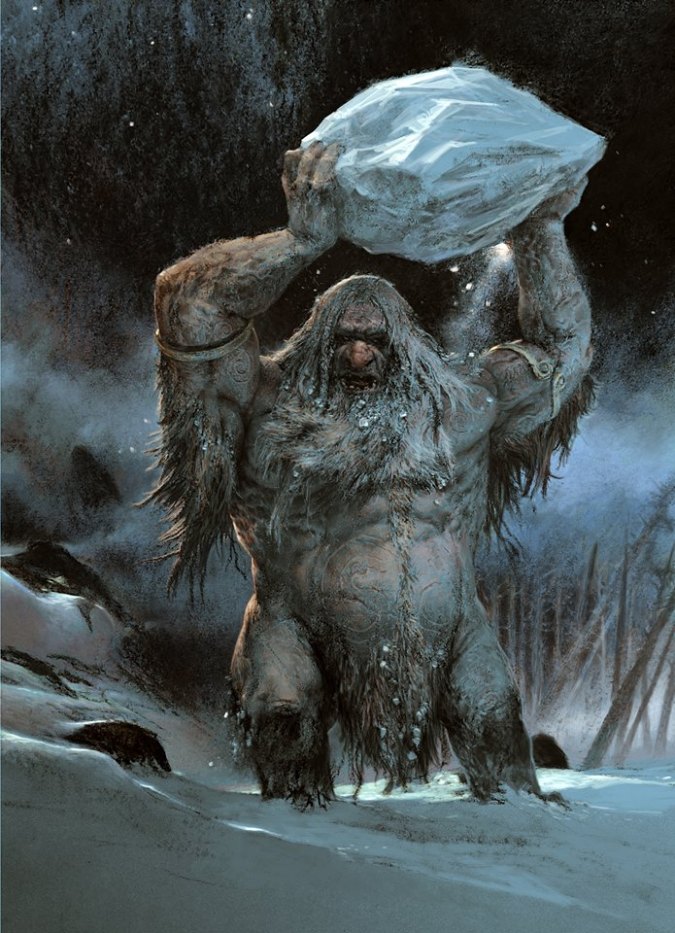
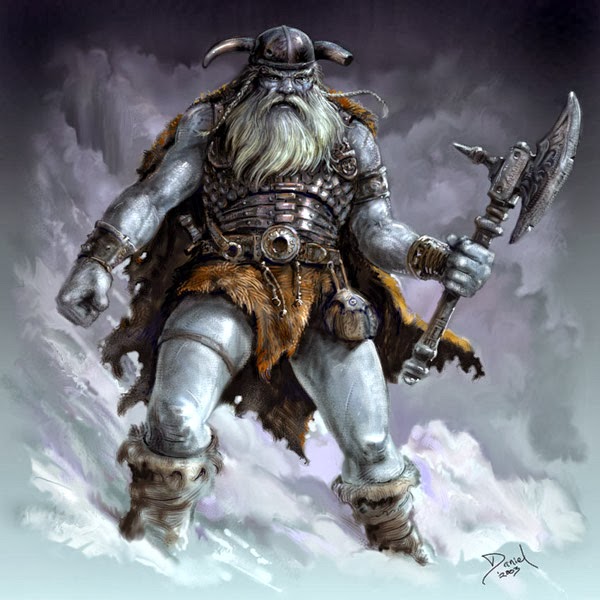
I suppose the imagery of a giant is pretty universal but as we will see there is a controversy about it when it comes to Norse Mythology. Giants are the primary antagonists in most of the stories of the gods in Norse mythology.  The frost giants take prominence but there are also other types of giants.  Dungeons and Dragons 5th edition’s Monster Manual lists six types of giants – Cloud, Fire, Frost, Hill, Stone and Storm.  It might be argued that all of these have some  from ideas found in Norse mythology.

See the source image

But the question starts pretty early as regards if the Norse people actually conceived these giants as ‘giants’.  The problem is one of translation and when Christians began to translate the word for ‘giant’ they may have bastardized it by adding the Greek mythology concepts and used the word for ‘giant’ that reflected this change.  What you see then is a mutation of the original Norse Idea and the Greek idea of titans.

See the source image

The original concept in the Norse may simply have been beings that represented the forces of Chaos. When you look at some of the giants you get that – Storm, Fire, Frost, Hills, Stone and Clouds are forces of nature that are both large and powerful.  Both needed for survival, but also feared because of their destructive nature at times.  The “giants” are simply personification of these forces.  They may or may not have been large humanoids to the Norse people.  It would make more sense if they were not.

See the source image

The reason I say it would make more sense if they were not, is  the simple fact that the gods and goddesses mate with giants and produce offspring. Sex between two individuals of great difference in size becomes problematic, unless the Norse people didn’t really have the concept of giants being large humanoids but rather simple humanoids that personified certain powerful natural forces.  To the Norse people the gods and the giants may simply been the same size just representing on the one hand forces of order and civilization (the gods), and on the other, the raw natural forces of the world (the ‘giants’).

What I am saying is that the whole notion of these ‘giants’ being large humanoid like creatures might be a later addition.  This would explain why later writers had to give some of the gods the ability to shape shift and change size.  But the original myths may not have had this at all. The my simply have been referring to ‘giants’ as those being who represented the great powers of nature.

See the source image

To me this makes the parings of some of the gods and giants interesting because it represents symbolically the need for the forces of civilization and humanity, if you will, to sometimes cooperate and draw strength from the chaotic forces of nature.  That sometimes the ‘children’ of these paring represent both sides of that equation such as Loki pairings with the giantess that produced Fenrir, Hel,  and Jormungandr.  All of these Children have their chaotic element but there is also the ability to think and speak beyond the base animal that they represent in the case of Fenrir and Jormungandr. Hel herself is human like but represents that primal force of Death, but also her realm is orderly and well thought out.

It is why in Norse mythology all of the gods and giants are the product of a an original giant.  That out of the primal forces of nature came the forces of order and chaos. Both are necessary and both can be in conflict or in love (lust) for each other.  To me it speaks of how the Norse people could recognize that; in all things, some necessary things were present. Fire is a primal natural force that is dangerous; but without it, civilization and technology is simply not possible. The earth and hills can be wild and dangerous places; but without the earth we mine and the trees we cut down, we would not have tools or shelter. The mythology reflects this idea of necessary harmony, even tough at times those forces are a threat to each other.

See the source image

In our world the giants represent much the same.  Large chaotic forces that must be fought and overcome. The show up in a lot of places in fantasy mythology.  But the idea of being primal natural forces is pretty interesting and we see that too.  For me though I prefer if the giants remain as the larger than life humanoids. It just makes the battles more epic. Courage is a necessary thing when facing them. Every movie or book that uses them reflects this.  Or on rare occasions we find a giant that is actually gentle who desires to help but his great power can unintentionally cause harm.  Thus even when we bend such forces to our will, there is still a danger because of their nature.

All important lessons taught to us through the giants.

The Rabyd Skald – Wandering Soul, Bard and Philosopher. The Grey Wayfarer.

Skaal!!!