Odin’s Eye – Bible Problems: General Issues and Introduction

Happy Thor’s Day

Discussion:

Odin’s Eye is about a lot of things but every eight weeks or so one thing it will be about is taking on the Bible.  I fairly sure that my Alma Maters of Trinity Bible College and Asbury Theological Seminary will not be proud of me during these posts, because I will be using knowledge I gained from earning my degrees with them and then turning it against them, but I know I am not alone in this department with either.

The amount of people who go to school to become ministers or Bible scholars and then turn their back on the faith is legion.  In fact, one of the atheist contentions is that the Bible itself is one of the best breeding grounds for atheism or at least non-belief in Christianity is probably true.  When you read the Bible objectively through the eyes of reason; you have to conclude ultimately it is a work of human beings and whether or not the divine has anything to do with its existence is pretty much a matter of opinion and blind faith.

See the source image

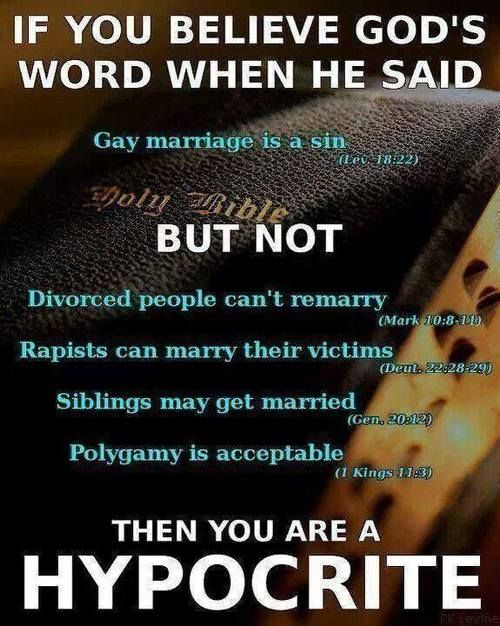
I am not an atheist, but I get the contention and it is valid.  In general, the Bible has some very basic problems that in my opinion point not to a divine authorship but a human one where human beings are giving their opinions about how god operates, giving an account where the author believes he (there are no female authors of the Bible) or someone else encountered God or wrote with the intention of ordering society using God as the authority to hush opposition to their plan. The nature of these problems are as follows:

  1. Contradictions – I spent the majority of my time as a Christian scholar and minister trying to explain contradictions in the Bible.  To be fair sometimes a contradiction is not always present where one is said to exist, but there were many that I simply had no answer for.  The bible does on occasion say two things about the same thing  and there is a direct contradiction. Many Christians point to the idea of people taking these things out of context, but I would say I have taken context into consideration several times and still find a contradiction.
  2. Confirmation Bias –  The Writers of Scripture want the God they are describing to exists.  They want to the resurrection to be true, etc. So they never really address questions that a skeptic would ask. Questions that would help their case if they answered them, but because they are not asked or answered, it just shows bias.
  3. Timeline issues – Like it or not some things don’t mess with each other from a timeline perspective. When I was teaching life of Christ, the one area that gave me the most timeline fits was the resurrection itself. The accounts of who and where Christ appears and in what order vary widely.
  4. Historical – despite my Bible college apologetics professor’s assertion that the Bible is grounded in history; much of that is either unproven or there is a historical record, archaeology, etc. that contradicts the Bible.
  5. The Bible doesn’t live up to its own standard of confirmation of fact – the ‘two or three witnesses’ standard does not always hold up with the Bible itself for establishing every fact. Most events in the Bible are stand alone with no other account of them existing in the Bible itself or in the world for that matter.
  6. God contradicts himself or it seems that God cold have done things in a far more simpler way – the moral questions of the Bible’s god are at times overwhelming. This includes everything from the treatment of women to God plain out not following his own standards for ethics and justice.

I could go on and on, but whenever you see and Odin’s Eye with the Subtitle – Bible Problems; know this is where I am going to take the Bible and be very critical of it.  I am not doing this to offend, but to point out how very questionable it is for the Bible to be a special revelation of God, but more a collection of men’s opinions and accounts of the almighty that should raise an eyebrow, not inspire devotion.

Faith:

People ask me then where my faith is when it comes to the Bible.  It’s not the Word of God to me. It might contain some observations that might help me understand the divine as a deist, but it certainly is no longer the divine special revelation I once thought it was. I think the notion of ‘special revelation’ is man-made so people can say something is of God when really it is just a man-made idea.

Religion:

If the bible is not special revelation, then the basis for most of the Abrahamic Religions is non-existent.  In these religions what we see most is them using ‘holy’ scripture to justify their existence and their use of force and religious ‘ethics’ to control the behavior of others.  Sorry there i\s a great deal of truth to the idea all religions are cults and engage in cultish behavior to control and just because it has it has a billion followers doesn’t make this less true.  Once you find yourself in the authoritative position to disperse the ‘proper’ interpretation of the bible, that gives you an incredible position of power over those who blindly believe. Religion thus cannot be trusted because it is very much about power and control most of the time.  It is why I have sworn them all off.

Theology:

Theologically speaking the so-called ‘special revelations’ might have some good theological observations at times, but I can get no confirmation as a deist that they are true and never will.  The real challenge to me in theology now is that I know I will die ignorant of the truth of the divine, but I am OK with that. Ignorance simply is, the question is what to do about it. Sometimes the thing to do; the only thing you can do based on the nature of the questions, is accept being ignorant.

Spirituality:

I would say over the years the Bible has been a tool of spiritual enlightenment.  But so have my weightlifting sessions, my hikes in the woods and my reading of other books.  I can’t say anymore that The Bible is my authority of faith and practice, nor would I say that I consider it a superior form of knowledge over all others.  It is one voice of many and sometimes I think what it says contains the truth and other times I think what it says is bullshit.  But that is true of pretty much everything I read so…

Conclusion:

My Bible; that I preached from not so long ago, sits on my shelf. I don’t think I have opened since that last Sunday.  It sits currently between The Armchair Economist and The Picture of Dorian Grey.  I suppose the irony of that, and the fact my last sermon was on adultery while I was engaged in an affair, will sit with me forever. I also have no intention of allowing it to be master over me anymore.  Where I walk, I take steps on my own and quite frankly I think my life is better for it. The Bible for me now is a collection of works that sometimes inspires wisdom and other times makes my eyebrow raise. But mostly it is just another book to me now as journey onward.

Continuing to Walk the Path,

The Rabyd Skald – Wandering Soul, Bard and Philosopher. The Grey Wayfarer.

Skaal!!!
Odin’s Eye – My Deism


Happy Thor’s Day

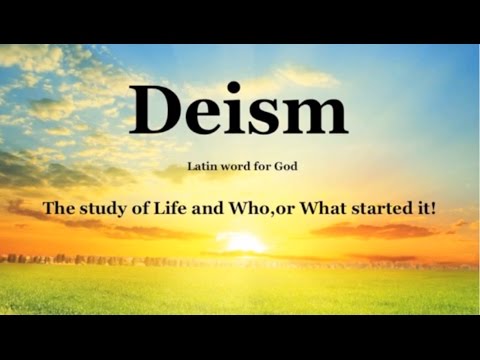
I suppose my belief system is a little complicated. However, at its root or its central tenet is being a deist. However my deism, is not of the same flavor as most people would think of it; nor is it classical deism. Some of the things classical deism upholds, I have modified a little.

  1. Deism would maintain at single creator based on reason.  I would say based on reason, you can’t dismiss the idea of a group of powerful beings being the creators following a common plan or that the universe itself is the creator. I hold out a lot of possibilities here as far as what the guiding force behind our origin might be, if any.
  2. I do maintain with the deists that there is an order and complexity to the universe that imply a creator or creators of some kind.
  3. I agree that there is a limit to human knowledge and understanding that makes it hard; if not impossible, to understand the full nature of the divine.
  4. What ever divine power or powers exist have given man his faculties to both create and uphold his own ethical and moral principles.
  5. Human beings should indeed be free to find, know and worship these divine force or forces in their own way. All views of the divine are to be respected as long as they don’t violate the rights of others.
  6. All human beings are equal creations of this divine power. As such they are accorded rights based on that natural equality.  I do have some things I debate about rights at this point though. More on that at some other time.

Faith:

As far as faith in the divine goes, I have faith that something exists at the present.  I have an active faith in the existence of something divine. I must state for the record, that I can no longer dismiss the notion that the atheist might be right but at the same time I simply do not think humanity has achieved a level of knowledge that can say – “There is No God” with 100% confidence. I believe there is something out there that we cannot comprehend and that no religion can truly explain.

Religion:

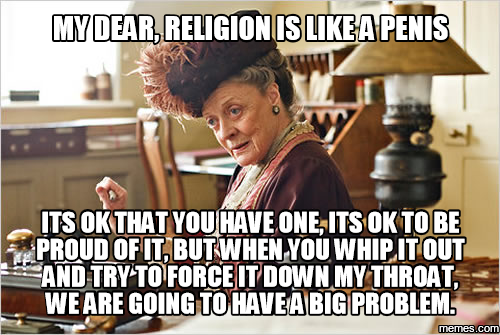
I maintain that people have their right to any religion they like including the right to not have one at all.  I draw the line however with any religion whose followers want to impose their views, ethics and moral code on others.   If you use your religion to justify harming others or force them to take certain actions because of it; I would say that is wrong as well. Religion is very much like a penis, as one actress in a movie remarked, and should have the same societal limitations.

See the source imageTheology:

As a long time theologian ( yes, I have degrees in Biblical Studies and Theology), I used to rely on special revelation; namely the Holy Bible of Protestant Christianity, for my foundation for my work in theology.  Having come to recognize fully that the Bible is a fully human book and that the divine has little to do with, I have to look at how to understand the divine differently.

There is no such thing as special revelation in the sense any so-called holy book is a direct revelation of God. You might find the divine revealed in the human thoughts that are presented in such books; as the authors discuss and tell you what they think about the divine, but those thoughts are human not divine.  To do theology as a deist, I am left with my own reason as I observe the world around me.  I am left with my human facilities alone as I observe and think about the divine.  Part of that is perhaps looking at religions to find certain foundational beliefs common to all that can be helpful in this process, but no one stands the divine better than another.  They all may have some truth, but none of them have THE TRUTH.

Spirituality: 

Deism allows me to engage one other thing and that is to explore the possibility that there is more to humanity than the biochemistry we are left with, if we remove the divine from the equation.   That there is a possibility that man is more than body, mind and emotions but has a spiritual side and an immortal soul. I probably engage this with my more pagan side of my belief system, but it is deism that opens the door to it.

Conclusion: 

I have fully embraced the notion of pursuing the real divine that actually exists without special revelation.  Natural revelation makes things far more interesting and to be honest, more difficult.  But there is a greater honesty to deism as compared to religious pursuits of the divine that I used to embrace.  Only time will tell where this will lead me.

I remain,

The Rabyd Skald – Wandering Soul, Bard and Philosopher. The Grey Wayfarer.

Skaal!!!
Odin’s Eye – Why I am a Deist

Happy Thor’s Day

Introduction:

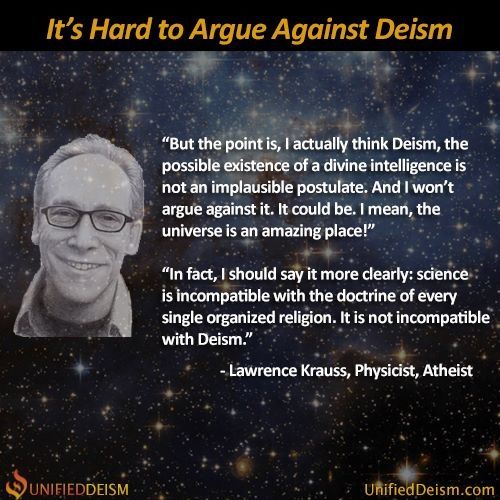
I said for a long time that if I wasn’t a Christian I would be a Deist, because it is the most rational position because of the ignorance of mankind. We don’t know a lot of things, so to maintain that there might be a Divine power out there is simply a rational statement.  It’s possible and even atheists admit this. Most atheists aren’t screaming into the microphone that people who believe in the divine are stupid, they just maintain that they don’t believe in a divine power themselves.  They also like Laurence Krauss above admit that we are ignorant, so we can’t dismiss the possibility. Epistemologically, we are all in a sense agnostics except the religious who apparently think they have it all figured out.

I know a lot of my friends are worried because I am not a Christian anymore.  I even had my counselor ask if I had renounced Christ. I almost laughed because if my salvation or damnation depends on my saying or not saying words, then I am sure that’s more pivotal rather than living your life with virtue in mind?  Your actions can be totally evil, but as long as you don’t renounce Christ, you are good to go to heaven? I am sure someone will eventually say to me “I love you and I just don’t want to see you in hell.”  Did you ever ask yourself the question: Why should he or I go to hell in the first place and is that justice?  More on that later in Odin’s Eye in weeks to come.

See the source image

Faith:

As a deist I can have faith in a creator, in the divine. I can’t really say what that divine power is however.  What this means is I also don’t know what the divine’s actual expectations are.  What I am left with is to engage a lot of reason with my faith and that my friends is a far more powerful combination than religion and faith.

Religion:

As far as I can tell all religions are man-made and their holy books are written by men.  I cannot completely dismiss that those men might have been honest and genuine in their intentions.  I also cannot deny for sure that they may not have encountered the divine power that actually exists.  What I might say is that they all interpreted those things in the light of their preconceived religious world view. Casting those experiences in something they already understood and then adding their own opinions and spin to it.

As a deist, I really am no longer religious.  I am however still spiritual in some regards.  I take however as the deist axiom that ‘God gave us reason not religion’.

See the source image

Theology:

I can still reason about the divine.  I just don’t have to deal with the mucky muck of trying to figure out special revelation or revealed religion.  I am left with creation to tell me through engaging it with my reason, what the divine might be like.  I could make mistakes in judgment, but the one thing I am no longer doing in my theology is accepting as final arbiter someone else’s opinion about God like it is fact that cannot be questioned.  That includes Paul, Moses and Muhammad.

Spirituality:

I think religions tap into spirituality and that is why they exist, but also it is why they all will work in this regard.  You can also be spiritual without them.  Meditation for instance has been rationally explored and the reason it works is that it is basically a human being learning to calm down, think and be at peace. It’s why even as a deist I can be spiritual but it is far more me trying to find my way in this world, than understanding the divine.

Conclusion:

I have heard deism is the a logical progress which ends in atheism.  I am not sure that is true and the whole logical progression/evolution of religion thing has never appealed to me as genuine or always true.  I really don’t find atheism to be rational at this point given the colossal ignorance of mankind.  At the same time I get it. I don’t bear the atheist any ill will because I do understand why someone would follow that path.

For me the path is deism for while I think.  I can have a faith that is rational taking into account my own ignorance.  I don’t have to be religious to be spiritual in truth. Theology is a little more difficult but still possible.  I guess I just need to see where the path ultimately takes me.

The Rabyd Skald – Wandering Soul, Bard and Philosopher. The Grey Wayfarer.

Skaal!!!