“Self-Love – The Essential Ingredient for Happiness” – Of Wolves and Ravens – Love

Happy Mani’s Day

Discussion

Just a reminder that Of Wolves and Ravens will be the second post on Mani’s Day from now on instead of on Tyr’s Day.

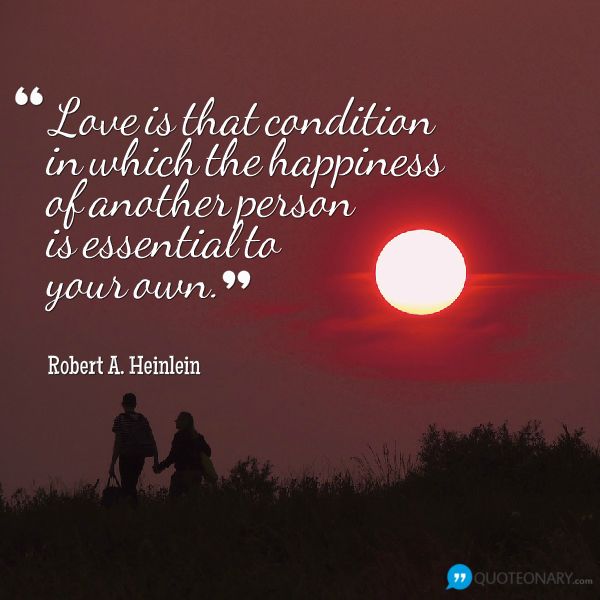
The last time I wrote on the virtue of Love, I engaged the topic of love based on Robert Heinlein’s definition which is love is mutually essential happiness.  I still hold with that which is why turning this idea of mutual essential happiness toward the idea of self-love is personally difficult.  Because it basically amounts to the simple fact that if you do not view loving yourself as essential then you will never be happy even if you love someone else and they in return love you.
I know this from painful experience as my lack of self-love led to a lot of problems with loving others.  It creates an imbalance NOT because self-love is at one end of the scale and loving others at the other end of the scale.  It is actually that self-love is the central fulcrum point on which all other loves are balanced and if the fulcrum isn’t solid the rest will collapse.

To the Wolves and Ravens:

“Feed the Wolves, but Listen to the Ravens first.”

Needs (Geri):

I hope that the above understanding of self-love demonstrates the need we all have for it.  For me, this revelation showed why things went bad and why they also went so bad once they did.  This is the difference,  When your self-love is good, then you consider your love for others as trying to balance all the rest but the central love of self will not be sacrificed while doing it.

When you don’t have that, you are like a juggler that keeps taking on another object to juggle and never considers if they can handle another one. There is no self to maintain so you just keep loving others more and more until it flips to self-loathing and then you focus on that and forget you are juggling. You can’t keep all the balls in the air at that point and they start to fall until you just say ‘fuck it’ and sit down letting them crash all around you and you don’t care anymore.  That’s what happened to me.

Wants (Freki):

This is why I personally spend a lot of time thinking about how to love myself.  Loving others comes naturally to me; loving myself is work but essential work I want to do.  Taking the time to ask the simple question of ‘If I take on loving this person, will it help me love myself or hinder me loving myself? Is this love a benefit or a burden too great for me to carry?” When things are balanced, you are not juggling, but carefully considering if things between yourself and the others you love are balanced on self-love.

Reason (Huginn):

Rationally there is also the fact that loving others and finding that person whose happiness is essential to your own keeps you from narcism.  Loving yourself at the expense of all others needs to be guarded against.  Narcism is probably the basis of all evil shit in the world. Loving others is rationally necessary to keep yourself from that path, but it has to be balanced on the fulcrum of the love of self.

Wisdom (Muninn):

Balancing the love we have for others while maintaining the central fulcrum of the love of self is the issue here. We need both to be happy.  Whenever I feel unhappy, I realize now either something is out of balance or my love for self has slipped.

Conclusion:

Going back through all my discussions on love, I have to get back to the beginning idea that Love is the combination of Courage, Honor, and Truth.  Love takes these and combines them into a very powerful force.  A force that leads us to be happy in this world and that happiness’ essential ingredient is self-love that allows us to keep all our other loves balanced.  It is this understanding of love that now guides me and so far the only issues it raises is about whether certain relationships are essential to my happiness. The most essential of these is the one with myself.

I remain,

The Rabyd Skald – Wandering Soul, Bard, and Philosopher. The Grey Wayfarer.

Skaal!!!
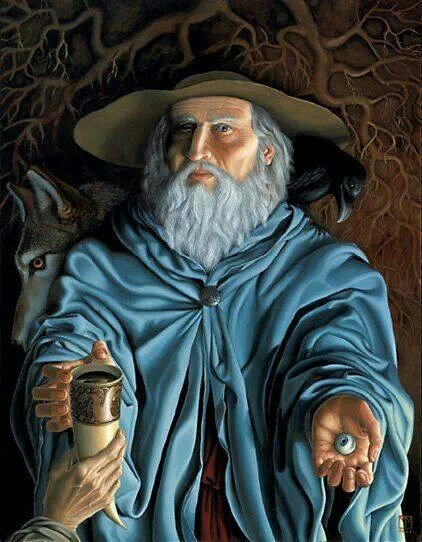
“A New Pattern?” – Odin’s Eye

Happy Thor’s Day.    

Discussion:

When I started this blog, I intended Odin’s Eye to be about my spiritual journey.  Probably more about my change in spiritual viewpoint or vision.  The pattern I established was pretty straightforward at the time although I established it a month or two after I started:

Deism, Bible Problems, Humanism, Christianity Problems, Paganism, Religion Problems, The Wayfarer’s Spiritual Side, My Theological Objections to Christianity Revisited.

I also established that on every pagan holiday, I would stop and comment that week on it.  That has been a fun journey in and of itself.  But it is also about to come full circle with the closing of the first year of this blog on September 30th.  Fall begins on September 22 and the pagan holiday is Mabon or for Vikings – Haustblót.  After that, the cycle starts again on October 1st.  I intend to continue to talk about pagan holidays but I want to get as truly Viking as I can the second time around.

Outside this though, I have had a pretty good debate running with myself about changing the pattern of the posts for Odin’s Eye.  Most notably do I want to go through the whole Chrisitntity issues again?  I am thinking of saving all that for a book or two, so what really is the purpose of Odin’s Eye? Well, it is about spirituality and my spiritual journey. At the same time, it is a place to pose spiritual questions to myself and perhaps you the gentle reader.  I guess the main thing is to stop talking about the spiritual past and embrace the spiritual present and look to the spiritual future.

My first step in revising the pattern was to eliminate the negative in a lot of ways and also to get rid post types that go over old ground.   This leaves:

Deism, Humanism, Paganism, The Wayfarer’s Spiritual Side

The more I thought about it though, the whole deism and humanism questions are pretty settled for me and boil down to two fundamental truths. 1) I hold the possibility of divine power or powers, and 2) I believe that to solve human problems, humans are going to have to do it themselves.  The powers might help or might not, better to be self-reliant first.  I am not sure I really need to discuss these anymore with myself.  I side very much with enlightenment thinking for my rational and more practical side. But eliminating these two posts leaves me with only two:

Paganism, The Wayfarer’s Spiritual Side

I don’t think that is sufficient enough of a rotation to keep me off my soapboxes.

It is really the whole Asatru and Pagan side I struggle with more. Getting a grip on the wisdom and intuition side of things that involve is the struggle now.  It is the nature of this struggle I would rather talk about now.

If I go the spirituality and paganism route the list of topics changes dramatically and gets quite long actually.  The thing is that some of my other post types handle a lot of this but what lies outside on the fringe where Odin’s Eye can help me come to a better understanding of these issues. I began to realize after while this topic is so big, and for me largely unexplored, there is really no way to establish a pattern.

So I am going to do something uncharacteristic for me.  Be open each week to any topic with only the boundary of it has to be something spiritual that is not necessarily covered by other things I do on the blog. I short these topics are going to come more from my times of meditations than a rational pattern that I simply follow.  I am opening myself up once a week to letting the topic be spiritual in nature and not chosen so much as it becomes an interest through meditation.

I am going to remove one filter for the Eye and replace it with another. Religion needs to go as it is negative in a sense, filtering out the religious aspects of things was a part of looking through the eye.  I no longer seek to do that, but discover the fuller spiritual truth of something.  I am going to replace religion with meditation.

Time to Look Through the Eye:

“To see the truth, change one eye for another”

Faith:

When I put any subject through the filter of faith, what I am asking at that point is what I believe about that subject?  The introduction tells people what I know about a particular subject, but faith is an exploration of what I believe about it. The idea is to set up where I am, then the other three filters follow which will possibly change that belief.

Meditation:

Meditation is the first filter.  It is calming my mind and opening up to what the powers, universe, whatever might inspire me to think about that topic.  Words, questions, thoughts, etc. that come from my times of meditation on the subject.  Then asking how these affect my beliefs about it.  It going to require me to keep my paper journal handy during every meditation session, but I think it will be worth it.

Theology:

Once I get to this question it is more about how this topic influences my understanding of the divine. Simple but a necessary question for me as someone who still practices theology. For me, the delving into the spiritual side of things is motivated in part by theology and understanding the divine.

Spirituality:

This is putting everything in a context filter.  How is my overall understanding of spirituality affected by this now?  Have my beliefs about this subject changed due ot putting it through my spiritual filters? What is my overall spiritual viewpoint now?  It is the bringing it altogether filter.

Conclusion:

I, of course, will have some concluding remarks about each subject and I might pose a few questions for you the gentle readers that might have a greater understanding of certain subjects I am struggling with. A good post wrapup will be what I am looking for here.

I am hoping these changes will be effective in helping all of us understand the spiritual side of life better.  Of Wolves and Ravens is about philosophy, but Odin’s Eye is about Spirituality and as such needs to have more spiritual methods of finding what to talk about.

I remain,

The Rabyd Skald – Wandering Soul, Bard, and Philosopher. The Grey Wayfarer.

Skaal!!!
“Stoics and Epicureans” – Of Wolves and Ravens – Western Philosophy

Happy Tyr’s Day

Discussion

In Hellenistic Western philosophy, there is also a form a dualism that is a creation of two schools of thought – Stoicism, and Epicureanism. Breaking them both down:

Stoicism:  Nature is rational; man cannot escape the forces of nature but can uniquely follow its laws; A life lived this way leads to virtue; Wisdom is the core of virtue from which spring the cardinal virtues; Passion is irrational and thus strong feelings should be avoided; pleasure is not good or evil and only acceptable if it does not interfere with one’s quest for rational virtue; Poverty, illness, and death are not evil; Duty is the motivation for pursuit of virtue.

Source: https://www.thoughtco.com/stoics-and-moral-philosophy-4068536

Epicureanism: This is a little more complicated.  One person, I read listed eight epicurean councils: 1) Don’t fear God.2) Don’t worry about death. 3) Don’t fear pain. 4) Live simply. 5) Pursue pleasure wisely. 6) Make friends and be a good friend. 7) Be honest in your business and private life. 8) Avoid fame and political ambition. He also listed ten values of which the first five deal with ourselves and the second five deal; with our relationships to others: Prudence, Self-management, Self-sufficiency, Serenity, Simplicity, Friendliness, Honesty, Generosity, Cheerfulness, Gentle-ness

Source: https://churchofepicurus.wordpress.com/basic-principles-for-the-modern-epicurean/

I suppose the main difference I see is the fact that Stoicism is pretty straightforward, but Epicureanism seems to be a little more freeform – ‘chaotic’ if you will. It would explain while on one site about Epicureanism there was a list of 40 tenents.  The difference between the two basically comes down to the goal of Stoicism being happy through overcoming and enduring hardship, wherein Epicureanism happiness is found in training one’s desires.  I can see one major difference in that Stoics accepted the fate of circumstances and tried to be wise by enduring it where Epicureanism seems more at odds with the idea of fate. Some things can be avoided if one trains one’s desires. Both sides had the basic same goal – wisdom.  To be a person content with themselves.

Source: https://academyofideas.com/2014/03/stoicism-vs-epicureanism/

To the Wolves and Ravens:

“Feed the Wolves, but Listen to the Ravens first.”

Needs (Geri):

The fact there is a debate in Western philosophy probably indicates the need for moral philosophy. How one conducts ones’ self toward self and others is has a great bearing on what we need.  Needs are real and both schools acknowledge this. One side, however, seeks to endure while the other side seeks to live in such a way that they are dealt with beforehand.

For myself, it seems that need is more of a looking at life and seeing what is needed for survival.  This breaks down into obvious needs and personal needs.  Food, water and shelter from the elements when needed. Stoics would endure a lack of these needs while Epicureans would seek to avoid the lack in the first place. Other needs are more specific to the individual.  I think what I find is that I mix this whole debate in a blender and come out with something that is a mix between the two when it comes to needs.

Wants (Freki):

Passion and desire resulting from it, Stoics would decry, I would say that without passion there is little motivation to pursue much of anything, including virtue. I balance things, which is more in line with Eastern Philosophy.  We are all self-motivated which stems both from rational need and passionate desire.

Reason (Huginn):

From a rational point of view, it is reasonable to look at any philosophy and eat the meat and spit out the bones.  I can see from the Stoics that virtue is a good thing and agree with that, I, however, reject the notion of fate as it leads to a lot of evil in my opinion.  I can see the Epicurean point of working to avoid evils like poverty and illness, but I can see the Stoic point of sometimes endurance is needed.

Wisdom (Muninn):

I see wisdom in both philosophies, but their means are different in achieving the state of self-contentment or being the sage as they would call it.  I see the best example of my own blending of the two is the fact that the Nine Noble Virtues seems to borrow from both but each virtue might be seen as a blending of both schools of thought.

Courage, Discipline, Perseverance, Indstriousnesss are more Stoic; Truth, Self-Reliance, Hospitality, and Fidelity more Epicurean.  Both in their own way strive for Honor. Some of my other underlying philosophies borrow from both.  Minimalism is Stoic, lIbertarianism more Epicurean but both have elements of both.

Conclusion:

I guess it all reflects that I am kind of eclectic when it comes to philosophy.  That said My philosophy of “Feeding the Wolves but Listening to the Ravens first” has remained constant now for almost a year and I find many philosophies simply get too focused on my way of thinkingto me on a small group of ideas. There is more to life than reason or getting what you want, but together, the many dualisms of my philosophy come together and form something very coherent to me at least.  I borrow from many viewpoints to get a fuller view of the world and how to live life.

I remain,

The Rabyd Skald – Wandering Soul, Bard, and Philosopher. The Grey Wayfarer.

Skaal!!!

“Idunn – The Renewer” (Asatru – Part 8) – The Pagan Pulpit

Happy Sol’s Day

Announcements:

We don’t pray here – we figure God, the gods, goddesses, or whatever powers that be either know already, don’t give a fuck, or are busy with more important matters than our petty stuff. We also kind of assume that they expect us to do stuff that we can do for ourselves and that we will do them ourselves and not be lazy. We also believe in being good friends, so we don’t presume on our friendship with the powers that be by asking them all the time for stuff while giving them nothing in return.

We also don’t take an offering here.  We figure the powers that be probably don’t need it.  Let’s be honest, offerings are not given to the divine powers, they are given to an organization to support it.  Just being honest. God, the gods or whatever never sees a dime, farthing or peso of that money; it all goes to the church, mosque or shrine.

Theme Song: “Idunn” – Trobar de Morte

Meditation:

Image may contain: text

You either understand or you don’t.

Text:

See the source image

If you want more details about Asatru, I can’t recommend this book enough.

Sermon: “Idunn – The Renewer”

I know people might have been expecting Frigg, but  Idunn is the goddess of spring, renewal, and youth. She is the wife of Bragi – the poet of the gods. I place her prominently because, to the followers of Asatru, she has become the patron goddess in many ways of the renewal aspects of Asatru. She is the one who is the most instrumental in the rediscovery and renewal of the old ways and making them new again.

In mythology, she figures prominently as the keeper of the golden apples of youth.  When a god or goddess began to fade and begin to look old, they would come to her and take an apple and eat it.  Their youth would then be restored.  In the one-story where she figures prominently, she is the object of the giant’s desire, and she is captured by them thanks to Loki.  Loki then is charged with rescuing her and he does.  She is the wife of Bragi – the poet of the gods.

I like this version of not only renewal but the view of the gods.  Even their immortality has a requirement from the universe for it to exist. It is not simply just there but requires renewal and that is the job of Idunn to grow the apples of youth and provide them when needed.

Rebirth and renewal and pretty universal pagan concepts.  They appear in almost every mythology and are always considered in some ways vulnerable. That said, they are vulnerable not because they can be destroyed, but because they have requirements or locations which can be controlled by multiple people or things.

As spiritual concepts, renewal and rebirth are good ones. I know of no practitioner of paganism that at one point or another didn’t realize their need for a renewal of spirit or a rebirth moment from time to time. Stagnation and death are forces in this world and to avoid them requires renewal and rebirth.

To the Asatru movement, Idunn is a patron goddess who is thanked for her efforts in helping the Asatru being reborn and being given new life.  To many, she symbolizes the rebirth of Neo-Paganism.  In a sense, Asatru has been allowed to take a bite of the golden apples and be renewed after a long absence.

For me personally, the image and story remind me of several lessons:

1) I am engaged in a bit of a rebirth process for myself right now and as a 50-year-old man, it is a hard process.  But rebirth and renewal are absolutely necessary if life is to continue.  Change is a necessary part of life.

2) That what is precious should not only be honored but guarded.  I look at the Asatru Movement and think also that while renewing and growing, it needs some sort of way to preserve it.  The old ways were lost once before and perhaps finding a way to preserve this way of life against that possibility again is a good idea.

3) It also has to be concluded that in renewal, new things will be needed.  There is simply too much lost, so the gaps will have to be filled with new ideas and concepts. New ways of doing things coupled with what we know of the old. Rebirth and renewal have that aspect as well.

Hail Idunn!!!

Parting Thought:

Image may contain: one or more people, beard, text and closeup

I remain,

The Rabyd Skald – Wandering Soul, Bard, and Philosopher. The Grey Wayfarer.

Skaal!!!

“Weights, Backpacks, and Overcoming Myself” – A Skald’s Life – Self Virtues

Happy Frigg and Freya’s Day. 

Journal Entry:

Recently I decided to do my weight training cycles in two-month blocks instead of three months.  Part of it is that you have to change things up from time to time because your body gets used to what you have been doing and you plateau.  By changing things and keeping them new you avoid that.  Weightlifting has some of that built-in by changing the resistance level but changing the exercises, training split and order do a lot in terms of keeping things fresh.  Keeping things challenging so you don’t get complacent is a lot of what I have learned from lifting.

The major change that will start next week is bringing back into my routines one piece of equipment – the barbell.  That means squats, bench presses, and deadlifts. I have avoided these since joining my new gym because of the hiatus before and because I wanted to make sure my body was ready with fewer aches and pains before I began.  I am ready and to be honest I need to do it.

As I look at the problem areas that remain on my body they all related to the three exercises I stated above. Those are the places where fat burn has been lowest and muscle development lightest.  Basically glutes, lower back, and chest.   It is those three missing exercises that would probably get me over the plateau I’m am on now as well and so it is time.

The other issue is walking and hiking. I don’t know but I have this image of me in retirement doing some crazy hiking. Like the United States hiking triple crown which consists of the Appalachian Trail (AT), The Continental Divide Trail (CDT) and the Pacific Crest Trail (PCT).  To do that requires a lot of training walks and shorter hikes as preparation for that.  It’s a few years down the road but I can see it in my head.

There is, of course, the issue of the Self Virtues which is to provide strength over self and provide the ability to overcome weaknesses of self.  That requires discipline, perseverance, and fidelity.  Progress doesn’t just fall out of the sky.

Discipline:

“Discipline is the willingness to be hard on oneself first and then if needed help with the development with others, so that greater purposes may be achieved.”

Principle: Apply discipline to every aspect of life that it can be applied.

Goal: To be following a full Paleo Diet by March 31, 2020.

Bucket List: Do a rebellious act on April Fools Day, April 1st, 2020.

Nutrition is also a big issue, Mostly I want right now to go through my apartment and get rid of anything I am not supposed to be doing with Paleo and start right from there.  But my wife isn’t doing it and it wouldn’t be right to impose this on her although I think it would help both of us.  So mostly I am going to have to find ways to do this myself and avoid the temptations in the kitchen.

Mostly though I need to ask the question fo whether discipline can be applied to anything else in my life.

Perseverance:

“Perseverance is the ability to stand up and return from defeat and failure”

Principle: Keep getting up after every defeat or failure.

Goal: To engage in an exercise program that involves weightlifting, hiking/walking, and stretching/ yoga an average of three days a week from April 1st, 2019 to March 31st, 2020

Bucket List: To get at least one tattoo by March 18th, 2020.

This week has had a lot of failure and defeat, time to get up and keep trying.

Fidelity: 

“Fidelity is the will to be loyal to one’s Gods and Goddesses, to one’s Folk, to one’s self, and loyalty to one’s friends was as valued as highly as loyalty to one’s family.”

Principle: Be loyal to those who have been loyal to me.

Goal: Celebrate my wife and I’s 30th anniversary (June 10th, 2019) with a mini-vacation (achieved)

Bucket List: Discover all the countries of origin from my genetics and visit them all by March 18th, 2029.

I don’t know.  Fidelity is complicated.  I am now looking at who I should be loyal to in a lot of areas of my life.  I have a very few friends left because in this latest crisis my ‘friends’ scattered like cockroaches when the light is turned on. In truth, though all my relationships are getting the – ‘OK, I am loyal to you, but why’ question? I am just not sure how much I am going to like the answers.

Higher Virtue – Wisdom:

What is the wise thing to do?  It is my last question on each decision.  After the questions: What is the loving thing to do and what is the just thing to do? I guess there can be those moments where I still don’t have a good answer.   In the meantime, I maintain discipline, keep getting up and maintain Troth. 

Rest Day Routine: 

  1. Morning Routine
  2. Wife: Communication / Cuddle Time
  3. Blogging – Organize, revise, write a new post for the next day, 15 min. work on fiction.
  4. Walking – 1 hour.
  5. Cleaning – varies but one room of the apartment at least.
  6. Reading – half an hour for enjoyment.

Once I find a full-time job rest days will be at a premium and this will be much more important.  I need to sit down and revise this one more. What I am seeing is that there will be a standard daily routine and a few things that either fall in the Work Day or Rest Day Routine.

Goals and Bucket List Items Achieved (Since Summer 2018):

Goals Achieved: 3

  1. Graduated College with a BS in Political Science and minors in Economics and International Business – December 2018
  2. Finalize last requirements for my degree – Internship by May 2019 – May 2019
  3. Celebrate my wife and I’s 30th anniversary (June 10th, 2019) with a mini-vacation – June 2019

Bucket List Items Achieved: 0

I remain,

The Rabyd Skald – Wandering Soul, Bard, and Philosopher. The Grey Wayfarer.

Skaal!!!

“Taoism: Yin and Yang” – Of Wolves and Ravens – Eastern Philosophy

Happy Tyr’s Day

Discussion

In the rotation, I deal with eastern philosophy directly once, but to be honest there is a lot of Taoism in my philosophical viewpoint.  Particularly the idea of balance or what the Taoist would call yin and yang. The chart below kind fo displays the basic difference.

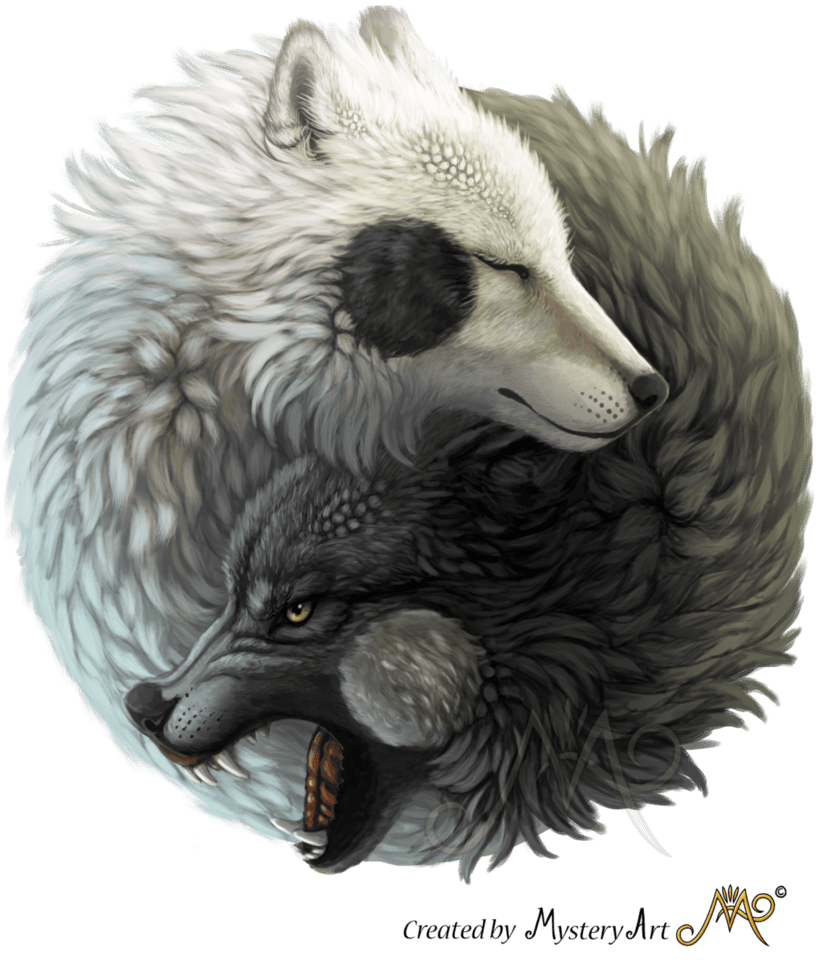
One might say the whole concept of Wolves and Ravens represents Yin and Yang, but it isn’t that simple because in Taoism some things in my philosophy cross the lines to the other side and some of the things might be considered on both sides depending on how they are applied. For me, you might say the Wolf of Need and the Raven of Reason are Yang, but the Wolf of Want and the Raven of Wisdom (which involves a lot of intuition based on experience) are Yin.

If I take anything from Taoism it is the idea of the balance of life. Of keeping things level instead of overdoing one thing at the expense of the other.  The parallels to this idea are in truth in every philosophical system I can think of as well as a large chunk of the nature of each mythology.

Probably this is found in two other notions: 1) Order (or Law) vs. Chaos (or Liberty) and 2) Good (benevolence) vs. Evil (malevolence).   A Taoist would try to strive for a balance between these and be truly neutral about both of them.  I tend to be more Chaotic but neutral about the question of good and evil.  You might say I boil it down to the issue of law vs. liberty and lean heavy on the side of liberty, but the whole good and evil question might be invalid.  I say ‘might be’ because I am still thinking and meditating about it.  The one thing is that I am deliberately unbalanced right now from a Taoist point of view in regards to law vs. liberty. Mostly because I can see how the law is far easier connected to doing harm in the name of good intentions. Whereas to me liberty brings about a respect for the humanity of the other persons in the world which often benefits all.

I would say at that point the Taoist and I reach a fork in the road and I wish them well and then take the fork in the road that says ‘liberty is better than law’.  That said, balance in other aspects of my life is influenced and reflects an understanding of Taoism.  Balance is a constant consideration of mine.

To the Wolves and Ravens:

“Feed the Wolves, but Listen to the Ravens first.”

Needs (Geri):

The need for balance is illustrated in what happens when the balance is not maintained.  I can speak from painful experience of the consequences of not maintaining the balance between self-love and loving others as an example.  Too far on self-love and you become a narcissist and too far in the love of others makes you a living martyr that eventually leads to self-destruction.  Neither is desirable and the balance keeps you functioning both in the love of self and others without the extremes of either. The need for balance is pretty clear from a preservation standpoint.

Wants (Freki):

A proper balance is also wanted.  It leads to greater success. I have known many men and women who their life was their work and in the end, they never enjoyed once the fruit of their labors.  Because they didn’t know how to relax and enjoy the fruit of their labors, their health suffered.  On the flip side, I have known people who gave themselves over to hedonism without working at all.  Their laziness leads to poverty and quite frankly a lack of honor.  The ultimate expression of this is the thief who lives on the labors of others.  The one who learns to balance work and enjoyment will be the one who is truly successful and that is something I definitely want.

Reason (Huginn):

Reason comes into these things as you have to think about things fairly regularly to observe if balance is being maintained.  Balance doesn’t come easily or without a lot of thought behind it.

Wisdom (Muninn):

I would say Taoism as a philosophy has a lot of wisdom to it, but I would evaluate things ma little differently as far as what needs to be balanced. That said, the principles are very universal and wise at the same time and I have no trouble listening to them and applying those I think leads to wisdom.

Conclusion:

I suppose Of Wolves and Ravens is indeed my own form of Taoism.  Balancing need and want with reason and wisdom.  But there is an imbalance built-in to that – listening to reason and wisdom first. A little asymmetry is good for us actually so that is something else to consider. Next week is western philosophy and I think there is a debate there that is about asymmetry that will be good to look at when considering this.

I remain,

The Rabyd Skald – Wandering Soul, Bard, and Philosopher. The Grey Wayfarer.

Skaal!!!
“Odin – The All-Father” (Asatru Part 7) – The Pagan Pulpit

Happy Sol’s Day

Announcements:

We don’t pray here – we figure God, the gods, goddesses, or whatever powers that be either know already, don’t give a fuck, or are busy with more important matters than our petty stuff. We also kind of assume that they expect us to do stuff that we can do for ourselves and that we will do them ourselves and not be lazy. We also believe in being good friends, so we don’t presume on our friendship with the powers that be by asking them all the time for stuff while giving them nothing in return.

We also don’t take an offering here.  We figure the powers that be probably don’t need it.  Let’s be honest, offerings are not given to the divine powers, they are given to an organization to support it.  Just being honest. God, the gods or whatever never sees a dime, farthing or peso of that money; it all goes to the church, mosque or shrine.

Theme Song: Old High German: Wotan chant

This is actually a chant that is found on a site that teaches people about the German language and the translation is in the description. Wotan is another name for Odin.

Meditation:


Image may contain: text

To be truly spiritual and even a genuine person in general, one needs to recognize that each person’s question of who they are and what they should be doing is individual. The question is different for all of us and the riddle of life is answering the one we actually have, not the one everyone says we should have.

Text:

See the source image

If you want more details about Asatru, I can’t recommend this book enough.

Sermon: “Odin – The All-Father”

Odin, Wotan, etc. He is known all across the Scandinavian and Germanic world by many names. A couple things are clear in all the stories and myths.  1) Odin is the chief deity and 2) He is very unlike the other supreme deities like Zeus and Jupiter in that he does not lord it over people or rule by decree.  Rather, he takes on the problems himself and does what he needs to do to overcome them.  He leads by example more than orders.

It is only natural that Asatru would embrace him.  From a spiritual standpoint, his essence is summed up very well in the title ‘All-Father.”  To the followers of Asatru, Odin is the speaker of the Havamál a collection of his wise sayings.  He is the god most associated with words and language so it is no surprise that he has many names.

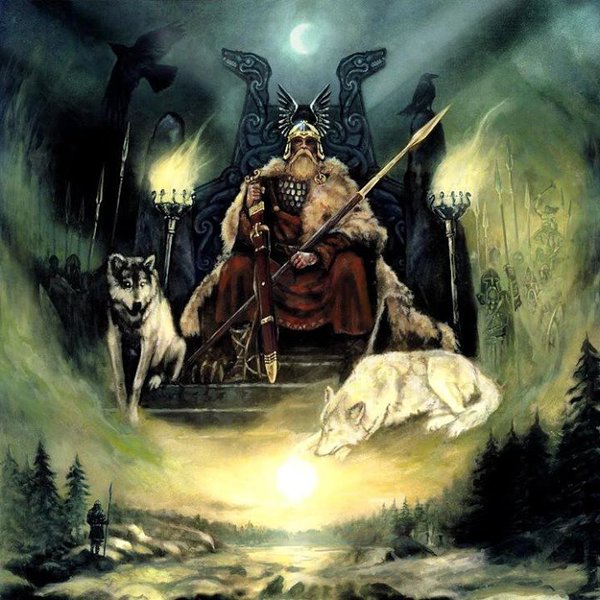
Paxton rightly points out there is a duality to Odin.  One the one hand there is power, anger, war, and aggression on the other side there the god of magic, wisdom and spiritual deepness.  On the one hand, you have the armored king on his throne with spear and crown.  On the other hand, he is also the grey cloaked, broad-brimmed hat-wearing wanderer.  There is an air of power and mystery to Odin as he is both warrior and mage.

His accomplishments in the mythology are large.  1) All-Father – creator of mankind. 2) He is king of the gods, but in practice, he seems to be more of a chairman of the board of gods.  Each god or goddess being fiercely independent. 3) He trades his eye for wisdom and foresight. 4) He acquires the Mead of Poetry from giants. 5) He hangs from the world tree upside down for nine days to discover the knowledge of the runes. Odin, in short, has a bad-ass list of accomplishments in Norse Mythology. He is also the god who never turns his back on humanity or being a part of wandering among them.

These days, according to Paxton. heathens invoke prayers to Odin still, even if they serve other gods more fervently, they still pay respect to the All-Father.  Most Odinsmen and Odinswomen are people who work with words.  Paxton advises against, however, asking him for victory.  He is, after all, a god that is even willing to sacrifice himself for the greater good.  He expects the same from his followers and would have no problem leading one into defeat if it meant forstalling Ragnarok.  He is a strong and powerful figure and is treated with respect by the followers of Asatru.

As I mentioned before, I don’t think one needs to actually believe in the Norse Gods as real to be a follower of Asatru.  What you do have to respect is how their stories pull you back to your ancestors’ view of the world and what they valued. When it comes to the ideas they valued most in a leader, Odin is the perfect representation. He is strong, listens to the counsel of others, is willing to take the lead and sacrifice himself to get what he needs to be successful.  When a battle comes, he leads from the front. He speaks little but acts boldly whether those actions are out in the open or clandestine. He has the long term in mind. The greater vision if you will.

You don’t have to do much more than come to my blog and see the title and the imagery I use for it, to know I place great value on what Odin represents. I would say my image of myself as a man has strong parallels with Odin.  I work to be strong but also wise. I like to read and write mostly because it allows me to hear the counsel of others. If there is some greater good to be achieved, I will sacrifice myself, although I am trying to do that only when absolutely necessary. When battle comes I like to be out front not only leading but fighting along the sides of those I lead.  I never forget where I come from. I prefer to remain quiet and let my actions speak for me. I tend to see the bigger picture and act accordingly.  Odin is if anything a good example of leadership values and characteristics I try to emulate in my own life.

That of course and the image of the grey pilgrim who wanders but is not lost is the whole essence of the blog – The Grey Wayfarer.

Parting Thought:

Image may contain: 1 person, meme and text

I would say some stories I have seen are written in both. Sometimes blood is used as the ink too.

I remain,

The Rabyd Skald – Wandering Soul, Bard, and Philosopher. The Grey Wayfarer.

Skaal!!!

“A Virtue By Another Name” – Of Wolves and Ravens – The Higher Virtues

Happy Tyr’s Day

Discussion

Having finished a discussion of all the Nine Noble Virtues of Asatru (NNV), we flip to Side B for “Of Wolves and Ravens” which is ten other philosophical discussions: The Higher Virtues, Eastern Philosophy, Western Philosophy, Love, Minimalism, Economics, Justice, Political Science, Libertarianism and Wisdom. The fact that I do this rotation at least twice a year is no accident as there are other philosophical guides to my life that form a significant part of my philosophy of life.  A philosophical framework, if you will.

This week is supposed to be the Higher Virtues and it still will cover them, but I want to share a discovery I made while reading Essential Asatru by Diana Paxton.  I got to the section near the end on Heathen Virtues and was excited because I was interested to see if there was anything new to discover. This, after all, was why I started gravitating toward Asatru in the first place – the NNV.   What I read as short but impactful because it introduced the simple truth that there were more than the NNV as virtues of Asatru and that there was something also called the Six Goals of Asatru.  In addition to all this, some of the NNV had other names which gave a different spin on their meaning.  While there wasn’t a lot of depth in the book, the simple statement of this was enough to get my wheels turning.

Firstly was the additional virtues that Paxton says some heathen groups have: Equality, Friendship, Strength, Generosity, Kinship, and Wisdom. Wisdom is already one of my Higher Virtues. but the other five merit some discussion.  The ideas of Friendship and Kinship are not fully explained but as I see those words I know that in large part represented by the Noble Virtue of Fidelity.  I treat my friends like family and Kin but the result is the same for all – I am loyal to those who are loyal to me.  Equality and Generosity I would say I have as background understandings of Hospitality and the Higher Virtue of Justice.

One meditation that was good was on Strength.  I could imagine the NNV forming the three strands of the higher virtues of Love, Justice, and Wisdom.  Then Those three strands forming a strong rope – Strength in a multiple-corded rope of virtue.  In a sense Strength is one of the major goals of being a person who follows a code like the NNV.

The Six Goals of Asatru I had never heard of before and it tells me that there may be things inside these Asatru Brethren groups that art taught and encouraged that don’t make it outside them very often. Not secret but not as popular with the general public.

The six goals are: Right, Wisdom, Might, Harvest, Frith (Peace) and Love.  It should be noted Love and Wisdom are already considered by me as part of my three higher virtues. Right, I have dubbed Justice. Frith is a new one for me but it means Peace both personal and community. I feel this is a worthy goal and one that would be the result of Justice, Love and Wisdom are acting their part.  Might and Strength are related. almost the same but the first refers to the strength of the community as a goal and the second personal moral strength, so there is that connection.  Harvest is an interesting one that goes very much with the Virtues of Self-Reliance, Industriousness, and Hospitality.

More significant for me is that Paxton gave different names for some of the NNV that offered a different perspective on how to look at that virtue. Courage has the second name of Boldness.  Truth and Honor remained the same, but Fidelity was called Troth which is a very unique word to use and thus indicates its value to the community. Discipline is called Self-Rule, so the idea of personal sovereignty is a part of the idea of Discipline. Hospitality was the same but given some of the other virtues above it becomes very much defined more concretely with more facets. Industriousness is the same. Self-Reliance becomes independence which the goal of Self-Reliance but I can see where it is a virtue in and of itself. Perseverance becomes Steadfastness which adds as I have remarked before the virtue of standing in the midst of adversity not just getting up from failure; it shows this virtue is also a means to victory, not just a response to defeat.

There is a lot to think about here but for now, my definitions will remain the same as changing those is a soul searching decision. I may, however, look at my higher virtues and meditate on them and some of these new ones more to establish a clearer picture.

What’s the point? Some might ask, well…

To the Wolves and Ravens:

“Feed the Wolves, but Listen to the Ravens first.”

Needs (Geri):

Men need a code.  Women need a code.

I can tell you what, people should be very glad I found the NNV and started to follow it last year.  If I had not I would be a monster without a code of conduct – destructive to both others and myself. I had that ‘women suck’ moment right after the Breakup with Miss Salty and I can tell you I came very close to becoming the Wolf in both the spirit of Fenrir and the predator at that moment. Chaotic, evil and full of rage.  I can think of nothing scarier than an empath that is malevolent.

The NNV came along and also filled a need for making sense of myself and getting me some sort of focus that I needed.  Otherwise, the wolves would be loose right now and men who wronged me would be targets and women in general objects for my use. In a sense, the NNV helped me find my true self and bring the wolves into my service rather than running wild.

Wants (Freki):

A code also allows you to start focussing properly on what you want and how to properly get it. Otherwise, you have no plan and follow it to the end. Focusing on the virtues you think is important begins to retrain your brain to follow after them and how to achieve them.  This is something you want, trust me.  No greater progress in your life will be achieved until you first find out what you value.

Reason (Huginn):

Mostly though, the NNV brought me back to a reasonable meditation on life and principle. It has brought me to Asatru as a form of spirituality, but it is a rational spirituality, not one that is making shit up. It is focused on value, goals and my journey has purpose because of it.  I am not wandering lost.  I may wander, but I am not lost, I am engaged in the purposeful pursuit of virtue wherever that journey may take me.

Wisdom (Muninn):

I find there is greater wisdom in the wisdom you discover for yourself than in ‘wisdom’ that is dictated to you.  No Wisdom is one size fits all, so to speak. The best wisdom is confirmed by virtue and experience combining into something that allows you to live better.  Wisdom may indeed be the highest virtue of them all, but it is also the result of living a code of virtues that you value.  For me, it started with adopting the NNV into my life.

Conclusion:

Essential Asatru has me thinking about virtue a lot since I read that section.  I am looking at it once again very holistically.  Mostly though I am glad I adopted the NNV and began to conceive them in a way that was helpful to me in a very dark time.  It allowed me to see myself as a human being again and more importantly helped me see others as human beings again.  I still have serious trust issues with my fellow humans, but it is getting better.  A lot of it has simply been about being true to myself in the full truth of following the NNV as best I can.

I leave you with Marcus Aurelius:

See the source image Still Walking,

The Rabyd Skald – Wandering Soul, Bard, and Philosopher. The Grey Wayfarer.

Skaal!!!

“Belief in the Norse Gods (Asatru Part 6)” – The Pagan Pulpit

Happy Sol’s Day

Announcements:

We don’t pray here – we figure God, the gods, goddesses, or whatever powers that be either know already, don’t give a fuck, or are busy with more important matters than our petty stuff. We also kind of assume that they expect us to do stuff that we can do for ourselves and that we will do them ourselves and not be lazy. We also believe in being good friends, so we don’t presume on our friendship with the powers that be by asking them all the time for stuff while giving them nothing in return.

We also don’t take an offering here.  We figure the powers that be probably don’t need it.  Let’s be honest, offerings are not given to the divine powers, they are given to an organization to support it.  Just being honest. God, the gods or whatever never sees a dime, farthing or peso of that money; it all goes to the church, mosque or shrine.

Theme Song: “The Pagan Norse” – Burnt Page Films:

Meditation:

Image may contain: 1 person, text

Even death is just an epitaph to your story as your legacy and influence can have an effect long after you are gone. But while you are alive the story is still being written and you can have an effect on the end of the story and what that legacy will be.

Text:

See the source image

If you want more details about Asatru, I can’t recommend this book enough.

Sermon:

As we head into the second part fo our text, a sermon is in order about belief in the old gods, but first, a disclaimer from myself as this is the part of Asatru I have the ‘hardest’ time with.  I don’t have a problem with people believing in the Norse gods any more than I have a problem believing in Christ, but I find that the actual existence of such divine beings as Odin or Christ for me needs to be defined. For me, this would be a belief for me that is more about the personification of divine or spiritual forces, not a belief in an actual being known as Odin or Thor. It’s kind of like saying Spiderman exists.  Is there a real guy that is named Peter Parker with spider powers? No.  But there is a creation in the literature that is a beloved comic character that teaches life lessons and personifies certain very human ideas. That is very real.

I think the same is true for all the mythologies.  Certain cultures created stories that reflected their values and there was a perceived need to have these values preserved and restated through myth.  The Norse people were no different in this regard. Whether Odin and Thor actually exist is irrelevant to me as this part of Asatru, it is the values and virtues they portray in their stories that matter to me.  In that respect, the gods exist and the had an influence on my ancestor’s lives and that is enough for me.

For followers of Asatru, there is an identification with gods that is often individual and very personal.  Some followers of Asatru worship all the gods, but they’re always a favorite god for many which earn that follower a title – ‘Thorsman’ or ‘Freyawoman’ or some other title with the god’s name.  I don’t think you have to do much more than look at this blog to see what god would be in my title. I am an Odinsman.  Not the warrior Odin in his hall so much as the wanderer looking for knowledge and wisdom.   It is an image that inspires me and motivates me.

See the source image

Asatru is about the Norse gods in the end and their worship and veneration.  It is about honoring them and what they stood for. This is something one can accomplish without necessarily believing in a literal Thor, Freya or Odin. Religion is ultimately a personal construct that you can share as a community construct. Many followers of Asatru are also like myself in that we are returning to the faith of our ancestors.  A faith that was taken from us by the invasion of Christianity and now we have the freedom to once again embrace.

In the coming weeks, we will be looking at the spiritual significance of many of the gods to the followers of Asatru.  Essential Asatru does this by first covering the gods and then the goddesses, I will be going back and forth to maintain a little more male/female balance. In some cases, I will probably combine a few of the gods and goddess together.  This will be done when there is little known about them or that the combination has a significance in the mythology.

Parting Thought:

Quit explaining your life, live it.  Those that love you will give you the freedom to be what you want to be because they love you.  Haters?  Fuck ’em.  They get silence.

I remain,

The Rabyd Skald – Wandering Soul, Bard, and Philosopher. The Grey Wayfarer.

Skaal!!!

“Objections to Christianity – Part 2 – Sin: An Imaginary Man-Made Problem” (Revised August 2019) – Odin’s Eye – Theological Objections to Christianity

Happy Thor’s Day

August 2019 Revision Notes:

It has been almost a year since I wrote these originally starting in November of 2018.  When I got to the rotation in Odin’s Eye the last time where I was going to deal with these objections again, I saw no need for revision but rather simply laid it out there that no one had responded to them to that date and moved on into the rest of the Rotation for Odin’s Eye. 

This time though I feel that I need to spend four weeks of Odin’s Eye doing some revisions that will either clarify my position, add some other thoughts or edit for other issues.  Such edits will be marked by italics.  When archived, they will appear under the original post on this Page: My Four Theological Objections to Christianity

 Mostly though this is a cut and paste with some revisions. As the series goes on there will be more revisions as I can see the need for things to change a bit in the other three objections. In part two, I felt the need to add a few paragraphs for hopefully a clearer explanation. 

Introduction:

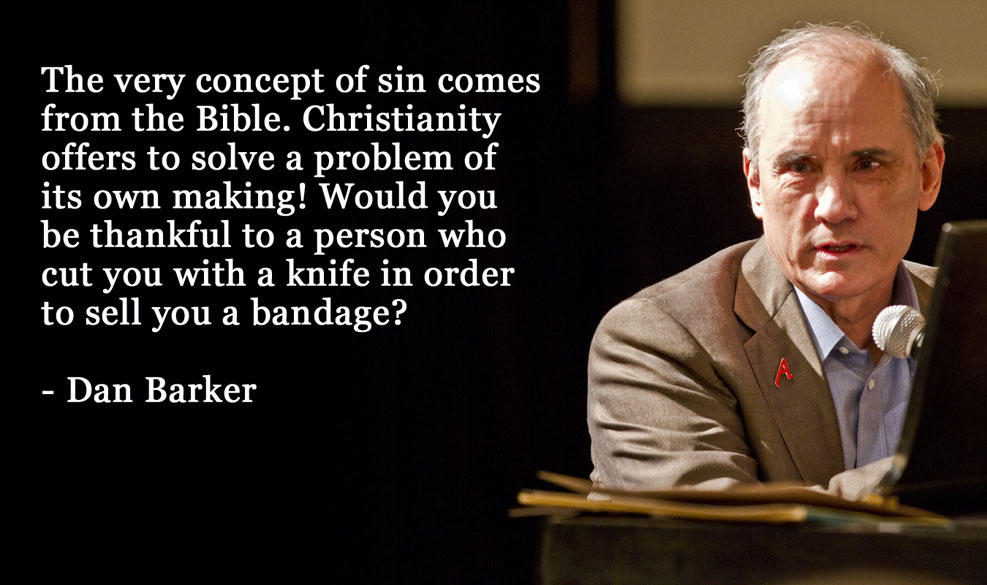
My loss of faith really started here.  I can actually go back to a message I was preaching on sin and salvation through Christ and the fact this quote from Dan Barker from Losing Faith in Faith ( a book I still want to read) was rolling around in my head.  I was trying to think of something that would make his assertion wrong.  I got up preached the message and sat down.  I can site this moment as the time my crisis of faith began. I realized he was right.

I realized there is no proof that sin rationally exists.  I only believed that because that was what I was told by a preacher and read it in the Bible.  Unless the Bible was truly inspired, then I had no natural or logical proof that there was this thing called sin, a sinful nature or my actions were righteous or sinful. God Himself had never come down and told me I was a sinner, that was men either in the form of preachers or the men who wrote the Bible.  Over time, I began to realize that sin has the same problem as the inspiration of the Bible – the Bible asserts it but never proves it.

Going back to my pulpit moment, I sat there thinking and my faith started to unravel.  I sat there thinking: “I make a living by telling people they are sinners so they will feel guilty, then they accept the ‘gospel’ and feel better.  Out of gratitude they throw money in the basket and pay me. WTF.”  It was a bad moment for me, and one that led to my eventual downfall over two years later.

Faith:

If you are a believer you take the existence of sin as purely a matter of faith.  Basically, if you believe that sin exists, you do it for the same reasons you believe the Bible is inspired.  You have faith it is true – you hope and believe it is true, but you do not have a proof or a rational argument to say it is true.  The Bible writers assume sin is real and a problem.  They never prove it, and the believer is left to take that sin exists as a reality and that God has solved it.  You believe all that without rational evidence.  It is purely a matter of faith.

Now I want to emphasize that this does not disprove sin’s existence, but it puts on the same plane as believing in a lot of things that we believe exist but have no proof of.  The issue then is should we order our lives on faith in the idea that man is sinful, or go based on our own observations of human nature and conclude that if anything we can have faith in the fact that all human beings are human. 

Religion:

I now think that sin is a man-made concept.  It probably originally. like so many things might have had a good intention.  To keep people from making bad decisions given the cultural context.  I mean sex without birth control and modern medicine can lead to deadly diseases and unwanted pregnancies. So you tell people not to have sex except with people they are committed to and get married to so the child will be legitimate. The practical side of this is the lessened risk of STDs and unwanted pregnancies. It is a wise course of action.

When just showing the wisdom of this to others doesn’t work, you throw in the wrath of God to bring about a more forceful form of persuasion – tell them it’s a sin against God and He will bring down his wrath on the one who sins.  This is where you make up the concept that sexual sin is an affront to God and he will send you to hell if you don’t repent of it and stop doing it.  It is ultimately a fear tactic that uses guilt to prevent certain behaviors.

The dark side of this gets worse though as people genuinely think they’re taking the side of God when the punish sinners.  The real problem with sin is that some people think they have risen above the concept of it.  They feel qualified to judge others using their religious beliefs. It gets worse because the said concept can be held by people in power who wish to impose their views on people to create a ‘righteous society’.  To force others to follow your moral code of some behaviors being sin and thus outlawed. The problem is the difficulty using reason to prove something is a sin.  It’s not self-evident.

Theology:

I don’t believe in sin as a theological concept anymore. I think in large part it is a bad one because all it does is produce guilt and then in a guilt-ridden state people can be manipulated.  I haven’t looked at this fully but I have a theory a large part of religious people have a poor self-concept and that is because they have a large amount of guilt associated with their ‘sins’.  This leads them to think they are bad or even evil people and the cycle of self-destruction begins.  You spend a lot of time putting on masks at that point to protect yourself from the social wrath of being a sinner while at the same time being wracked with guilt because you can’t seem to escape your sin. If it sounds like I have been there – yep.  I would say a lot of my initial causes of depression came from this struggle.  Yes, I am saying that religion, particularly the Christian notion of sin,  may have has a great deal of influence in causing my depressive issues.

My theology about mankind has certainly changed since I discarded man as a sinner.  I don’t think of myself as a sinner but simply a human being. I am not all-powerful, all-knowing or all-present; so I am going to make mistakes and there is really nothing I can do about it. I have needs that are normal.  Wants that are normal.  I have my reason and wisdom to guide me. I am not perfect and I make mistakes and have errors in judgment, but that doesn’t mean I am a sinner, just human. To me, life is no longer about overcoming sin and removing it from my life.  Rather, it is about discovering the virtue in me and causing it to grow. And there is a virtue in who I am as a human being if I look for it and develop it.  It’s about growing into the best human being I can be.

Note: Unlike the atheist, I have not discarded the idea of a spiritual side to mankind at all, but rather I am saying that sin is not something I believe is real about it.  Humanity is more complicated than he is all bad or all good. 

Spirituality:

This is why spiritually speaking I spend more time meditating on the Nine Noble Virtues as a way to learn where I need to grow. I am not trying to get rid of sin out of my life, praying that God is gracious, etc. I have come to see some things as normal and human, not sinful.  My goal now is to build character, not remove sin because I think sin is a made up imaginary concept.  I meditate on the good things, not the bad things.  I grow the good in me, rather than trying to deny my humanity by calling it sinful. I find it makes me much happier and far more at ease in this world.

One good example of this is my changing attitudes about sex and sexual desire. I feel sexual desire is normal in humanity and it is normal to feel a sexual desire toward a lot of different people.  Lust is made up to me unless you are using the term to describe passionate sexual desire which is neither good nor bad. What might be a factor in sexual desires is wisdom and reason saying that not all sexual interaction is beneficial. Some of it could be detrimental.  The real issue is that sex in and of itself is not sinful in any form. Enjoy, but be smart and wise. 

In my case, sexual fidelity is part of my marriage because that is the oath I swore as a Chrisitan that I still honor. If it wasn’t, having sex with another woman would not necessarily be a violation of fidelity as there is no sin to it, but one might challenge my wisdom.  Like it or not people get jealous and envious and that can lead to relationship issues. There are also cultural expectations to consider which do have an effect on how a person is perceived. This is not about sin anymore is the point, but rather what effects it might have on relationships and troth issues may or may not be affected depending on the specific nature of oaths of fidelity. 

Conclusion:

After concluding that the Bible is a human book with no proof of inspiration and the sin is a concept made up by the writers of the Bible.  There are only two things left on my four objections to Christianity.  The first is the other imaginary thing the Bible creates which is the solution to sin being Salvation in Christ and finally, the god of the Bible seems to have very suspect standards of justice.

The Rabyd Skald – Wandering Soul, Bard, and Philosopher. The Grey Wayfarer.

Skaal!!!