“Asatru and Fidelity” – Of Wolves and Ravens – Fidelity

Happy Tyr’s Day

Discussion:

“Fidelity is the will to be loyal to one’s Gods and Goddesses, to one’s Folk, to one’s self, and loyalty to one’s friends was as valued as highly as loyalty to one’s family.”

Principle: Be loyal to those who have been loyal to me.

Fidelity or Loyalty, also known is Asatru as Troth, is something in certain areas I have struggled with from time to time. That said, when I was first embracing the Nine Noble Virtues after my recent affair, I didn’t list it as number one or even two as the virtues I needed the most.  It actually finished in the middle much to some people’s surprise at the time.  I will get to why I assessed Fidelity at that level in a moment.  The real issue first is what is fidelity?

This is the only time I found the website Ravenbok a little disappointing because they focused on two issues marriage and loyalty to the gods. In marriage, the point out the obvious in the idea of sexual fidelity and loyalty to one’s vows to one’s spouse.   They do that being loyal to the deities of Asatru might be challenging.

My definition of Fidelity goes much further than that, and recent experience has allowed me to visualize and define it much more completely.  My definition includes the following loyalties to be aware of: The divine, family, self and friends. One principle comes from the definition that friends are treated like family in the case of loyalty.  The other principle is my stated principle which is to be loyal to those who have been loyal to me.

It is this reciprocal understanding of loyalty that is instinctual to me and it is a double-edged sword. First, it is inherent to my being.  My personality type (INFJ) is focused on this idea of standing for each other and reciprocal loyalty, to violate this would be a violation fo who I am in a lot of respects.  It is not impossible to do, but very difficult.  It means that usually, it will be the other person who breaks faith with me before I break faith with them. That I have only broken up with one girl in all my years of dating before I got married, the rest broke up with me. Universally ‘friends’ walk away from me before I have ever walked away from them.

The other edge to the sword is to understand my loyalties are interconnected but loyalty to self is essential to maintain balance. I often maintain loyalties to others at the expense of loyalty to myself and that usually ends in disaster. By making sure it is central and all other loyalties are related to it, I can overcome this, but it takes a lot of thinking to make sure I am being loyal to myself.  It is not as instinctual, so I have to work at it.

In the end, it is not if I will be loyal or show fidelity in a relationship, but why that matters and that is why I ask why I am in each relationship constantly now. It all centers on if that relationship also reflects loyalty to self now.  If it doesn’t then there is something wrong with it that can lead to problems. To fix it, I need to ask how I can change the relationship so the fidelity in it is reciprocal again.  If it can’t be changed, then it is time to acknowledge that it might be that the other person is disloyal and the relationship needs to be abandoned rather than me showing blind loyalty to it.  Time to walk away before I get hurt.

It is treating myself like a human being and being loyal to myself is a new learning process when it comes to loyalty.  In this case, thinking of loyalty in terms of the wolves and ravens helps a lot and gives me the visualization I need most of the time.

Website: Ravenbok – The particular page is: The Values of Asatru

To the Wolves and Ravens:

“Feed the Wolves, but Listen to the Ravens first.”

Needs (Geri):

I never made any progress in understanding fidelity until I learned that seriously considering what I need and want is important.  Learning to feed the wolves is important because if they don’t get fed they go rogue on me.  The morph into a monster that.  In order for my relationship and the fidelity that is in them to bring virtue and strength, what I need has to be equally considered with the other person.  If I don’t consider what I need in that relationship, it will fail in the end because the wolves will become famished and then lash out.

Wants (Freki):

This includes not just need but want.  If I find myself giving up my goals and desires more often than the other person this is going to be a problem in the same way as needs can become a problem.  I would say learning to feed the wolves is the best way to keep them from going wild, from becoming so hungry the consume me and those I love.  This forms the best way for me to understand loyalty to myself.  “Feed the wolves”

Reason (Huginn):

Yes, reason does say to be considerate of the needs and want of others in relationships and the nature of loyalty.  Fidelity, however, is a two-way street and my problem is not showing loyalty but in making sure I receive it in return. That by being loyal I am not losing myself.  Fidelity is about being true to all relationships and that includes the one you have with yourself.

Wisdom (Muninn):

Finding the wisest path that offers loyalty to self while maintaining loyalty that is reciprocal is the challenge these days. Learning that loyalty to myself is important is one thing, living it given it is more natural for me to sacrifice than to embrace my needs and wants is not a natural act. It however essential as I have learned from painful experience. The big challenges remain: 1) What do I mean by loyalty to the divine? and 2) What level of loyalty to myself is required that finds balance with loyalty to others? It is these two questions that keep me writing and meditating.

Conclusion:

I am still learning, but I can’t deny the value of the view of Troth or Fidelity that the followers of Asatru have.  I have been asked by some why I came back to my wife and from her side, it was the end of denying she was part of the problem. From mine, it was meditating on the value of the virtue of loyalty and coming to a painful realization that the problem was not loving my wife enough, but loving myself enough so I could love my wife enough.  Only time will tell if I learn this enough and fast enough to make all my relationships stronger.

Still Walking,

The Rabyd Skald – Wandering Soul, Bard, and Philosopher. The Grey Wayfarer.

Skaal!!!
“Objections to Christianity – Part 1 – The Bible’s Inspiration by God” (Revised August 2019) – Odin’s Eye – Theological Objections to Christianity.

Happy Thor’s Day

August 2019 Revision Notes:

It has been almost a year since I wrote these originally starting in November of 2018.  When I got to the rotation in Odin’s Eye the last time where I was going to deal with these objections again, I saw no need for revision but rather simply laid it out there that no one had responded to them to that date and moved on into the rest of the Rotation for Odin’s Eye. 

This time though I feel that I need to spend four weeks of Odin’s Eye doing some revisions that will either clarify my position, add some other thoughts or edit for other issues.  Such edits will be marked by italics.  When archived, they will appear under the original post on this Page: My Four Theological Objections to Christianity

 Mostly though this is a cut and paste with some revisions. As the series goes on there will be more revisions as I can see the need for things to change a bit in the other three objections.  In this one, however, the objective remains pretty much the same. 

Introduction:

I want to state upfront, this is a long post. I want to be complete as possible in stating this objection and the ones that follow.  Mostly as I will state later that I for a long time wanted answers; I still do.  It was hard leaving my faith because I wanted so desperately to believe. Reason itself eventually prevailed and I will stand by that decision.   The reason I am putting a lot of words into this is that I still would accept answers: if they could be proven rationally that Christianity is the true religion.

I have written on my crisis of faith a couple of times. Despite some people’s assertion that this was due to personal events, it actually started in 2015 with my second objection which is that I think ‘sin’ is a man-made up concept.  It started when I preached a message about sin and I had heard a quote that week from a critic of Christianity that basically said sin was made up and that because of it Christianity solves a problem of its own making.

I will get into this moment in more detail in my second objection post, but it got me rethinking everything in the light of skepticism and I began to form four theological objections for which I still have no satisfactory answers. While the sin question got my original thinking going, it is this first question involving the Bible and divine inspiration that forms the foundation of the other three.

Now, I want to state for the record that I am no amateur when it comes to the Bible or Theology.  1) I have degrees in both Biblical Studies (BA) and Theological Studies (MA).  2) I am a ‘professional’ theologian and have been since 1996.  3) I was a Christian from the time I was eight and as I approach my 50th birthday that would have been close it forty-two years. 4) I was a pastor (now retired) for twenty years and have spent many years since school studying the Bible and engaging theological questions.  5) I have had several crisis moments in my theology and up until two to three years ago I could answer them all or found ways to explain them.  Not anymore.

I will also say I am not hostile to Christians, I get it.  It took me a long time to face the facts of the objections I will present in this series. I still am open to anything that answers them.  My largest problem when I discuss this is people sometimes get offended because I seem to be very aggressive, but I am not really doing that, just being as honest as I can.  People don’t always like it when you ask questions that are hard about what they believe. Cognitive dissonance is a real thing, so I get.  Understand I am not being hostile to your faith if you have it.  I am just being hostile to mine or what mine used to be. That’s because I take as a central core idea that if the God of the Bible is the real god and the Bible is inspired by him, then it should make sense and have rational proof this is so.

Faith:

Bottom Line, faith is trusting in something that you have no evidence for and that is the problem.  You hope it is true and you believe it is true, but you don’t know it is true. This is particularly true for many church doctrines and one of the most notable is the divine inspiration of scripture.  The reason I can say this is no matter what school of thought you follow in looking at inspiration, there is no evidence that God came down and inspired the Bible.  You simply have to believe the simple statement “All Scripture is given by inspiration of God.”  There is no attempt to prove this, just a statement of fact that the reader must simply accept.

An example is probably in order:

“The Rabyd Skald’s writings are inspired by the god Odin.  Everything he writes comes straight from the mouth of the god Odin.” 

You say ridiculous.  I ask why?  You say because I simply have made an assertion and have offered no proof that what I say is true. I want to tell you the Bible does the exact same thing with the exact same level of proof that God came down and directly inspired the writers of the Bible – none. It’s pure faith, no evidence even from the Bible itself.  The Bible writers simply assert this; they never prove it.

Religion:

Looking at the doctrine of inspiration historically, once again we have no proof of the inspiration of Scripture by God, just the creation of the doctrine of inspiration and various councils of men deciding which books are inspired.  There is no record of God coming down and saying – “these books are my inspired word.” Just groups of men doing that.  That is what you actually see.

It stands to reason that religions do this.  In the end, you need a common core of beliefs and authority and it is far easier to make a group of writings do that because it has a greater chance of standing the test of time.  Especially if you inject a tradition of copying and transcribing these books from one generation to the next. Even in this though, two problems develop. 1) People abuse the authority of said books and can twist their meaning and 2) the transcription of said books can be flawed.

The second brings up an additional inspiration question which is: ‘Is the Bible still inspired even though people have put mistakes into it and changed it from one language to the next where meaning is going to get changed?’  The human factors are definitely present in the Bible.  Does that undermine inspiration or simply point to the fact that the Bible is a wholly human book? Because we don’t really have proof God is involved, are we just making up the whole divine inspiration thing in order to make this human book have more significance?

Theology:

I spent a great deal of time and digital ink pouring over this question of inspiration.  On my blog All Things Rabyd (which is still there although no longer active)  I spent nine posts looking at the various theories of divine inspiration.  You can find the link to all of them here. I eventually settled on Dynamic Inspiration as the best possible explanation to handle the human element of the bible.  That much like the doctrines of Christ state Jesus was 100% God and 100% Man, so was the bible the same way.  It satisfied me for a while but there was a fatal flaw in the whole thing.

The flaw? I still had no proof positive that the 100% divine inspiration part was real.  There is no photograph of God reaching into the head of Paul or Moses inspiring them to write things.  I mean you could say God is the inspiration for the Bible like a person might be inspired to write about nature from being outside. There is however no proof that God took an active hand in telling the authors what to write or how to write it.  That is purely a matter of whether you believe that or not.  It really is blind faith when you consider that particular question.

Spirituality: 

I will probably handle other objections involving scripture at a later date.  My purpose today is to get the main parts of my first objection to Christianity out there.  The question always comes – do I still read the Bible and what value do I place on it?  Well, yes I do.  I value it in that it contains a lot of ‘truth’ small ‘t’.  I just don’t think it’s the Truth with a capital ‘T‘.  Rather a lot of men wrote about their sincere belief in God.  God inspired them in that way and they wrote but in the end, it was human inspiration ABOUT the divine.  It was not God coming down and whispering in their ear what to write, no matter what their claims.

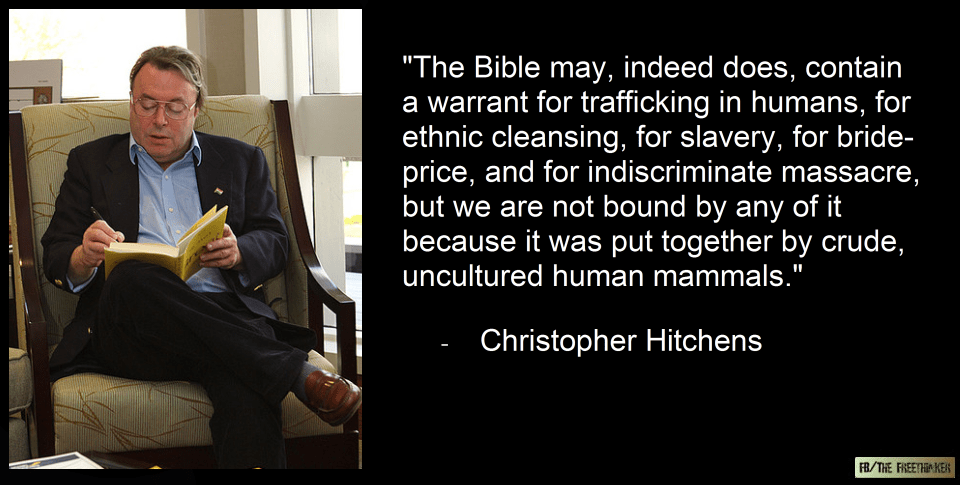
It also, because it is a human book and not divine to me, contains a lot of Bull Shit and spiritual opinion by ancient authors which may or may not be valid.  You still have to use a lot of judgment in looking at the Bible because if some of it is objectively true then the god of the Bible becomes at times both inconsistent and a sadistic tyrant.   

For me, I still draw a lot of inspiration from the Bible.  Some of its stories are great.  It has men wrestling with the question about God.  Some of the teachings of Christ are some of the best on human relationships you will ever see.  That said, it is only one avenue of being inspired, not the only one and it is a very human book.  In short, it has its flaws, and I think some of the morality it promotes could be questioned as to whether it actually does good or not.

Conclusion:

When the doctrine of inspiration goes, then you can look at the Bible objectively.  This caused me to really realize the god of the Bible has a few problems.  1) Sin seems to be made up as a concept and used to control the behavior of people 2) The plan of salvation God comes up with does not speak well of supreme being because it makes God both sadistic and masochistic. 3) God’s justice seems a little suspect especially when you consider final judgment.

The Rabyd Skald – Wandering Soul, Bard, and Philosopher. The Grey Wayfarer.

Skaal!!!

“Asatru and Perseverance” – Of Wolves and Ravens – Perseverance

Happy Tyr’s Day

Discussion:

“Perseverance is the ability to stand up and return from defeat and failure”

Principle: Keep getting up after every defeat or failure.

It seems simple enough, doesn’t it?  Keep getting up no matter how hard life knocks you down, you put your feet back under you and stand up.  I can tell you from long experience, this is more a matter of will than anything.  The world can be a hostile and difficult place to try to achieve something.  If you fail to get up, you will join the long list of people who did not do so and now dwell in mediocrity and obscurity.

Of all the virtues, I find this one the most natural to myself.  Not to say that it isn’t tested on a regular basis, but I faced my first real test of perseverance in high school on the football field.  But four years of hard grinding practices designed to make you quit, then break you down and then build you back up.  Never missing one practice just for the chance to play a game.  For my chance at Friday Night Lights and the glory therein.  I never got much playing time, but the lessons of getting back up and to keep working never left me.

Website: Ravenbok – The particular page is: The Values of Asatru

To the Wolves and Ravens:

“Feed the Wolves, but Listen to the Ravens first.”

Needs (Geri):

The failure to persevere means one thing.  You are done.  To not be done you have to get up and try again.   If I can’t get you to understand this basic concept perseverance teaches, then nothing else is possible. Never quit is the start fo all success.

Wants (Freki):

It is the success that leads us to why we want perseverance.  If we don’t quit, if we keep getting back up, then success will happen eventually. Maybe not in the way we want or to the degree we want, but no opportunity for success involves laying on the ground and waiting for it to come to you. If you want something you have to go get it and if you get blocked, inhibited or nocked down, you have to keep trying. To get what you want is going to involve getting back up.

Reason (Huginn):

In my studies, I have never noted a person who didn’t fail from time to time.  Most of the successful people I know failed sometimes many times.  Reason suggests that failure is not the enemy of success but the builder of the virtue of Perseverance if you embrace it.

Wisdom (Muninn):

If experience teaches wisdom, then perseverance seems to be its main avenue.  It is the primary experience of getting up after every failure that leads to the most wisdom and success.

Conclusion:

I have little problems with perseverance.  I think this last year would stand as exhibit A from my life for that.  My strength has come from never giving up no matter how dark Life or The Grey gets. I keep walking and getting up and walking.

Still Walking,

The Rabyd Skald – Wandering Soul, Bard, and Philosopher. The Grey Wayfarer.

Skaal!!!

“Asatru and Discipline” – Of Wolves and Ravens – Discipline

Happy Tyr’s Day

Discussion:

“Discipline is the willingness to be hard on oneself first and then if needed help with the development with others, so that greater purposes may be achieved.”

Principle: Apply discipline to every aspect of life that it can be applied.

I have to give the website Ravenbok credit for their views on Discipline and their contrast with legalism because it is spot on. Discipline is about being hard on yourself first and letting others be free to do as they see.  The disciplined person seeks to improve themselves and doesn’t presume to have the answer when it comes to others.  The disciplined person is motivated by the happiness he finds in changing himself to be a better person. To be disciplined requires one to focus on self.

The legalist, by contrast, thinks happiness will be found in changing others into their vision of what they think is fair or right.  So they attempt to dominate and control through law in its various political and religious forms.  The legalist disciplines others but does not lift a finger to discipline himself.

That is not to say that as a leader the follower of Asatru does not discipline those under him or lead them in disciplined activities to improve the company or team.  The main thing is that the disciplined person leads from the front by disciplining himself first and never asking people to do something they have not demonstrated a willingness to do themselves. To achieve greater purposes requires people who focus on changing themselves first and then each other through example, not coercion.

“It is the exercise of personal will that upholds honor and the other virtues and translates impulse into action. If one is to be able to reject moral legalism for a system of internal honor, one must be willing to exercise the self-discipline necessary to make it work.”

Website: Ravenbok – The particular page is: The Values of Asatru

To the Wolves and Ravens:

“Feed the Wolves, but Listen to the Ravens first.”

Needs (Geri):

I very much need discipline for a lot of reasons but mostly it keeps me walking life.  There is a connection between Perseverance and Discipline that is so integral to my self-concept that I need the discipline to keep putting one foot in front of the other.  Without the disciplined action, I have done all these years to improve myself, I doubt very much that on a couple occasions, I would have gotten back up.

Wants (Freki):

Discipline is also something I want as the actions of it allows me to focus on the one person who can make me happy – me.  Discipline is what helps me make progress on me and do something else that is essential – mind my own damn business when it comes to others.  I can only change me and I would be presumptuous to think that I have the right or the knowledge to effectively change others without demonstrating how that change works in me first. Self-Discipline taught me that.

Reason (Huginn):

It is an emotionally immature person, in my humble opinion who seeks to control others.  Even if said person has good intentions, they will probably cause more harm than good because they are not knowledgeable in and of themselves to know every possibility or what the other people might consider good.  Reason says it is better to focus on self so that one is not a burden to others and to be in a position to help.  You don’t do that by forcing others to be charitable for you.  You do it by disciplining yourself so you can be charitable yourself.

Wisdom (Muninn):

I think the path to wisdom and thus happiness is the road which requires a disciplined mind and pace to walk it.  The wise man is a disciplined man and visa versa.

Conclusion:

On a more personal note, discipline gives me a lot of tools that I fight The Grey with.  Depression often takes a lot of tools to beat it.  Most of them are formed and created through discipline. My victories will come, but with every one of them, I will look back and say that discipline gave me the skills, strengths, and abilities to win them.

The Rabyd Skald – Wandering Soul, Bard, and Philosopher. The Grey Wayfarer.

Skaal!!!

“Asatru and Hospitality” – Of Wolves and Ravens – Hospitality

Happy Tyr’s Day

Discussion:

“Hospitality is the willingness to share what one has with one’s fellows, especially when they are far from home.”

Principle: To share out of my abundance to help people where I can with their life’s journey.

Hospitality is a virtue that is represented to Asatru as the glue that holds society and civilization together. The particular focus of Hospitality in the Norse context is one of being kind to strangers and travelers. If there is a virtue that relates personally to me as a wayfarer of life, it is this one. I have always appreciated the kindness people have shown me when I was far from home. Having a place where I knew I was safe while traveling is something that always warmed my heart.

It is this virtue of hospitality in the modern world that gets translated as being respectful to all human beings and giving people the things they need when they need them out of respect for their humanity. Need not want through here.  People can be treacherous and the virtue acknowledges that, and one part of this is once a person has acted treacherously toward you; you don’t have to lift a finger to help them again.

This is the ‘give and take’ of Hospitality.  It is not just enough to properly give it, but also to be thankful to receive it and not do it to take advantage of people.  What makes it work is the two-sided nature of Hospitality, both knowing how to properly give it and receive it.

Website: Ravenbok – The particular page is: The Values of Asatru

To the Wolves and Ravens:

“Feed the Wolves, but Listen to the Ravens first.”

Needs (Geri):

I think society needs this understanding of hospitality again  I need it.  I think it is more practical than the Christian notion of ‘give expect nothing in return’ that no one actually follows.  This is ‘give and receive graciously’ both ways, but always keep your eye on how people receive your hospitality and in what motivation that gives it to you.   This is not a license to manipulate or take advantage of people because at that point it ceases to be a virtue.

Wants (Freki):

We want hospitality to be present in our society as it is the one virtue that allows us to put aside our differences and work for the common good. That is all differences – political, religious and cultural.  Some things are bigger than the individual and only a team can take them on.

Reason (Huginn):

For myself as a person who has been on the receiving side of hospitality from time to time, I can see how broad you can make this.  It has the rational quality of being able to apply it to many different situations and in many different forms.  It is a good solid virtue that can be personalized to a great degree and that is a good quality to have as well.

Wisdom (Muninn):

Hospitality to be done properly requires the wisdom of experience and a good eye for judging the situation.  Laziness is not to be coddled only genuine need.  At the same time compassion needs to be exercised. It is wisdom that is the tool that is needed to know the difference.

Conclusion:

I personally only struggle with the concept of hospitality; in that, recent events of this last year have me with my own form of TNO (Trust No One) at a high level. I try to help when I can but I am always a suspicious fuck these days. The virtue right now at least forces me to try to consider it every time I read and meditate on it.

The Rabyd Skald – Wandering Soul, Bard, and Philosopher. The Grey Wayfarer.

Skaal!!!
“Asatru and Industriousness” – Of Wolves and Ravens – Industriousness

Happy Tyr’s Day

Discussion:

“Industriousness is the willingness to work hard, always striving for efficiency, as a joyous activity in itself”

Principle: Work with the enjoyment of work itself.

The followers of Asatru’s Nine Noble Virtues (NNV) have a deep realization of the necessity that virtues cannot e idle.  There is nothing more useless that people who claim certain ideals and qualities but then do not display them.  In truth this virtue in particular cuts against the notion of being hypocritical. If something needs to change or needs doing there is no waiting for the gods or goddesses to do it or if I am deficient in some quality there is no waiting for the powers that be to change me,  I work and do that myself.

For me, I have found that I am very willing to work hard.  Even more so than before I followed Asatru.  Hard work is its own reward at times. I strive to be efficient looking for new and better ways to do things. I look at the situation and try to see the most effective way to order things to do them so that they are done well and as quickly as possible so more can be done in less time.

My struggle is working at all times with the enjoyment of work in and of itself.  I also strive to find a job and a career that suits me the best.  I can work hard at any job you give me. I also want to know the job is challenging to me on all levels because that is what gives me the most joy in my work.   It is what allows me to take the most pride in a job well done.

Website: Ravenbok – The particular page is: The Values of Asatru

To the Wolves and Ravens:

“Feed the Wolves, but Listen to the Ravens first.”

Needs (Geri):

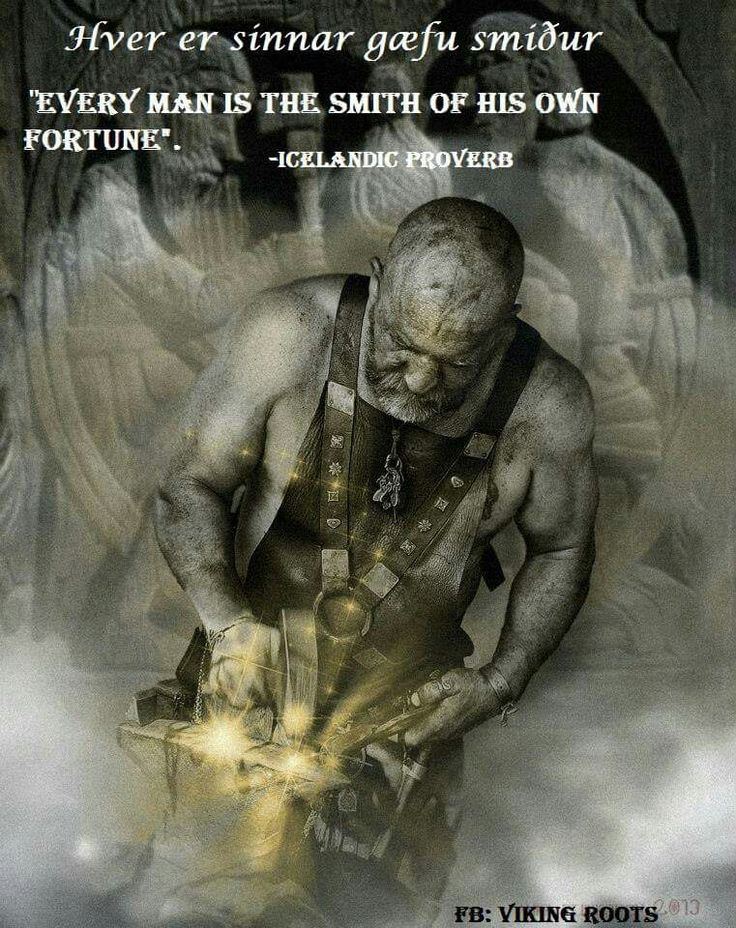
There is the mentality of the thief that seeks to take from others.  There is the counter mentality which is to smith your own life from what you are given.  The first is dishonorable and cowardly. The other is honorable and courageous.  The need to work hard with joy is obvious to me.

Wants (Freki):

I want to work hard because there is satisfaction in doing that gives a lot of honor to my soul.  In addition, I have goals that require hard work so if I want to achieve them I need to get off my ass and go get them. If you want a good life, the first thing to realize is no one is going to give that to you.  You have to go earn it.

Reason (Huginn):

Reason tells me also that hard work leads to a lot of benefits with others.  being the one that people look to and can’t do without, is an advantage in any employment situation. Rationally hard work makes you more valuable to other people than someone who is lazy.  It should also be noted that if you are a boss, those workers under you respect hardworking bosses more than ones who are lazy. Respect of this sort is more valuable than gold.

Wisdom (Muninn):

But more than that, living life to its fullest requires the wisdom of industriousness.  The old adage of working hard and playing hard comes from industriousness.  There is great wisdom in doing all things with effort and striving for efficiency so more gets done in your life in less time.  More is built and enjoyed.

Conclusion:

Hard efficient work in all areas is valuable. Industriousness reminds us that no matter what we are doing to do it with the highest amount of effort and efficiency.  It doesn’t matter if it is devotion to the spiritual, vocational or recreational part of life.  All need good solid effort to make the most of every situation. It is one of the virtues I have learned to enjoy the most.

The Rabyd Skald – Wandering Soul, Bard, and Philosopher. The Grey Wayfarer.

Skaal!!!
“Asatru and Self-Reliance” – Of Wolves and Ravens – Self-Reliance

Happy Tyr’s Day

Discussion:

“Self-Reliance is the spirit of independence, which is achieved not only for the individual but also for the family, clan, tribe, and nation.”

Principle: To achieve and maintain personal independence and advocate for independence in my family, state and nation.

This virtue is much more complicated than it first appears.  We also need to remember that as we move from the Foundational Virtues to the Business Virtues that this is my distinction but in other views, this virtue is handled in a different place.  What all of us acknowledge is that the Nine Noble Virtues weave together to form different concepts and at Self-Reliance, we see a lot of that.

Mostly though there is one word that guides my thinking on this virtue – ‘independence”.  It is that line ‘the spirit of independence’.  I would say that one cannot be dependent on others and self-reliant and as such one is not truly free if one is dependent on others.  Your dependence means that the people you are dependent on can take it away and thus can dictate terms in some way in other areas with the threat of taking what they give you away.

This idea of self-reliance meshes well with the libertarian concept of the Non-Aggression Principle (NAP) as to be self-reliant it can be seen that attempts to force or defraud others are not self-reliant but rather the actions of the thief and extortionist. No thief or extortionist is self-reliant.

In Asatru, the person who is valued is the one who goes and, using industriousness, makes their own life.  The person who finds ways to leach on the lifeblood of the industriousness of others is not. Hospitality is the guard against those who find themselves in trouble due to no fault of their own as in Hospitality (which we will discuss in a couple weeks) you find each person having the requirement in that virtue of helping those in need if it is in their power to do so.

Website: Ravenbok – The particular page is: The Values of Asatru

To the Wolves and Ravens:

“Feed the Wolves, but Listen to the Ravens first.”

Needs (Geri):

The need for self-reliance is obvious for personal development.  No one grows stronger or better by being in a dependent state in relationship to others.  It is liberty and independence that have as their responsible core the need to grow and be better to live a better life. We need self-reliance to maintain our freedom by working for it. As much as I believe it is true that liberty requires a sacrifice of blood from those who would try to take from time to time.  The constant maintenance of liberty is done by people working hard every day to maintain their self-reliance.

Wants (Freki):

We want self-reliance as well.  I suppose in Asatru this is best reflected in how the Norse people looked at the gods.  They certainly didn’t look to them for help all the time.  The gods were mostly invoked; if at all, through a good relationship where a person maintained a friendship with the gods but never presumed too much on it.  They only turned to the gods for help when needed like a friend would with a friend.  This creates respect that is both wanted and needed when carried over to human relationships as well.

Reason (Huginn):

Rationally this guards us against two things.  One the one hand we seek to be prosperous enough so that no one can control us.  Having prosperity allows one to look an employer in the eye and remind them you can live without them or have enough to live through hard times. On the other hand, the followers of Asatru recognize the dangers of materialism as not all one acquires leads to the utility of being valuable practically.  Simple prosperity is more desirable that opulent displays of wealth because opulence is a drain on one’s prosperity and actually threatens self-reliance and thus freedom.

Wisdom (Muninn):

Wisdom plays its part and I will let my source document speak on this issue because I can’t think of a way to put it better:

Being self-reliant also means taking responsibility for one’s life. It’s not just about refusing a welfare check or not lobbying for a tax exemption, but also refusing to blame one’s failures on religious intolerance, the patriarchy, or an unfair system. The system may, in fact, be unfair, but it’s our own responsibility to deal with it.

– The Values of Asatru

Wise words. My ultimate advocacy for self-reliance is reflected in my own success, despite the obstacles, to be self-reliant.

Conclusion:

I would say people become much too reliant on others and it robs them of what they could have.  They look too much to others, like the government, and thus borrow from the future of prosperity of others to feed their own in the now.  The national debt of the United States is one great symptom that shows the harmful results of this overreliance on others. This is not to say you can’t when truly needed, get help from others, but we often do so to the point it is harmful to others and this robs both them and us.  Life would indeed be better for all if people found as many solutions to their own problems on their own first; only relying on others when absolutely necessary.

The Rabyd Skald – Wandering Soul, Bard, and Philosopher. The Grey Wayfarer.

Skaal!!!

“Asatru and Truth” – Of Wolves and Ravens – Truth

Happy Tyr’s Day

Discussion:

“Truth is the willingness to be honest and to say what one knows to be true and right. It is often better to not say anything at all if one cannot be honest.”

Principle – To Be Honest, and Speak Truth to Myself and Others.  To Be Silent in the presence of Fools.

Truth is one of those Virtues that must always be present.  No moral code would have any value without it. It is difficult to be truthful at times especially when it is you that have made a mistake and someone asks what happened.  The temptation to lie becomes very real in those moments but the better path is honesty.  Plain simple honesty.

This honesty isn’t simply a matter of word, but of how you live your life.  Make no mistake there is no ridged moral code here if a lie preserves someone’s life then it is Ok to do so. It is also Ok to engage in deception in war or when someone is known to be treacherous then you can lie to them as a way of combating them.  But those are special circumstances.  In more normal circumstances, the virtues of truth and honor go together.  The advice here is if you wouldn’t want someone to know you are doing it – don’t.

Paganism also has this idea of each person walking in their ‘truth’ with a small ‘t’ but that has not dismissed the notion of finding The Truth with a capital ‘T’.  You might say as we walk each one of us in our truth we are on the quest to find The Truth.

In my case with this virtue, I have also added the notion of being silent in the presence of fools. A fool is someone who can no longer learn or be taught anything. Words and truth are wasted on such people who are proud of their ignorance.

Website: Ravenbok – The particular page is: The Values of Asatru

To the Wolves and Ravens:

“Feed the Wolves, but Listen to the Ravens first.”

Needs (Geri):

For myself, I find the pursuit of the virtue of Truth to be a challenge but desperately needed.  Lies told to one’s self are the most dangerous as they can be the most damaging. Truth is needed to clear the fog away from your path so you can see clearly.  The needs here is to be honest and say what one knows to be right and true not just to others but in the end the most important person to be truthful with is yourself. Something I hope to learn in a little more easier fashion than often is the case.

Wants (Freki):

I want the truth as a part of my life.  Lies and deception are very damaging and should only be present in times of conflict when you are dealing with someone who is trying to hurt you with lies of their own.  Otherwise to get to the point of progress requires truth to see the path clearly.   Lies and deceptions, particularly the ones you tell yourself, are the most deadly things in trying to achieve your goals and enjoy your life.

Reason (Huginn):

Reason and truth go hand in hand.  Reason simply does not function in the presence of lies. Leaving my faith was a direct response to the lies I found in the doctrines of it.  It was embracing the truth about something that was falsely claiming to be the truth.  Reason looks at truth with joy and so I do as well.

Wisdom (Muninn):

I have found the great wisdom in all this is silence. One should never be too bold in presenting truth because the truth is always a work in progress and what one thinks is the truth today can be found to be false tomorrow when the truth is fully revealed.  Arrogance is not becoming or valuable in the pursuit of either truth whether small ‘t’ or capital ‘T’.

Conclusion:

All that said, Courage kicks in when the truth is known and it needs to be said. This can be very revealing when those that are living lies get angry, defensive or just plain don’t say anything thus acknowledging their deception. Courage and Truth are a deadly combination to the lies and deceptions that surround us.  Never underestimate their power working together.

I remain,

The Rabyd Skald – Wandering Soul, Bard, and Philosopher. The Grey Wayfarer.

Skaal!!!

“People as Sacred” – Odin’s Eye – Humanism

Happy Thor’s Day

Discussion:

A humanist is a person who sees human beings and the human race as the central thing to solving human problems.  A pagan is a person who finds spirituality in all things.  I want to talk about how these two intersect.  For me, people are both the solution to their problems and sacred as part of the universe.  I don’t look to political or religious forces to solve human problems.  Both of those things tap into tribalism hard and push us to fear and hate one another. If you looking for the evil that might exist, you don’t have to look too far into any political or religious organization and you will find some.

As a humanist, I don’t think political ideology solves problems. Speaking as a political scientist, I can tell you that politics is about putting groups of people against one another to gain power, not solve problems.  Unless you see solving the problem as subjecting other people to what you think is right and forcing them, politics and government is not the way to go.

As a pagan, and former Christian, I can see how religion is used much the same way as it influences culture to label things ‘sinful’.  Once again, this is then used to put groups of people against one another as ‘the righteous’ put themselves against ‘the sinners’. Using shame, shunning and general looking down noses at others because ‘they don’t have the truth of our faith’, you can see once again how this is used to control people through fear and manipulation. Sorry, religion tends to create more problems not solve them.

It seems if human beings want actual solutions to their problems, they might want to look at themselves and stop joining religious and political groups that are not about solving problems but rather are about control.  Time for an alternative way of looking at people that might actually solve their problems.  Time to start looking at people as sacred.

Time to Look Through the Eye:

Faith:

Having faith in human beings to solve their own problems is difficult at first.  Both the above forces fo government and religion do some pretty good PR to label some people as the problem and having the need for others to control them. I always marvel at political and religious leaders ability to label whole groups of people as the problem and not themselves of course.  They are the solution.

I can say that if you sit back and really think about it there are two things I can have faith in: 1) That things are getting better all the time for humanity, and 2) That a whole bunch of people are trying to convince you that things are getting worse for their own gain.  But if I look at it objectively and consider people being sacred. You can have faith in each individual human being to solve their own problems if they are given the freedom to do so. Letting people be themselves is the most sacred and loving thing you can do for someone else.

Religion:

Religion, in general, sees humans as problematic or having problems.  Paganism sees them as sacred. Not problems but wonderful parts of the universe. Religion involves chains and spirituality involves removing them.  The first step in seeing people as sacred is to stop thinking they need religion to help them overcome their problems.

Because each person is sacred, they hold within themselves the ability to solve their problems.  Religion always tries to get a person to look to the divine, or faith or something outside one’s self to solve the problems they have but in truth, each person’s decisions will either lead them into problems or out of them.  Religion makes a lot of false claims and promises they cannot prove, but one thing you can know for yourself is there is always a better path that you can take as a human being if you tap into it.

Theology:

What needs to change is our understanding regarding humanity.  As a Christian, I taught mankind is sinful and only god can get them out of the problems that cause. The problem is there is no evidence that sin even exists outside the say-so of the Chrisitan preachers. That theology certainly does not look at people as sacred, that is part of the goodness that is creation.

As a pagan humanist, my viewpoint of humanity is very much changed.  Each person is unique and the most sacred thing they all have is the ability to choose their own direction.  To choose their own path. It is this that must be guarded and protected as the previously mentioned forces of politics and religion will always try to take this away.  What makes a person sacred is their ability to sovereignly choose for themselves the path they want to walk.

Spirituality:

The spiritual side of all this is that to walk this path we have far more going for us in helping us to do do this.  That in addition to their being a rational and logical side to life, there is an emotional and passionate side.  There are also the factors of driving needs and wisdom gained through experience.  All these combine into a spiritual walk that allows us to use all we are as human beings to set and guide the choices we make.

Part of that is respecting that people are sacred and walking it as a spiritual path is to guard it for ourselves and respect it in others. To interfere in a person’s choice, even benevolently, is to look at them without this respect for the fact that they are sacred and what makes them sacred is their ability to choose for themselves what path they are walking.

Conclusion:

In the end s much as sometimes I can think people are stupid in their choices, I respect that their ability to choose is sacred to them.  It is what makes each individual unique to me and worthy of a measure of respect.  Now, this doesn’t mean all choices are good ones or even benevolent and some choices can be stopped if they violate this principle.  A choice to force, coerce or defraud someone is one that does not have this respect of another person’s sacredness. It should be stopped. But there are many choices that I would not make but they are not violating the principle of sacredness so I should not interfere.

It is amazing to me what peace of mind comes when you leave people to be sacred in their own lives. The freedom from the desire to control and manipulate is a wonderful one. It also brings about the simple truth about yourself – you are the product of your choices.  Those choices are sacred no matter if they were good or bad because as a human being you made them.  That is freedom with responsibility.

I remain,

The Rabyd Skald – Wandering Soul, Bard, and Philosopher. The Grey Wayfarer.

Skaal!!!
“Asatru and Courage” – Of Wolves and Ravens – Courage

Happy Tyr’s Day

Discussion:

“Courage is the bravery to do what is right always.”

Principle – Act with Courage at the right time

As I was reading the Asatru website Ravenbok on Courage I realized that there is one aspect of courage that even that website admits that most followers of Asatru fail at and that is having courage about what they believe. It is this folding to the prevailing Christian culture or whatever other religious culture exists and not coming out and telling people you are pagan is what they are talking about here.  Courage is lacking in this regard although anyone who wants to know where I stand simply has to read this blog and its The Pagan Pulpit.

Just for the record, I am a diest humanist that has very pagan tendencies when it comes to spirituality.  I don’t really have a problem saying it.  Social acceptance be damned!  Perhaps this is one area of Asatru I do better in.  I don’t proselytize as that is not very pagan but if someone asks, I sure as hell will tell you where I stand.

But I get it.  For literally millennia the Abrahamic religions have hunted down pagans and killed them.  Hell, the Bible has in the book of Joshua that not only justifies this Genocide but clearly paints a picture that the biblical god would not be pleased with his people unless they killed every man woman and child.  Well, except virgin girls so the men could make them their wives. In this atmosphere, it can still be hard to have the courage to say you’re a pagan to people who have demonstrated historically that they will come up with multiple and twisted reasonings to subject and kill those that disagree with them.

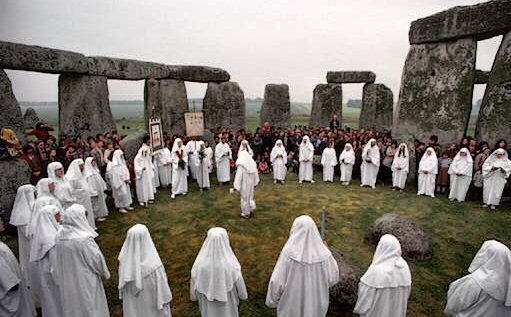
For myself, I follow the virtues of Asatru and they remind me Courage is a commitment to do the right thing at the right time, every time. That includes when people ask me what church I go to tell them –  I don’t go to church.  My place of worship is every place that I am and my act of worship is to act at all times according to the virtues of Asatru.

Website: Ravenbok – The particular page is: The Values of Asatru

To the Wolves and Ravens:

“Feed the Wolves, but Listen to the Ravens first.”

Needs (Geri):

Courage is the most needed virtue in the face of Fear.  Courage is a choice and a needed choice if one is going to do anything.  Our world gives us lots of things to fear. Politics and religion encourage us to fear because it makes us easier to manipulate. Courage is the needed choice to be free.

I need a lot more courage in expressing my self verbally. I guess it is my personality.  The few other INFJ types in know all have the same problem.  Being natural empaths we don’t want people to feel bad because then we feel bad ourselves. So we find alternate ways of expressing our feelings.  In my case, I find it far easier to write my feelings than say them.  That way I can’t feel people’s reactions to my written words.  I need to overcome this to a point that I can face those feelings bravely.

Wants (Freki):

It is this freedom that gives the desire (want) to embrace liberty and self-reliance. Better to live free and die than to bow in chains.  You need and want courage because it is the means to liberty and freedom of choice. Otherwise, your fears will lead you into chains.

I know there is a freedom o open expression.  I have had it a couple times where I and the other person could talk freely about what we felt and ti was very liberating.  I just have to have the courage to take the steps I can on my side to get there.

Reason (Huginn):

That said, there is a great deal of difference between foolhardy and courage.  There is no courage in paying a price or dying for nothing. Courage should cause us to fight for the things that matter.  Part of real courage is reason.  Rational courage is what we are making choices about not being afraid of the things in our way of a better life, not knee jerk martyrdom.

When it comes to expressing myself verbally,  I know what I need to do.  I know it is reasonable and wise.  That is not the problem.  It is, in the end, making the choice to be brave.

Wisdom (Muninn):

Some times the wisest path to walk is the one that involves facing our fears and overcoming them.  It gives us the strength to face later challenges.  Courage has wisdom to it when it is used for a purpose because it leads to the building of character.  And no one has ever built character into their lives without acts of courage.  Fear and cowardice only lead to the things people despise in their more rational and wise moments.

Conclusion:

‘I walk with courage. I follow the old ways. I strive for honor. I know what I stand for.  I am proud of that.  I am heathen.’

I remain,

The Rabyd Skald – Wandering Soul, Bard, and Philosopher. The Grey Wayfarer.

Skaal!!!